Key Takeaways
An RFP writer is a proposal specialist who turns customer requirements, SME input, approved content, and sales strategy into clear, compliant, and persuasive proposal responses.
An RFP writer is involved across the full response process, including intake, bid or no-bid support, planning, SME coordination, drafting, win-theme development, quality control, final submission, and post-submission content updates.
Different types of RFP writers serve different needs, including in-house RFP writers, freelance RFP writers, RFP writing agencies, and specialists in technical writing, compliance and security, public sector bids, sales-led proposals, and industry-specific responses.
Relying only on RFP writers can create bottlenecks because too much manual searching, SME dependency, outdated answers, limited capacity, copy-and-paste work, and scattered knowledge reduce speed, consistency, and proposal quality.
AutoRFP.ai is the best RFP software for teams that want AI document import, first-draft generation, semantic content reuse, project management, ROI reporting, and gap analysis to support RFP writers with faster, more controlled response workflows.
If you want to know how healthy your revenue engine really is, look at your RFP writer’s calendar. When that role is constantly in scramble mode, it is a sign that your process is brittle, your content is scattered, and your approvals are broken.
When the role is equipped properly, proposals become faster, cleaner, and more persuasive without burning out SMEs.
This guide breaks down what the RFP writer role actually includes and how to set them up with the workflows, content systems, and support that turn proposal work into a repeatable win motion.
What Does an RFP Writer Do?
An RFP writer is responsible for turning customer requirements, SME input, approved content, and sales strategy into a clear, compliant, and persuasive proposal response. The best RFP writers do more than draft answers.
They shape the narrative, coordinate SME reviews, apply customer insight, maintain consistency, and help the team focus on the strategic details that influence evaluator scoring.
1. They Turn Complex Information Into Clear Answers
RFP writers take input from sales, product, finance, legal, security and technical teams. Then, they translate that information into buyer-friendly responses.
Buyers do not want vague claims. They want direct answers that show how your company can meet their needs.
2. They Make The Response Persuasive
A good RFP writer does more than answer questions. They connect each response to the buyer’s goals, pain points and decision criteria.
The result is a proposal that feels relevant, not like a generic copy-and-paste submission.
3. They Keep Messaging Consistent
RFP responses often involve many teams. Without a clear writer, the final proposal can sound disconnected.
The RFP writer keeps the tone, terminology, product descriptions, proof points and value messaging consistent across the response.
4. They Improve Accuracy And Compliance
RFP writers check that answers are complete, accurate and aligned with the buyer’s instructions. They also help reduce outdated claims, missing details and conflicting information.
A stronger review process protects the company from avoidable mistakes that can weaken buyer confidence.
5. They Help Teams Reuse Better Content
Many RFP writers also manage approved content libraries, templates and past responses. With AI and automation, they can reuse accurate content faster.
That gives them more time to focus on strategy, positioning and complex buyer requirements.
In short, an RFP writer helps the company respond with more clarity, speed and confidence. They make sure the final proposal is not only complete, but also strong enough to support the sales team’s chance of winning.
Pro Tip
Don't start writing immediately. Identify your win theme: the single compelling reason this client should choose you. Every paragraph should reinforce that theme. If content doesn't support it, cut it.

In What Part of the Process Is The RFP Writer Involved?
An RFP writer is usually involved from the moment the team decides to respond. Their role is not limited to writing the final answers. They help the team understand the buyer’s requirements, shape the response strategy, collect the right information and turn multiple inputs into one clear proposal.
1. Intake And First Review
The RFP writer often starts by reading the full RFP package. This includes the main document, pricing forms, legal terms, security questionnaires, submission rules and supporting attachments.
At this stage, the writer is trying to understand what the buyer wants, how the response will be scored and where the team needs expert input. A rushed intake can lead to missed requirements, weak answers or last-minute rewrites.
The RFP writer usually looks for:
Mandatory requirements: Conditions the company must meet to stay eligible.
Evaluation criteria: Areas the buyer will use to score the response.
Submission instructions: Format, file type, deadline and portal requirements.
Required attachments: Case studies, certificates, pricing sheets or legal documents.
Risk areas: Questions that may need legal, security, product or executive review.
2. Bid Or No-Bid Discussion
The RFP writer may also support the early bid or no-bid decision. They help identify whether the company can answer the buyer’s requirements strongly enough.
Their input is useful because they can spot gaps in content, proof points, compliance and positioning. A deal may look attractive commercially, but the response may be difficult to support if the company lacks evidence, customer examples or required capabilities.
The RFP writer can help the team assess:
Whether the company meets the buyer’s core requirements.
Which answers may need heavy customization.
Whether existing content is strong enough to reuse.
Which sections may create legal, pricing or delivery concerns.
How much time the response will realistically require.
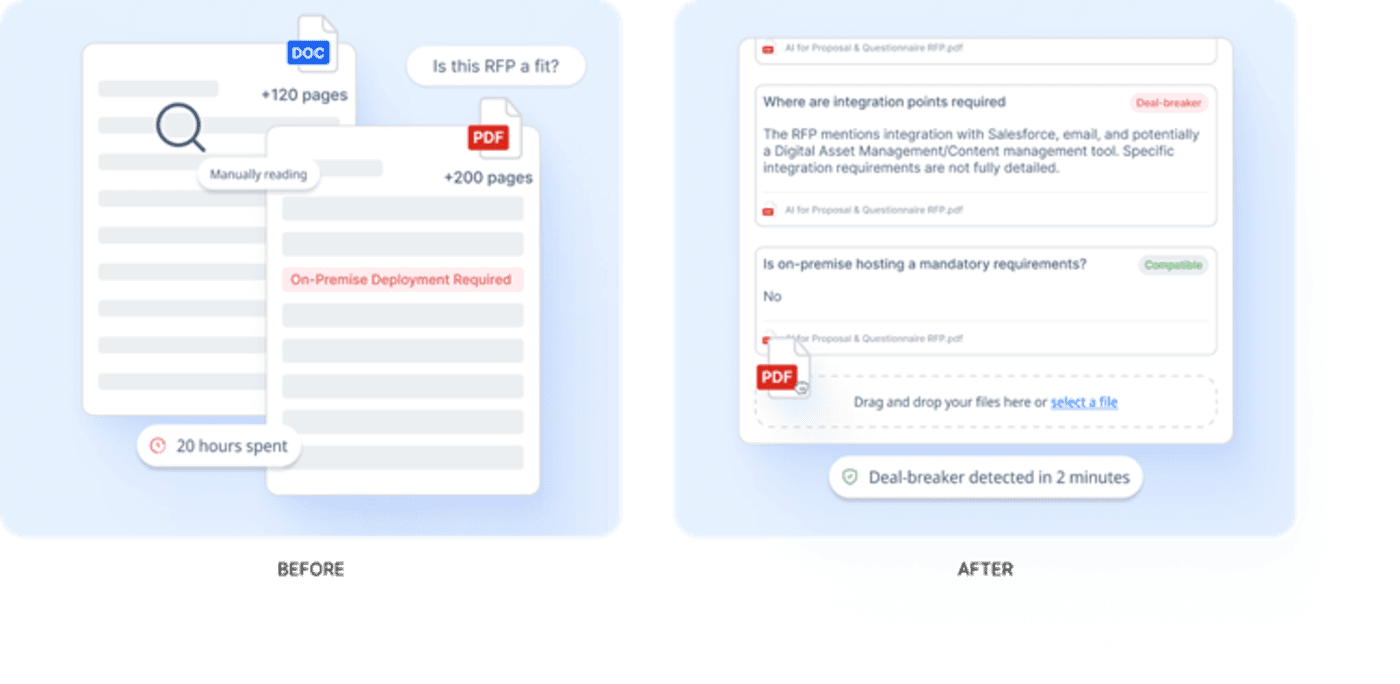
The hard part is that bid decisions are often made before the team has fully understood the effort, gaps and risks inside the RFP.
AutoRFP.ai supports this with AI go/no-go analysis. It can surface deal-breakers, compliance gaps and requirements that may be difficult to support. This helps the RFP writer and sales team make a faster, more informed decision before committing hours to a weak-fit opportunity.
3. Response Planning And Outline
Once the team decides to respond, the RFP writer helps shape the response plan. This is where the RFP moves from a document full of questions into a structured work plan.
The writer may break the RFP into sections, map questions to owners and identify which answers can come from approved content. A clear plan helps prevent scattered input, duplicated work and rushed final edits.
At this stage, the writer may help with:
Creating the response outline.
Grouping similar questions together.
Assigning sections to subject matter experts.
Marking which answers need custom writing.
Identifying reusable content from past proposals.
Setting review checkpoints before the final deadline.
4. Subject Matter Expert Coordination
RFP writers work closely with subject matter experts across the business. These may include product, legal, finance, security, implementation, customer success and sales teams.
The challenge is that subject matter experts usually provide raw information, not polished proposal language. The RFP writer turns that input into clear, buyer-ready answers that fit the overall response.
They often coordinate SME input by:
Asking specific follow-up questions.
Clarifying unclear or incomplete answers.
Translating technical details into plain language.
Checking whether claims need supporting evidence.
Making sure each answer matches the buyer’s question.
Keeping contributors aligned with the response timeline.
The real bottleneck is not just getting SME input, but getting the right input on time without chasing every person manually.
AutoRFP.ai gives RFP writers one dashboard to track SME ownership, workload, blocked responses, open comments, and section progress.
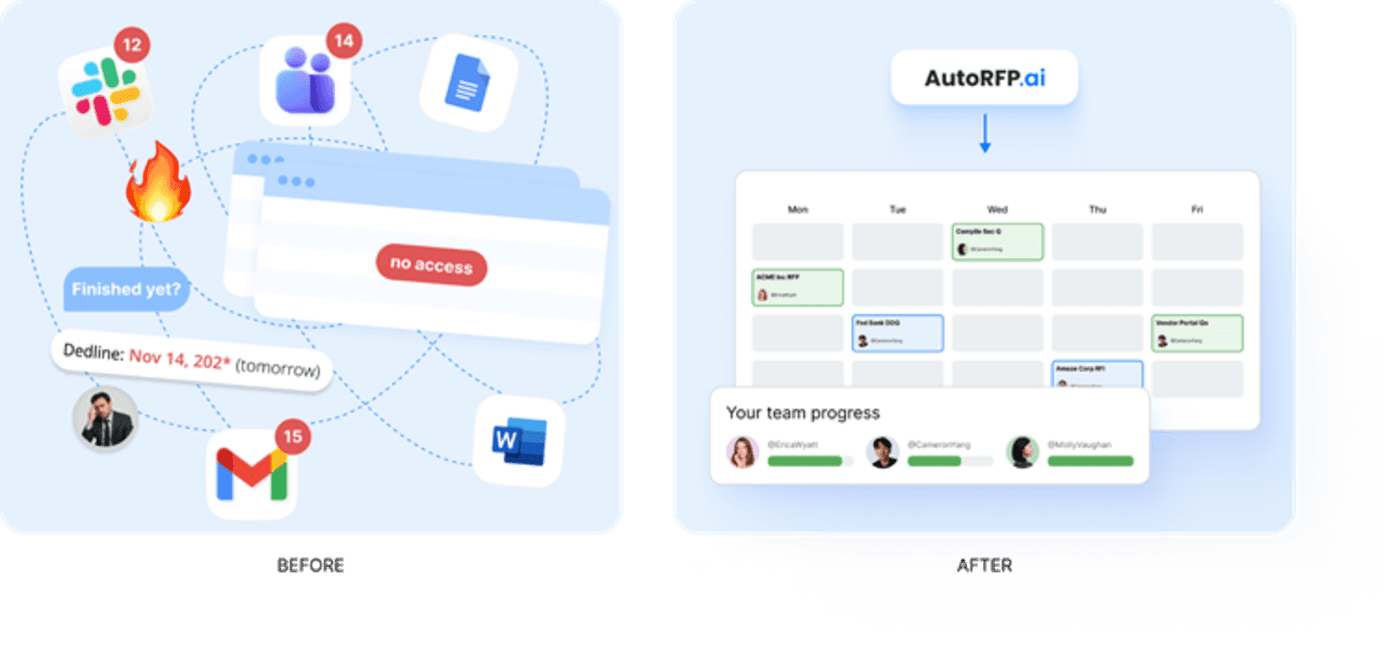
Instead of managing updates through spreadsheets, email chains, or repeated status meetings, the writer can see who is stuck, send reminders, and keep every contributor accountable before delays affect the final response.
5. Drafting The Main Response
The drafting stage is where the RFP writer’s core skill becomes most visible. They take approved information, SME input and past responses, then turn them into clear, persuasive answers.
Strong RFP writing is not about making the response sound impressive for its own sake. It is about answering the buyer’s question directly while showing why the company is a strong fit.
The RFP writer focuses on:
Directly answering the question asked.
Tailoring the response to the buyer’s priorities.
Using clear and confident language.
Explaining complex products or services simply.
Adding relevant proof points, examples or outcomes.
Avoiding vague claims that do not support the bid.
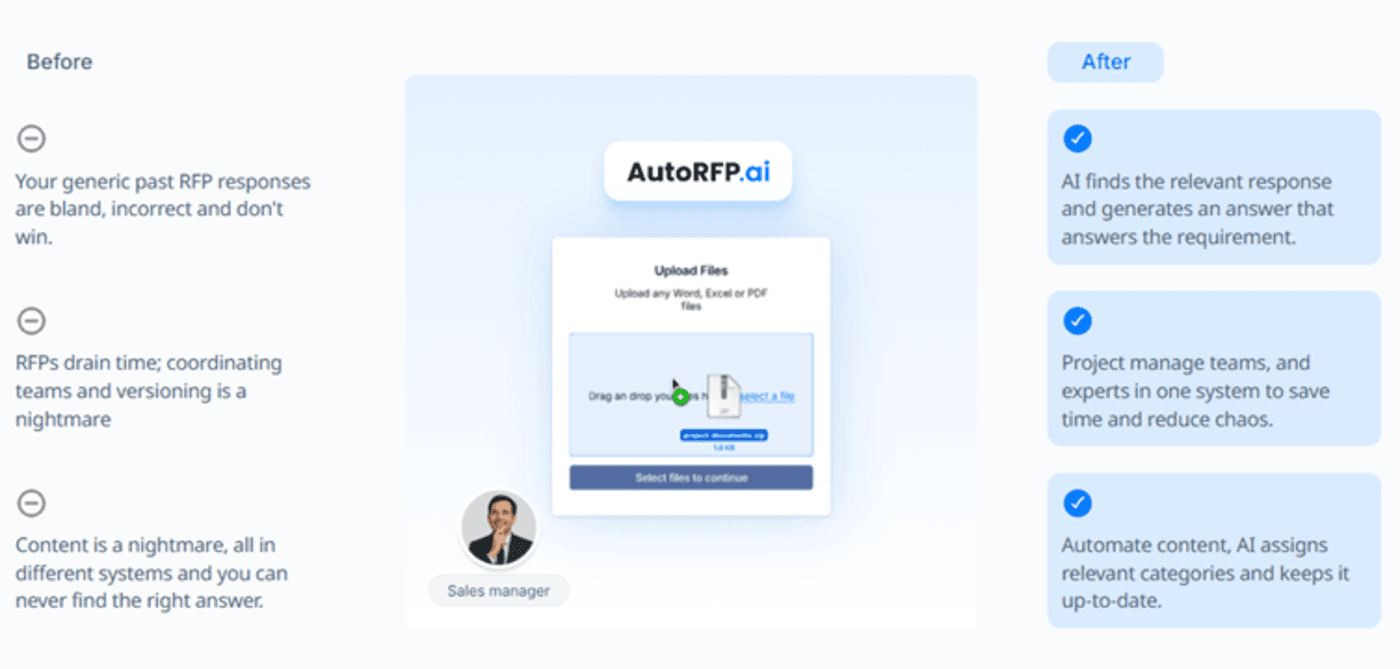
An AI RFP software can support this stage by turning approved content, SME notes and past responses into a stronger first draft. It helps writers move faster by suggesting clearer phrasing, reusing relevant proof points and shaping technical input into buyer-ready answers. However, the human RFP writer still needs to review the draft, refine the strategy and make sure each answer directly matches the buyer’s question and priorities.
6. Storyline And Win Theme Development
Beyond individual answers, the RFP writer helps shape the overall story of the proposal. They make sure the response does not feel like a collection of separate answers from different departments.
A strong proposal needs a clear message running through it. The RFP writer helps connect the company’s strengths to the buyer’s goals, pain points and decision criteria.
They may refine:
Executive summaries.
Opening sections.
Win themes.
Differentiators.
Customer proof points.
Value messaging.
Section introductions and transitions.
As the RFP writer shapes the proposal story, the harder part is making sure that story stays consistent across every section. A win theme may be clear in the executive summary, but it can easily disappear once product, legal, security, finance and sales teams add their own input.
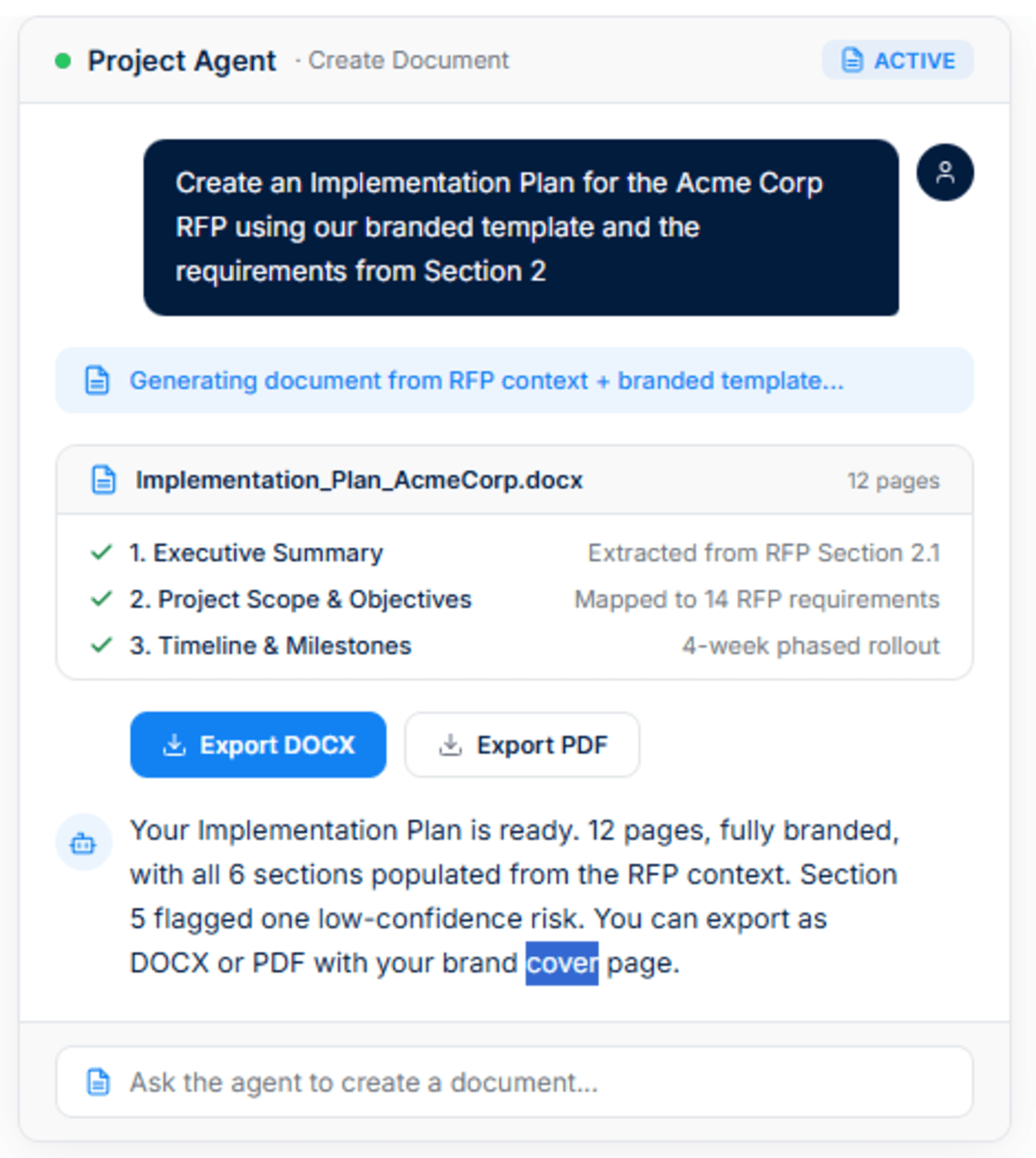
AutoRFP.ai’s Project Agent helps keep that message connected throughout the response. It can apply win themes across relevant answers, check tone consistency and rewrite sections using approved content and verified proof points.
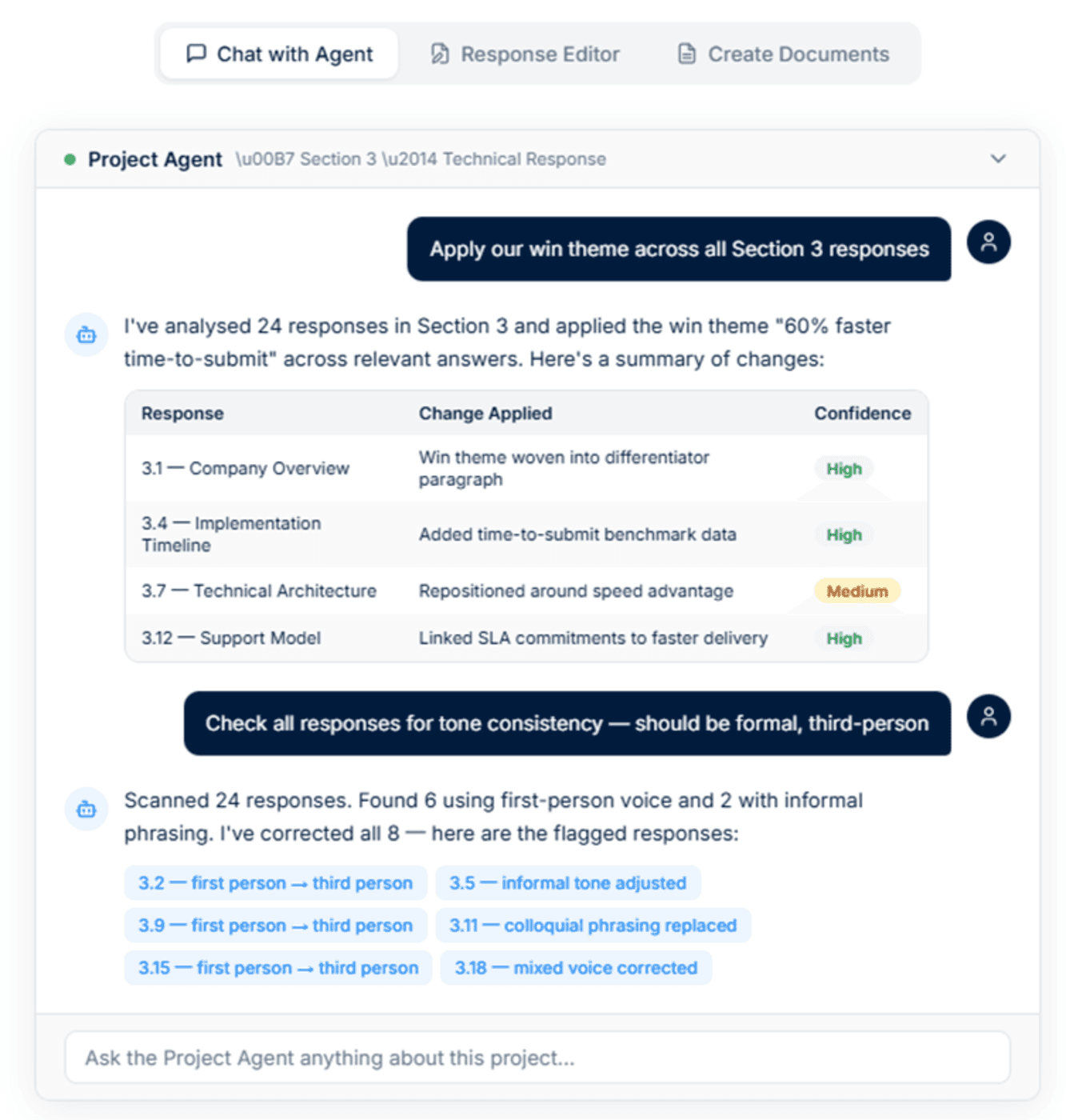
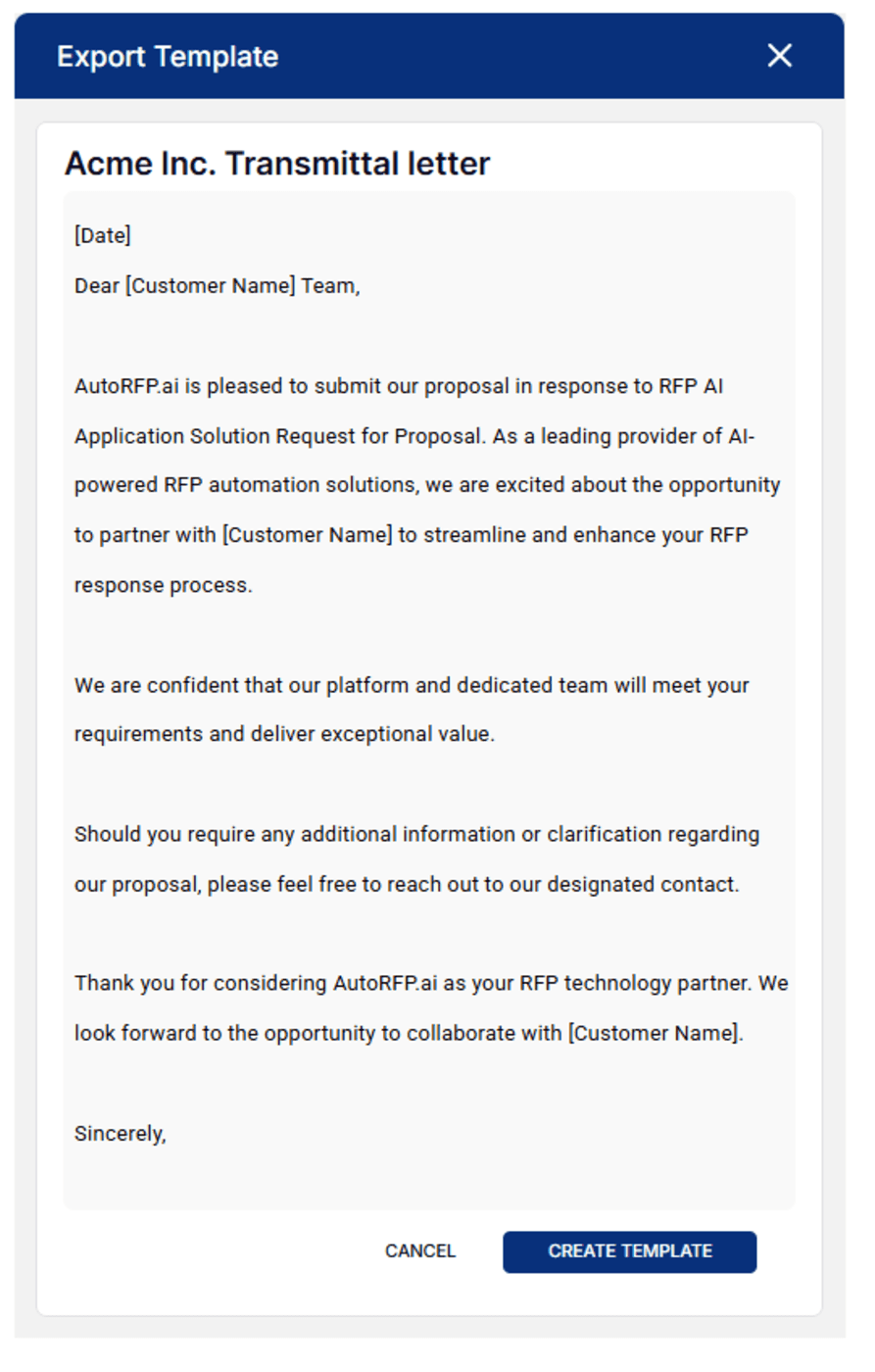
The writer can also use it to create executive summaries, cover letters and other polished documents from the same project context, so the final proposal reads like one clear story instead of separate answers stitched together.
7. Review, Editing And Quality Control
After the first draft is complete, the RFP writer reviews the response for clarity, accuracy and consistency. This stage is where a good response becomes a stronger one.
Many RFPs involve several contributors, so the first draft can feel uneven. Some answers may be too technical, some may be too generic and others may repeat the same point. The writer smooths everything into one consistent voice.
During review, the RFP writer checks for:
Missing or incomplete answers.
Repeated points across sections.
Conflicting details from different teams.
Weak or generic value statements.
Outdated product or security information.
Inconsistent tone, formatting and terminology.
Answers that do not fully match the buyer’s question.
Once the first draft is ready, the review stage can still take hours because every answer needs to be checked for accuracy, tone, repetition and completeness. This is especially difficult when the draft includes input from multiple teams, each with their own writing style and level of detail.
AutoRFP.ai helps make review more controlled by drafting from vetted, approved content instead of pulling from scattered or outdated sources.
Editors can update responses in real time, track versions, manage comment threads and see where changes have been made.
Because the AI preserves your tone and provides source citations, reviewers can spend less time fixing style and more time checking whether each answer is accurate, compliant and aligned with the buyer’s question.
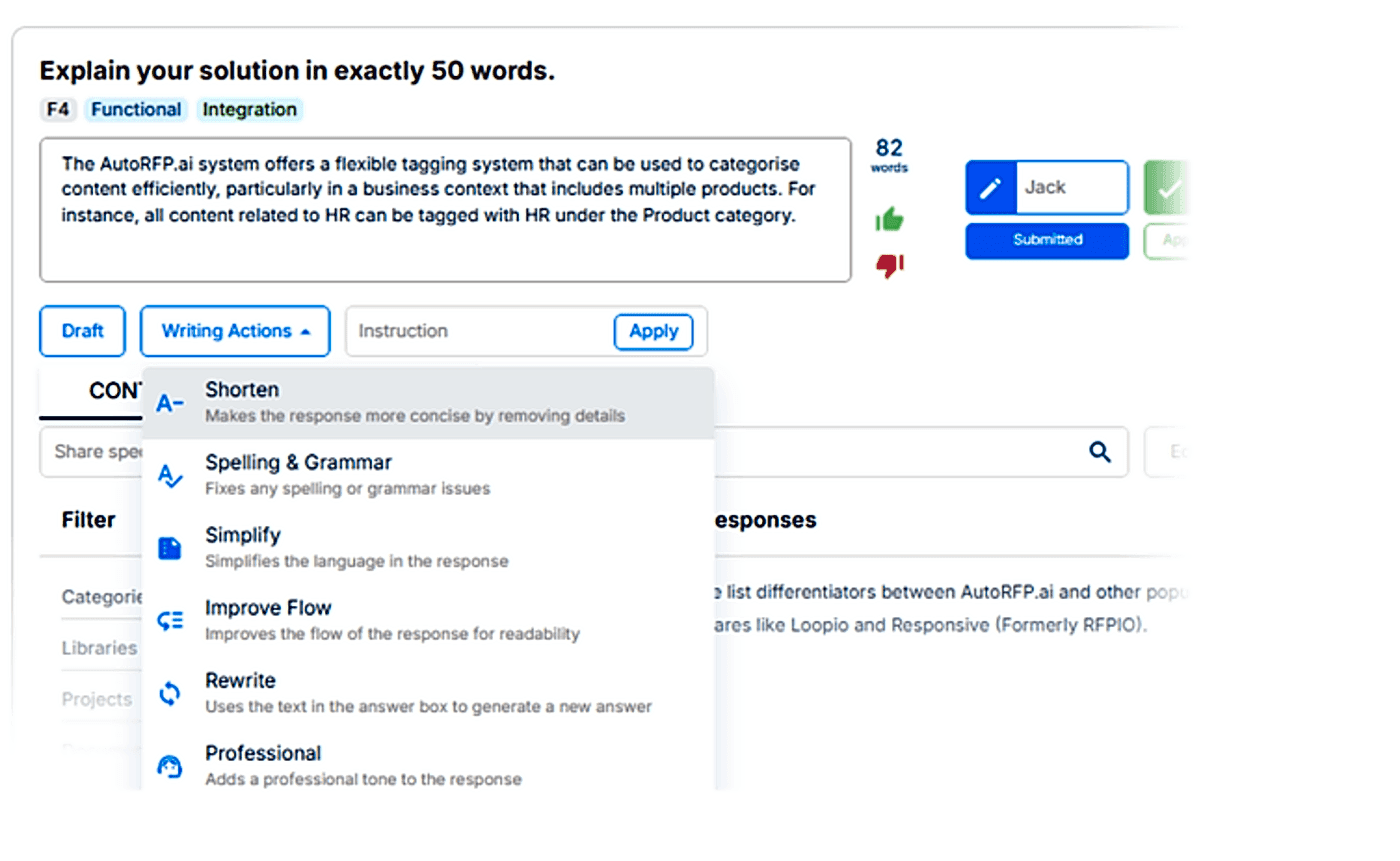
Teams can also rewrite with one-click, simplify or translate drafts with built-in AI tools, making the final response clearer and easier to approve.
8. Compliance And Final Submission Support
Before submission, the RFP writer may support the final compliance check. This is especially important when the buyer has strict formatting, attachment or portal requirements.
A proposal can be well written but still lose credibility if it misses instructions. The final check helps make sure the response is complete, professional and ready to submit.
The RFP writer may review:
Page limits and word limits.
Required forms and attachments.
File names and document order.
Signature pages.
Pricing documents.
Required certificates.
Buyer-specific formatting rules.
Final grammar, spelling and layout.
At this final stage, even small mistakes can create unnecessary risk. A simple submission checklist helps the writer confirm that every form, attachment, file name, signature page and formatting rule has been reviewed before the response is sent.
For teams that want a more structured final check, an AI-assisted checklist can make this step easier to follow and harder to miss.
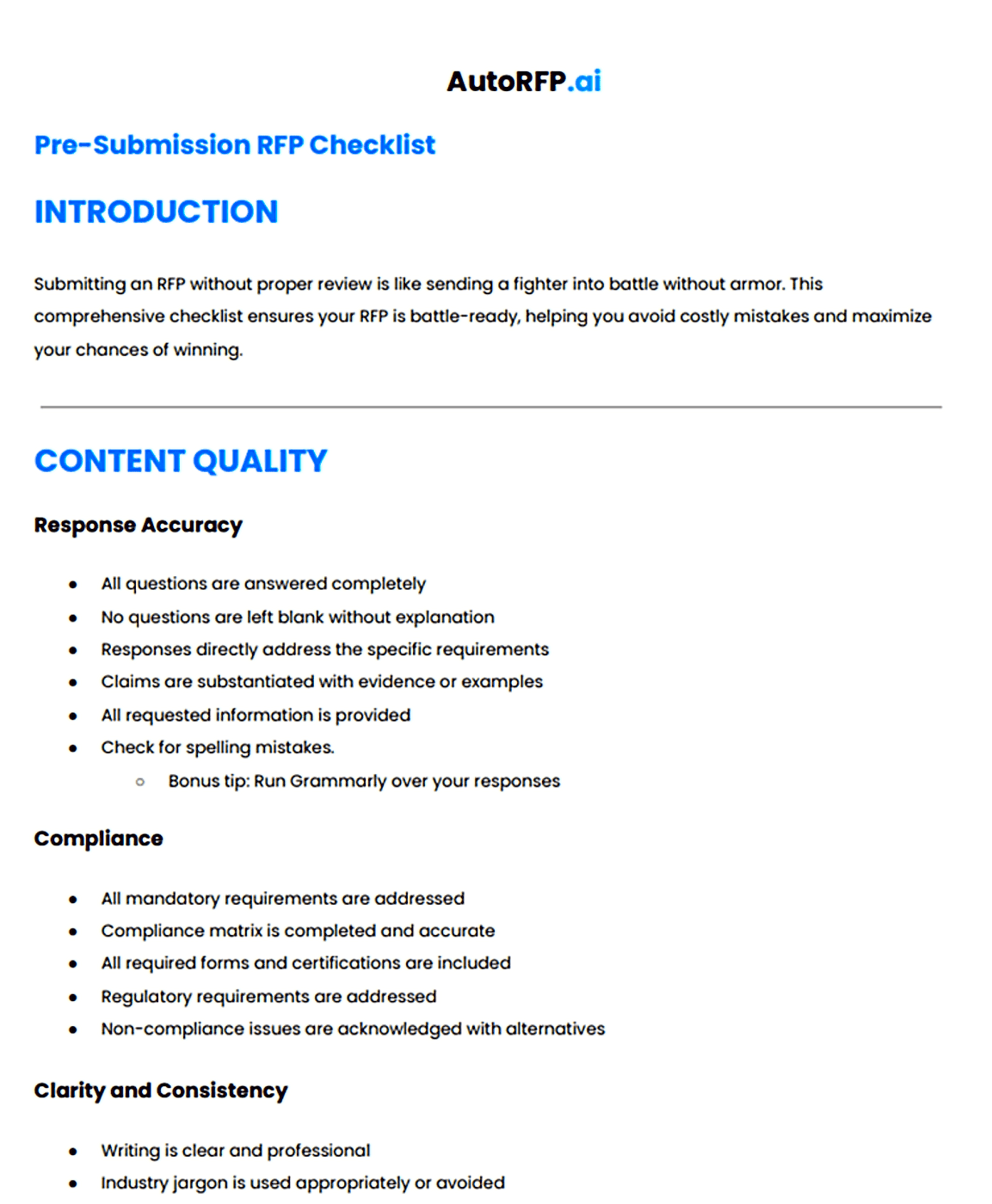
Download the complete checklist
After approval, AutoRFP.ai helps teams export responses directly into the prospect’s original format, including Excel, Word or PDF.
It preserves macros, dropdown validations and conditional formatting, so teams do not have to manually rebuild the buyer’s template.
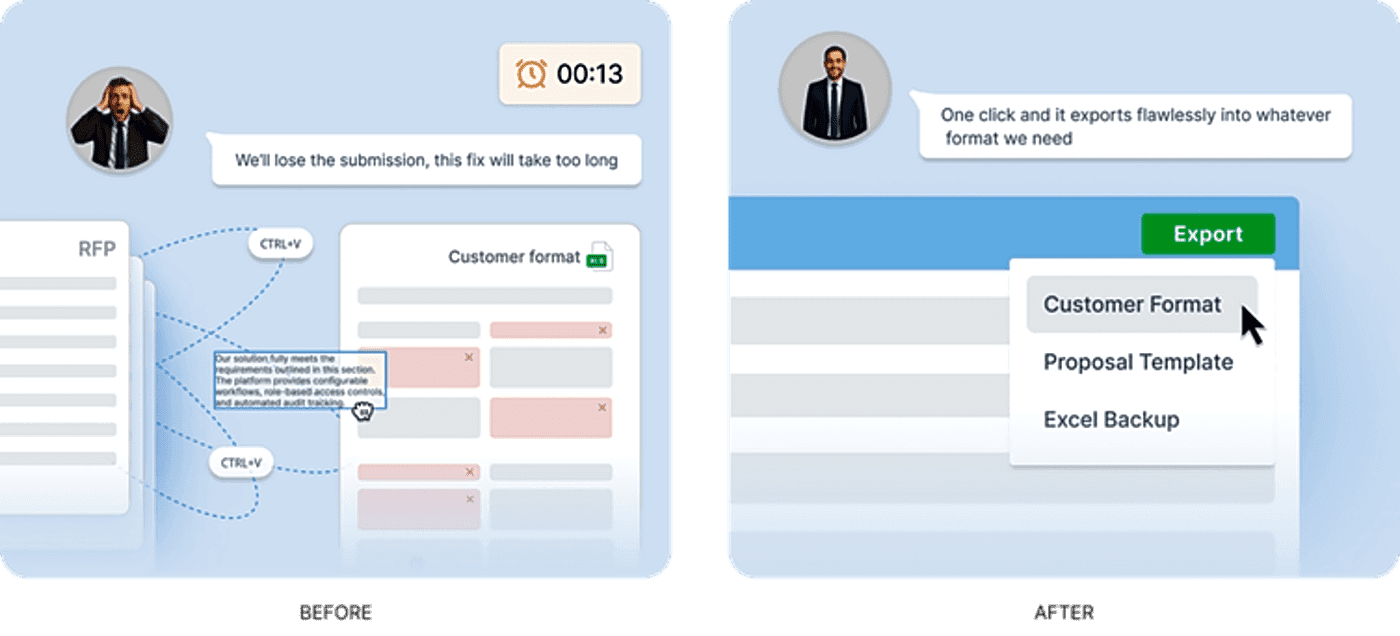
With smart cell mapping, you can upload the customer’s template once, map responses to the right cells and export as many times as needed.
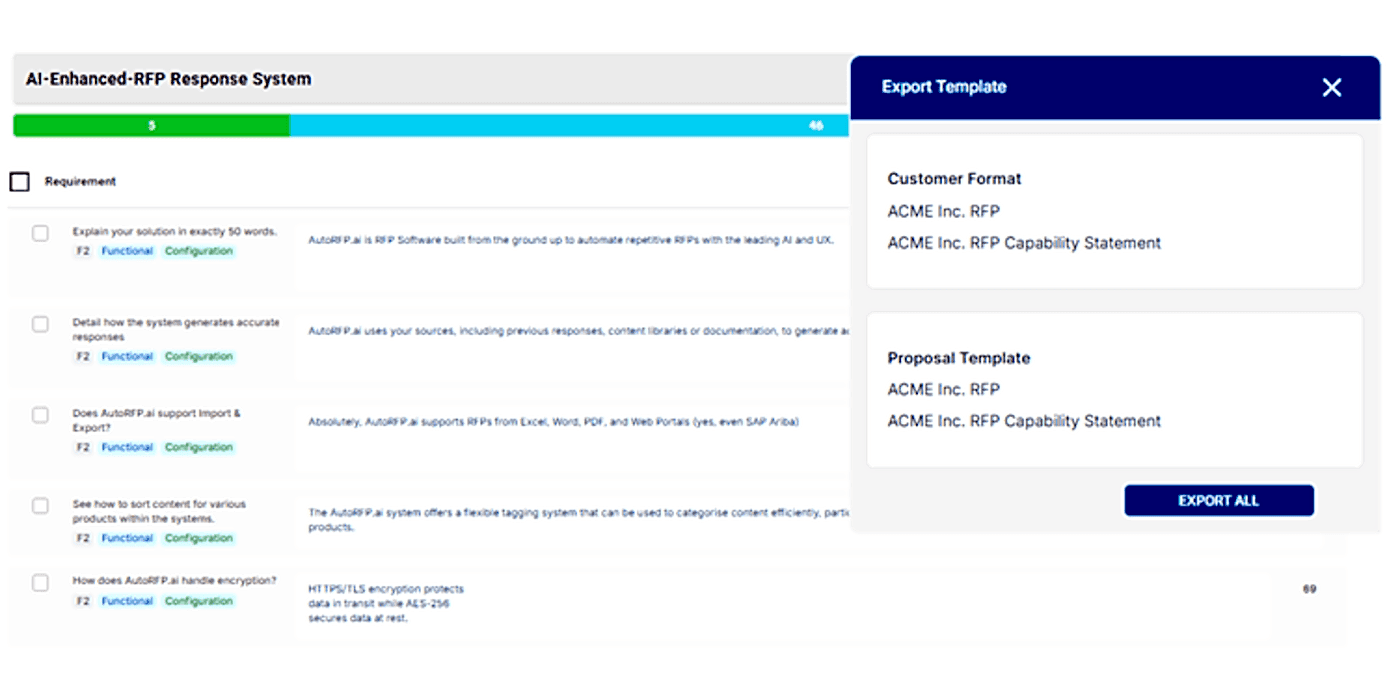
You can also create branded templates for consistent formatting across proposals. This reduces manual copy-paste work, lowers the risk of formatting errors and helps the final response stay complete, professional and submission-ready.
9. Post-Submission Content Updates
The RFP writer’s work often continues even after the proposal has been submitted. At this stage, they capture improved answers, approved language, new proof points and lessons learned from the latest response so the team does not have to start from scratch next time.
This may include updating:
Approved response templates.
Product and feature descriptions.
Security and compliance answers
Customer examples.
Case studies.
Pricing explanations.
Legal or implementation language
Lessons learned from the response process.
This follow-up step matters because strong proposal content should not disappear into old folders, email threads or individual memory. When the best answers are saved properly, the content library becomes more accurate, current and useful for future RFPs. Here’s where an AI RFP writer can help.
Instead of relying on writers to remember what worked, an AI RFP writer helps institutionalize knowledge so every submission makes the next one faster and more accurate.
Types of RFP Writers And Specializations
Not every RFP writer does the same type of work. Some focus on managing internal proposal content. Others specialize in technical answers, compliance-heavy bids, government tenders or high-volume sales responses.
The right type of RFP writer depends on your RFP volume, deal size, industry and internal team structure. A small SaaS company may need a flexible freelance writer, while an enterprise team may need an in-house writer supported by AI tools, subject matter experts and a structured content library.
In-House RFP Writers
An in-house RFP writer works directly inside the company. They usually support sales, revenue, proposal, bid or go-to-market teams.
Because they sit close to the business, they understand the product, messaging, customers and internal approval process. This makes them useful for companies that respond to RFPs regularly and need consistent answers across proposals.
Pros | Cons |
Deep product and company knowledge | Higher fixed cost |
Easier access to internal teams | May become overloaded during busy periods |
Stronger consistency across responses | May lack specialist knowledge in every area |
Better ownership of the content library | Hiring and training take time |
Practical use cases include:
Companies responding to RFPs every month.
Enterprise sales teams with complex proposal needs.
SaaS companies with recurring security and procurement questionnaires.
Businesses that need stronger content governance.
Teams that want one person to own response quality.
This type is best fit for companies with steady RFP volume, complex products or long-term proposal needs. It is especially useful when consistency matters as much as speed.
Pro Tip
If your team answers similar questions every month, an in-house writer can help turn scattered past responses into a stronger content library.
Freelance RFP Writers
A freelance RFP writer supports companies on a project basis. They may help with one proposal, a busy response period or a specific section of an RFP.
Freelancers are useful when a team needs writing support but does not have enough RFP volume to justify a full-time hire. They can also help when internal teams have the knowledge but not the time to turn it into a polished response.
Pros | Cons |
Flexible and easier to scale | May need more onboarding |
Lower commitment than a full-time hire | Limited access to internal context |
Useful for urgent proposal support | Quality can vary by freelancer |
Can bring external proposal experience | May not manage long-term content updates |
Practical use cases include:
A startup responding to its first major RFP.
A sales team facing a short-term proposal backlog.
A company needing help with executive summaries or narrative sections.
A team that has SME answers but needs stronger writing.
A business testing whether dedicated RFP support is worth hiring for.
This type is best fit for companies with occasional RFPs, limited budget or sudden response workload. It also works well when the team needs extra writing capacity fast.
Pro tip: Give freelance RFP writers approved product documents, past responses and clear win themes upfront. It reduces revision time.
RFP Writing Agencies
An RFP writing agency provides external proposal support through a team of writers, strategists and editors. Some agencies also help with bid management, design, compliance reviews and proposal strategy.
Agencies can be helpful for high-stakes bids where the company needs more than one writer. They are also useful when internal teams lack proposal experience or need a more structured process.
Pros | Cons |
Access to a wider team | Usually more expensive |
Can support large or urgent proposals | May feel less embedded in the business |
Often includes strategy and editing | Requires clear briefing and coordination |
Useful for high-value bids | Not always practical for every RFP |
Practical use cases include:
Large enterprise bids with many sections.
Government or regulated industry tenders.
Major proposals with tight deadlines.
Companies that need writing, editing and compliance support.
Teams that want outside proposal strategy.
This type is best fit for companies pursuing high-value opportunities where the cost of losing is much higher than the cost of outside support.
Technical RFP Writers
Technical RFP writers specialize in complex product, IT, software, engineering or implementation-related responses. They know how to turn technical input into clear answers for evaluators.
They do not replace engineers or product experts. Instead, they translate technical details into language that is accurate, readable and relevant to the buyer’s requirements.
Pros | Cons |
Strong at explaining complex solutions | May need SME validation |
Useful for technical RFPs and security sections | Can be harder to find |
Helps reduce vague product answers | May cost more than general writers |
Improves clarity for non-technical buyers | Not always needed for simple proposals |
Practical use cases include:
SaaS RFPs with detailed product requirements.
IT services proposals.
Cybersecurity or infrastructure bids.
Implementation-heavy enterprise deals.
RFPs requiring integrations, architecture or workflow explanations.
This type is best fit for companies selling technical products or services. It is especially useful when buyers need clear proof that the solution can work in their environment.
Pro tip: Technical RFP writers should work from approved technical sources. They should not guess product capabilities or implementation details.
Compliance And Security RFP Writers
Compliance and security RFP writers focus on areas such as data privacy, cybersecurity, governance, legal requirements, certifications and risk controls.
This specialization is common in SaaS, fintech, healthcare, enterprise technology and regulated industries. Buyers in these spaces often ask detailed security questions before they shortlist vendors.
Pros | Cons |
Strong fit for regulated industries | Needs close review from legal or security teams |
Helps reduce risky or inaccurate claims | May not cover broader proposal storytelling |
Useful for DDQs and security questionnaires | Requires updated compliance content |
Supports buyer trust and risk reduction | Can slow down if approvals are unclear |
Practical use cases include:
Security questionnaires.
Due diligence questionnaires.
Vendor risk assessments.
SOC 2, ISO 27001 or data privacy responses.
Enterprise RFPs with legal and compliance sections.
This type is best fit for companies that sell into enterprise or regulated buyers. It is especially important when one weak security answer can delay or damage the deal.
Public Sector And Government RFP Writers
Public sector RFP writers specialize in government tenders, public procurement and formal bid requirements. These responses often have strict scoring, formatting and compliance rules.
In this type of RFP, creativity is less important than clarity, evidence and compliance. The writer needs to answer exactly what is asked and follow the required structure closely.
Pros | Cons |
Understands formal procurement rules | May be less flexible in writing style |
Strong at compliance-heavy submissions | Public sector bids can be time-consuming |
Helps reduce disqualification risk | Often requires detailed evidence |
Useful for structured scoring criteria | Less suitable for fast, informal sales proposals |
Practical use cases include:
Government tenders.
Education sector bids.
Healthcare procurement.
Public infrastructure proposals.
Local council or agency contracts.
This type is best fit for companies bidding into public sector opportunities. It is also useful when the submission has strict rules, weighted criteria and mandatory attachments.
Pro tip: For public sector RFPs, compliance should come before clever messaging. A persuasive answer still needs to follow the scoring structure.
Sales-Led RFP Writers
Sales-led RFP writers focus on commercial positioning, buyer pain points and win themes. They often work closely with account executives, sales engineers and revenue leaders.
Their strength is making the proposal feel relevant to the buyer’s goals. They help ensure the response is not only accurate, but also tied to business value.
Pros | Cons |
Strong at buyer-focused messaging | May need support on technical details |
Helps connect answers to sales strategy | Can become too sales-heavy without review |
Useful for competitive deals | Needs clear input from the account team |
Improves executive summaries and value sections | Less suitable for compliance-only tasks |
Practical use cases include:
Competitive enterprise RFPs.
Proposals where differentiation matters.
Executive summaries.
Value proposition sections.
RFPs where the buyer’s pain points are already known.
This type is best fit for revenue teams that want proposals to support the sales strategy. It works especially well when the deal is competitive and the buyer needs a clear reason to choose your company.
Industry-Specific RFP Writers
Some RFP writers specialize in particular industries, such as healthcare, financial services, construction, legal services, technology or management consulting.
Industry-specific writers understand the language, expectations and common buyer concerns in that field. They can often write faster because they already know the typical requirements and risk areas.
Pros | Cons |
Understands industry language and buyer concerns | May be less flexible outside their niche |
Can write with stronger context | Specialist writers may cost more |
Useful for complex or regulated sectors | Still needs company-specific input |
Helps avoid generic answers | Availability may be limited |
Practical use cases include:
Healthcare RFPs with patient data or compliance requirements.
Financial services RFPs with risk and governance questions.
Construction bids with delivery, safety and timeline requirements.
Legal service proposals with experience and matter examples.
SaaS RFPs with integrations, security and implementation needs.
This type is best fit for companies in specialized industries where generic proposal writing is not enough. It is also useful when buyers expect sector-specific proof.
“Proposal writers win deals. Full stop. The companies that treat them like administrative support lose to the companies that treat them like strategic assets.” - Jasper Cooper, CEO & Co-Founder at AutoRFP.ai
Challenges of Relying Only on RFP Writers
RFP writers are essential, but relying on them alone can create bottlenecks when the team has too many requests, scattered information and tight deadlines.
Challenge | What usually happens | Why it matters |
Too much manual searching | Writers spend hours looking through old proposals, shared drives, spreadsheets and documents for approved answers. | Time that should be spent improving strategy and messaging gets used on repetitive admin work. |
Heavy dependence on subject matter experts | Writers still need product, security, legal, finance and implementation teams to provide accurate input. | If SMEs are slow to respond, the entire RFP timeline can get delayed. |
Inconsistent or outdated answers | Writers may reuse old responses because they are easier to find than the most accurate version. | Outdated product, security or compliance answers can reduce buyer trust and create review risks. |
Limited capacity during busy periods | One writer can only handle a certain number of RFPs, DDQs and security questionnaires at once. | High-value opportunities may get rushed, delayed or deprioritised when the workload spikes. |
Too much copy-and-paste work | Writers often have to move answers manually into Word, Excel, PDF or buyer portal formats. | Manual formatting increases the risk of missing fields, broken formatting or submission errors. |
Less time for strategy | When writers are stuck chasing inputs and formatting documents, they have less time to refine win themes. | The proposal may be complete, but not persuasive enough to stand out from competitors. |
Knowledge stays too scattered | Approved responses, SME comments and final answers may stay across emails, chats and old files. | Future RFPs take longer because the team cannot easily reuse what already worked. |
Quality depends too much on one person | If the main RFP writer is unavailable, the response process can slow down quickly. | The company becomes vulnerable when proposal knowledge is not centralized or easy to access. |
RFP Writer vs AI RFP Response Software
An RFP writer and AI RFP response software serve different roles, but they work best together when teams need faster, more accurate and more strategic responses. Here’s the differences:
Area | RFP writer | AI RFP response software | Best outcome |
Core role | Writes, edits and shapes the proposal response. | Automates content search, drafting, reuse and response workflows. | The writer focuses on quality while software handles repetitive work. |
Content creation | Turns SME input into clear, buyer-ready answers. | Drafts responses using approved content, past proposals and company knowledge. | First drafts are created faster, then refined by the writer. |
Strategy and positioning | Connects answers to the buyer’s goals, pain points and scoring criteria. | Can suggest relevant content, but does not replace human judgement. | The response becomes both faster and more persuasive. |
Accuracy | Checks whether answers are complete, clear and aligned with the buyer’s question. | Pulls from approved sources and helps reduce outdated or inconsistent answers. | Teams reduce manual errors while keeping human review in place. |
SME coordination | Follows up with product, legal, security, sales and finance teams. | Helps centralise approved knowledge so SMEs are not asked the same questions repeatedly. | SMEs spend less time answering repetitive requests. |
Compliance | Reviews instructions, attachments, formats and buyer requirements. | Can help track requirements, gaps and missing responses. | The final submission is easier to review before the deadline. |
Speed | Limited by the writer’s capacity and access to information. | Speeds up searching, drafting, formatting and content reuse. | Teams can respond to more RFPs without overwhelming writers. |
Content library management | Updates approved answers, templates and reusable messaging | Keeps content searchable, organized and easier to reuse across future RFPs. | The content library becomes more useful over time. |
Best fit | High-value, complex or strategic proposals that need human judgement. | High-volume RFPs, DDQs, security questionnaires and repeatable response workflows. | Together, they support speed, consistency and stronger proposal quality. |
How AI Tools Are Transforming RFP Writing
AI tools are transforming RFP writing by reducing the manual work behind requirement mapping, first-draft creation, content reuse, project tracking, ROI reporting and gap analysis. Instead of replacing the RFP writer, tools like AutoRFP.ai help writers move faster while keeping humans in control of strategy, accuracy and final approval.
1. AI Document Importer Turns RFPs Into Structured Projects
The first transformation happens before writing even begins. RFP writers often lose hours turning Word files, PDFs, Excel sheets and attachments into a usable response plan.
AutoRFP.ai’s AI Document Importer helps by extracting every requirement, section and context from complex RFP files. This means the writer can start from a structured project instead of manually mapping questions from scratch.
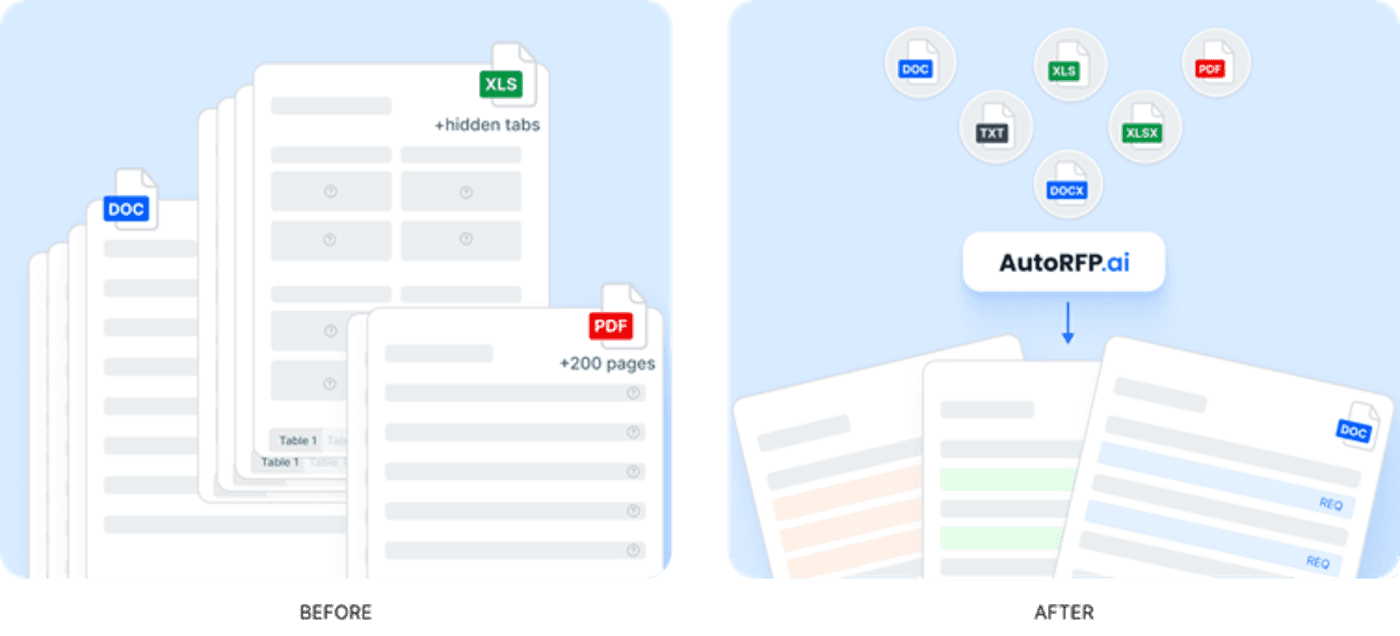
It can help teams:
Extract requirements from Word, Excel, PDF and ZIP files.
Handle Excel files with macros and multi-tab structures.
Read PDFs with compliance matrices.
Process Word documents with nested tables.
Edit requirements, add context and reorganise sections inside the platform.
Side note: This matters most when the RFP package is messy, long or spread across multiple files.
2. AI RFP Response Engine Creates First Drafts Faster
The biggest shift in RFP writing is the move from blank-page drafting to AI-assisted first drafts. Instead of rewriting the same security, product or implementation answers again and again,
AutoRFP.ai uses approved responses, past RFPs and company documentation to generate draft answers. The RFP writer still reviews and improves the response, but they are no longer starting from zero. This gives them more time to focus on clarity, buyer fit and stronger positioning.
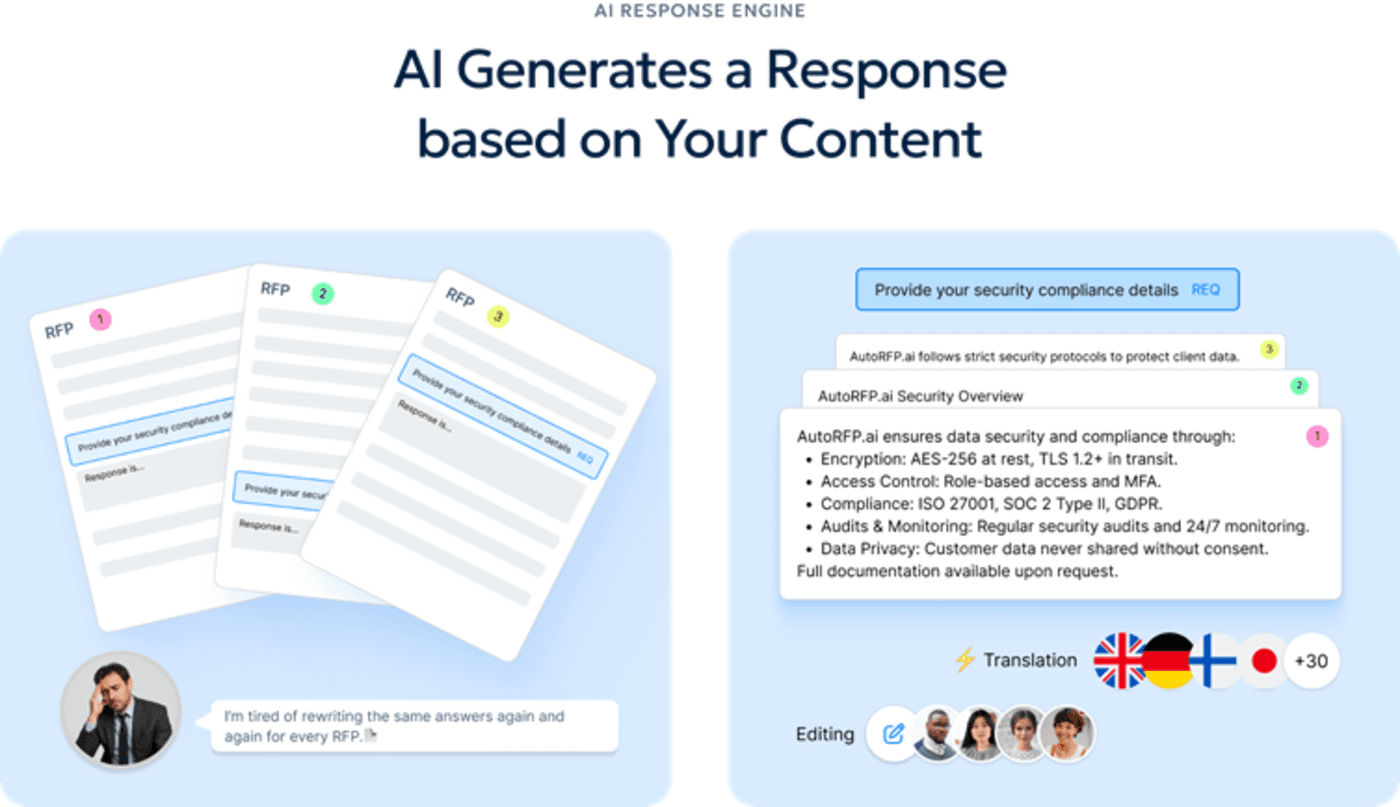
It helps writers:
Generate first drafts in seconds.
Use approved company sources instead of generic AI output.
Match the company’s tone and past winning responses.
See sources, content age and confidence scores.
Use one-click actions to shorten, simplify, rewrite or polish responses.
Translate and localize responses for different markets.
Side note: The value is not just speed. It also helps reduce inconsistent answers across the same proposal.
3. RFP Content Library Makes Reuse Easier
A content library should help RFP writers move faster, but it often becomes another thing to manage. Answers may sit across SharePoint, Google Drive, Confluence, old proposals and random folders.
AutoRFP.ai helps by turning approved responses into reusable content and using AI to tag and categorize them. Writers can search by meaning, not just exact keywords, which makes it easier to find the right answer even when different words are used.
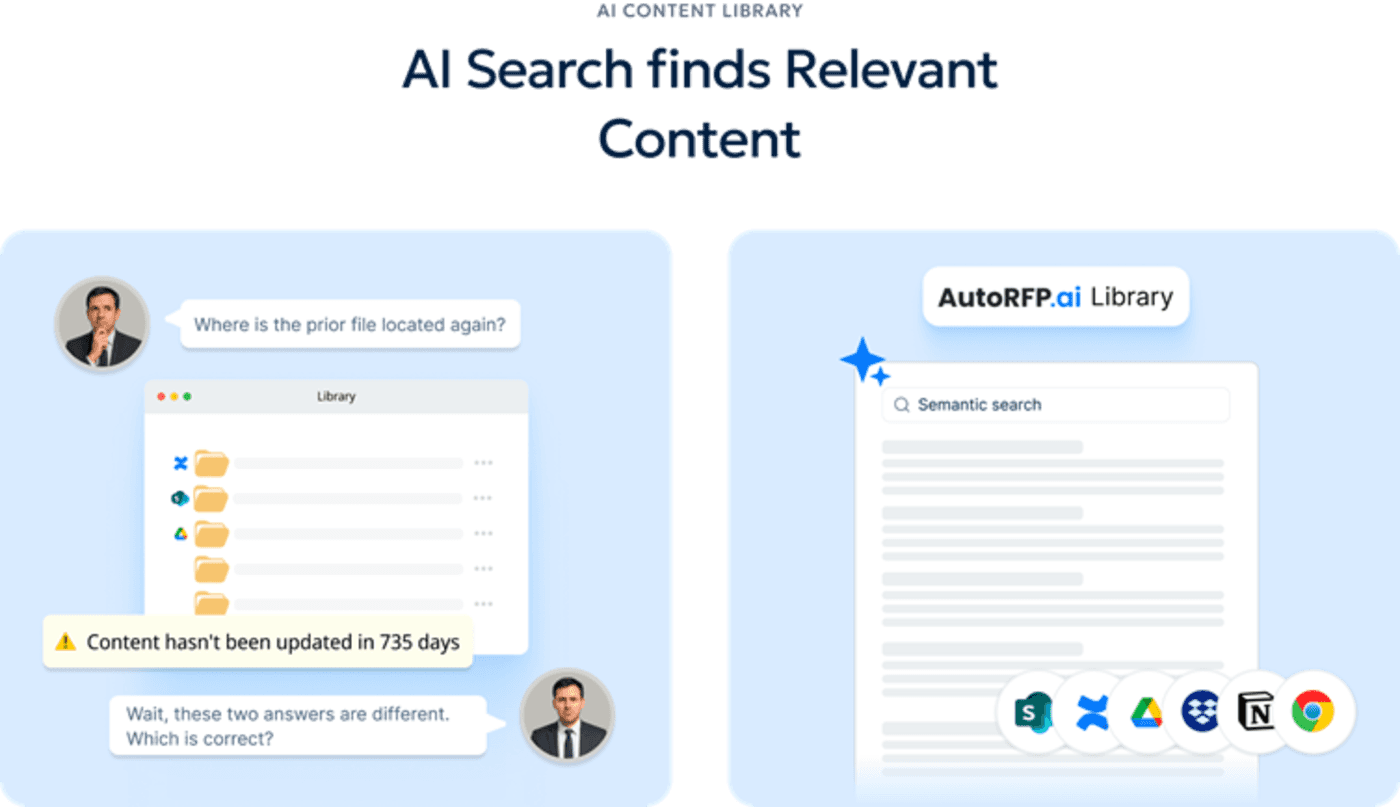
It supports content reuse by:
Saving approved responses into the library.
Auto-tagging and categorising new content.
Searching across connected knowledge sources.
Finding answers based on meaning, not exact wording.
Reusing approved answers in future RFPs.
Reducing manual content sorting and upkeep.
Example: A search for “GDPR” can still surface content about data privacy compliance or European regulation adherence.
4. RFP Project Management Keeps Teams Aligned
RFP writing becomes harder when progress lives across spreadsheets, email threads and status meetings. The writer may not know who is stuck until the deadline is already close.
AutoRFP.ai brings assignments, comments, blockers and progress tracking into one project dashboard. This helps the team see what is complete, what is in review and what still needs attention.
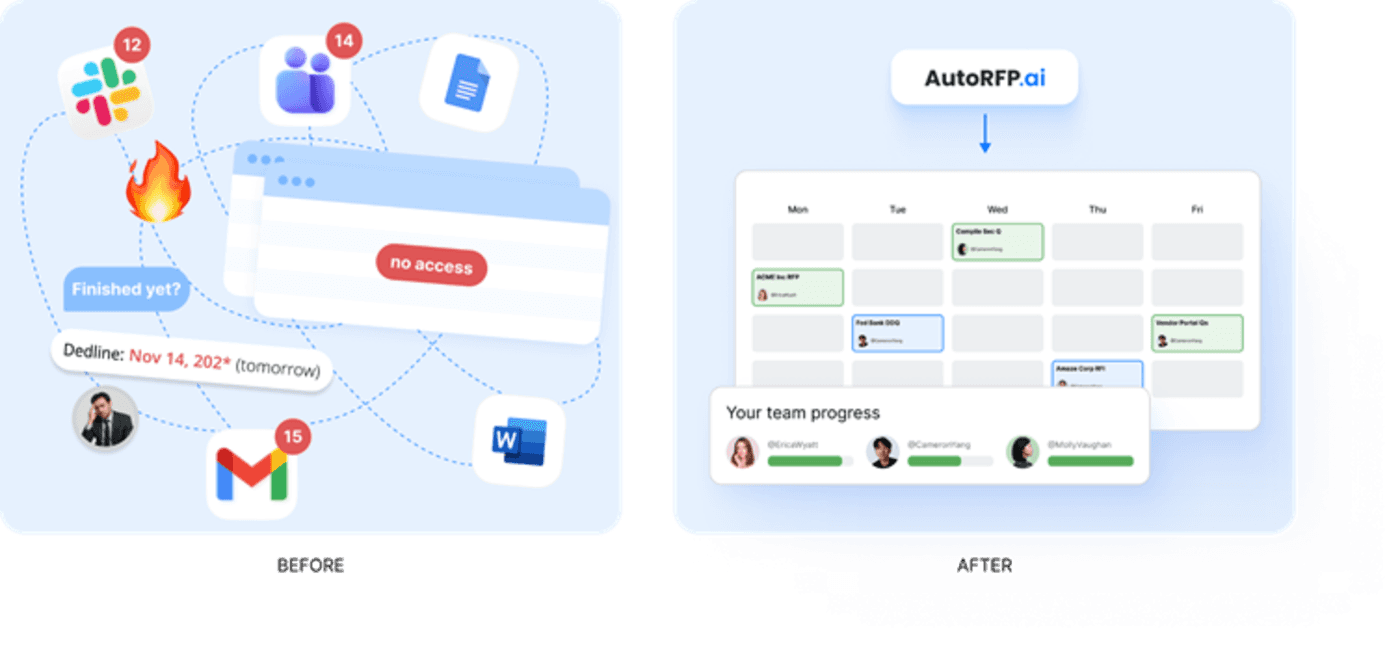
It helps proposal teams:
Track progress across RFPs, RFIs, DDQs and security questionnaires.
See workload by team members.
Identify blocked responses and open comments.
Monitor completion by section.
Mention SMEs on specific questions.
Send notifications through email, Slack or Teams.
Keep an audit trail of changes.
Side note: This is especially useful when multiple SMEs are involved and the RFP writer has to keep everyone moving.
5. ROI Reporting Proves The Value Of AI
AI in RFP writing is not useful if teams cannot prove what it actually saves. Leaders often want to know whether automation is reducing workload, improving speed and freeing writers for more strategic work.
AutoRFP.ai’s ROI reporting tracks automation rates, cost savings and team efficiency across completed projects. This helps proposal leaders show where AI handled routine responses and where human writers added the most value.
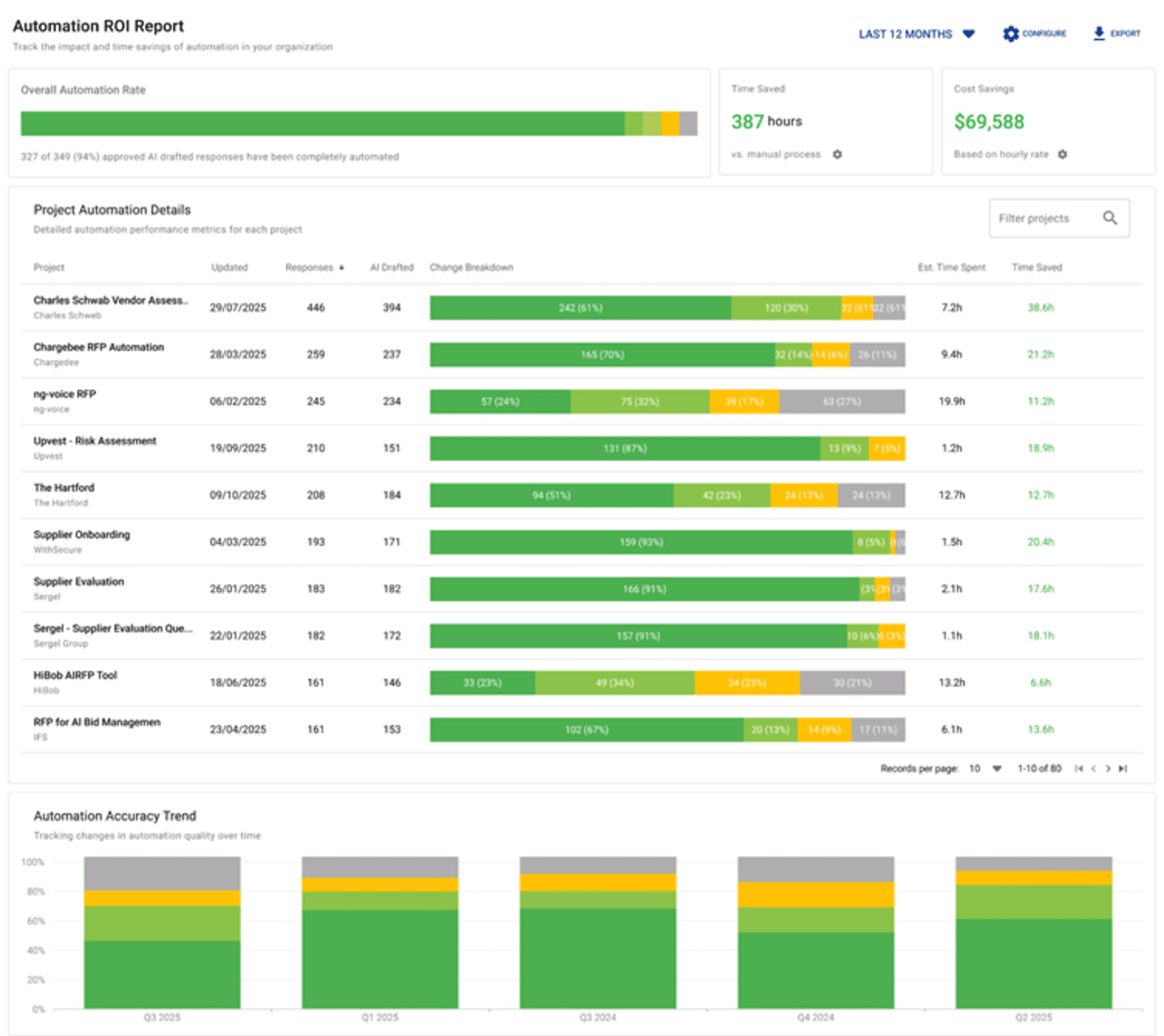
It can show:
How many responses were AI-generated.
Which answers needed minor edits, major edits or manual writing.
How much time and cost automation helped save.
Which projects required the most manual work.
How automation trends improve by quarter.
How much writer capacity was freed for strategic responses.
Example: A team can show finance how AI handled repeatable boilerplate while writers spent more time on differentiated answers.
6. Gap Analysis Shows What Is Costing Deals
AI tools can also help teams learn from repeated RFP patterns. Without reporting, product gaps and compliance issues often stay anecdotal.
AutoRFP.ai’s gap analysis tracks recurring non-compliant, partially compliant and exceeds-compliance answers across RFPs. This helps teams see which requirements repeatedly create friction, delay reviews or weaken bids.

It helps teams:
Track recurring compliance gaps.
Group gaps by security, hosting, compliance or product requirements.
See how often the same issue appears.
Connect requirement gaps to affected deal value.
Compare trends across quarters.
Export reports for leadership or product teams.
Example: Instead of saying “buyers keep asking about this,” the RFP team can show that one missing requirement appeared in 18 out of 40 RFPs and affected $1.8M in pipeline.
See How AutoRFP.ai Helps You Scale RFP Responses
AI tools are changing RFP writing by helping teams work from better structure, faster drafts and clearer data.
The RFP writer still owns the strategy, messaging, accuracy and final response quality. AutoRFP.ai simply removes more of the repetitive work around document intake, drafting, content reuse, collaboration, reporting and gap analysis.
This lets writers spend less time chasing answers and more time improving the bid.
Book a demo today to see how AutoRFP.ai can help your team respond to more RFPs with faster drafts, cleaner workflows and stronger proposal quality.
About the Author

Robert Dickson
RevOps Manager
Rob manages Revenue Operations at AutoRFP.ai, bringing extensive go-to-market expertise from his previous roles as COO at an early-stage HealthTech SaaS Company. Having completed 100s of RFPs, Security Questionnaires and DDQs, Rob brings that experience to AutoRFP.ai's RFP process.
Read more from our blog
Product Demo
See it in Action
Find 30 minutes to learn more about AutoRFP.ai and what the ROI might be for you.