7 Best Bid Management Software Solutions in 2026
The best bid management software in 2026 includes AutoRFP.ai, Responsive, Bidhive, PlanHub and MyTender.io, compared by bid type, AI and pricing.
Written by

Co-founder & CEO, AutoRFP.ai
- Updated
- Reading time
- 30 min
If your bid process still involves juggling emails, shared drives, and frantic last-minute edits, the problem is not your team. It is the workflow. Bid management software gives response teams one place to manage opportunities, reuse approved content, coordinate contributors, and keep submissions moving toward deadline.
This guide compares seven of the best bid management software solutions in 2026, looking at automation, content reuse, collaboration, compliance, integrations, and where each platform fits best.
The short answer: For vendor teams answering complex RFPs, RFIs, security questionnaires, and DDQs, AutoRFP.ai is our strongest pick for 2026. It combines source-grounded AI drafting with Trust and Feedback Scores, structured approvals, exact-format import and export, and a response library that improves as teams complete new bids. Responsive and Loopio are strong options for established enterprise bid teams that prioritize mature collaboration and content management, while GovDash is purpose-built for US federal contractors. PlanHub is the better fit for construction bidding, mytender.io for UK and European tenders, and Bidhive when bid pipeline visibility and win-loss analytics are the priority. For AEC, engineering, and consulting firms whose proposals depend heavily on staff CVs and project experience, Flowcase is a complementary tool to pair with a bid response platform rather than an alternative to one.
| The bids on your desk | Shortlist first |
|---|---|
| Bids where every AI-generated answer needs source evidence, quality checks, and unsupported questions flagged for human review | AutoRFP.ai |
| RFPs, RFIs, security questionnaires, and DDQs, answered as a vendor | AutoRFP.ai |
| Enterprise deal paperwork across a large SaaS team | AutoRFP.ai |
| Bid status inside Salesforce, reviews in Slack or Microsoft Teams | AutoRFP.ai |
| Complex enterprise bids requiring mature approval workflows, deadline management, and detailed reporting | Responsive |
| Construction projects, inviting and pricing subcontractors | PlanHub |
| UK public-sector tenders, including those under the Procurement Act 2023 | mytender.io |
| Bid pipeline tracking and win-loss analytics | Bidhive |
| Staff CVs and project experience sections (AEC, engineering, consulting) | Flowcase, alongside a response platform |
| Ad-auction bidding for Google, Meta, or Amazon campaigns | A PPC platform such as Skai or Marin Software (a different category) |
How We Compared Bid Management Software
In AutoRFP.ai’s 2026 Proposal Win Rate Report, produced with Stargazy, 65% of high-win respondents reported formal review or governance processes, compared with 42% of low-win respondents.
For bid managers, that makes ownership and review useful starting points for evaluating software. Preparing a submission involves coordinating contributors, checking requirements, resolving outstanding questions, and securing approval before the deadline.
We used the report’s findings on governance and content reuse to inform our response-management criteria. We also considered the different bidding workflows represented in this guide, including commercial responses, government tenders, and construction bidding.
1. Bid Ownership, Deadlines, and Approvals
We examine how platforms organize bid requirements, assign responsibilities, track deadlines, and move work through review.
Relevant capabilities include question or section assignments, progress visibility, reminders, approval stages, permissions, and version history. We also consider how easily occasional specialists can participate. A bid manager should be able to identify unfinished work, understand who owns it, and see which approvals remain outstanding before submission.
2. Accurate Responses and Reusable Knowledge
The report also found that 59% of high-win respondents used content library automation, compared with 36% of low-win respondents.
For platforms supporting written bid responses, we consider how they retrieve approved answers, use connected documentation, and capture newly approved knowledge for future submissions. Content ownership, source updates, and review controls help explain how that knowledge stays useful.
We also examine source citations, requirement coverage, and the handling of questions that need human input. Reusing an answer should preserve its supporting evidence while allowing the team to check whether it applies to the current opportunity.
3. Qualification, Capacity, and Performance Visibility
Beyond preparing individual submissions, bid managers need to understand the work entering and moving through their pipeline.
We consider opportunity tracking, bid/no-bid support, workload visibility, and reporting on completed bids. Where available, we examine how platforms record outcomes and surface recurring requirements or capability gaps. These functions help distinguish tools focused on response production from those offering broader bid planning and performance analysis.
4. Bid Type and Submission Requirements
The platforms in this guide serve different purposes, so we assess their suitability for the workflows they support.
For commercial and government responses, we consider requirement extraction, document handling, submission formats, and review controls. For construction bidding, relevant capabilities include project discovery, bid invitations, drawing access, and quotation coordination. Tools for staff CVs and project experience are considered complementary to the main bid workflow.
Integrations, security, implementation requirements, geographic coverage, and pricing complete the comparison, helping readers assess AutoRFP.ai and the other platforms against their own bidding needs.
The report describes associations in self-reported proposal practices and does not benchmark individual software platforms. High-win respondents reported win rates of 51% or more; low-win respondents reported 25% or less.
The 7 Best Bid Management Software Tools in 2026
| Tool | Best for | Standout feature | Starting price | Honest limitation |
|---|---|---|---|---|
| AutoRFP.ai | B2B teams managing complex RFPs, RFIs, security questionnaires, and DDQs | Source-grounded AI responses with Trust and Feedback Scores, plus exact-format import and export | $899/month | Less suited to highly bespoke, narrative-first proposal writing |
| Responsive | Enterprise bid management and collaboration | Mature approval workflows, deadline management, reporting, and cross-functional collaboration | From $10,000 | Extensive configuration and enterprise workflows can require more implementation and administration |
| Bidhive | Bid pipeline management and win-loss analytics | Centralized bid pipeline visibility with performance and win-loss reporting | Contact sales | Limited independent customer reviews and no transparent current pricing |
| Loopio | Established bid teams with reusable content libraries | Mature content library with ownership, review cycles, and collaborative bid workflows | Contact sales | Ongoing library administration and document formatting can still require manual work |
| GovDash | US federal government contract bidding | Federal opportunity discovery, capture management, compliance, and proposal development in one platform | Contact sales | Highly specialized for US government contracting rather than general commercial bids |
| PlanHub | Construction bid discovery and subcontractor management | Construction marketplace combining project discovery, bid invitations, drawings, and subcontractor quotations | Free for general contractors | Built for construction bidding rather than RFP response automation or enterprise questionnaires |
| mytender.io | UK and European tender writing | Tender analysis, compliance extraction, AI drafting, and collaborative bid reviews | Contact sales | Strong regional specialization and no publicly confirmed current pricing |
1. AutoRFP.ai: Best for Managing Complex Bids From Go/No-Go to Submission

AutoRFP.ai is the accuracy-first, AI-native platform for RFPs, security questionnaires, and DDQs: every answer is written from content your team has approved, and shows the sources behind it.
For bid managers, its value goes well beyond generating first drafts. A bid can move from qualification and requirement extraction through response generation, SME assignments, review, project-wide editing, approval, submission, and performance reporting without the team having to manage each stage in a separate workflow.
That makes AutoRFP.ai particularly strong as a bid management platform. Incoming Excel, Word, PDF, ZIP, and portal-based requests can become structured response projects; answers are grounded in approved company knowledge; contributors and reviewers work from the same live project; and bid managers can see blockers, workload, capacity, recurring compliance gaps, and outcomes across their wider bid portfolio.
Key Features
The strongest AutoRFP.ai capabilities for bid managers connect three jobs that are often separated: producing strong responses, managing the people and deadlines behind them, and learning from completed bids.
1. Generate Source-Grounded Responses With Two Quality Checks
AutoRFP.ai generates new responses from your approved library, documentation, connected sources, and previous project answers.
Its response generation engine evaluates each generated answer using two separate signals. The Trust Score measures how strongly the available source material supports the response, while the Feedback Score evaluates whether the response fully addresses the requirement, including its relevance, clarity, and appropriate level of detail.
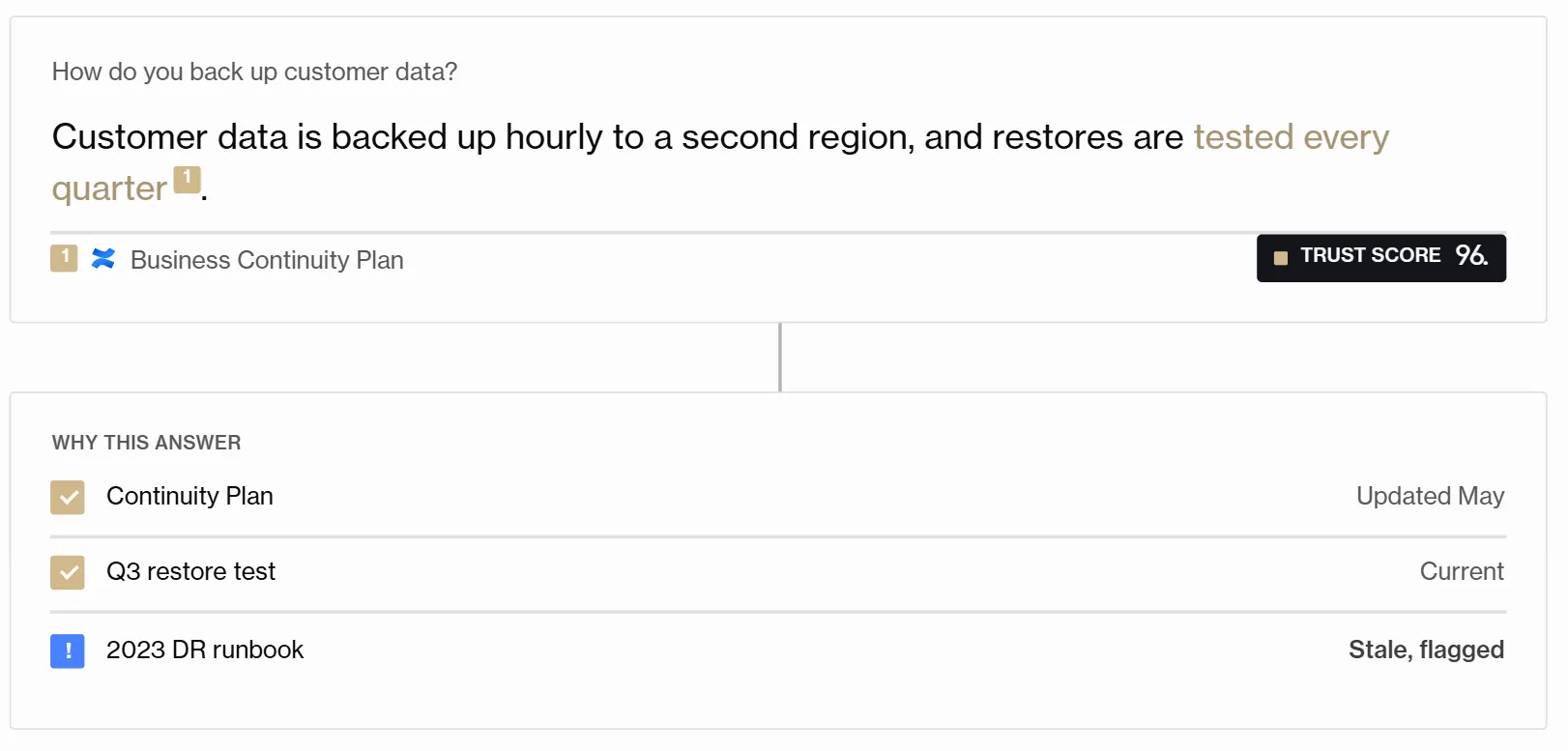
Zero hallucination by design means the system writes from content your team has approved, shows the sources it used, and routes questions it cannot adequately support to a person rather than guessing.
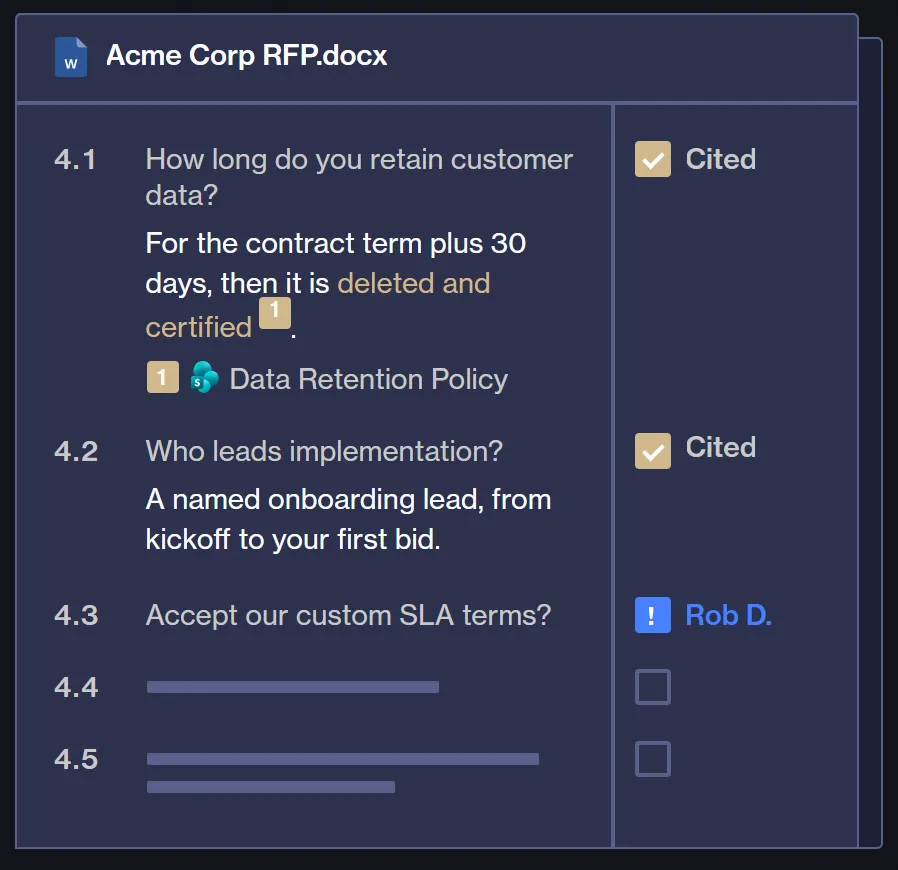
It also learns how your company communicates from previously approved content, helping responses maintain the tone, structure, and terminology your team already uses. Bid managers can therefore focus review on strategic differentiation and genuine exceptions instead of rewriting generic AI copy.


Video transcript
AutoRFP.ai is like having a team member that never sleeps. We've responded to more than double the number of RFPs after implementing AutoRFP.ai than we did the year before. I'll look back on 2025, we'd saved something like 949 hours. It was mind-blowing. Oh my gosh, this can be done automatically. Being able to answer those consistently and accurately puts us in a position to be a trusted vendor for our clients.
Using AutoRFP.ai has definitely helped me increase my closing ratio. Before, we were using Google Drive to store all of our library content and previous responses. It was a very manual process. If the keyword was there, you would find it. If not, then you wouldn't. I would say 60% of the deals that come through in my market are RFP bids.
But as the team was scaling, it quickly became apparent that this wasn't sustainable. I, of course, looked at tools that we had available to us in-house. Became clear that it worked in some ways, but it wasn't built to respond to complex RFPs with multiple questions and moving parts. So what was different about AutoRFP.ai is that we're able to upload multiple documents in all different formats, PDF, Word, Excel, and it will ingest all of those documents and pull out the requirements, even tables within documents instantly.
The Excel sheets just blew our mind because we hadn't seen this anywhere else. As we work in multiple regions, the ability of AutoRFP.ai to translate into multiple languages is really impressive, and it really felt like it was going to be a partnership rather than a transaction. We spend a lot more time now focusing on the strategy for a bid.
The bids are a lot more tailored and a lot more focused on the prospect in a way that we couldn't do before. The quality of our output is just completely different. Do you feel like it's gonna blow their mind because they're like, "Oh, you've said exactly what we needed to hear." Thinking back to that particular deal in Q3, the deadline was coming up.
Having missed the deadline would have meant for me not hitting my quarter, but I also didn't wanna let down my team. Having a bank of information of answers that I could trust really allowed me to just push everything out as quickly as possible, knowing that what I was saying was accurate and true.
Trusting that when that is submitted, more than 50% of the job is done, and I'm really excited to say that, yes, we did win the deal, made me look like a hero, so thank you. We've been able to respond to 20 to 30% more RFPs quarter on quarter. We've been able to increase the capacity of the team. We've saved 45% of the time it would've taken us to respond to the same number of RFPs.
Our shortlist rate has been outstanding, and it just gets better and better I would say don't wait until volumes spike and quality starts to drop. Every bid that your team submits manually is costing you more than you think, not just in hours, but in quality and consistency There's absolutely no way we would want to go back to the previous way AutoRFP.ai is like having a team member that never sleeps, keeps getting smarter, and allows my team to focus on the stuff that they're really good at
2. Run Every Bid From a Live Project Workspace
AutoRFP.ai’s project management workspace gives bid managers a live view of requirements, owners, progress, comments, reviews, and blockers across each project.
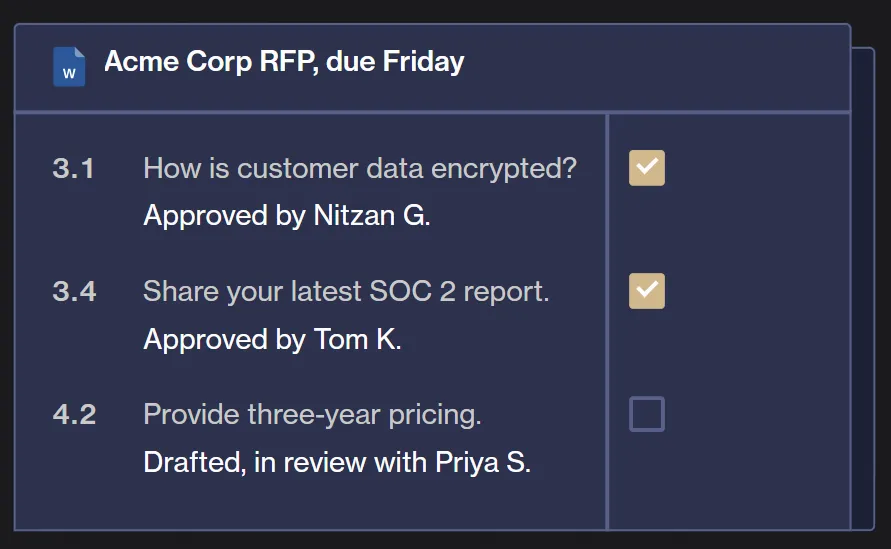
Individual questions or sections can be assigned to SMEs across product, security, legal, finance, technical, and compliance teams.
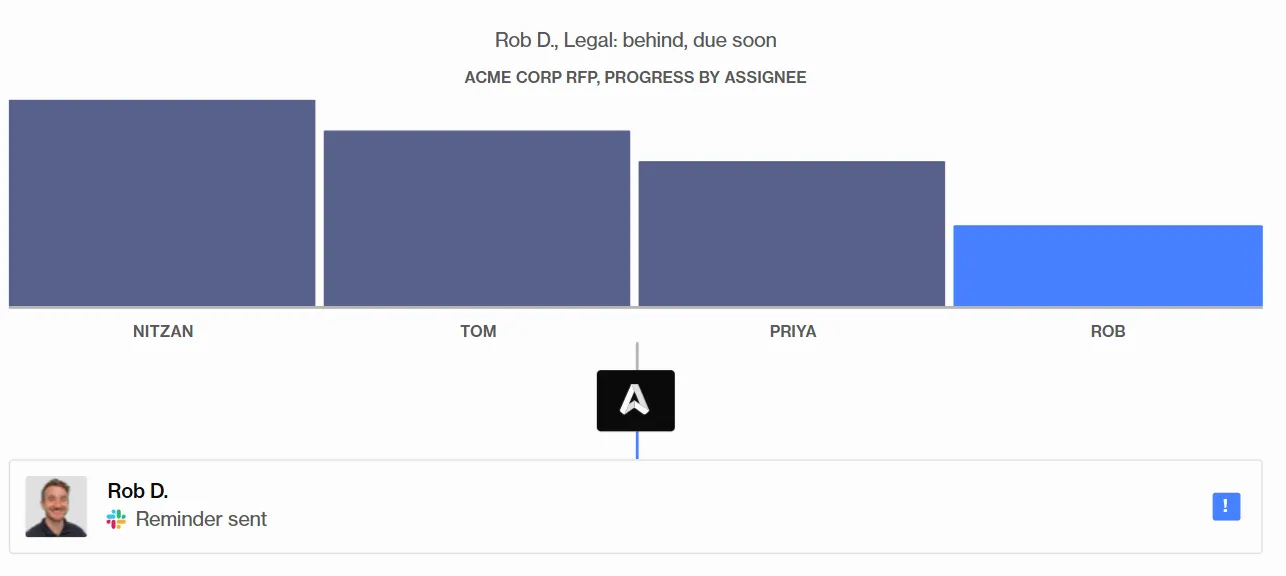
Bid managers can see where work is blocked, send reminders, monitor progress, and maintain a full record of who contributed, edited, reviewed, and approved each response.
Collaboration extends into Slack, Microsoft Teams, and email, so assignments and review requests can reach SMEs where they already work.
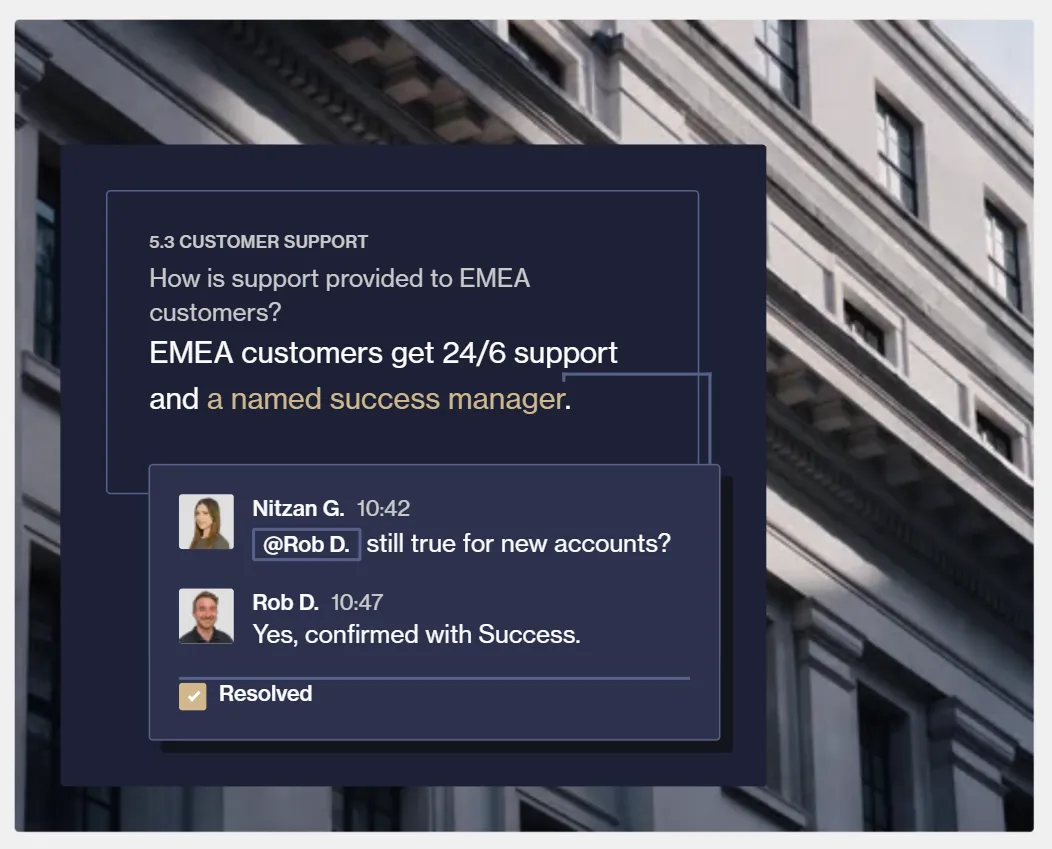
AutoRFP.ai also includes unlimited users, making it easier to involve occasional subject matter experts without restricting participation to a fixed group of licensed contributors.
Sequential approvals, version history, permissions, and audit trails keep the final submission controlled even when a large number of people contribute.
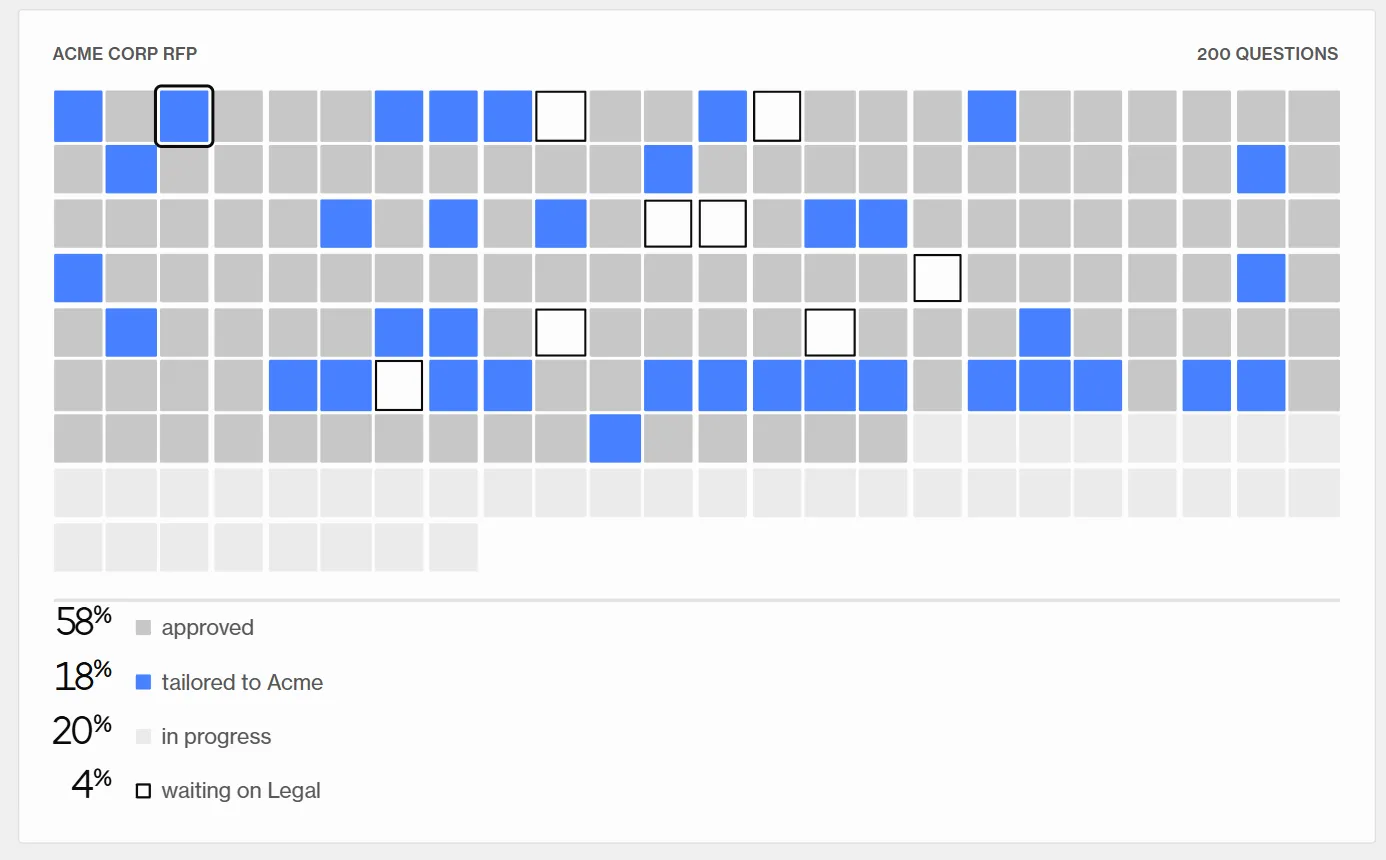
3. Build on a Library That Maintains and Improves Itself
AutoRFP.ai treats the response library as an asset to build on rather than something AI replaces.
Its content library searches approved answers, previous projects, and connected sources such as SharePoint, Google Drive, Confluence, OneDrive, Box, Notion, and other company systems by meaning rather than relying only on exact keywords.
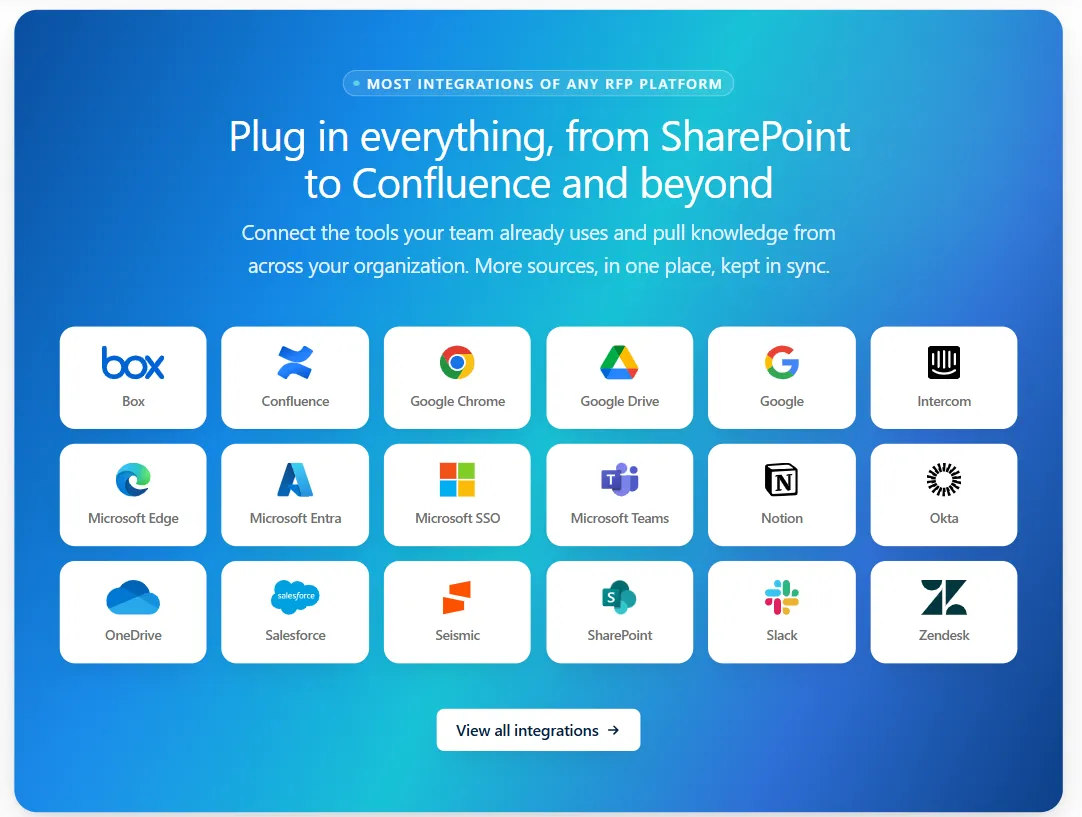
As the team approves responses, that expertise can be captured for future bids. Connected-source syncing can also bring changes from the systems the business already maintains into the knowledge available for future response generation.
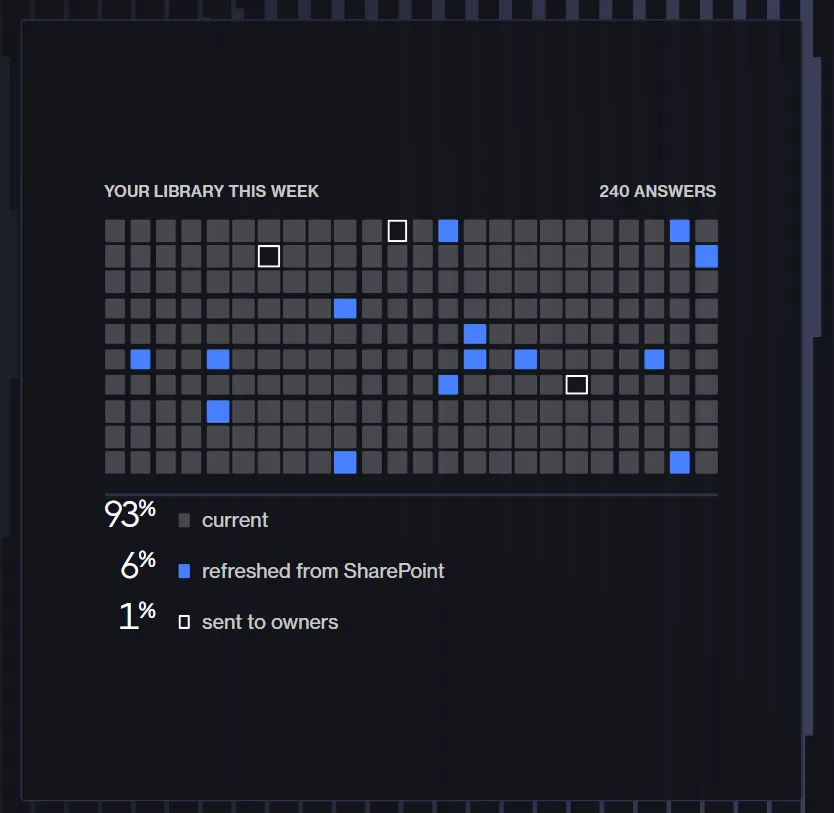
Content owners remain in control of organization, tagging, review, and approval. The result is a library that grows through everyday bid work and becomes more useful as the team completes new projects, without discarding the knowledge and governance processes the organization has already invested in.
Webinar replay
How Winning Teams setup their Content Libraries

4. Move Complex Bid Files From Intake to Submission Without Rebuilding Them
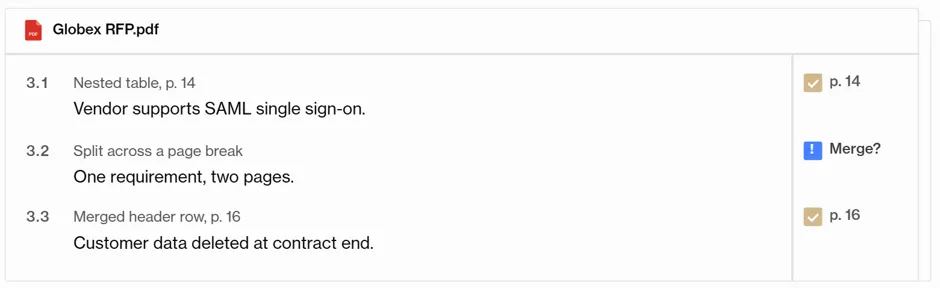
AutoRFP.ai’s AI Document Importer can process Word documents, PDFs, ZIP files, and complex Excel workbooks, including nested tables, hidden tabs, macros, dropdowns, and multi-sheet structures.
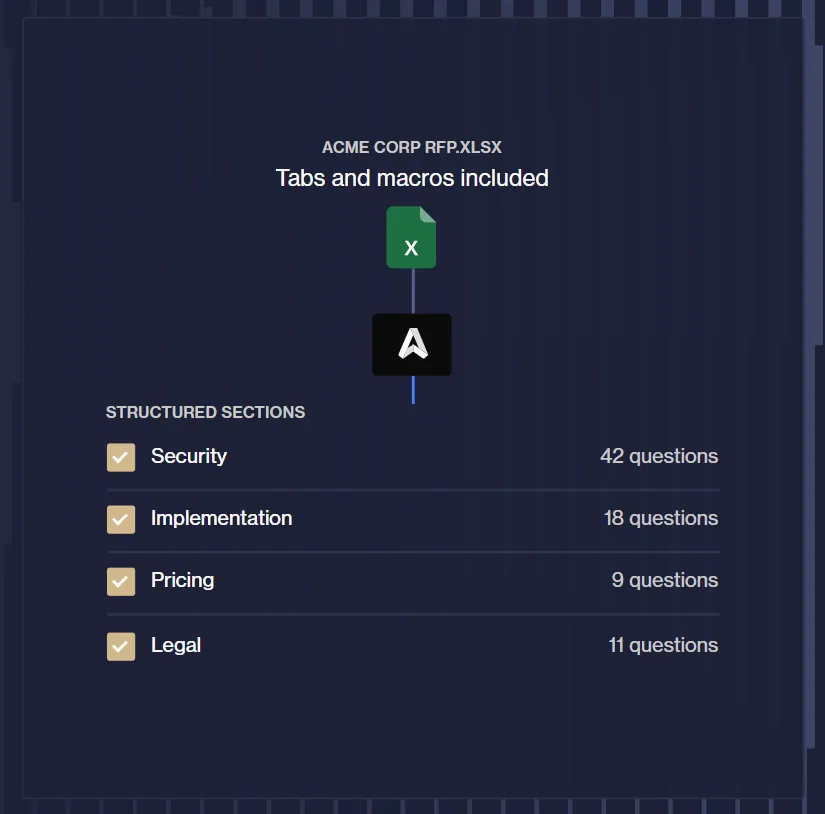
The AI extracts requirements and supporting context into a structured project, while the bid team can review and adjust that structure before response work begins.
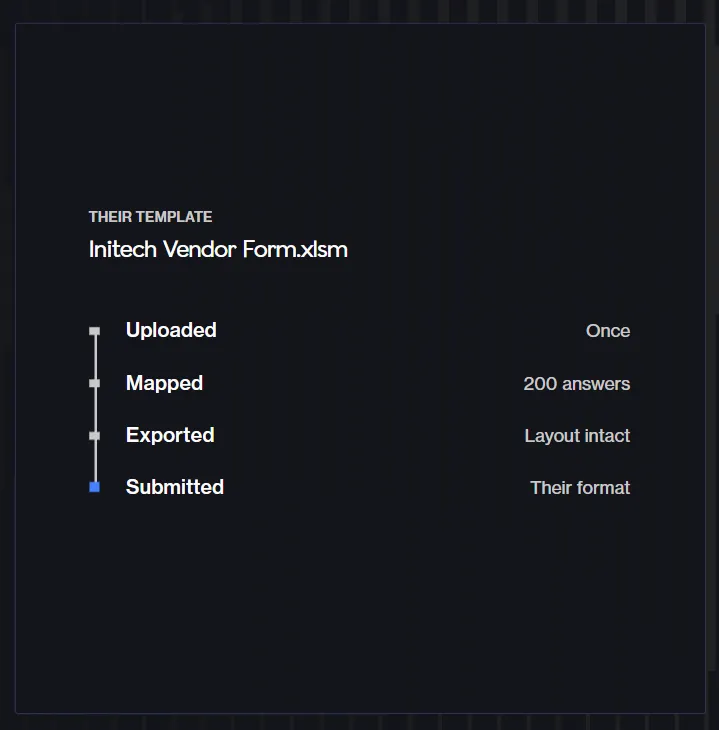
After review, completed Excel and Word bids can be returned in the customer’s original file, preserving the structure required for submission. PDFs are handled within the response workspace and can be exported as Word documents.
When requirements sit inside procurement or security portals rather than downloadable files, the Portal Agent can bring those questions into the same response process.

The important benefit for the bid manager is continuity: the team’s internal workflow does not have to change every time a buyer sends a different file type or submission method.
5. Use the Project Agent to Improve the Entire Bid at Once
The Project Agent works across the project rather than limiting AI assistance to one response at a time.
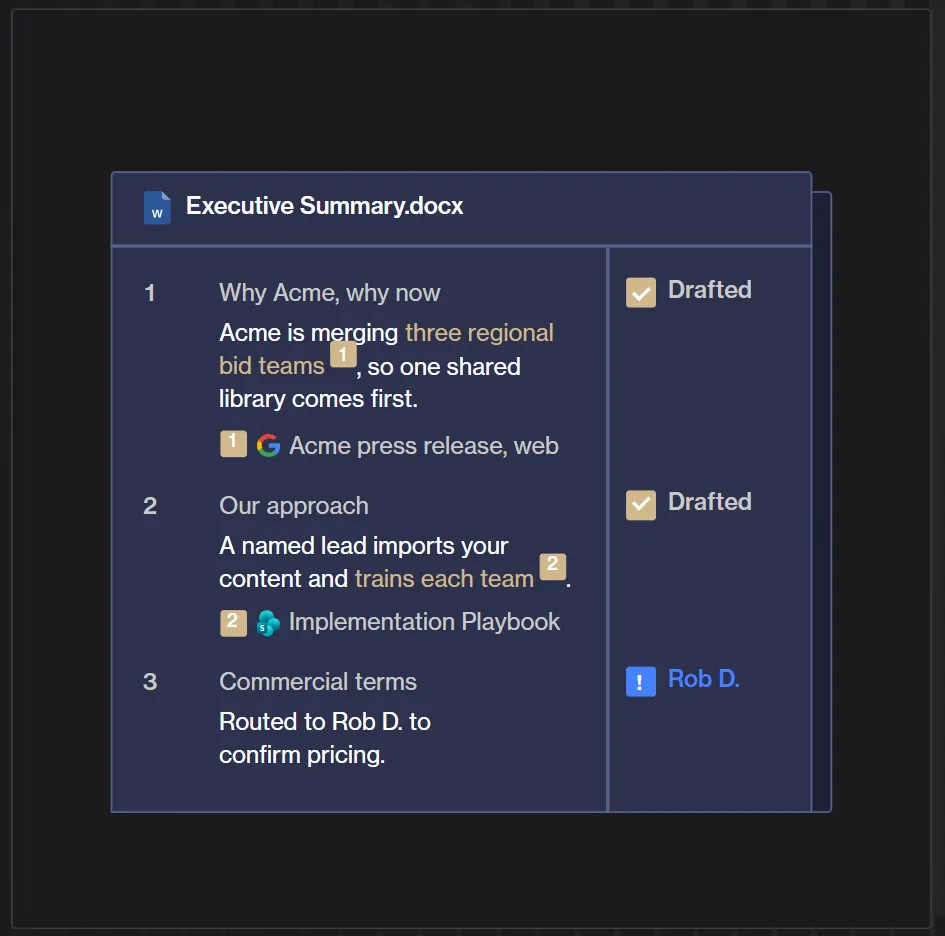
A bid manager can give it a project-wide instruction, such as aligning tone, applying a win theme, checking compliance language, or correcting an inconsistency across a large set of responses. Proposed changes are shown for review before they are accepted.
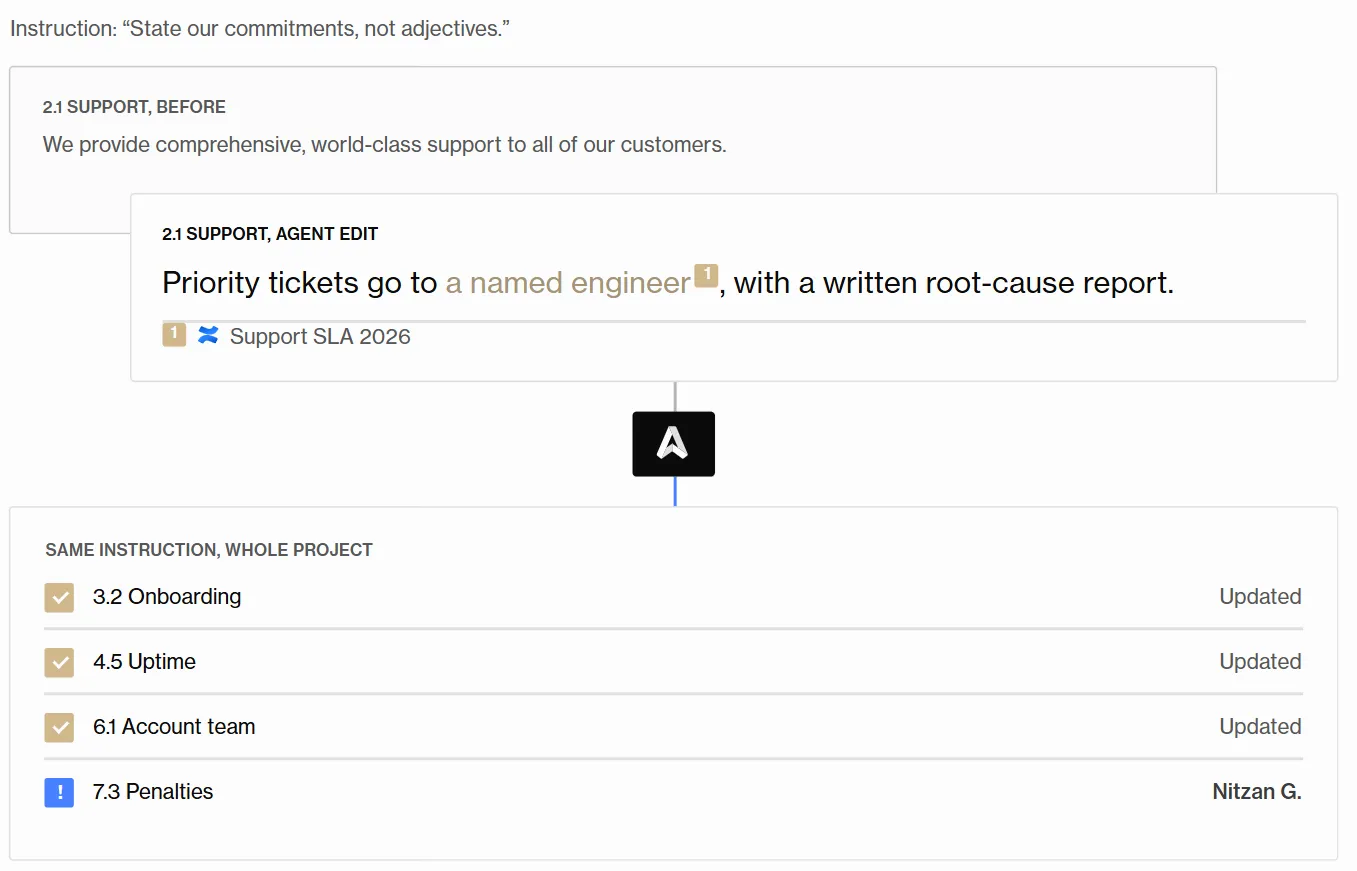
That becomes especially valuable late in a bid. If positioning changes, a product claim needs updating, or the team wants a more consistent executive voice, it does not have to manually open and edit hundreds of individual answers.
The Project Agent can also create supporting bid documents from project context, including executive summaries, cover letters, implementation plans, compliance matrices, and other documents using uploaded company templates.

6. Make Better Bid, Capacity, and Product Decisions With Portfolio Data
AutoRFP.ai extends beyond managing the active response.
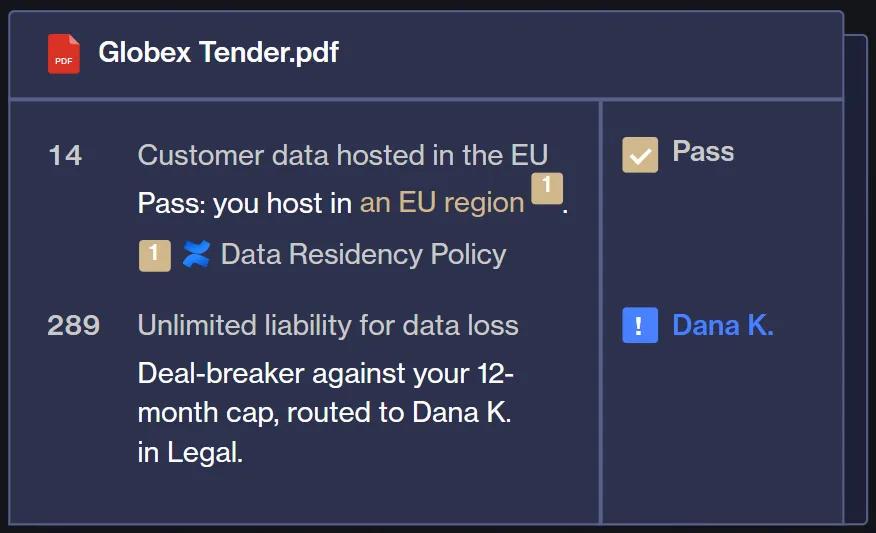
Its Go/No-Go analysis can compare an incoming RFP against configured criteria before substantial work begins, helping teams surface deal-breakers before SMEs spend hours responding.
RFP reporting then gives bid leaders visibility into workload, capacity, project volume, completion times, outcomes, and performance by segment.
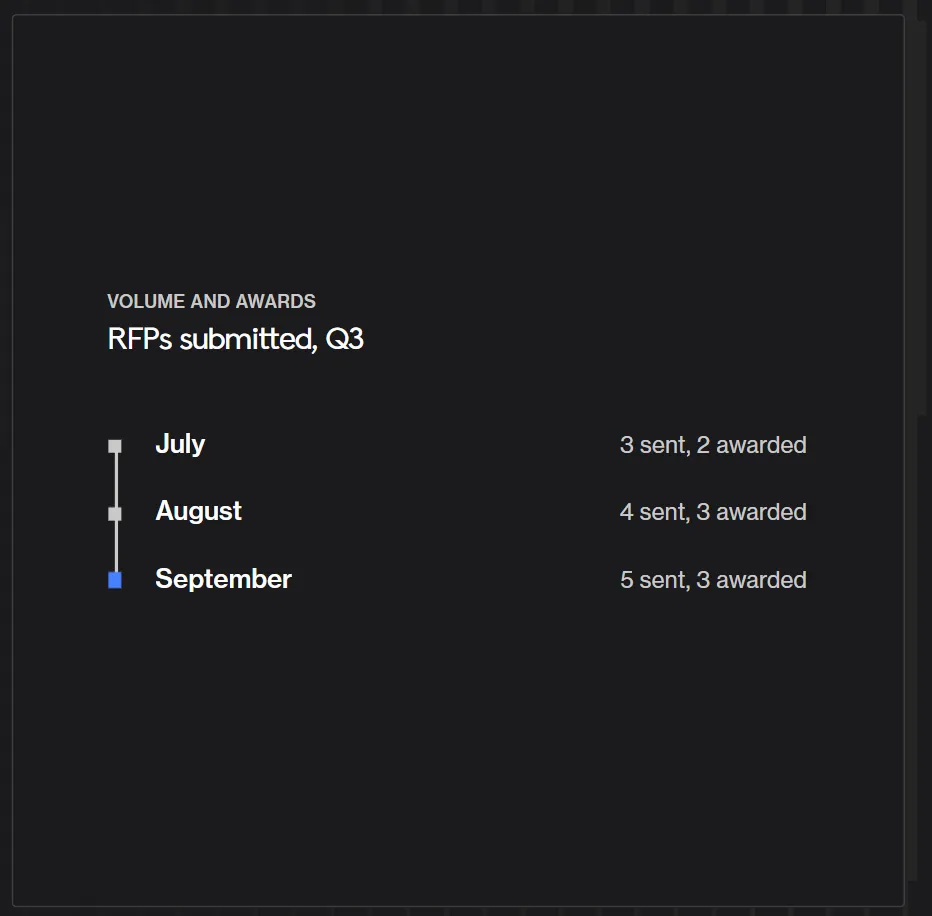
That helps answer operational questions such as whether the team can accept another large RFP or where response work is becoming a bottleneck.

Its Gap Analysis goes a level further by aggregating recurring non-compliant requirements across completed bids.
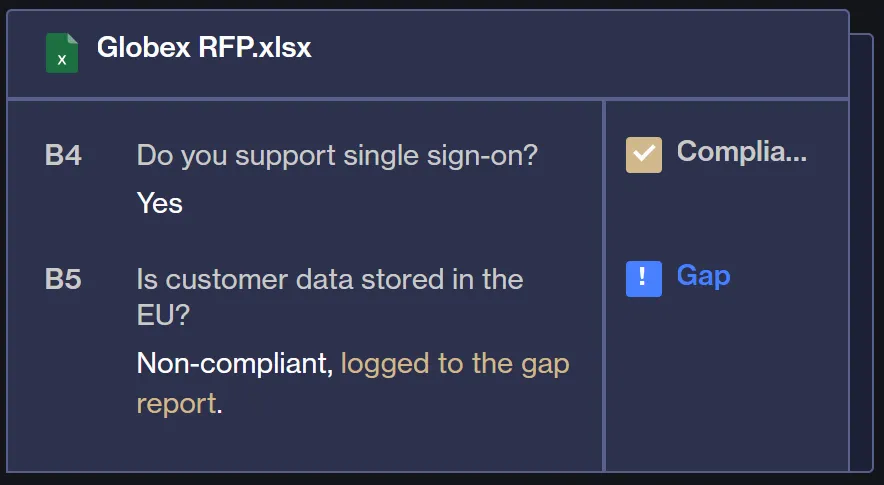
Instead of repeatedly discovering the same missing certification, integration, hosting option, or product capability one RFP at a time, teams can identify patterns and use them as evidence for qualification decisions and product priorities.
Pricing
| Plan | Monthly Cost | Key Inclusions |
|---|---|---|
| Scale | $899/month, paid yearly | 24 projects per year, online training |
| Accelerate | $1,299/month, paid yearly | 50 projects per year, online training |
| Enterprise | Custom | Scalable projects per year, bespoke implementation, and bespoke terms |
Every plan includes unlimited AI, unlimited content, unlimited users, all features, SSO with Google and Microsoft, 18+ integrations, ISO 27001:2022 and SOC 2 compliance credentials, unlimited support, and implementation support.
All features, including SSO, integrations, AI, translation, and more, are included rather than sold as paid add-ons.
AutoRFP.ai also offers a 30-day money-back guarantee, allowing customers to try the platform and request a refund if it is not the right fit.
Where AutoRFP.ai Shines
- Bid management that connects strategy and execution: Qualification, response work, SME coordination, review, submission, and performance analysis feed into the same operating process instead of leaving the bid manager to stitch separate workflows together.
- Review by exception: AutoRFP.ai helps teams distinguish routine responses from the answers that genuinely require expert judgment, allowing senior contributors to spend more of their review time on risk, differentiation, and complex requirements.
- Project-wide consistency: Changes to positioning, tone, win themes, or response strategy can be applied across a project and reviewed systematically, which is much easier to control than correcting the same issue answer by answer late in the bid.
- A feedback loop between individual bids and the wider business: What the team learns during one submission can strengthen future response knowledge, while aggregated bid data can expose recurring compliance gaps, capacity constraints, and qualification patterns that would otherwise stay buried inside individual projects.
- Automation with visible human control: AI can take on repetitive response and coordination work while ownership, approvals, source verification, permissions, and audit history remain part of the process. The system is designed to reduce human effort rather than remove human accountability.
- Cross-functional participation without seat friction: Unlimited users make it practical to involve the right specialist when a requirement needs them rather than limiting bid participation according to software-license availability.
Where AutoRFP.ai Falls Short
- Buyer-side procurement and RFQs: AutoRFP.ai is designed for organizations responding to RFPs, RFIs, security questionnaires, DDQs, and tenders. Teams primarily issuing bids, evaluating vendors, managing suppliers, or running quote-driven RFQs need procurement-side software.
- Narrative-first proposal writing: AutoRFP.ai is strongest when bids contain structured requirements that need accurate, governed responses. Teams whose work is dominated by highly bespoke, long-form persuasive proposals may prefer specialist proposal-writing software for that part of the process.
Customer Reviews
Chris D., CTO, said:_ “AutoRFP solves the ‘blank page’ problem. It’s much easier to edit an existing answer than write it from scratch, especially when I SWEAR I answered the same question two weeks ago in the last RFP but can’t quite remember what I said or where to find it. The auto-generated answers are as good as I could expect from AI trained on our previous RFPs.”_
David F., Head of Sales, said, “I love how it takes a dirty Excel file and magically converts it into highly accurate answers. Before AutoRFP, the RFP process was so, so, so painful. I’m not going to lie, RFPs are still challenging, but AutoRFP has removed a lot of the laborious administrative and formatting work.”
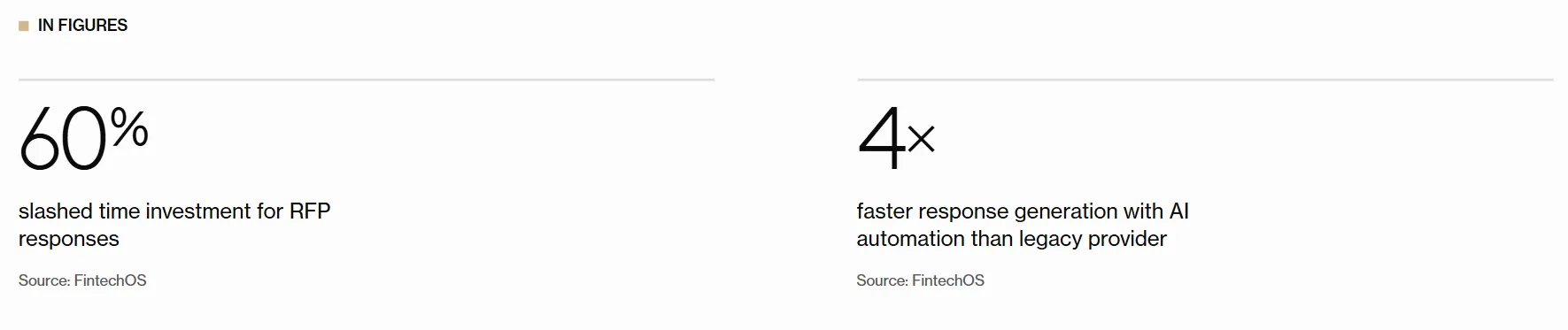
Mihai Popa, Bid Manager at FintechOS, said, “AutoRFP.ai is saving more than 60% of the time allocated before using the tool. The stakeholders involved can allocate this time to more strategic tasks.”
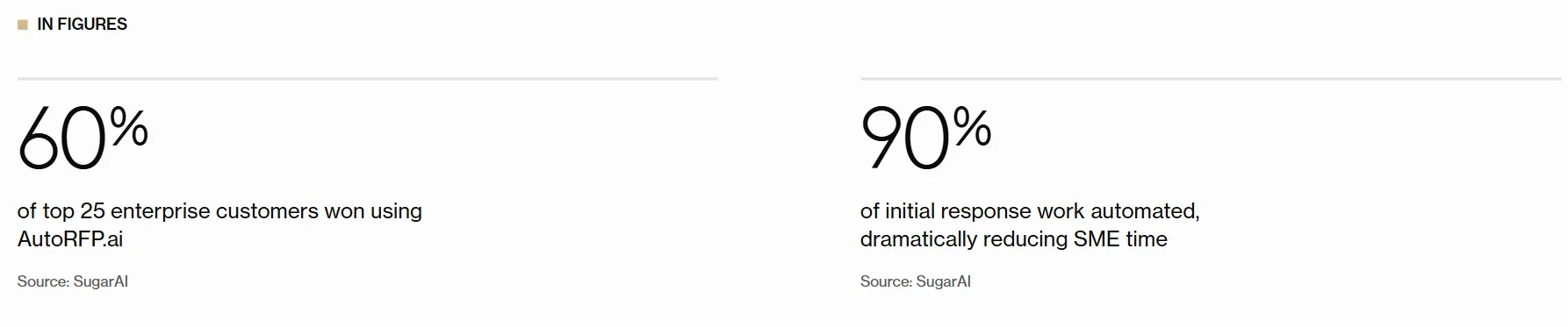
Shana Sweeney, Executive Leader at SugarCRM, said: “We won the deal because they had faith in our security posture, and that trust came from our ability to answer all the questions. We were the only company that took the time to fully respond to every security question.”
Who AutoRFP.ai Is Best For
- Bid and proposal teams managing recurring complex submissions: Teams handling detailed RFPs, RFIs, tenders, DDQs, and security questionnaires with large numbers of requirements and contributors.
- Enterprise sales and presales organizations: Companies where bids combine commercial, product, implementation, technical, security, and compliance requirements within the same deal.
- Cross-functional bid teams: Organizations that regularly need input and approval from sales, product, legal, security, finance, compliance, and other SMEs.
- Regulated and security-conscious organizations: Teams that need AI assistance without losing source traceability, permissions, approval history, auditability, or enterprise security controls.
- Bid functions trying to increase capacity without adding equivalent administrative overhead: Teams that want AI to absorb repetitive drafting, coordination, content reuse, and project work so bid managers and SMEs can spend more time on qualification, strategy, and differentiation.
- Organizations with valuable existing response knowledge: Teams that already have approved answers, previous bids, and internal documentation and want that knowledge to become easier to find, maintain, improve, and reuse.


Video transcript
Transcript is auto-generated and may contain minor errors.
Hey, I'm Rob from autoRFP.ai. What is autoRFP.ai? Well, autoRFP.ai is an AI software as a service or SaaS application that does AI for proposal or RFP responses. That includes RFIs, like request for informations, includes due diligence questionnaires or DDQs, and includes security questionnaires. So, you can find all about us at autoRFP.ai. So, we're a technology company. We have offices all across the globe including Brisbane, Australia, Vancouver as well. And effectively, our tool allows, whether it be bid managers, sales people, proposal writers, RevOps team members, sales leadership, answer complicated request for proposals. So, what is a request for proposal? You can see one of our other videos below in the description. But effectively, our system
looks something like this. And it lets team members, and you can have unlimited number of people log in to autoRFP.ai, good product, allows people to go in, create projects, which would be for instance an RFP. I can go in here, create my information from my zip file, and that includes, you know, like an Excel spreadsheet, PDF, Word doc. We can run an AI go no go project analysis on the RFP. And then effectively from that, we can bring in all the information in terms of what are the questions, where our AI automatically scans the documents and figures out what is being asked of the RFP, whether it's multiple tabs in an Excel spreadsheet and everything else, whether it's drop-downs. And that all happens automatically through the power of AI. Then, we generate our response, and we can do it in in 40 plus different languages and adding languages all the time. Once you've imported your RFP into order rfp.ai,
you can collaborate with your team members assigning different people to answer the questions, review the questions, looking at an overview of the entire project and project managing due dates. Now AI effectively starts automatically answering those different questions based on your knowledge documentation. So that might be your website, your help docs, your technical documentation, your past RFP answers or security questionnaires, your security policies. But effectively all that different company information you import into order RFP and then our AI leverages that to create an AI first draft of an RFP response. Once we're happy with all those requests, we can approve it. That goes into the model to learn from and add to. So your current responses are automatically used for new responses and then you can export that as well. And then the final cool thing about order RFP is you have a lot of different
integrations that you can pull in, whether it's knowledge documentation from places like Notion, Google Drive and so on. So that's order RFP. We're an AI SaaS app. Uh you can host globally. We do not use customer data for training purposes or to send it back to LLMs. So we're secure and private. We have our ISO 2701 certificate and our SOC 2 certificate and then you can find up-to-date pricing and information on our website. Or if you came to learn more, you can book a demo and schedule time with our team. Thanks.
2. Responsive: Best for Enterprise Bid Management and Collaboration
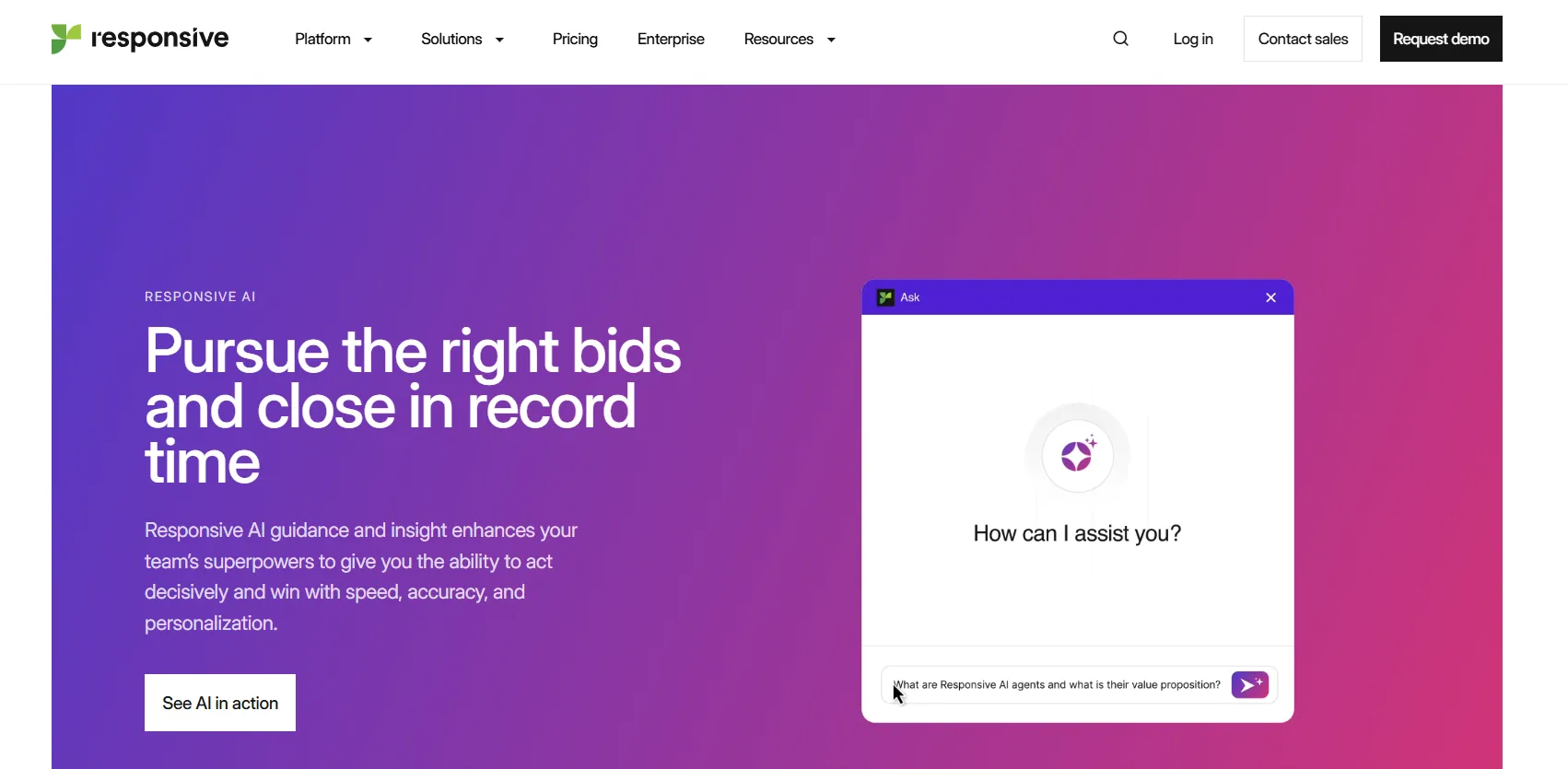
Responsive, formerly RFPIO, is an enterprise response management platform that helps proposal teams manage complex bids, RFPs, and procurement questionnaires. It combines AI-powered drafting, centralized content management, and established project workflows for organizations coordinating multiple bids across departments.
Key Features
- AI-powered bid responses: Responsive uses AI agents to analyze requirements, generate responses from approved company knowledge, and assist with proposal reviews.
- Bid project management: Teams can assign sections, monitor deadlines, manage approval stages, and track progress across multiple submissions.
- Content library and reporting: A centralized knowledge library supports reusable answers, while reporting dashboards provide visibility into response activity, team performance, and project status.
Pricing
| Plan Name | Plan Cost |
|---|---|
| Emerging Edition | Starting from $10,000 |
| Growth Edition | Contact sales |
| Enterprise Edition | Contact sales |
Responsive uses annual platform subscriptions, user licenses, and optional add-ons or services. Its published $10,000 starting figure does not specify a billing period, so buyers should confirm the complete annual cost with sales.
Where Responsive Shines
- Mature bid workflows: Responsive offers extensive task management, deadline tracking, review controls, and reporting for enterprise proposal operations.
- Strong collaboration: Its structured approvals and integrations help organizations coordinate sales, legal, technical, and security contributors.
- Broad AI capabilities: AI agents support bid qualification, requirement extraction, response generation, and content management throughout the response process.
Where Responsive Falls Short
- Implementation complexity: Its extensive configuration options and enterprise workflows may require more onboarding and administration than smaller teams need.
- Content maintenance: Teams must continue reviewing approved information and managing their response libraries to maintain accurate outputs.
Customer Reviews
Nick G., Director of Proposals, says, “I love Responsive. It’s a great tool and the best on the market.” He particularly values project progress tracking, accountability, and management dashboards.
Hannah W., Underwriting Analyst, shares, “It automates responses, and aids in seeing past responses.” She appreciates bid progress tracking and deadline reminders but reports occasional difficulties with answer accuracy and navigation.
Who Responsive Is Best For
Responsive is best for organizations that:
- Manage complex enterprise bids: Large proposal teams coordinating multiple stakeholders, reviews, and deadlines.
- Need detailed reporting: Organizations prioritizing bid progress, content governance, and performance visibility.
- Have established response operations: Teams prepared to invest in configuration, content administration, and standardized bid workflows.
3. Bidhive: Best for Bid Pipeline Management and Win-Loss Analytics
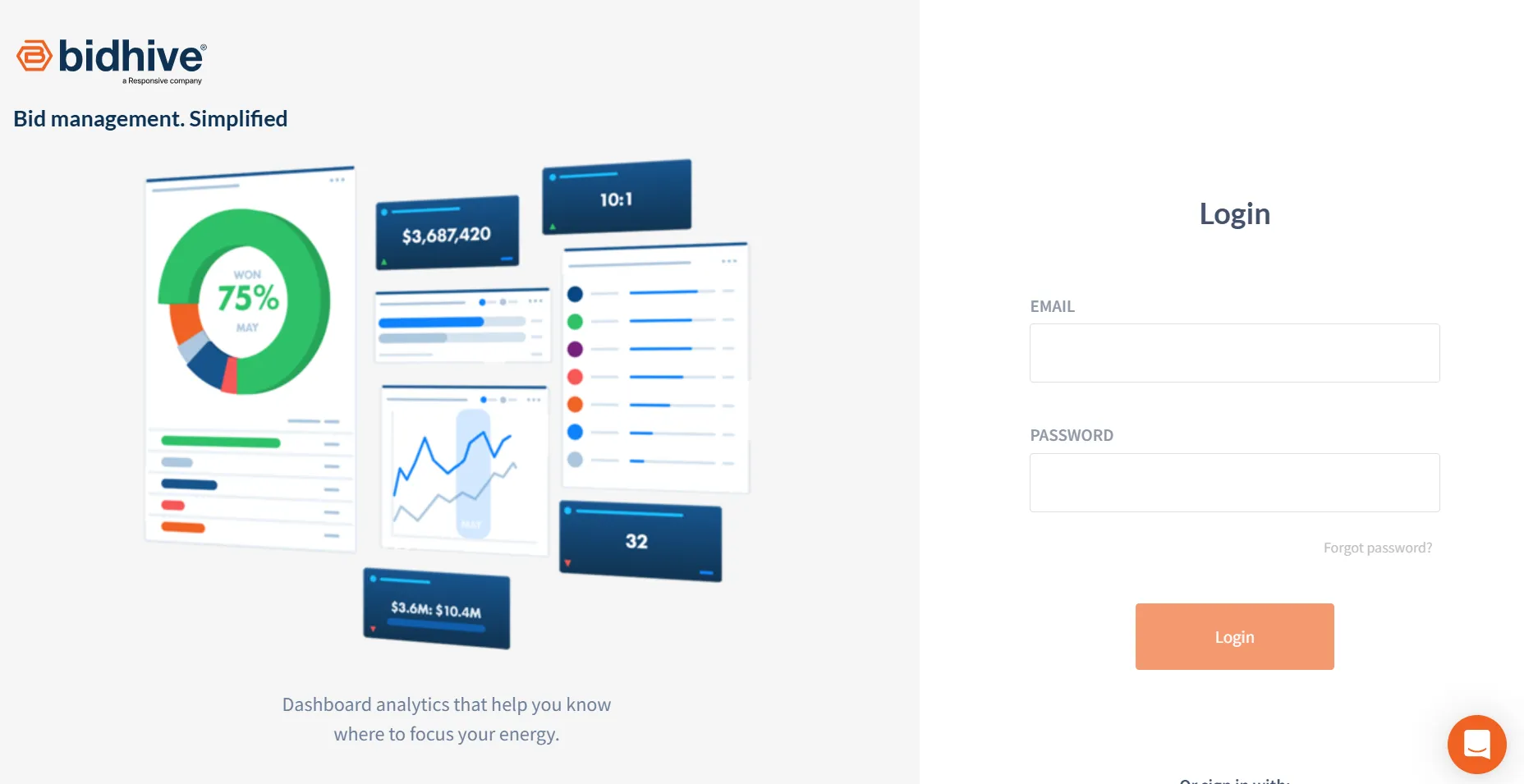
Bidhive is a bid management platform designed to help organizations plan, manage, and analyze competitive bids throughout the submission lifecycle. It brings opportunity tracking, bid coordination, reusable content, and performance reporting together for established bid teams.
Key Features
- Bid pipeline management: Bidhive provides a centralized bid register for tracking opportunities, deadlines, submission status, and bid/no-bid decisions.
- Bid collaboration: Teams can organize bid documents, assign responsibilities, coordinate contributors, and monitor milestones throughout the proposal process.
- Win-loss analytics: Reporting dashboards help organizations examine bid outcomes, contract values, and performance trends to inform future bidding decisions.
Pricing
| Plan Name | Plan Cost |
|---|---|
| Bid Team | Contact sales |
| Enterprise Teams | Contact sales |
Bidhive’s publicly available product listings identify Bid Team and Enterprise Teams offerings, but current subscription prices are not confirmed. An older published pricing schedule lists Free, Lite, Pro, and Enterprise subscriptions; those historical prices should not be treated as current without vendor confirmation.
Where Bidhive Shines
- Bid pipeline visibility: Bidhive helps managers understand which opportunities are active, who owns each submission, and where resources are allocated.
- Performance analytics: Its win-loss reporting gives teams useful information for improving qualification decisions and future bid strategies.
- Structured bid processes: Templates, milestones, and project coordination tools help organizations establish repeatable bidding workflows.
Where Bidhive Falls Short
- Limited independent reviews: Bidhive has little publicly available verified customer feedback, making it difficult to assess satisfaction through major review platforms.
- Pricing transparency: Buyers must contact the vendor to confirm subscription costs, user allowances, and available features.
- Specialized bid management focus: Organizations requiring broader CRM capabilities or extensive US government opportunity discovery should verify whether additional platforms are necessary.
Customer Reviews
Bidhive has limited independent customer feedback available across major third-party review platforms. Its bid management capabilities offer potential benefits such as simplifying opportunity tracking, streamlining bid coordination, improving team collaboration, and providing win-loss analytics to support better bidding decisions.
Who Bidhive Is Best For
Bidhive is best for organizations that:
- Manage multiple active bids: Established proposal teams that need visibility into simultaneous opportunities and deadlines.
- Prioritize pipeline analytics: Bid managers looking to measure submission performance, bid outcomes, and win-loss trends.
- Want standardized processes: Businesses seeking repeatable bid qualification, planning, collaboration, and review workflows.
4. Loopio: Best for Established Bid Teams With Reusable Content Libraries
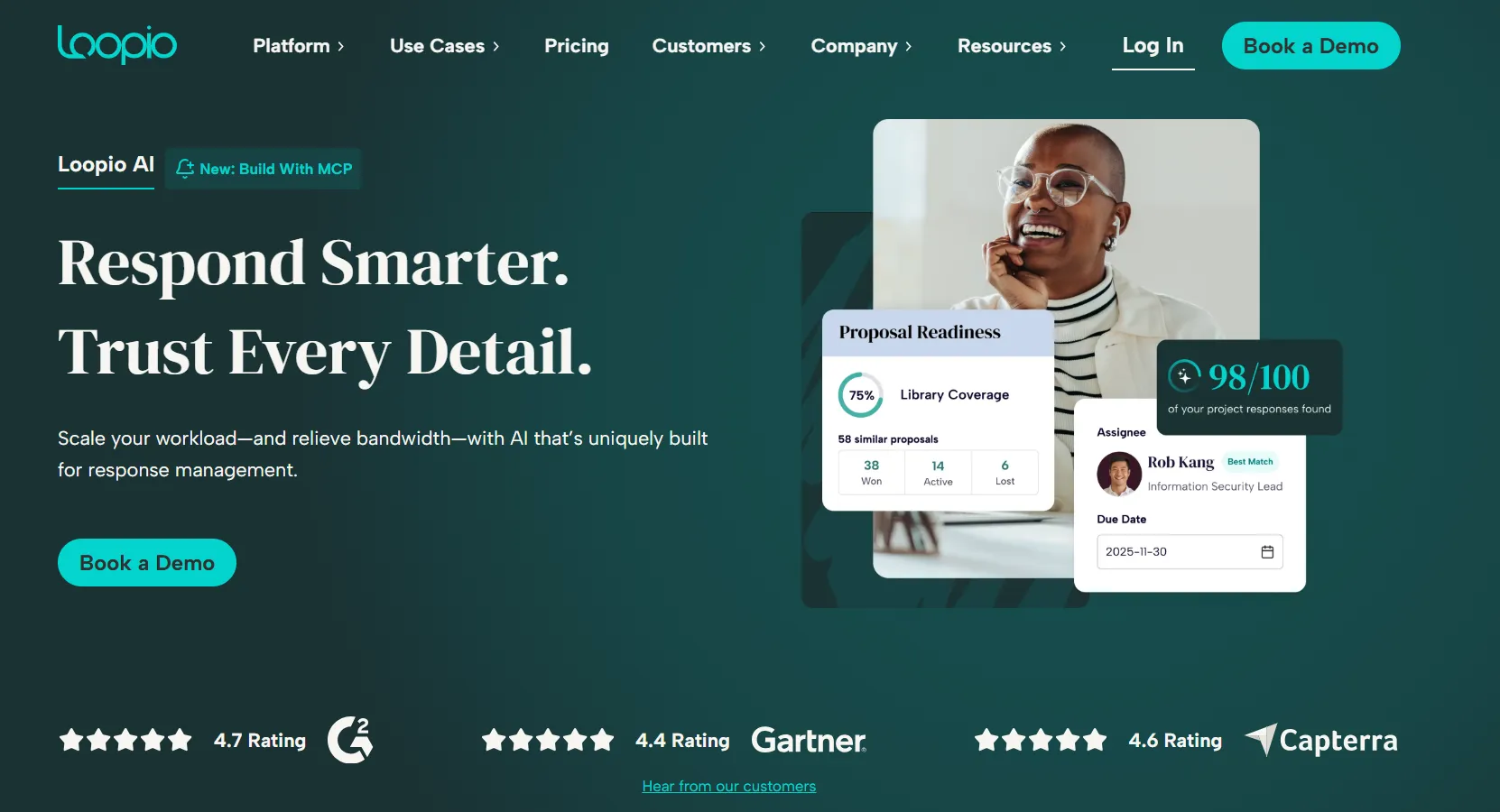
Loopio is an established RFP and bid response management platform known for its centralized content library, user-friendly interface, and mature collaboration features. It helps organizations coordinate bid submissions and reuse approved company knowledge across proposals, RFIs, and security questionnaires.
Key Features
- Centralized content library: Loopio organizes approved answers, previous responses, and supporting documents in a searchable library with ownership and review controls.
- AI-assisted drafting: Magic recommendations and generative AI help teams identify relevant information and generate responses using existing company knowledge.
- Project management: Proposal managers can assign questions, monitor deadlines, track response progress, and coordinate reviews across departments.
Pricing
| Plan Name | Plan Cost |
|---|---|
| Foundations | Contact sales |
| Enhanced | Contact sales |
| Enterprise | Contact sales |
Loopio does not disclose its current subscription prices publicly. Foundations includes 10 seats, while Enhanced adds collaboration and content-management capabilities. Enterprise supports larger organizations with multiple teams and customized requirements.
Where Loopio Shines
- Mature content management: Loopio’s organized library, content ownership, and review cycles help established teams maintain consistent proposal responses.
- Polished user experience: Its intuitive interface makes it easier for contributors to locate approved information and participate in bid projects.
- Established collaboration tools: Project tracking, deadlines, and multi-stage reviews support organizations managing complex submissions.
Where Loopio Falls Short
- Ongoing library administration: Despite its automation features, maintaining accurate content still requires regular reviews and oversight from content owners.
- Document formatting: Some customers report formatting adjustments when importing documents or exporting completed responses.
- Seat-based subscriptions: Organizations involving many occasional contributors should confirm licensing requirements and the cost of expanding access.
Customer Reviews
Ankit J., Senior Proposal Specialist, says, “User Interface and Project handling in Loopio is really good.” His review also identifies export formatting and template handling as areas needing improvement.
Lisa S., Business Development professional, shares, “The import function can be clunky at times.” She reports occasional formatting issues when working with PDF documents.
Who Loopio Is Best For
Loopio is best for organizations that:
- Maintain established bid libraries: Teams with reusable content and dedicated managers responsible for accuracy and approvals.
- Handle recurring response projects: Businesses regularly preparing RFPs, RFIs, and procurement questionnaires.
- Need structured collaboration: Organizations coordinating multiple contributors through assignments, deadlines, and review workflows.
5. GovDash: Best for US Federal Government Contract Bidding
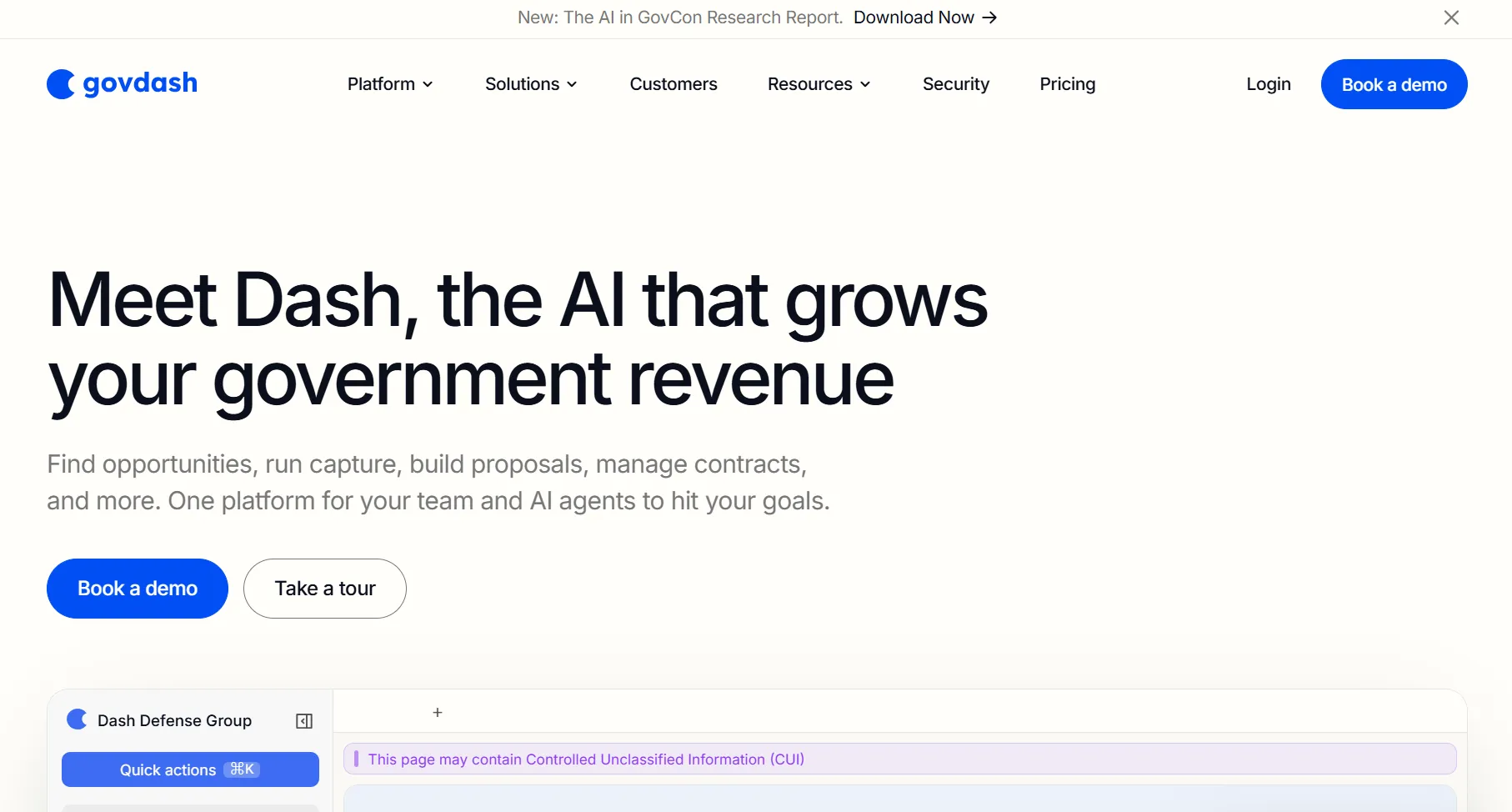
GovDash is an AI-powered government contracting platform designed specifically for organizations pursuing US federal contracts. It brings opportunity discovery, capture management, proposal development, pricing, and contract management into a connected platform.
Key Features
- Government opportunity discovery: GovDash helps contractors identify relevant opportunities from SAM.gov, GSA eBuy, and other government procurement sources.
- Capture and bid management: Teams can qualify opportunities, manage pursuit pipelines, develop capture strategies, and coordinate bid decisions.
- AI proposal development: GovDash generates compliance matrices, proposal outlines, and draft content from company knowledge, past performance, and solicitation requirements.
Pricing
GovDash does not publish standard plan prices. Its current model combines module subscriptions with shared usage credits. Teams can subscribe to individual product modules based on the workflows they need, while Dash Agent activity and certain AI work consume credits. GovDash also offers a credit-only option for smaller teams or organizations that want to start without a module subscription. Buyers should contact sales to confirm seat, module, and credit requirements.
Where GovDash Shines
- US government contracting specialization: GovDash supports federal opportunity discovery, capture planning, solicitation compliance, and proposal development within one environment.
- Connected bid lifecycle: Information from opportunity research, capture activities, and past contracts can support later proposal development.
- Government proposal compliance: Its compliance matrices, amendment tracking, and Microsoft Word workflows help teams manage detailed federal submission requirements.
Where GovDash Falls Short
- Government-specific focus: GovDash is designed primarily for government contractors, making it less relevant for commercial SaaS teams responding to routine customer RFPs.
- Pricing complexity: Buyers need to account for module subscriptions, Full and Flex user access, and usage credits when estimating total costs.
Customer Case Studies
Bob Bevelacqua, Chief Growth Officer at Endurion, describes GovDash as a strong integrated solution for CRM and proposal development. His vendor-published case study highlights the value of connecting government business development and proposal workflows.
Alyssa Feliho, Senior Proposal Manager at JANUS, describes GovDash as a digital teammate that helps keep the team accountable. Her customer story emphasizes process coordination and making sure important bid activities receive attention.
Who GovDash Is Best For
GovDash is best for organizations that:
- Pursue US federal contracts: Government contractors responding to solicitations requiring structured compliance and capture planning.
- Manage full government bid lifecycles: Teams connecting opportunity discovery, qualification, proposal development, and contract management.
- Need federal proposal support: Organizations handling solicitation requirements, compliance matrices, and past-performance narratives.
6. PlanHub: Best for Construction Bid Discovery and Subcontractor Management
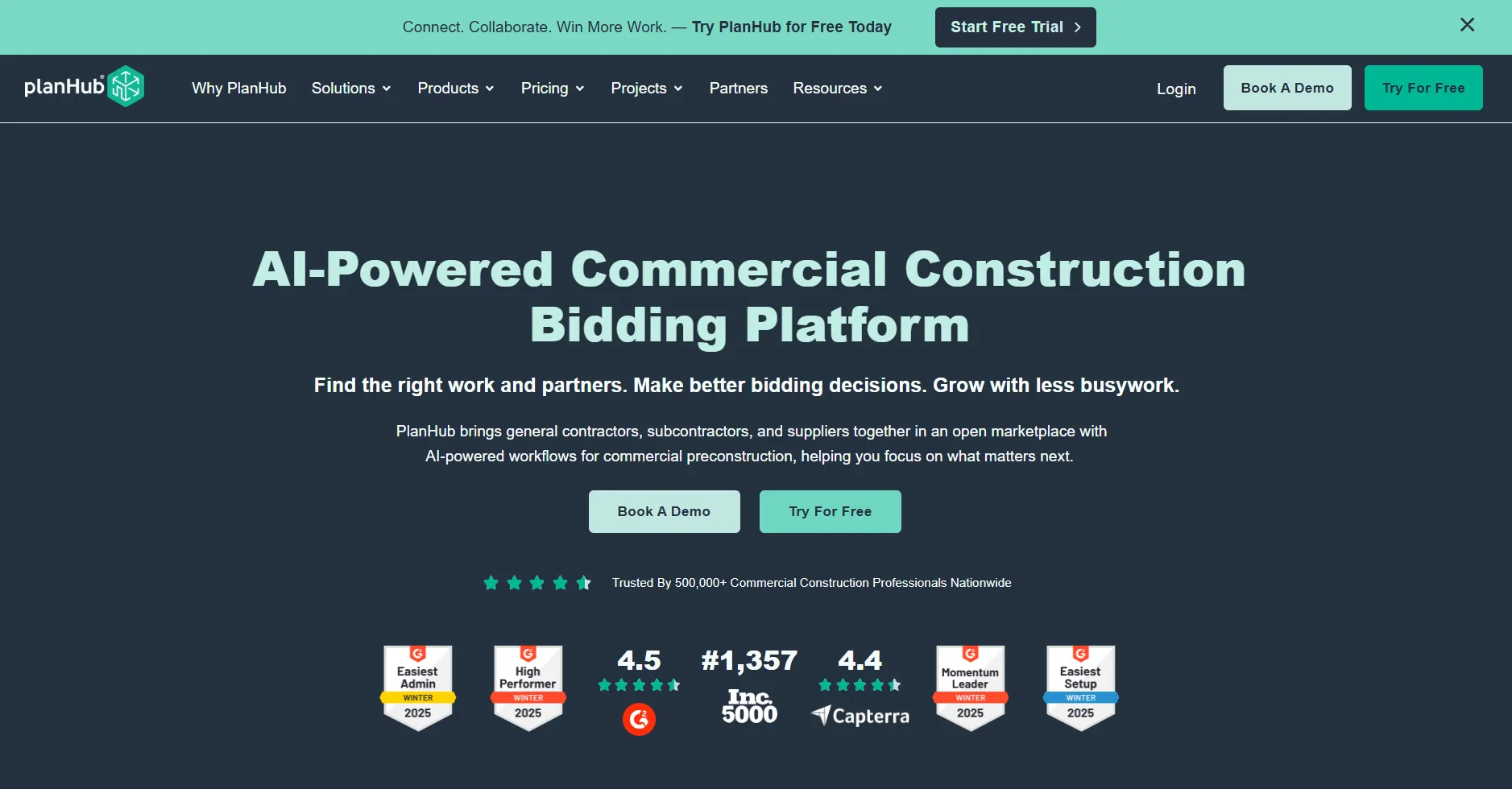
PlanHub is a construction bid management platform that connects general contractors, subcontractors, and suppliers through a shared preconstruction marketplace. It helps construction businesses discover projects, exchange bid invitations, review plans, and coordinate subcontractor quotations.
Key Features
- Construction project discovery: Subcontractors can search available projects, review bid opportunities, and connect with general contractors seeking qualified partners.
- Bid management: General contractors can post projects, distribute documents, invite subcontractors, and compare submitted bids.
- Takeoff and estimating tools: PlanHub provides construction-specific tools for reviewing drawings, measuring quantities, and supporting bid preparation.
Pricing
| Plan Name | Plan Cost |
|---|---|
| General Contractor Essentials | Free |
| General Contractor Pro | Contact sales |
| General Contractor Premier | Contact sales |
| General Contractor Enterprise | Contact sales |
| Subcontractor Premier | From $1,999/year |
| Subcontractor Enterprise | Contact sales |
PlanHub uses different pricing structures for general contractors and subcontractors. Subcontractor Premier starts at $1,999 annually for a 50-mile service radius, with higher prices for broader coverage. General Contractor Essentials provides free access to core bid management features.
Where PlanHub Shines
- Construction-specific workflows: PlanHub combines project opportunities, drawing access, subcontractor communication, and bid coordination in one platform.
- Large contractor network: Its extensive marketplace helps construction businesses identify bidding opportunities and potential partners.
- Free general contractor access: General contractors can begin posting projects and managing basic bid invitations without purchasing a subscription.
Where PlanHub Falls Short
- Industry-specific functionality: PlanHub focuses on construction bidding rather than AI-generated RFP responses, security questionnaires, or enterprise proposal content management.
- Subscription and coverage costs: Subcontractors may need higher-priced plans to access larger geographic territories and additional features.
- Document handling limitations: Some users report difficulties navigating large plan sets, managing documents, or finding specific project information.
Customer Reviews
Nikole C., Project Manager, describes PlanHub as useful for discovering construction opportunities and connecting with general contractors. She also notes that organization and subscription costs can be limited depending on usage.
Brian D., Estimator and Project Manager, praises PlanHub’s takeoff capabilities and the availability of bidding opportunities. However, he mentions difficulty locating certain projects and tracking bid outcomes.
Who PlanHub Is Best For
PlanHub is best for organizations that:
- Work in commercial construction: General contractors and subcontractors managing construction-specific bidding workflows.
- Need project discovery: Businesses looking for relevant projects and opportunities to connect with contractors.
- Coordinate subcontractor bids: General contractors handling invitations, drawing distribution, and quotation comparisons.
7. mytender.io: Best for UK and European Tender Writing
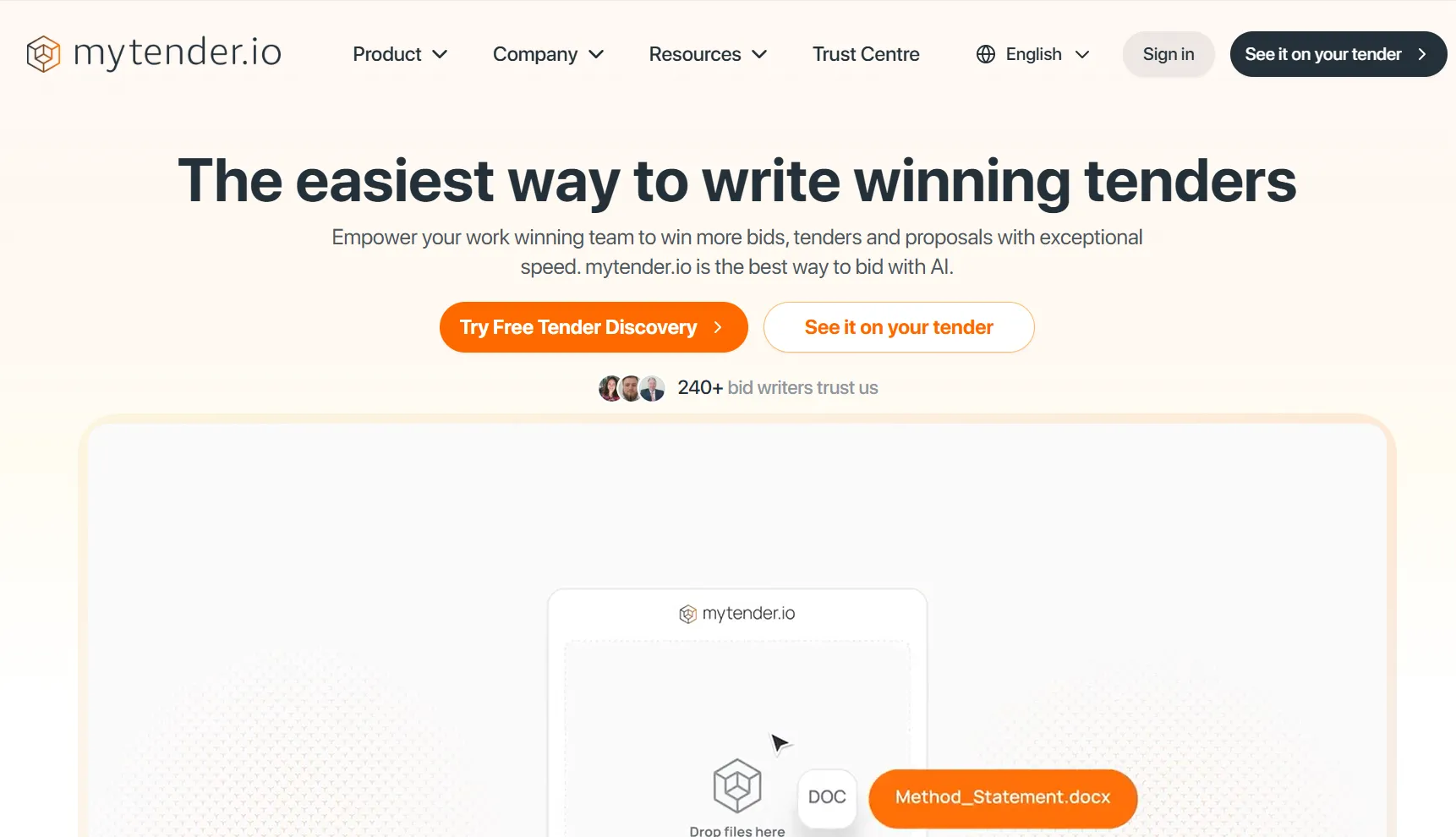
mytender.io is a UK-based AI bid writing platform that helps organizations analyze tender documents, prepare responses, and manage bid collaboration. It is particularly relevant to businesses bidding for UK and European contracts, including public-sector procurement opportunities.
Key Features
- AI tender drafting: mytender.io generates proposal content using company documentation, previous submissions, and approved bid information.
- Tender analysis and compliance: The platform extracts requirements, deadlines, evaluation criteria, and word limits, helping teams structure compliant submissions.
- Bid collaboration and review: Teams can assign sections, monitor progress, coordinate contributors, and evaluate draft quality using AI-powered feedback.
Pricing
| Plan Name | Plan Cost |
|---|---|
| Standard | Contact sales |
| Advanced | Contact sales |
| Enterprise | Contact sales |
mytender.io’s current public website does not confirm subscription prices. An older pricing page listed Standard, Advanced, and Enterprise plans at £699, £1,999, and £4,999 per month respectively, but these figures should not be presented as current without sales confirmation.
Where mytender.io Shines
- UK tender expertise: Its workflows are well suited to UK public-sector procurement requirements, evaluation criteria, and compliance-focused bid writing.
- AI-assisted proposal development: Tender analysis, content retrieval, drafting, and quality reviews support teams managing detailed written submissions.
- Bid team collaboration: Section assignments, shared content, and progress tracking help organizations coordinate tender responses involving multiple contributors.
Where mytender.io Falls Short
- Regional specialization: Its strongest positioning is within the UK and European tendering environment, making it less directly relevant to US-focused commercial proposal teams.
- Undisclosed current pricing: Buyers must contact the company to confirm available packages, licensing requirements, and subscription costs.
- Content preparation: Organizations need suitable company information, past proposals, and supporting documents to get the most value from AI-generated drafts.
Customer Case Studies
Mark Piggot, Business Development Director at Paprec UK, reports that mytender.io reduced his team’s tender preparation time by 75%. In the vendor-published case study, he also describes improvements in response structure, completeness, and customization.
Catherine C. Medina, Bid Team member at Mount Charles, reports that the platform increasingly reflects her team’s writing style as they use it. Her customer story also highlights more consistent quality scores and support from the mytender.io team.
Who mytender.io Is Best For
mytender.io is best for organizations that:
- Bid for UK and European tenders: Businesses regularly responding to public-sector and commercial procurement opportunities in those markets.
- Produce detailed written submissions: Bid teams needing AI assistance with tender analysis, drafting, and compliance reviews.
- Manage collaborative tender responses: Organizations coordinating multiple contributors, deadlines, and quality assessments.
Pair It With Flowcase for Staff CVs and Project Experience
Some bids depend heavily on the qualifications of the people delivering the work. Consulting, engineering, architecture, and other professional services firms often need to submit tailored staff CVs, project experience, certifications, and team credentials alongside their proposals.
Flowcase helps manage this information in a centralized, searchable system. Bid teams can identify employees with relevant skills and experience, customize their profiles for individual opportunities, and export information into branded proposal templates.
Where Flowcase Adds Value
- Centralized staff profiles: Store employee CVs, qualifications, certifications, and skills in one searchable location.
- Project experience management: Maintain reusable project histories and credentials for future submissions.
- Proposal-ready formatting: Create tailored CVs and project experience documents using approved templates.
- Complementary integrations: Connect personnel and project information with other proposals, CRM, and business systems. Best pairing: Use Flowcase alongside a bid response platform when submissions require detailed staff qualifications and project credentials. Flowcase manages the people and experience information, while the response platform handles bid requirements, drafting, collaboration, and submission workflows.
Flowcase is a complementary solution rather than a direct replacement for bid management software.
How to Choose the Best Bid Management Software for Your Business
The best bid management software depends on the types of bids you handle, the people involved, and the bottlenecks slowing down submissions. Evaluate these seven factors before choosing a platform.
1. Know Which “Bid Management” You Are Buying
Not all bid management platforms solve the same problem. Construction tools such as PlanHub manage project opportunities and subcontractor bids, while advertising platforms such as Skai automate paid-media auctions.
Response-side platforms such as AutoRFP.ai, Responsive, and Loopio help vendors prepare RFPs, tenders, security questionnaires, and DDQs. Complementary tools like Flowcase manage staff CVs and project experience for proposals.
Start by identifying which workflow your team actually needs.
2. AI-Powered Automation
Look beyond how quickly a platform generates text. Can it produce accurate first drafts from approved company knowledge, show supporting sources, and flag answers that need human review?
AutoRFP.ai uses source-grounded drafting and Trust Scores to help teams identify responses requiring closer attention.
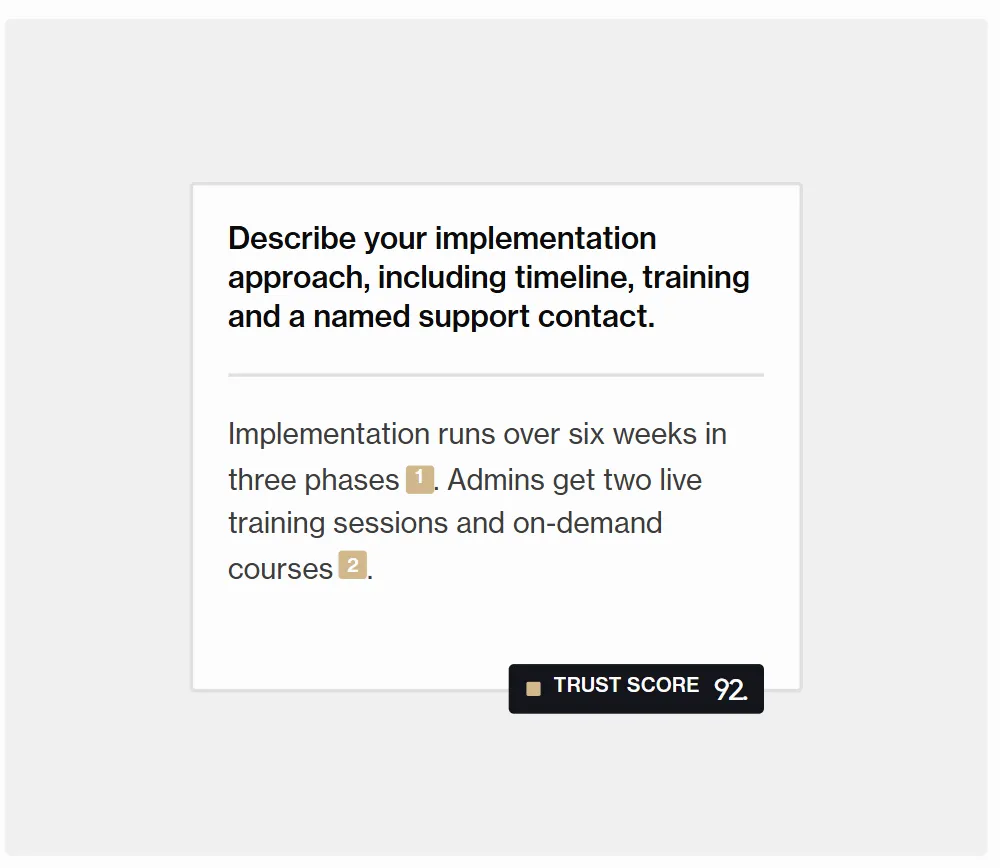
According to AutoRFP.ai’s Workforce.com customer story, 80% of Workforce.com’s customer questions were answered automatically in the first draft, helping the company double its RFP participation rate.
Spend less time answering repetitive RFP questions. Book a personalized demo to see how AutoRFP.ai generates accurate, source-grounded first drafts from your approved content.
3. Team Size and Bid Complexity
Consider how many people contribute to each bid and how complex your approval process is.
Large SaaS teams often handle RFPs, RFIs, security questionnaires, and DDQs involving sales, product, legal, and security specialists.
AutoRFP.ai supports this workload with unlimited users, source-backed responses, and structured approvals.
Teams prioritizing more mature deadline management and extensive enterprise reporting should also evaluate Responsive.
4. Real-Time Collaboration
Choose software that gives contributors clear responsibilities without creating more email threads.
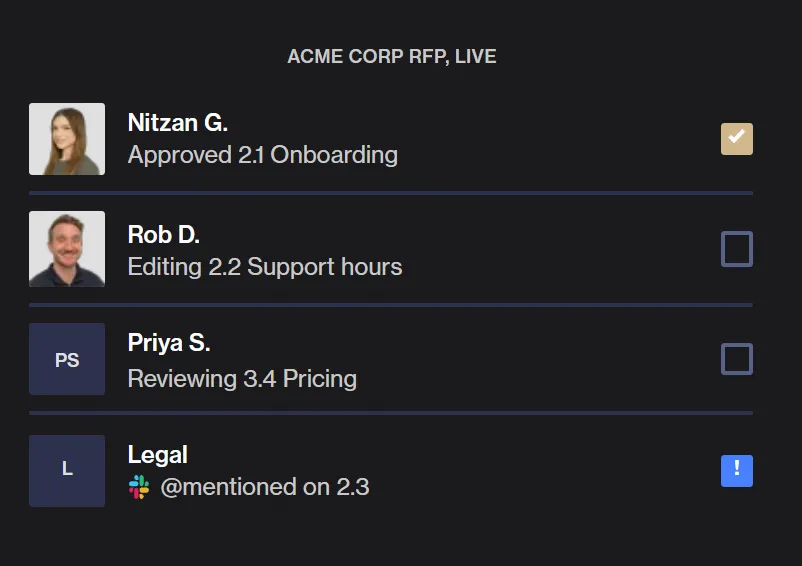
Look for question-level assignments, shared editing, deadlines, comments, version history, and approval workflows.
The platform should make it easy to identify outstanding responses and involve subject matter experts without losing track of changes.
5. Format Flexibility
Test whether the platform can handle your customers’ actual submission formats, including multi-tab Excel files, complex Word documents, PDFs, and procurement portals.
AutoRFP.ai supports exact-format import/export for Excel and Word, preserving the original document structure.

PDF tenders can be imported and exported as Word documents.

Its Portal Agent also extracts questions from supported web portals and provides drafted answers for one-click copying into submission fields.
6. Security Standards
Before uploading confidential bid information, verify the vendor’s security certifications, data-handling policies, access controls, and AI training practices.
AutoRFP.ai is ISO 27001:2022 certified and SOC 2 Type II audited, and customer data is not used to train AI models. Its Trust Center provides documentation to support security assessments.
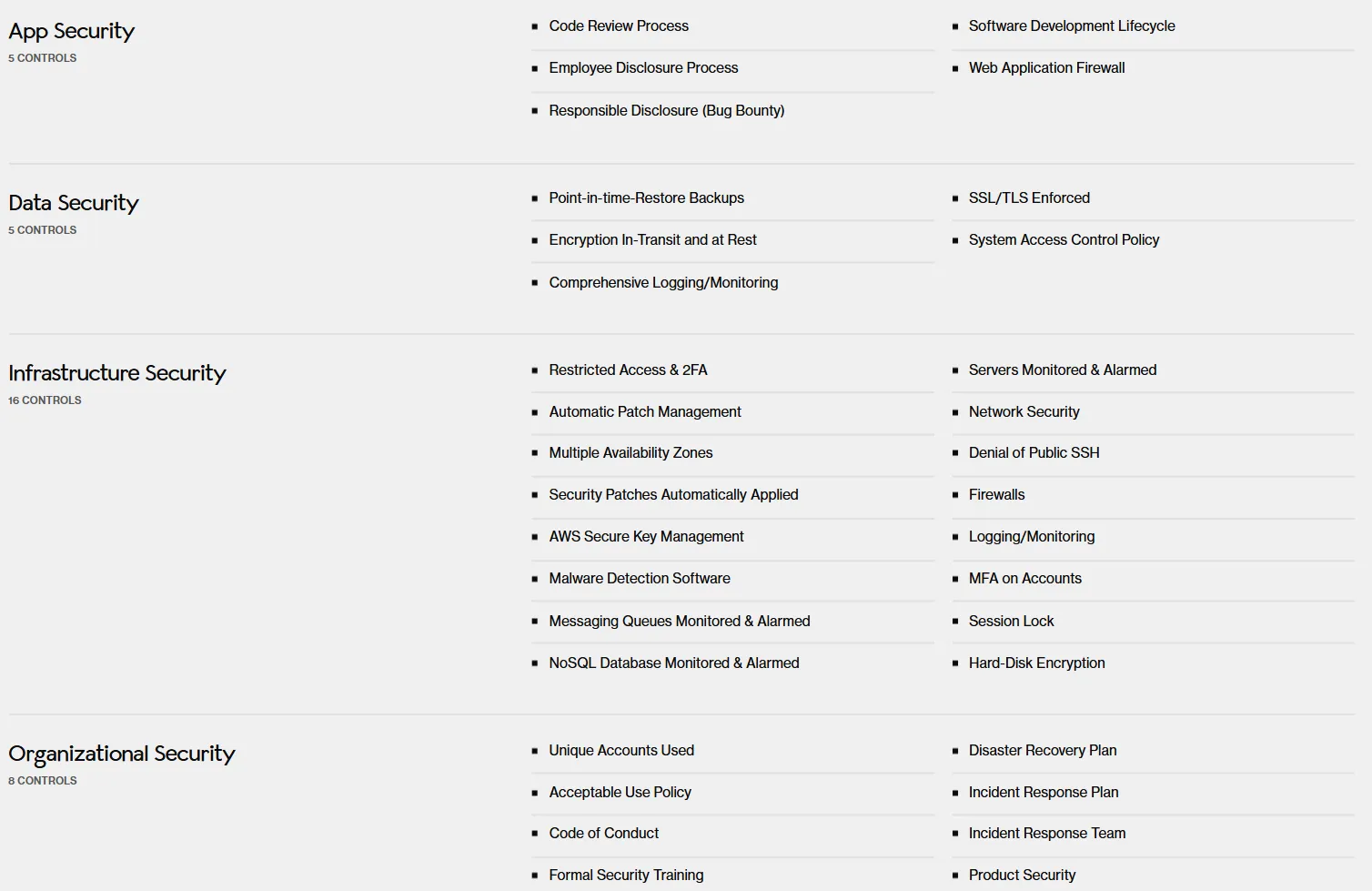
For regulated industries, also check data residency options, audit trails, and permission controls.
7. Integration Ecosystem
Prioritize integrations your team will actually use rather than choosing software based on connector counts alone.
For example, AutoRFP.ai connects with Salesforce, SharePoint, Google Drive, Slack, and Microsoft Teams. Its Salesforce integration supports two-way bid status updates, while Slack and Teams deliver assignments and review notifications.
Check whether integrations are native, how frequently knowledge sources sync, and whether additional fees or configuration are required.
Optimize Your Bid Management Workflow With AutoRFP.ai
Your choice of bid management software depends on your specific needs. If you require bid search capabilities, consider which tender search tools best fit your workflow.
Construction teams managing subcontractor bidding workflows may prefer PlanHub. Teams bidding on UK and EU public-sector tenders should consider mytender.io. Organizations needing comprehensive tender management software with analytics can explore Bidhive. Engineering, consulting, and AEC firms whose proposals depend on staff CVs and project experience can add Flowcase alongside their response platform.
But if you need software for automating commercial and enterprise RFP responses, DDQs, and security questionnaires, AutoRFP.ai combines AI-powered drafting with source-grounded answers and structured reviews.
Beyond generating responses faster, AutoRFP.ai reduces repetitive library maintenance and scales with your team.
Start automating your RFP responses with AutoRFP.ai today. The most practical way to evaluate its capabilities is to run a real bid through a two-week proof of concept and measure how much editing your team actually needs to do.
About the author

Co-founder and CEO of AutoRFP.ai. Spent 7 years running global RFPs and personally completed 500+ RFPs before founding the company.
LinkedIn