
2026 Presales Enablement: Strategies, Tools & Best Practices
Learn what presales enablement is, why it matters, and how to build a strategy that helps SEs respond faster, win more deals, and scale technical selling.

Technical Account Manager, AutoRFP.ai··20 min read
Sales engineers and solutions engineers often carry the heaviest part of modern enterprise deals: proving it works, proving it is safe, and proving it will deliver value.
If 57% of sales professionals say sales cycles are getting longer, the fix is not “work harder,” it is “enable smarter.” Presales enablement helps SE teams reuse what works, reduce rework, and keep technical validation from becoming a bottleneck.
In this guide, we’ll cover presales enablement strategy, tools, and best practices you can implement to speed up deals without cutting corners.
What Is Presales Enablement?
Presales enablement is the process of equipping solution engineers, sales engineers, and technical presales teams with the tools, content, training, and repeatable workflows they need to prove product fit during complex deals.
It helps presales teams:
Technical discovery: Run better discovery calls that uncover buyer needs, risks, and product fit early.
Tailored demos: Deliver demos that speak directly to the buyer’s use case, pain points, and technical requirements.
Technical answers: Answer product, security, compliance, and integration questions faster.
RFP and DDQ support: Support RFPs, DDQs, POCs, security reviews, and technical evaluations with accurate, reusable answers.
Less repetitive work: Reduce repeated technical answering so engineers can focus on demos, solution design, and qualified deals.
Buyer confidence: Turn technical expertise into clearer buyer confidence and stronger deal progress.
Unlike general sales enablement, presales enablement is not mainly about helping reps prospect, pitch, or close. It focuses on helping technical sellers prove whether the solution can actually solve the buyer’s problem.
| Area | Presales enablement | General sales enablement |
|---|---|---|
| Main audience | Sales engineers, solution engineers, and technical presales teams | AEs, SDRs, BDRs, and broader sales teams |
| Main goal | Prove technical and business fit | Help sellers sell more effectively |
| Key work supported | Discovery, demos, POCs, RFPs, DDQs, technical reviews, and security reviews | Prospecting, messaging, objection handling, pipeline management, and closing |
| Content needed | Demo flows, technical documentation, security answers, integration guides, architecture diagrams, and approved RFP responses | Sales decks, call scripts, battlecards, email templates, case studies, and objection-handling guides |
| Success outcome | Faster technical validation, fewer presales bottlenecks, and stronger buyer confidence | Better sales productivity, stronger pipeline execution, and improved quota performance |
Key Benefits of Presales Enablement
Presales enablement matters because complex B2B buyers do not just need a pitch. They need proof that your solution fits their technical, security, integration, and business requirements before they move forward.
| Why it matters | What presales enablement helps teams do |
|---|---|
| B2B deals involve more stakeholders: Sales engineers now deal with more people in each buying group, with Consensus reporting a 19% increase in stakeholders per deal. | Give each stakeholder clear, consistent answers across discovery, demos, POCs, technical reviews, and proposal discussions. |
| Sales cycles are getting longer: Salesforce reports that 57% of sales professionals say sales cycles are getting longer. | Help presales teams keep deals moving by using repeatable workflows, reusable content, and faster technical validation. |
| Buyers ask deeper technical questions: Presales teams are often responsible for discovery, tailored demos, POCs, technical evaluations, and technical objections. | Equip solution engineers with demo flows, product documentation, security answers, integration details, and architecture guidance. |
| Technical teams can become bottlenecks: Without enablement, engineers may spend too much time answering the same product, security, and integration questions. | Reduce repetitive work so sales engineers can focus on higher-value activities like demos, solution design, and qualified opportunities. |
| RFPs and DDQs add pressure: In complex deals, presales teams often support technical sections of RFPs, DDQs, security reviews, and evaluations. | Make it easier to reuse approved answers, involve the right experts, and respond accurately without slowing down the deal. |
| Technical confidence affects buying decisions: Buyers need to believe the product can work in their environment, not just sound good in a sales deck. | Turn technical expertise into buyer confidence, stronger product fit, and better deal progress. |
9 Core Components of a Presales Enablement Strategy
A strong presales enablement strategy gives technical sellers the structure, content, tools, and visibility they need to prove fit faster. This includes:
1. Technical Discovery Framework
Presales teams need a clear way to uncover buyer needs, technical requirements, risks, and success criteria early.
Discovery questions: Prepare questions that reveal use cases, current systems, pain points, timelines, and decision criteria.
Qualification signals: Help sales engineers identify whether the buyer is a strong technical and commercial fit.
Risk areas: Capture security, integration, compliance, implementation, and scalability concerns before they slow the deal.
Next steps: Turn discovery findings into demo plans, POC scopes, RFP responses, or technical review actions.
2. Demo and POC Playbooks
Demos and POCs should not rely only on each sales engineer’s personal style or memory.
Demo flows: Create repeatable demo structures for different industries, personas, and use cases.
Proof points: Include customer outcomes, technical strengths, and product differentiators that match buyer priorities.
POC criteria: Define what success looks like before the team invests engineering time.
Reusable assets: Give presales teams scripts, demo environments, checklists, and follow-up templates.
3. Technical Content And Knowledge Management
Presales enablement needs a reliable knowledge base that helps teams answer complex questions quickly and consistently.
Technical documentation: Centralize product specs, API details, architecture diagrams, security answers, and integration guides.
Approved answers: Store reusable responses for common product, compliance, and implementation questions.
Content ownership: Assign owners to keep answers accurate, current, and aligned with internal policies.
Easy access: Make it simple for sales engineers to find the right answer during demos, RFPs, DDQs, and technical reviews.
4. Cross-Functional Collaboration And Project Management
Presales work often depends on input from product, security, legal, engineering, and bid teams.
Clear ownership: Show who owns each technical answer, review, demo task, or approval.
Contextual collaboration: Let experts respond directly where their input is needed, instead of chasing email threads.
Status visibility: Track what is done, what is blocked, and who needs to respond.
Accountability: Reduce daily status meetings, spreadsheet tracking, and “did you see my comment?” follow-ups.
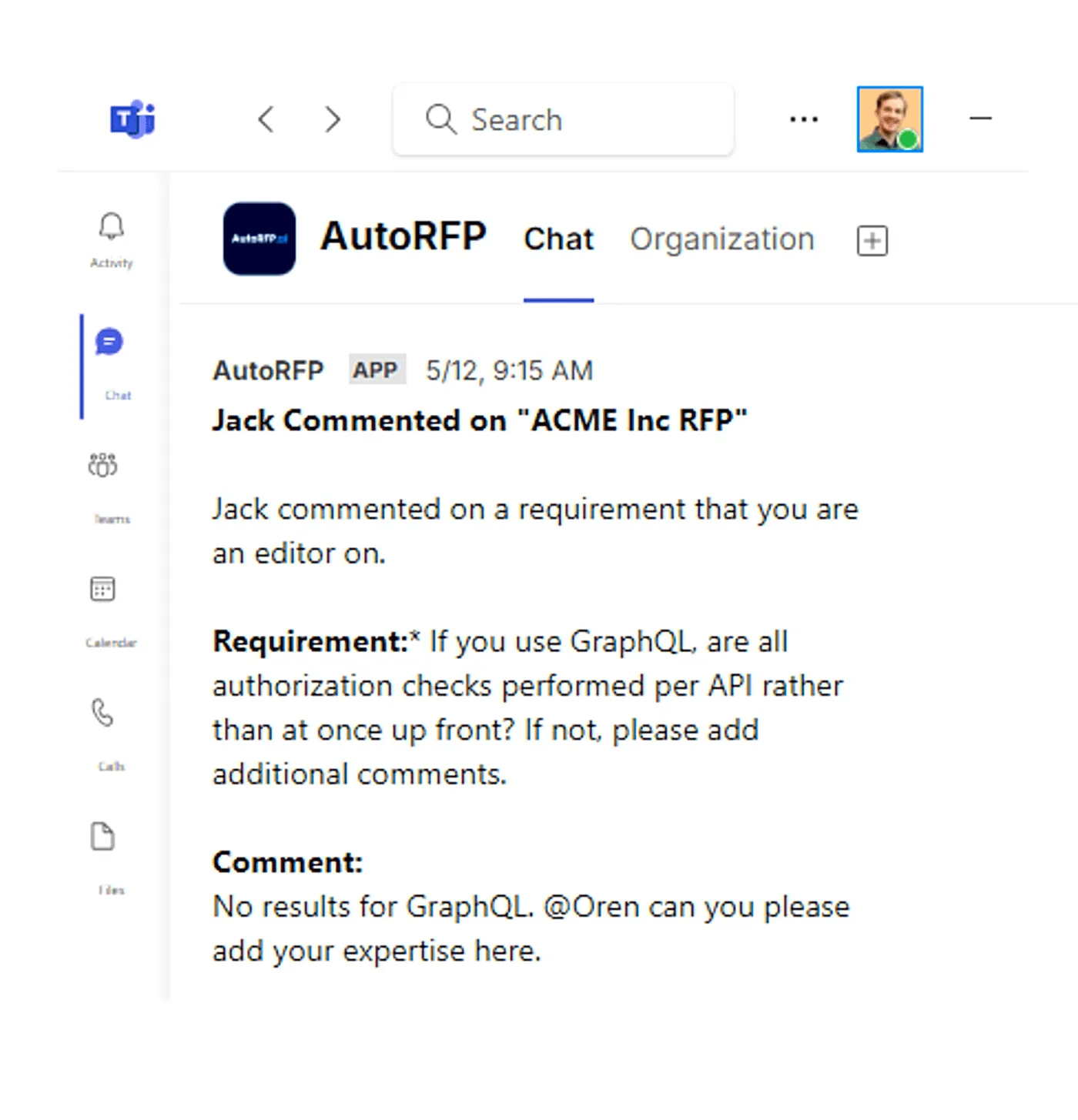
For RFPs, DDQs, and security questionnaires, this becomes especially useful. AutoRFP.ai lets bid managers mention technical experts directly on specific questions, collect input in context, and keep full version history.
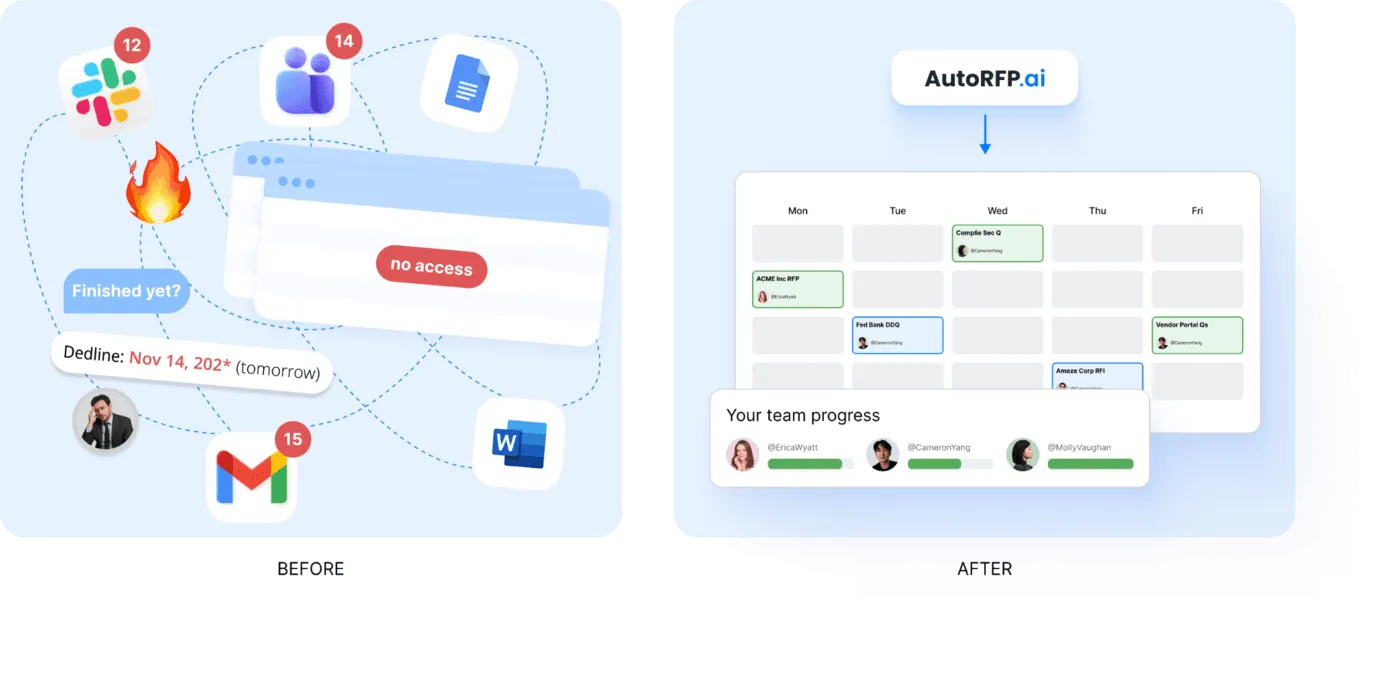
That helps presales teams avoid week-old email chains when technical specs are needed across multiple active projects.
5. Tools and Automation
Deploying dedicated presales software helps technical teams reduce repetitive work and focus more time on high-value technical selling.
Answer automation: Generate first drafts for repeated technical, security, compliance, and integration questions.
Document handling: Extract requirements from RFPs, DDQs, and technical questionnaires without manual formatting work.
Knowledge search: Help teams find approved answers, specifications, and supporting documents faster.
Workflow automation: Route questions, flag missing information, and speed up review cycles. When auditing your current sales enablement tech stack, finding tools that integrate smoothly into these engineering workflows is critical.
AutoRFP.ai fits this part of the strategy by helping teams draft accurate technical responses from existing documentation and past answers.
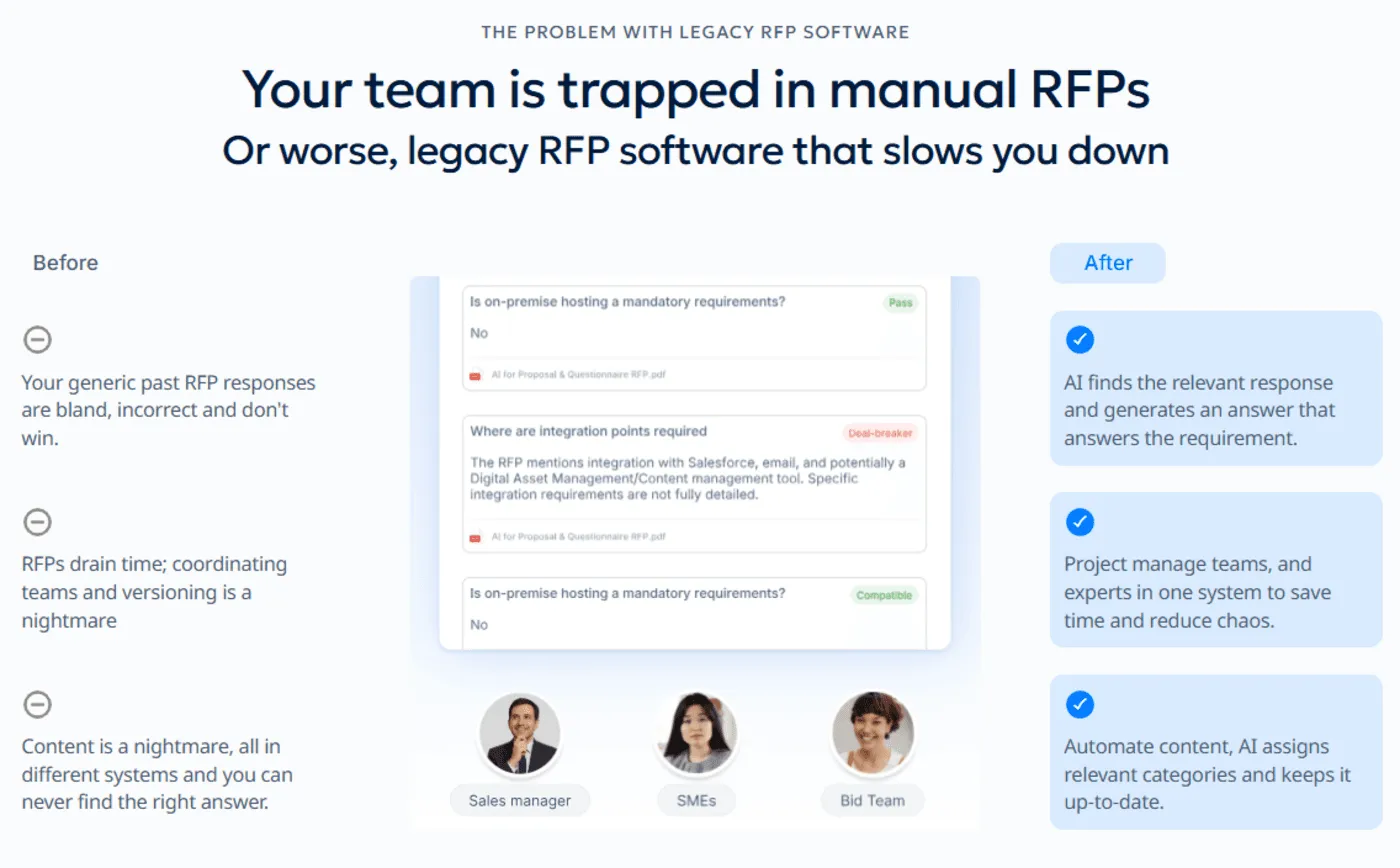
It can also help extract requirements from complex RFPs and reduce the time engineers spend rewriting the same answers. This allows sales engineers to focus more on demos, POCs, and solution design.
“In working with over 200 companies moving to an AI First Approach, we’ve learned that the real advantage isn’t simply automating content. It’s what teams do with the time they get back. The winners use it to invest in their processes and provide more insightful responses.” - Jasper Cooper, Co-Founder and CEO of AutoRFP.ai
6. Training And Skills Development
Presales enablement also needs training that helps technical sellers become better communicators, not just product experts.
Product training: Teach teams how features, integrations, and technical capabilities solve real buyer problems.
Buyer communication: Help engineers explain complex ideas in simple, confident language.
Objection handling: Prepare responses for security, implementation, integration, pricing, and scalability concerns.
Scenario practice: Use mock discovery calls, demo reviews, and POC planning sessions to improve consistency.
7. RFP, DDQ, And Technical Review Support
Presales teams often support technical sections of complex buyer evaluations.
Response libraries: Maintain approved answers for product, architecture, compliance, security, and implementation questions.
Expert routing: Send technical questions to the right internal reviewer without slowing the full response process.
Compliance checks: Validate answers against current security policies, certifications, and product documentation.
Reusable learning: Save improved answers after each response so future teams can work faster.
This keeps RFP and DDQ work from becoming a one-off manual effort every time. It also helps teams respond with answers that are accurate, consistent, and easier to approve.
8. Metrics And Reporting
Presales enablement should show where technical effort is helping deals move forward.
Activity visibility: Track time spent on demos, POCs, RFPs, DDQs, and technical reviews.
Conversion patterns: See which technical activities are linked to stronger win rates or faster deal progress.
Bottleneck tracking: Identify where deals slow down because of missing answers, delayed reviews, or unclear ownership.
Resource planning: Help leaders decide where sales engineers should spend their time.
AutoRFP.ai’s reporting angle supports this by showing how teams spend time across technical response work.
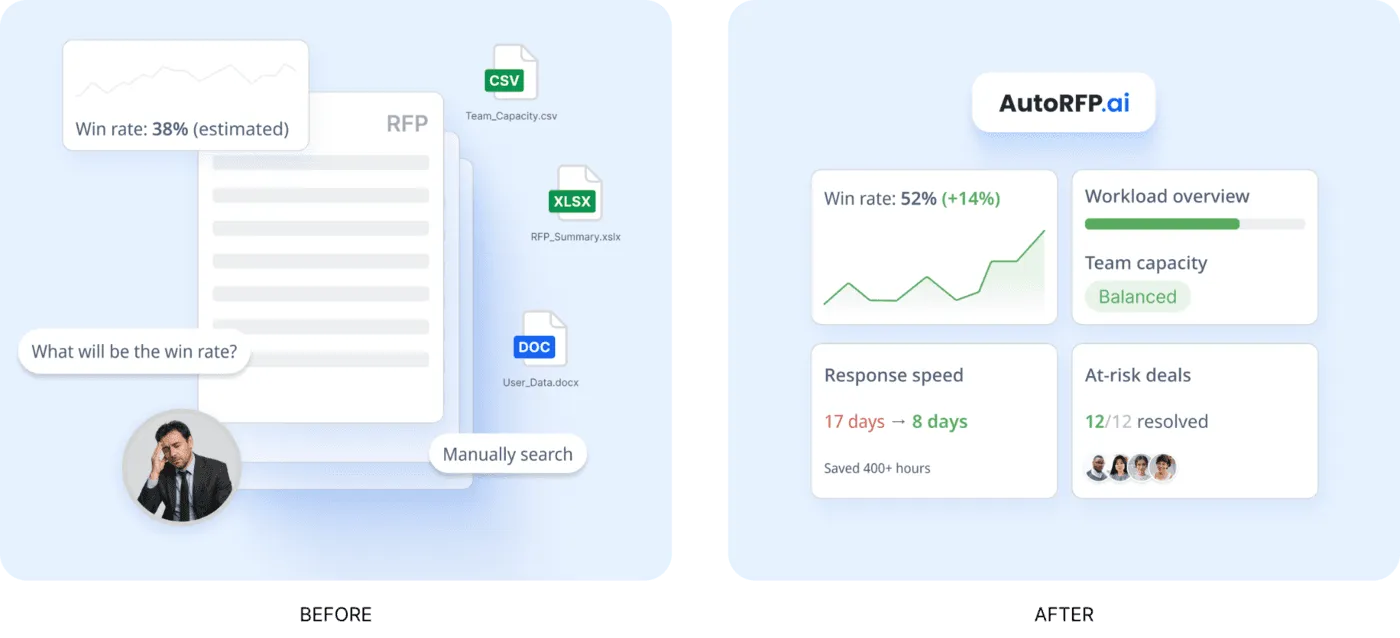
For example, teams can compare high-converting product capability questions against lower-value architecture deep dives. This helps presales leaders prioritize effort, automate repetitive work, and protect engineer time for better-fit deals.
9. Feedback Loops And Continuous Improvement
Presales enablement should improve as teams learn from every deal.
Post-deal review: Capture what worked, what slowed the deal, and which assets helped buyers decide.
Content updates: Refresh outdated answers, demo flows, proof points, and technical documentation.
Win-loss insights: Learn which technical objections, POCs, or RFP sections influenced outcomes.
Process refinement: Use feedback to improve discovery, demos, collaboration, and response workflows over time.
How To Build A Presales Enablement Program
Follow these steps to build a presales enablement program that helps technical sellers answer faster, prove fit earlier, and support complex deals with less manual effort.
1. Build A Centralized Technical Knowledge Base
Start by creating one source of truth for the technical content your presales team uses every day.
Product information: Store product specs, feature details, API documentation, integration guides, and architecture diagrams.
Security answers: Keep approved answers for compliance, data protection, uptime, SSO, encryption, and vendor review questions.
Reusable responses: Add past answers from RFPs, DDQs, security questionnaires, and technical reviews.
Clear ownership: Assign owners to review and update each content area so answers stay accurate.
This is where a content library becomes useful for presales teams. AutoRFP.ai can help teams reuse approved technical answers and find exact specifications quickly, instead of searching through old documents or waiting for an engineer to reply.
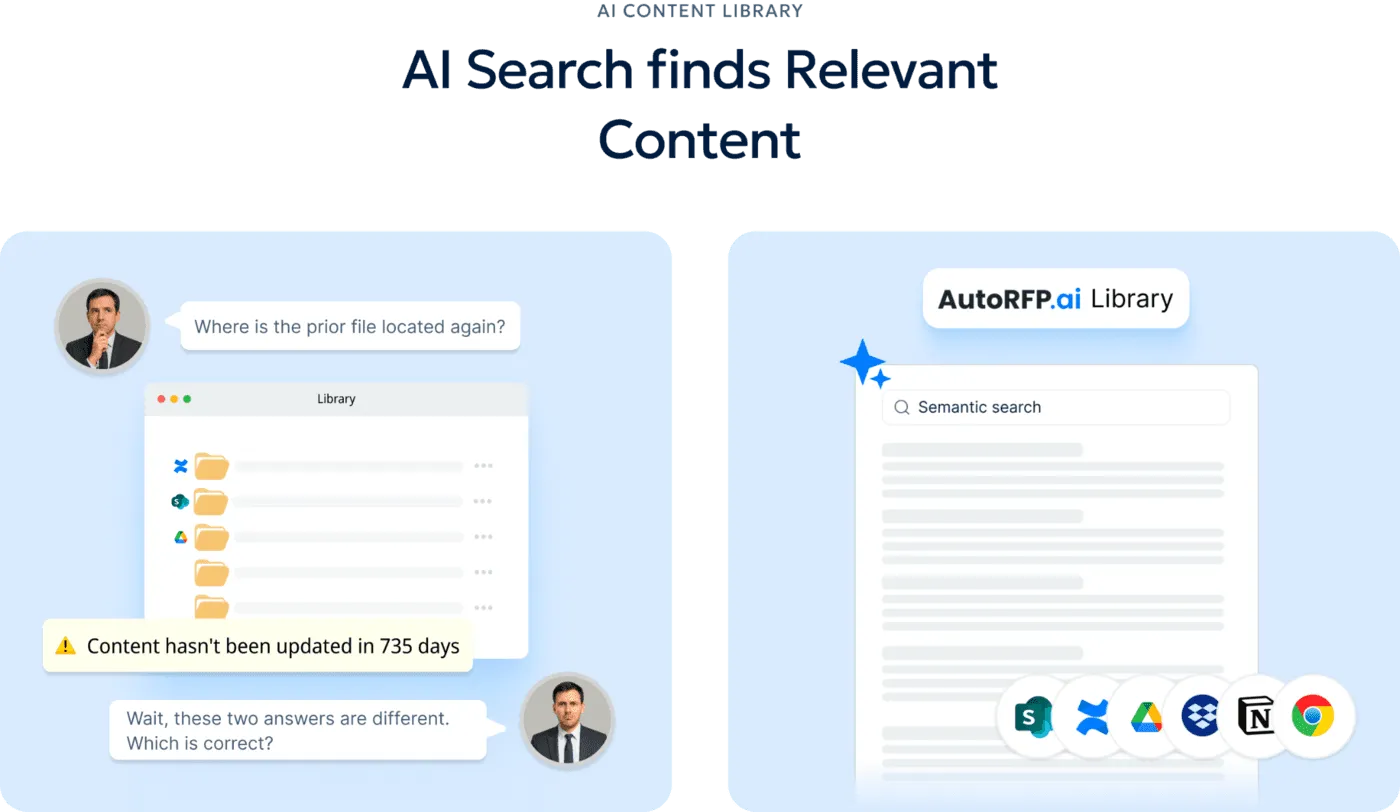
For example, if a prospect asks about API rate limits while the solution engineer is in back-to-back demos, the team can search the technical documentation library and respond with the right answer today, not tomorrow.
2. Map Your Highest-Impact Presales Workflows
Next, identify the workflows where presales effort has the biggest impact on deal progress.
Discovery: Define how sales engineers uncover technical needs, risks, integrations, and buyer priorities.
Demos: Create repeatable demo flows for different products, industries, and stakeholder groups.
POCs: Set clear criteria for when a POC is worth running and what success should look like.
Technical reviews: Standardize how your team handles security, compliance, architecture, and integration questions.
RFP and DDQ support: Clarify when presales should support proposal teams and which questions need technical input.
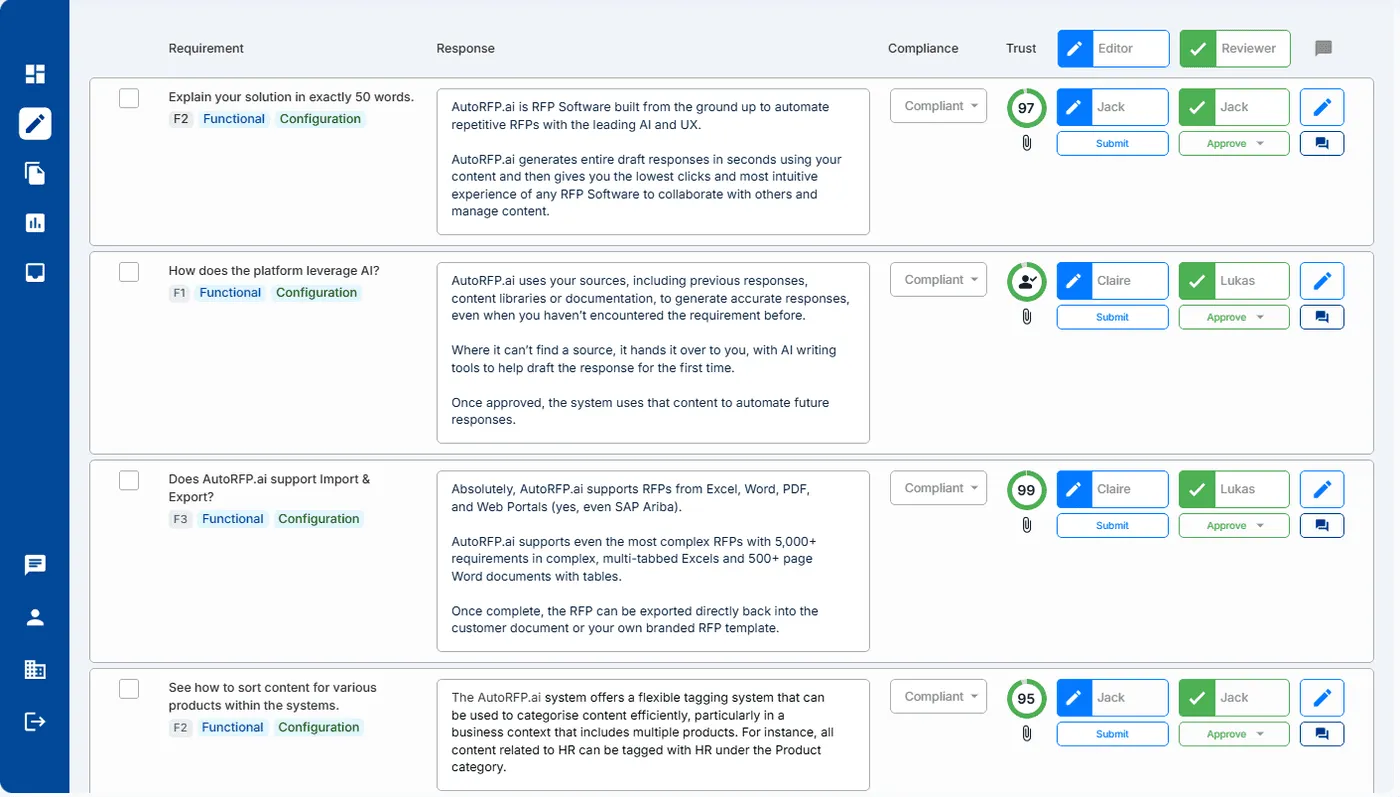
If RFPs, DDQs, and security questionnaires are major deal drivers for your team, this is where automation can help. Instead of asking engineers to draft every technical answer from scratch, tools like AutoRFP.ai can generate first drafts from existing documentation and past responses. Engineers can then review, refine, and approve the answer rather than spend hours rewriting repeatable content.
3. Standardise Discovery, Demo, And POC Assets
Once the main workflows are clear, create assets that help every sales engineer work from the same playbook.
Discovery guides: Prepare question sets for buyer goals, technical environment, current tools, risks, and success criteria.
Demo templates: Build demo flows based on buyer role, industry, use case, and technical maturity.
POC checklists: Define scope, timeline, success metrics, required resources, and buyer responsibilities.
Follow-up templates: Give teams ready-to-use summaries for next steps, technical findings, and open questions.
This keeps presales work consistent without making it robotic. Sales engineers still tailor the conversation, but they are not starting from a blank page every time.
4. Create Clear Collaboration And Ownership Rules
Presales enablement only works when everyone knows who owns what.
Technical ownership: Decide who handles product, security, compliance, integration, and implementation questions.
Review process: Set clear steps for drafting, reviewing, approving, and updating technical answers.
Escalation paths: Make it obvious when sales engineers should involve product, legal, security, or engineering.
Response tracking: Track open questions, blockers, comments, and approvals in one place.
This is especially important for RFPs and DDQs. If a bid manager needs technical specs for 30 questions across three active RFPs, they should not have to chase people through email threads. The right workflow lets them mention the expert directly, get the answer in context, and keep a full version history.
5. Add Tools And Automation Where Work Repeats
After the process is clear, add automation to remove repetitive manual work.
Answer generation: Draft first responses for common product, security, and integration questions.
Knowledge search: Help teams find approved answers without relying only on keyword search.
Document extraction: Pull requirements from RFPs, DDQs, and security questionnaires.
Workflow routing: Send the right questions to the right experts for review.
Compliance checks: Flag answers that may not match the latest policy, certification, or product documentation.
The goal is not to replace presales expertise. The goal is to protect it. Automation should handle the repeatable work so sales engineers can spend more time on demos, solution design, POCs, and high-value technical conversations.
6. Train Teams On How To Use The Program
A presales enablement program will not work if the team does not know when and how to use it.
Tool training: Show teams where to find content, how to search answers, and how to update information.
Workflow training: Explain when to use discovery guides, demo templates, POC checklists, and response libraries.
Quality standards: Define what a strong technical answer, demo, or follow-up should include.
Role clarity: Make sure AEs, sales engineers, bid managers, and SMEs understand their responsibilities.
This helps the program become part of the sales process, not just another folder or tool that people forget to use.
7. Measure What Improves Deal Progress
Finally, track whether the program is actually helping presales teams work better.
Time saved: Measure how much time engineers spend on demos, POCs, RFPs, DDQs, and technical reviews.
Response speed: Track how quickly teams answer product, security, and integration questions.
Content reuse: See which answers, demo assets, and technical documents are used most often.
Deal impact: Compare presales activities against win rate, deal velocity, and buyer confidence.
Bottlenecks: Identify where reviews, missing answers, or unclear ownership slow deals down.
This helps leaders improve the program over time. If certain technical sections take hours but rarely help deals convert, they can be automated or simplified. If demos, product capability questions, or POCs drive stronger outcomes, the team can prioritize those activities more intentionally.
This is also where teams need to prove whether automation is actually paying off. With AutoRFP.ai, presales leaders can use ROI reporting to see which projects still need heavy manual work, where AI and approved boilerplate are saving time, and which response types consume the most capacity.
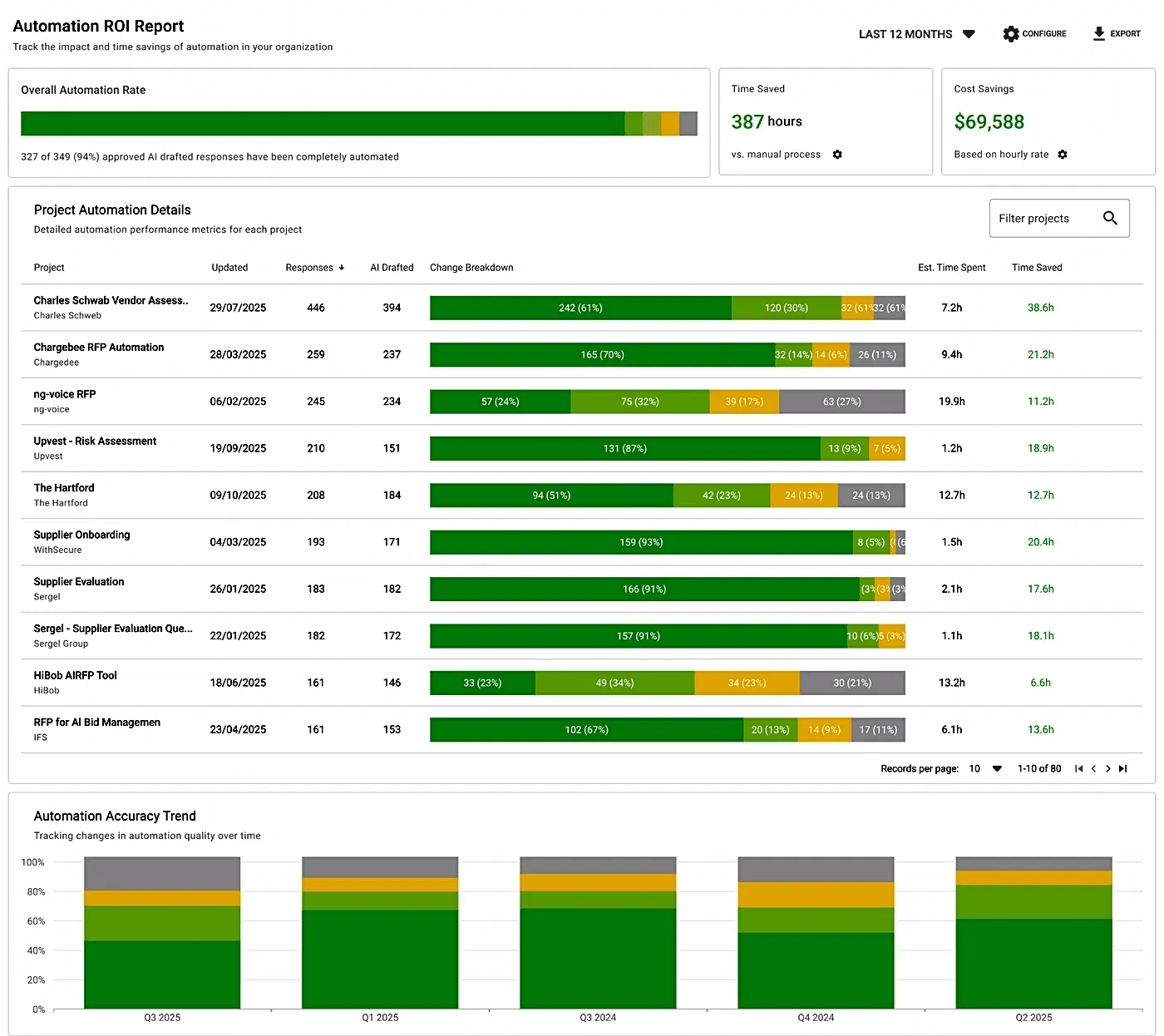
That visibility helps sales engineers spend less time copy-pasting the same compliance answers and more time shaping executive summaries, technical strategy, and competitive differentiators that help win deals.
Presales Enablement Best Practices (By Experts)
These expert-backed sales enablement best practices show how leading teams use automation, content systems, buyer insights, and clearer workflows to improve technical selling.
| Best practice | How to apply it |
|---|---|
| Use automation to create strategic capacity | Do not use automation only to produce more content faster. Use the time saved to improve discovery, response strategy, technical positioning, and buyer-specific insights. |
| Reinvest saved time into better responses | When automation handles repetitive answers, ask presales teams to spend more time on executive summaries, differentiators, proof points, and complex technical narratives. |
| Go beyond content reuse | A content library helps, but it should not be the whole strategy. Make sure reused answers are adapted to the buyer’s needs, industry, risks, and decision criteria. |
| Embed capture insights into responses | Add what the team knows about the buyer, competitors, pain points, priorities, and deal context into demos, RFPs, DDQs, and technical reviews. |
| Define clear win themes | Give presales teams agreed messaging around why your solution is the best fit, where it is strongest, and how it solves the buyer’s problem better than alternatives. |
| Improve processes, not just content | Use presales enablement to standardise discovery, demos, POCs, SME reviews, technical approvals, and post-deal learning. |
| Measure whether automation is paying off | Track time saved, manual work reduced, content reuse, response quality, deal progress, and where presales teams are spending their recovered time. |
| Prioritize insight over volume | High-performing teams do not win by sending longer or faster responses alone. They win by making responses more specific, strategic, and aligned with the buyer’s decision. |
Best Presales Enablement Tools in 2026
1. AutoRFP.ai
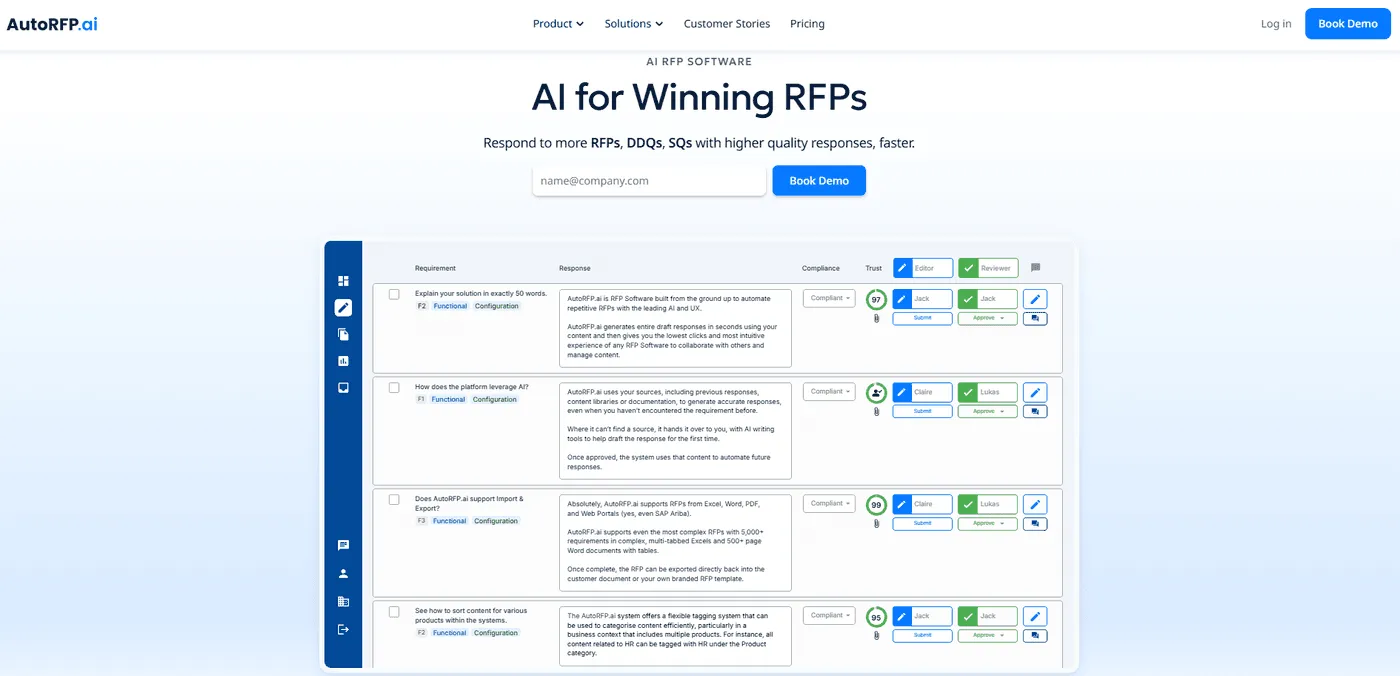
AutoRFP.ai is the best RFP software for presales teams that need to support proposal automation, security questionnaire automation, and DDQ automation without slowing down solution engineers. It helps teams draft technical answers, reuse approved content, validate compliance, manage response projects, and protect capacity across complex enterprise deals.
AI RFP Response Engine
AutoRFP.ai helps solution engineers stop spending hours rewriting the same technical answers. When an enterprise RFP asks detailed questions about architecture, compliance, integrations, or API limits, the platform generates accurate first drafts from technical documentation and past responses.
This means senior sales engineers can review and refine answers instead of writing everything from scratch. It helps cut repetitive RFP work so they can focus on demos, POCs, and solution design.
RFP Content Library
AutoRFP.ai gives presales teams a searchable technical content library for approved answers, API documentation, architecture diagrams, and past technical responses. This is useful when prospects ask specific product or security questions while solution engineers are busy with demos.
Instead of waiting until the next day for an answer, teams can find the right specification quickly and respond with confidence. It keeps technical answers consistent across RFPs, DDQs, security questionnaires, and buyer conversations.
Project Agent
AutoRFP.ai’s Project Agent helps teams validate responses before submission. Instead of manually checking every answer against security policies, certifications, or compliance documents, teams can use the Project Agent to flag gaps and suggest corrections.
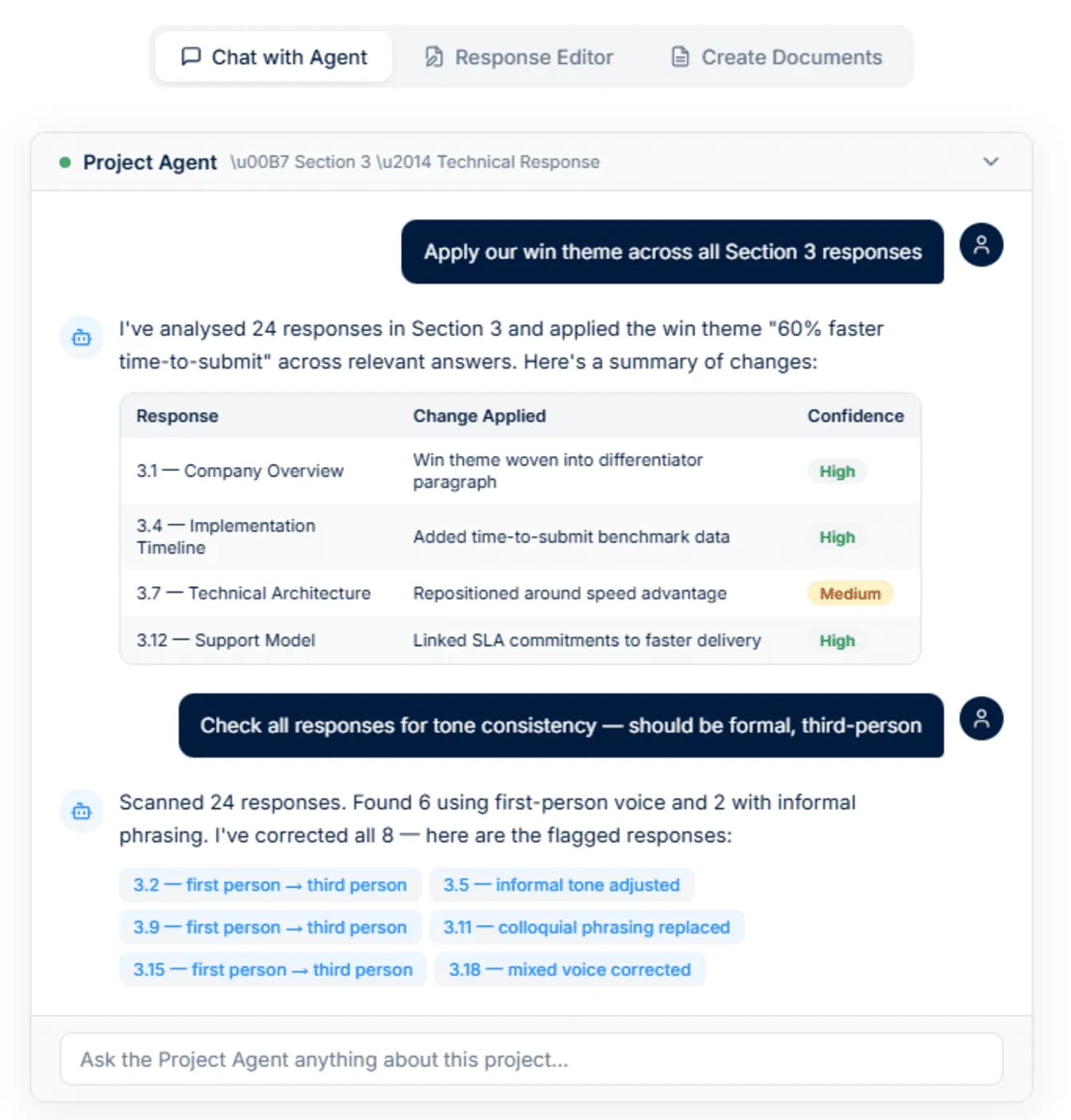
This is especially useful for security questionnaires and DDQs where accuracy matters. It gives presales and proposal teams a cleaner audit trail before they send responses to buyers.
RFP Project Management Software
AutoRFP.ai helps presales teams manage response work in one place instead of relying on scattered decks, Slack threads, emails, and spreadsheets. Teams can track owners, deadlines, comments, completion progress, and technical input across active RFPs, DDQs, and security questionnaires.
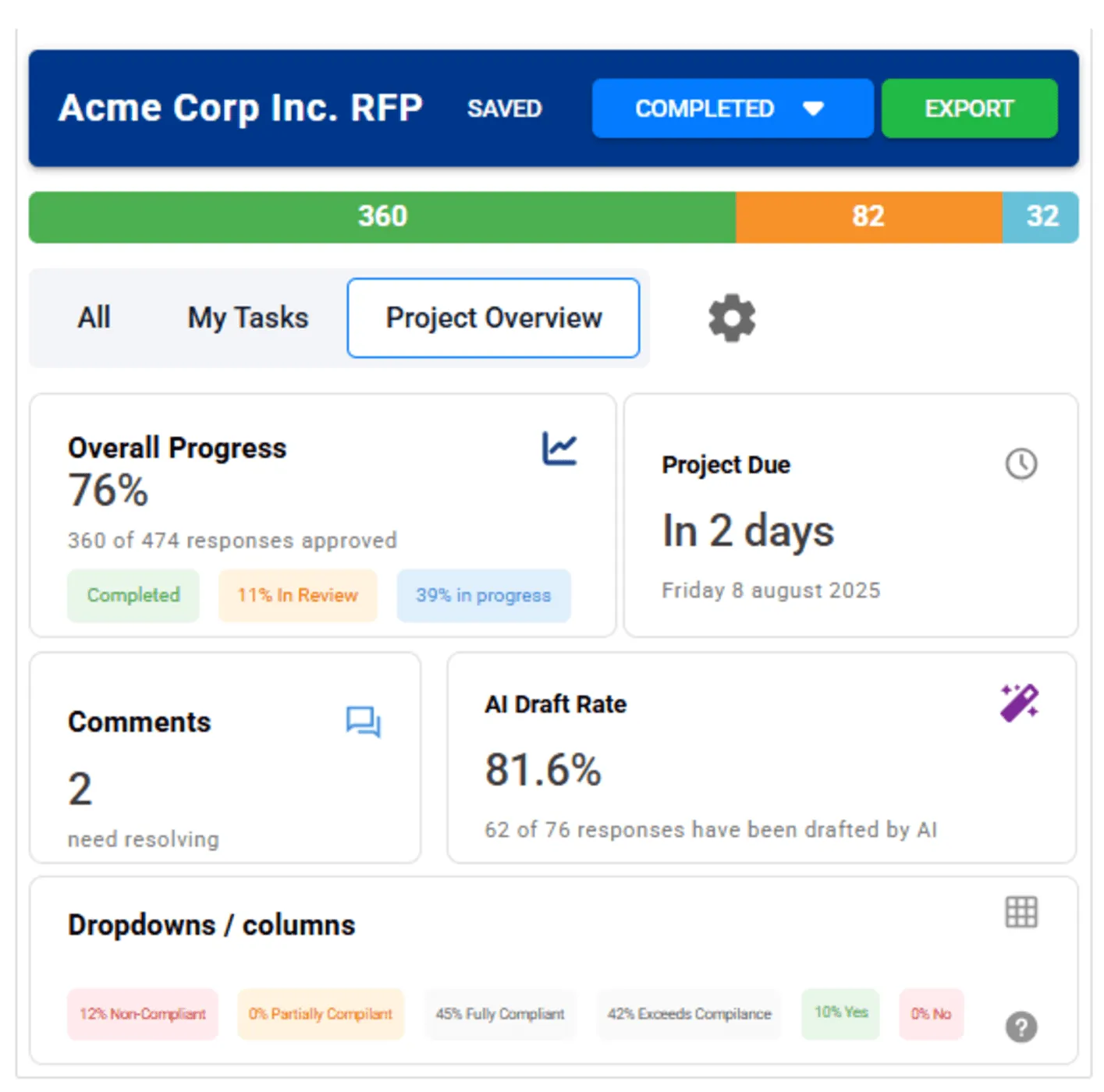
It also supports better demo preparation. When a solution engineer needs to prepare for a healthcare prospect, they can find the right demo flow, use case, technical talking points, and proof points instead of scrambling the night before.
Capacity And Workload Visibility
AutoRFP.ai helps teams understand whether they can take on the next RFP or security questionnaire before saying yes. When sales forwards a 250-question RFP or an 80-question security review with a tight deadline, leaders can see active projects, owners, due dates, progress, and workload.
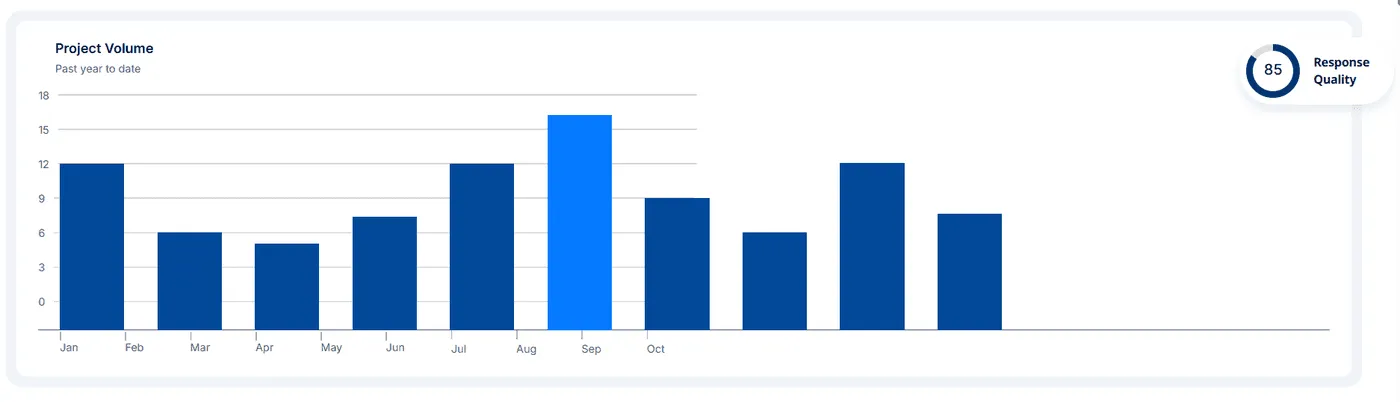
This prevents SMEs, bid managers, and solution engineers from getting overloaded. It helps teams prioritize winnable deals, push back on unrealistic timelines, and stop urgent questionnaires from draining time away from higher-value opportunities.
Who AutoRFP.ai Is Best For
AutoRFP.ai is best for presales and proposal teams that need to move faster on RFPs, DDQs, and security questionnaires without pulling solution engineers away from high-value technical selling.
B2B SaaS teams selling to enterprise buyers: Best for companies that regularly handle complex RFPs, vendor reviews, DDQs, and security questionnaires.
Presales teams with limited engineering capacity: Useful when solution engineers are spending too much time answering repetitive technical, compliance, architecture, and integration questions.
Proposal and bid teams managing multiple active responses: Helpful for teams that need one place to track owners, deadlines, comments, completion progress, and technical reviews.
Teams with frequent security and compliance questions: Strong fit for companies that need accurate, approved answers for SSO, encryption, uptime, certifications, API limits, data protection, and internal policy alignment.
Teams that already have past responses and technical documentation: Best when there is existing content AutoRFP.ai can use to generate first drafts, support reuse, and reduce manual writing.
Presales leaders who need workload visibility: Useful for managers who want to know which RFPs, DDQs, or security questionnaires are taking the most time and whether the team can take on more work.
Teams that want automation without losing expert review: Best for companies that want AI to handle repetitive first drafts while solution engineers focus on review, strategy, demos, POCs, and competitive positioning.
2. Consensus
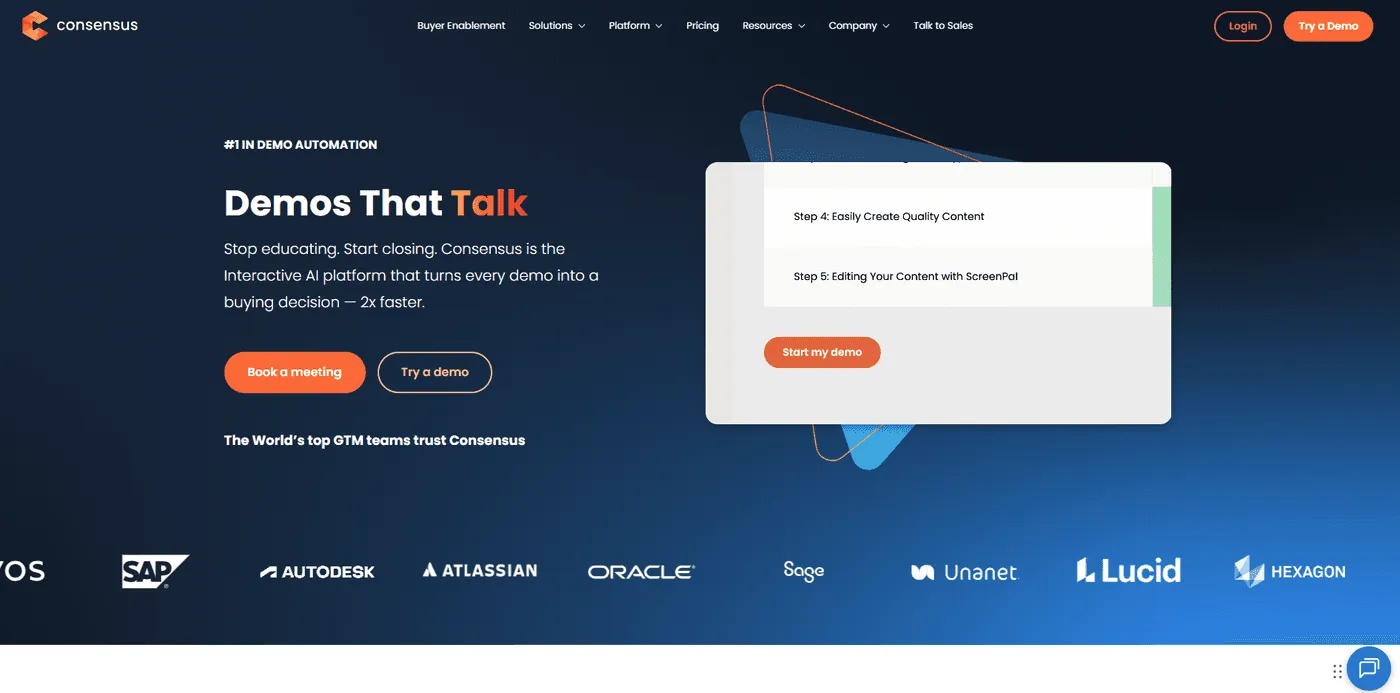
Consensus is best for scaling demos when solution engineers cannot join every early-stage product conversation. It helps teams deliver personalized, buyer-led demos and track how stakeholders engage with them.
Key Features
Demo automation: Lets teams create, send, and track buyer-led demos.
Product tours: Supports interactive product experiences for prospects.
Video demos: Gives buyers on-demand access to product explanations.
Buyer signals: Shows which stakeholders watched, shared, or engaged with demos.
Who Consensus Is Best For
Presales teams that spend too much time on repetitive demos.
SaaS companies with large buying committees.
Sales teams that want to qualify buyers before involving solution engineers.
3. Navattic
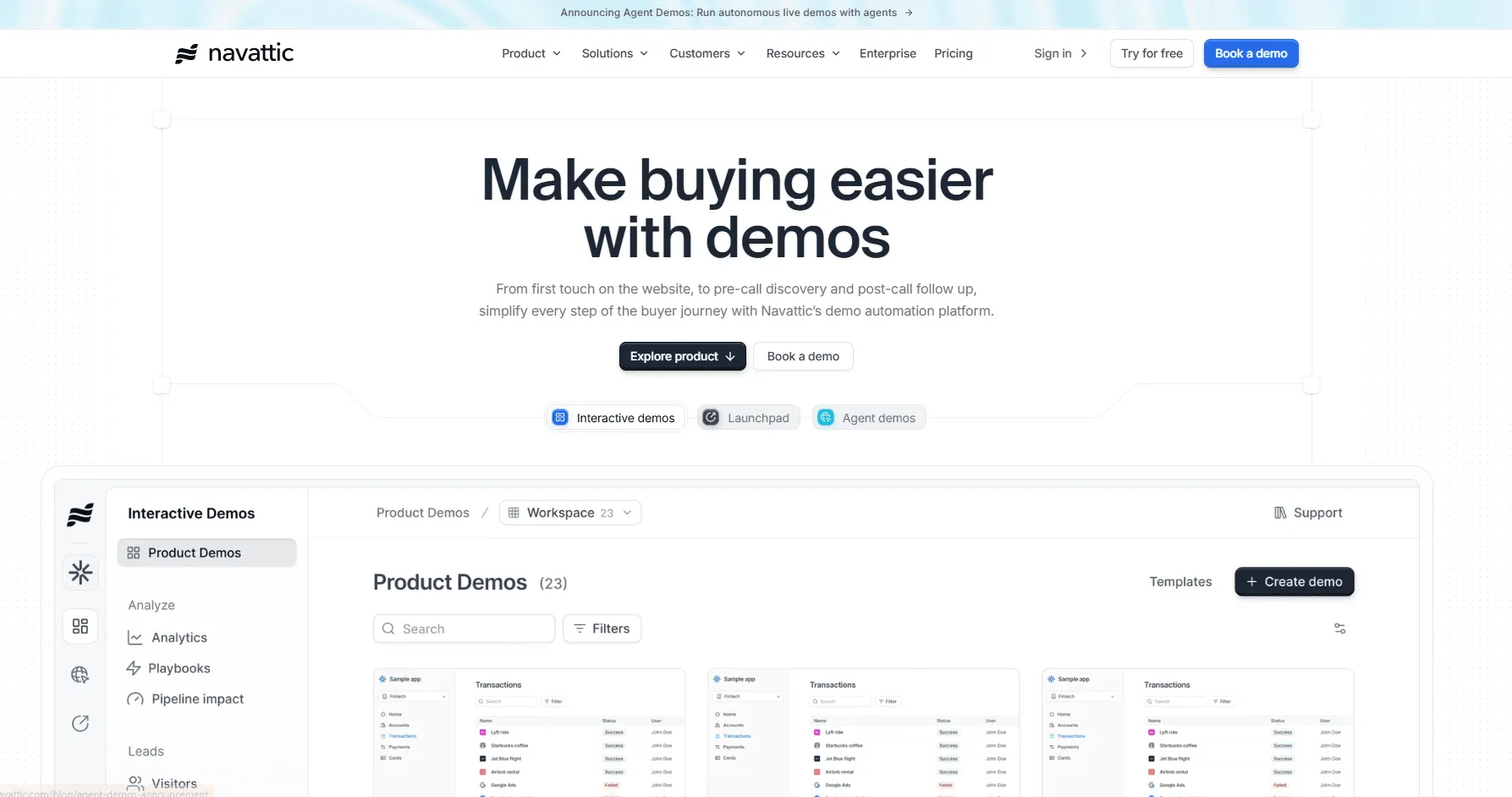
Navattic is best for self-guided interactive product demos across the buyer journey. It helps teams embed, share, and build demos that prospects can explore before or after speaking with sales.
Key Features
Interactive demos: Turns product workflows into clickable demo experiences.
Navattic Copilot: Helps teams build demos faster using AI.
Website embeds: Lets teams place demos on landing pages, product pages, and campaigns.
Demo personalization: Allows teams to adjust demo data and flows for different use cases.
Who Navattic Is Best For
Marketing and presales teams that want prospects to explore the product earlier.
SaaS companies with visual or workflow-based products.
Teams that want self-serve demos before sales or presales involvement.
4. Reprise
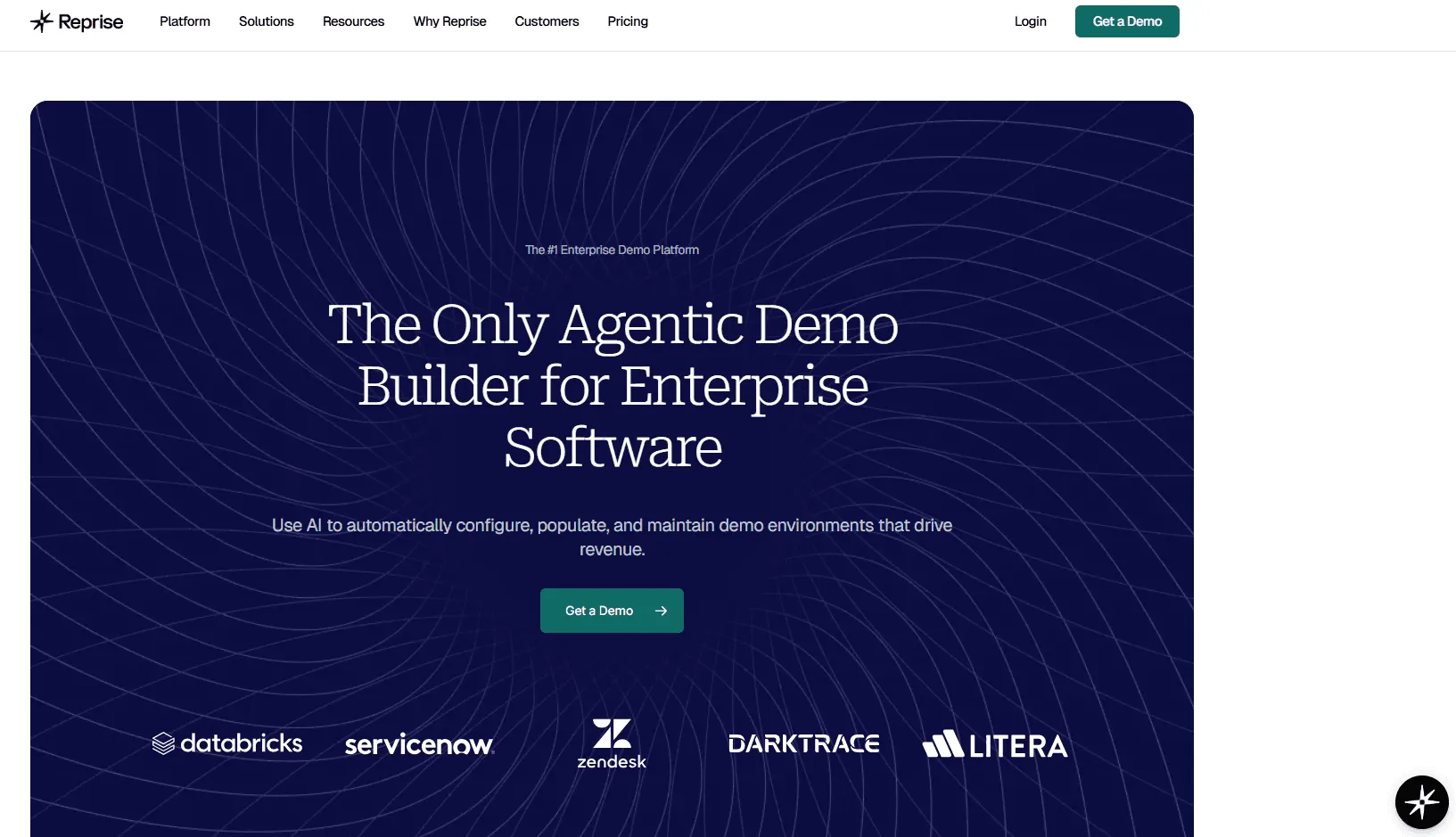
Reprise is best for building reliable demo environments that sales and presales teams can reuse across products, use cases, and verticals. It helps teams create interactive demos without depending heavily on engineering.
Key Features
Full-fidelity demos: Creates secure, resettable, fully interactive demo environments.
Reusable demo library: Gives sellers access to approved demos by product, use case, or industry.
Demo sandbox: Helps teams demo from a controlled environment instead of a fragile live product.
Analytics: Tracks demo performance and engagement across the sales funnel.
Who Reprise Is Best For
Solution engineering teams that need stable demo environments.
Enterprise SaaS teams with complex products.
Presales teams that often customize demos for different buyer segments.
5. Hero By Vivun
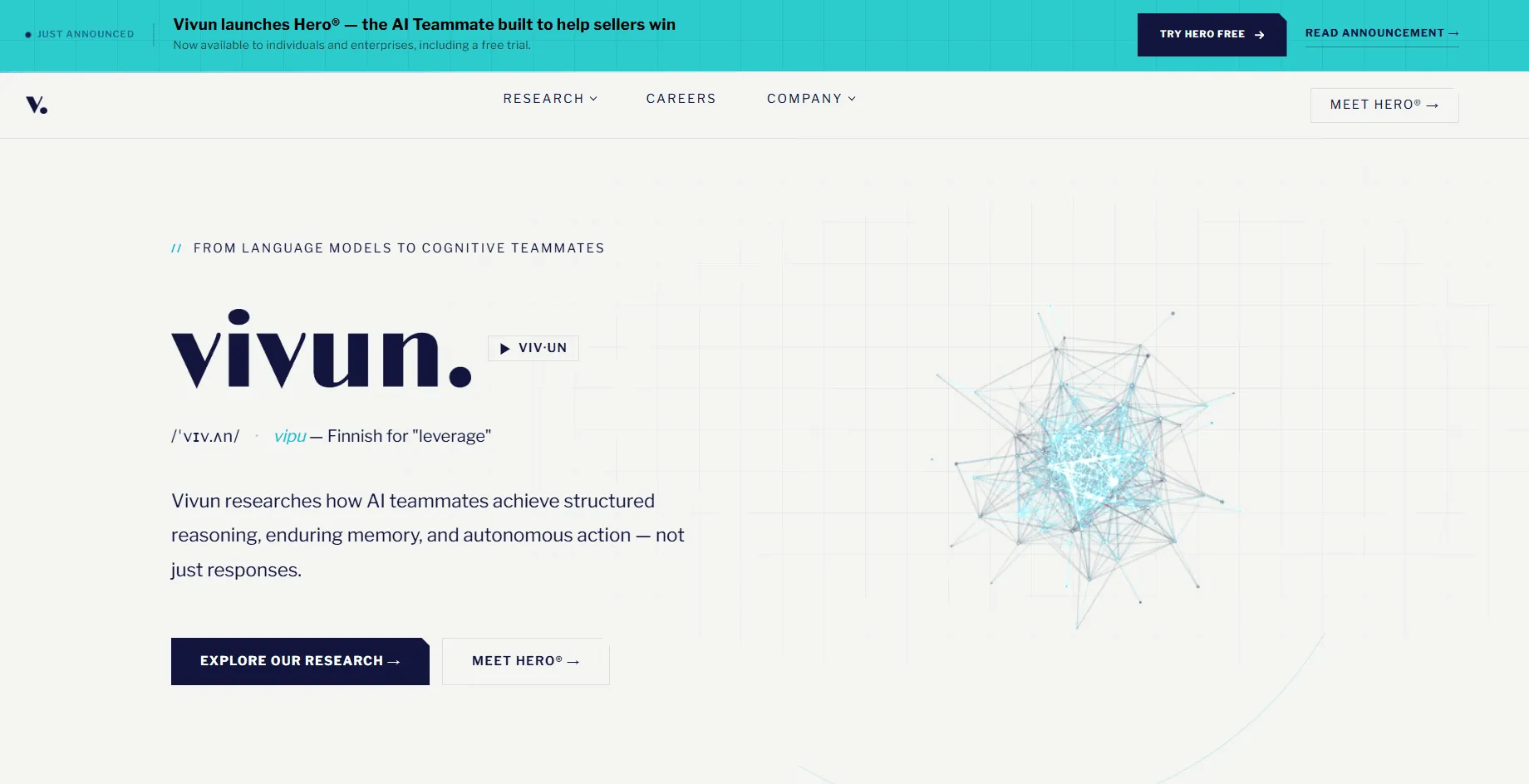
Hero by Vivun is best for sellers and presales teams that need live support before, during, and after buyer conversations. It helps teams prepare with deal context, answer questions in real time, and follow up without losing momentum.
Key Features
Pre-call preparation: Summarizes CRM data, account history, risks, and stakeholder context.
Real-time support: Surfaces answers, proof points, pricing guidance, and competitive insights during calls.
Deal context: Grounds guidance in the company’s product, sales process, and active deal data.
Tool integrations: Connects with systems like CRM, email, calendar, Gong, Outreach, Slack, and HubSpot.
Who Hero By Vivun Is Best For
Presales and sales teams handling high-pressure buyer calls.
Technical sellers who need fast answers during live conversations.
Revenue teams that want better call preparation, response confidence, and follow-through.
Help Presales Teams Clear RFP And Security Questionnaire Bottlenecks With AutoRFP.ai
Presales enablement is not about adding more tools. It is about removing the work that keeps solution engineers away from high-value selling.
If your main bottleneck is demos or product tours, tools like Consensus, Navattic, or Reprise may be the better fit.
But if your presales team is slowed down by RFPs, DDQs, security questionnaires, and repeated technical answers, AutoRFP.ai is built for that problem.
It helps teams reuse approved content, draft responses faster, manage reviews, and protect SME capacity across complex deals. AutoRFP.ai also supports RFPs, RFIs, DDQs, security questionnaires, spreadsheets, Word files, and PDFs.
If response work is slowing down your presales team, book a demo today with us.
About the author

Technical Account Manager
Technical Account Manager at AutoRFP.ai. Background in asset management completing institutional RFPs and DDQs; now implements AutoRFP.ai for some of the company's largest accounts.
LinkedInFrequently asked questions
1. How Does the AutoRFP.ai Chrome Extension Help Sales Engineers Handle Technical Questionnaires That Cannot Be Exported?
Many security and technical questionnaires live exclusively in web portals that do not allow for easy export. The Chrome Extension solves this by allowing Sales Engineers to access their entire technical content library directly within the portal. They can search for specifications, generate drafts, and paste them into the portal fields without ever leaving the page or switching tabs.
2. Can AutoRFP.ai Help You Calculate The Total Pipeline Value Affected By Specific Product Gaps?
Yes. The gap analysis feature does more than just list missing features. It aggregates the total deal value of every RFP and DDQ where a requirement was marked as a gap. This provides Presales leaders with a clear dollar figure to show product teams exactly how much potential revenue is being stalled by specific technical or compliance requirements.
3. How Does AutoRFP.ai Help Presales Leaders Identify Which Technical Experts Are Being Overloaded?
The platform includes a dedicated Workload Analysis dashboard. This allows leaders to see exactly how many review requests are assigned to each subject matter expert across all active projects. By identifying these bottlenecks early, you can redistribute tasks and prevent your most senior engineers from becoming a single point of failure for high value deals.
4. Does AutoRFP.ai Allow You To Export Technical Response Data Into Your Existing Business Intelligence Tools?
AutoRFP.ai supports data exports that can be integrated into your company's broader BI dashboards. This allows you to combine RFP and technical response metrics with other sales data, providing a unified view of how technical validation speed and accuracy are influencing your overall win rates and sales velocity.
5. How Does AutoRFP.ai Help Ensure That Technical Answers Remain Consistent Across Global Sales Engineering Teams?
The platform uses a centralized knowledge hub with strict version control and source attribution. When a global team member searches for an answer, they see the most recently approved version along with a Trust Score and a link to the original source document. This ensures that a Sales Engineer in London is providing the exact same technical specifications as one in San Francisco.
6. Why Is Technical Discovery Often More Critical To The Deal Outcome Than The Actual Product Demo?
While a demo shows what is possible, technical discovery reveals what is necessary. A strong discovery process uncovers the hidden risks, integration hurdles, and specific success criteria that the buyer will use to score your solution. If you miss these details during discovery, even the most impressive demo will fail to address the buyer's actual decision criteria.
7. How Can You Prevent Feature Creep From Derailing A Proof Of Concept Evaluation?
The best way to prevent feature creep is to define strict Success Criteria before the POC begins. Both the Presales team and the buyer must agree on a limited set of technical outcomes that will prove the solution's value. Any requests outside of this pre-approved scope should be logged as Future Requirements to keep the current evaluation on track and on time.
8. What Is The Best Way To Transition A Technical Win Into A Successful Implementation Handoff?
A successful handoff requires a Technical Memo that summarizes the buyer's environment, the specific use cases validated during the POC, and any partially compliant workarounds discussed. By sharing this context with the implementation team, you ensure that the promises made during the presales phase are accurately delivered during onboarding, which protects long term customer success.
9. Why Should Sales Engineers Be Empowered To Participate In The Bid Or No-Bid Decision?
Sales Engineers have the best understanding of the technical effort required to win a deal. If a bid requires heavy customization or addresses known product gaps, the SE can provide a realistic assessment of the resources needed. Empowering them to speak up early prevents the team from pursuing unwinnable deals that drain technical capacity away from higher probability opportunities.
10. How Can Presales Teams Maintain A Gold Standard For Technical Answers Without Constant Manual Updates?
The most effective strategy is to move from a Library Management model to a Content Verification model. Instead of manually writing every answer, use a system that flags content for review based on age or usage frequency. This Human in the Loop approach ensures that your most important technical answers are verified by experts only when needed, rather than in bulk once a year.

