
2026 RevOps Best Practices By Industry Experts to Drive Growth
Learn the top RevOps best practices for 2026: how to align teams, clean your data, automate workflows, and eliminate the late-stage revenue leakage that kills deals.

Ops Lead, AutoRFP.ai··10 min read
RevOps best practices matter because small process and data improvements compound across the entire funnel. When marketing, sales, and customer success work from the same definitions, handoffs get cleaner, forecasting gets more reliable, and teams spend less time debating numbers and more time executing. The strongest RevOps teams don’t rely on heroics. They build repeatable systems that scale.
In this guide, we’ll share RevOps best practices from industry experts across strategy, operating rhythm, data hygiene, tooling, and automation so you can drive predictable growth without adding unnecessary complexity.
What is Revenue Operations?
Revenue operations, or RevOps, is a business function that aligns sales, marketing, customer success, finance, and operations around one shared revenue process, so teams can grow revenue with cleaner data, smoother handoffs, and more predictable performance.
Shared revenue alignment: RevOps connects every team involved in generating, closing, and retaining revenue.
Process standardisation: It creates consistent workflows for lead management, deal progression, renewals, reporting, and customer handoffs.
Data visibility: RevOps helps teams work from the same customer, pipeline, and revenue data instead of scattered reports.
Technology management: It ensures CRM, automation, analytics, and revenue tools support the full customer journey.
Performance improvement: RevOps identifies bottlenecks, reduces manual work, and helps leaders make better revenue decisions.
“RevOps is the team that makes everything else go faster. We’re compounding 12% month-on-month at AutoRFP.ai with a team of 10. That doesn’t happen without treating the CRM like the 11th team member.” - Robert Dickson, RevOps Manager at AutoRFP.ai
12 RevOps Best Practices for 2026 (By Experts)
Here are the RevOps best practices you should follow in 2026 to improve revenue alignment, strengthen data quality, scale AI responsibly, and build a more predictable growth engine.
1. Build RevOps Around One Revenue Operating Model
RevOps works best when sales, marketing, customer success, finance, and operations follow one shared revenue process. In 2026, this matters even more because buyer journeys are more digital, data-heavy, and cross-functional.
Forrester predicts that more than half of large B2B purchases worth $1 million or more will move through digital self-serve channels, making alignment across the full revenue journey harder to ignore.
Define one shared revenue goal across GTM teams.
Standardise lifecycle stages, lead definitions, deal stages, and handoff rules.
Make RevOps responsible for connecting strategy, systems, data, and execution.
Review the operating model quarterly, not only during annual planning.
Pro tip: Keep the model simple enough for every team to follow without needing a separate RevOps explanation every time.
2. Fix The Process Before Scaling AI
AI will not fix messy CRM data. It will only make bad data move faster. Gartner found that organizations with successful AI initiatives invest up to four times more in data quality, governance, AI-ready people, and change management than those with poor AI outcomes
Audit CRM fields that directly affect routing, forecasting, reporting, and segmentation.
Remove duplicate, outdated, and incomplete records.
Set mandatory fields only where they help revenue decisions.
Create clear ownership for account, contact, opportunity, and customer data.
Pro tip: Start with the fields leaders actually use in weekly pipeline, forecast, and customer reviews.
3. Align Pipeline Volume With Team Capacity
Revenue teams struggle when pipeline growth moves faster than their ability to support it.
Track workload across sales, CS, RevOps, and operations.
Review whether lead volume, deal volume, or renewal volume is causing delays.
Add capacity, automation, or clearer qualification rules before teams become overloaded.
Pro tip: Treat capacity planning as a revenue protection activity, not an admin task.
4. Automate Repetitive Work, Not Strategic Judgement
RevOps automation should remove manual updates, routing delays, and repeated admin tasks. It should not remove human review from high-value decisions. McKinsey notes that gen AI can support B2B growth by improving revenue generation, sales productivity, and internal process efficiency.
Automate lead routing, task creation, renewal alerts, and CRM updates.
Use AI for first drafts, summaries, research, and workflow triggers.
Keep human approval for pricing, legal risk, enterprise commitments, and strategic deals.
Review automation rules regularly to avoid outdated workflows.
Pro tip: Automate the work that slows teams down, but keep humans close to anything that affects trust, revenue risk, or customer commitments.
“If your automation strategy isn’t contributing to revenue, you’re leaving money on the table.” – Mike Rizzo, CEO of MarketingOps.com
If enterprise sales deals regularly trigger RFPs, treat RFP execution as a RevOps workflow, not a separate proposal task. Tools like AutoRFP.ai can help teams reduce RFP turnaround time while keeping drafting, SME ownership, and progress more visible across the deal cycle.
“One December, I had two 500+ security questionnaires come across my desk. The first one took our team a week to do. After that, I knew there had to be a better way. When I found AutoRFP.ai, I was set up within 48 hours, and the second only took me a matter of hours. The response engine was outstanding, I can’t imagine completing security questionnaires without automation.” – Bryn Tardent-Powell, Head of Sales & Marketing at Cubiko
5. Use AI To Support Forecasting, But Keep The Forecast Explainable
AI can help RevOps identify deal risk, buyer engagement patterns, activity gaps, and forecast changes.
But leaders still need to understand why the forecast changed. Gartner has warned that traditional sales productivity metrics are falling short, with many CSOs saying analytics have less influence than executives expect.
Combine rep judgement with AI signals.
Track deal movement, activity quality, stage aging, buying committee engagement, and next steps.
Separate forecast confidence from pipeline volume.
Explain forecast changes in plain language, not just dashboard numbers.
Pro tip: Do not let AI produce a forecast that sales leaders cannot defend in a revenue meeting.
6. Build Customer Insight Into Every Workflow
Strong RevOps teams use customer insight to improve decisions, not just dashboards. In fact 88% of high-win teams have a defined customer-insight process.
Capture buying signals, objections, churn risks, and expansion opportunities.
Share customer intelligence across sales, marketing, and customer success.
Use insights to improve qualification, messaging, forecasting, and retention.
Pro tip: Activity data shows what happened. Customer insight explains why it happened.
7. Standardise Handoffs Across The Customer Journey
Weak handoffs create revenue leakage. Leads get delayed, sales context gets lost, onboarding starts with missing information, and customer success teams inherit unclear expectations.
Define handoff criteria between marketing, SDRs, AEs, customer success, and finance.
Set SLAs for response times, qualification updates, and customer onboarding steps.
Use CRM workflows to flag incomplete handoffs.
Review handoff issues in pipeline and customer meetings.
Pro tip: Treat every handoff as a revenue risk point, not just an internal process step.
8. Measure Revenue Efficiency, Not Just Activity
RevOps teams should not only report how much activity happened. They should show whether that activity improved conversion, speed, retention, or profitability. HubSpot’s 2025 State of Sales report shows most sales teams report stable or improving win rates and deal sizes, which makes execution quality a key area to inspect.
Track win rate, sales cycle length, pipeline velocity, expansion rate, and churn risk.
Compare activity volume with actual conversion quality.
Measure how much capacity automation gives back to the team.
Report leading indicators and lagging outcomes together.
Pro tip: A good RevOps dashboard should tell leaders what to do next, not just what happened last month.
9. Build Governance For AI And Automation
AI adoption is rising, but not every AI workflow creates business value. Gartner has predicted that more than 40% of agentic AI projects will be cancelled by the end of 2027 because of rising costs, unclear value, or weak execution.
Define which workflows AI can own, assist, or only recommend.
Set review rules for AI-generated content, customer messages, and revenue decisions.
Track AI accuracy, edit rates, time saved, and adoption.
Document risks, exceptions, and escalation paths.
Pro tip: Before adding a new AI tool, define the workflow, owner, metric, and review process first.
10. Align RevOps With Customer Retention And Expansion
RevOps should not stop at closed-won revenue. In 2026, the strongest teams will connect acquisition, onboarding, renewal, expansion, and customer health into one revenue view.
Track customer health signals inside the revenue reporting model.
Connect renewal dates, usage patterns, support issues, and expansion opportunities.
Create shared visibility between sales and customer success.
Use alerts to identify churn risk before renewal conversations start.
Pro tip: Add post-sale metrics to RevOps reporting so growth teams can see whether new revenue is actually turning into durable revenue.
11. Create A Strong Enterprise Deal Desk Layer
Large deals often slow down because approvals, security reviews, RFPs, legal input, and pricing decisions happen in separate places. RevOps should create a structured deal desk layer that keeps late-stage enterprise work visible and accountable.
Define when a deal should enter the deal desk process.
Track security questionnaires, RFPs, pricing approvals, legal reviews, and executive sign-offs.
Assign owners for every blocker, not just every sales stage.
Use automation to keep progress visible across revenue, legal, security, and finance teams.
Pro tip: For RFP-heavy sales motions, connect your deal desk with the best AI RFP response software like AutoRFP.ai so response drafting, SME input, and approval tracking do not sit outside the main revenue process.
12. Invest In RevOps Skills, Not Just RevOps Tools
RevOps tech stack can improve speed, but people still need to design the process, manage change, and make judgement calls. Recent Gartner coverage shows that companies getting higher AI returns tend to invest in human roles, upskilling, and governance rather than treating AI as a simple headcount replacement.
Train teams on data hygiene, workflow design, AI use cases, and reporting.
Give RevOps authority to challenge broken processes.
Build playbooks for sales, marketing, customer success, and finance workflows.
Make RevOps part of strategic planning, not only tool administration.
Pro tip: The best RevOps teams act like revenue architects, not CRM cleaners.
“Successful RevOps is invisible when it’s working. Reps live in the CRM, forecasts hit because the framework is in the deal record, and the operator spends time on the two to three plays that actually move the pipeline.” - Robert Dickson, RevOps Manager at AutoRFP.ai
More On How AI Fits Into A Modern RevOps Strategy
AI fits into a modern RevOps strategy by helping teams turn revenue data, workflows, and buyer requirements into faster decisions, stronger execution, and fewer cross-functional delays.
“AI without clean data is just faster garbage. Before any agent, workflow, or fancy MCP setup, RevOps needs to make sure the CRM is something AI can actually trust.” - Robert Dickson, RevOps Manager at AutoRFP.ai
Use AI As A Revenue Multiplier, Not Just A Productivity Tool
AI should do more than help teams save time. In RevOps, its bigger value is helping sales, marketing, customer success, and leadership make better decisions from the same revenue signals.
Revenue prioritization: AI can help teams decide which accounts, deals, renewals, or expansion opportunities deserve attention first.
Resource allocation: AI can show where teams should focus effort based on revenue impact, not just activity volume.
Deal quality: AI can help identify whether a deal has strong buyer engagement, clear next steps, and enough internal support.
Strategic focus: AI can reduce low-value analysis work so RevOps can spend more time improving the revenue system.
Pro tip: Frame AI as a way to improve revenue judgment, not just a way to get more tasks done.
Embed AI Agents Inside Daily Revenue Workflows
AI becomes more useful when it sits inside the tools and workflows revenue teams already use. Instead of making teams open another platform, AI agents can monitor signals, trigger alerts, summarise updates, and support next steps inside the flow of work.
Workflow monitoring: AI agents can track deal changes, customer signals, missing updates, and delayed handoffs.
Automatic alerts: AI can notify the right owner when a deal, renewal, or customer request needs action.
System updates: AI can help keep records, notes, and task statuses updated with less manual effort.
Handoff consistency: AI can reduce delays by making sure context moves with the work.
Pro tip: The best AI workflow is the one your team does not need to remember to open.
Protect Sensitive Revenue Data From The Start
RevOps teams handle sensitive information across contracts, pricing, customer accounts, security reviews, proposals, and procurement workflows. Any AI system used in RevOps should have strong security, clear data boundaries, and proper governance before teams rely on it for buyer-facing work.
Data protection: AI tools should protect customer, contract, pricing, and proposal information.
Access control: Teams should define who can view, edit, approve, or reuse sensitive revenue content.
Approved sources: AI outputs should be grounded in trusted internal content, not random or outdated information.
Review rules: Human approval should stay in place for legal, security, pricing, and enterprise commitments.
Pro tip: Do not scale AI in RevOps until teams know what data it can access, how it is used, and who reviews the output.
Where AutoRFP.ai Fits
For enterprise sales teams, RFPs, RFIs, DDQs, and security questionnaires are often hidden RevOps bottlenecks because they pull in sales, security, legal, product, and finance teams.
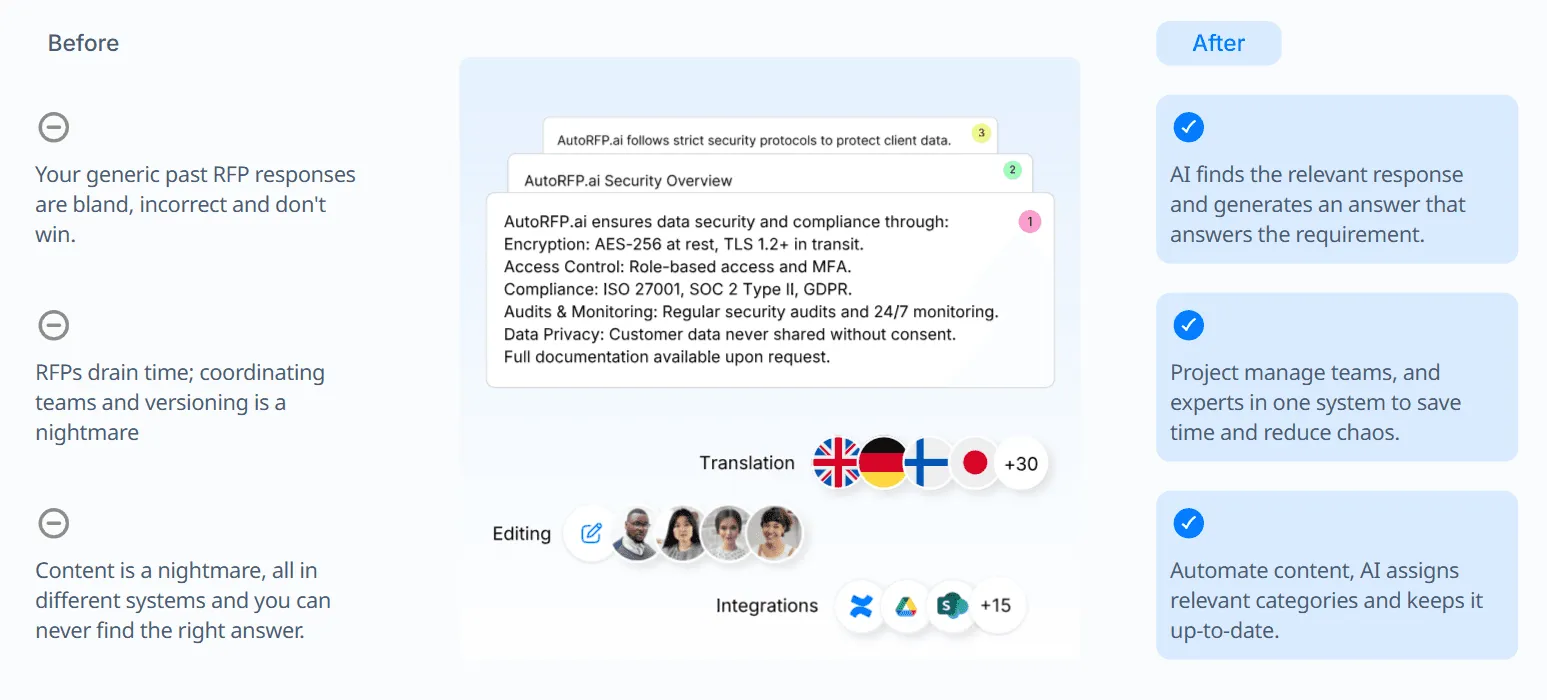
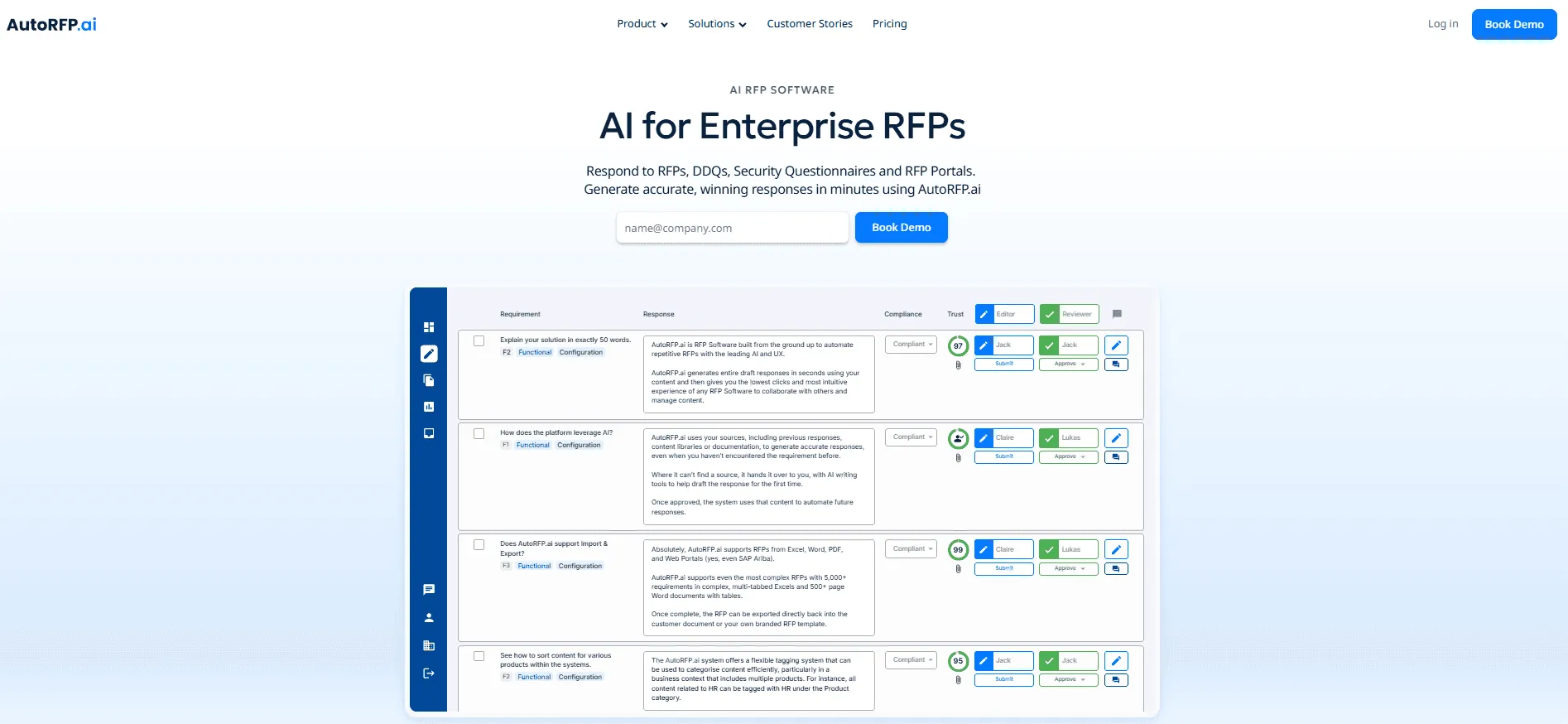
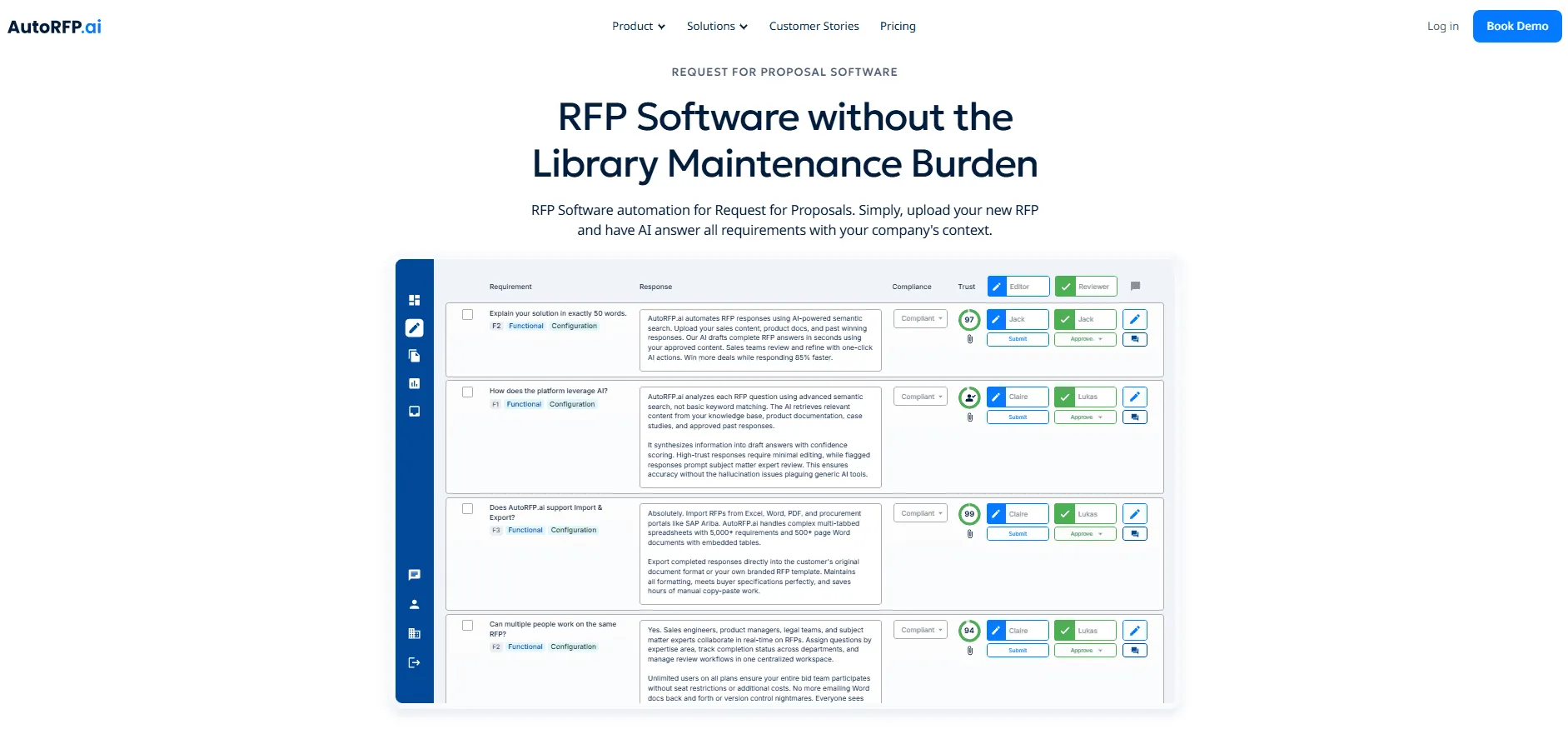
AutoRFP.ai fits this part of the RevOps workflow by helping teams generate responses from approved sources, reduce response time, and keep proposal work more trackable across deal teams.
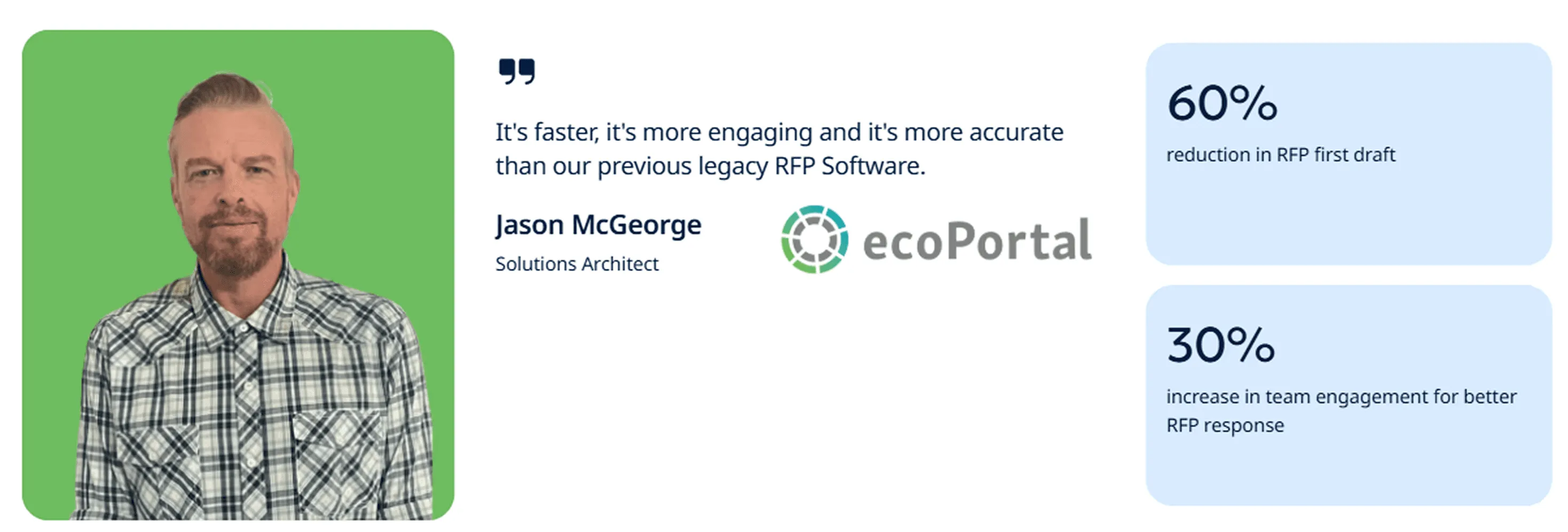
Teams using AutoRFP.ai typically cut response time by 60% and respond to 30% more RFPs per quarter.
Faster buyer responses: AutoRFP.ai helps teams prepare RFP, RFI, DDQ, and security questionnaire responses faster.
Approved knowledge reuse: Teams can reuse past responses, content libraries, and documentation instead of starting from scratch.
Cross-functional visibility: Sales, SMEs, security, and proposal teams can work from a more structured response process.
Revenue impact: Faster RFP execution can help protect deal momentum when buyer requirements are complex.
Pro tip: Treat RFP execution as part of RevOps when it affects sales capacity, buyer response speed, and enterprise deal progression.
Connect AI To The Existing Revenue Tech Stack
AI should support the systems teams already use, not create another disconnected layer. This matters because RevOps depends on smooth movement between CRM, collaboration tools, marketing automation, customer success platforms, and proposal workflows.
CRM alignment: AI should support pipeline, account, contact, and opportunity workflows.
Collaboration tools: AI should help teams work inside tools like Slack, Microsoft Teams, and email.
Knowledge systems: AI should connect to approved documents, past responses, and internal knowledge bases.
Lower context switching: Teams can move faster when AI works where the revenue process already happens.
Pro tip: Choose AI workflows that reduce tool switching, not ones that force teams into another silo.
Use AI To Turn Revenue Activity Into Learning
AI can help RevOps understand which actions actually move revenue forward. Instead of only tracking activity, teams can use AI to study patterns across won deals, lost deals, slow approvals, buyer objections, and successful follow-ups.
Win-loss patterns: AI can help identify which messages, proof points, or process steps appear in stronger deals.
Content performance: AI can show which assets or responses help buyers move forward.
Process gaps: AI can reveal where approvals, handoffs, or requirements repeatedly slow deals down.
Continuous improvement: RevOps can use these insights to refine playbooks, workflows, and enablement materials.
Pro tip: Use AI to create a feedback loop between daily revenue work and long-term process improvement.
Use AI To Personalise GTM Execution At Scale
AI can help RevOps teams make go-to-market execution more relevant across different accounts, industries, buyer roles, and deal stages. Instead of using the same messaging for every buyer, teams can use AI to tailor outreach, content, follow-ups, and sales guidance based on real revenue signals.
Account-specific messaging: AI can help teams adapt sales and marketing messages based on industry, pain points, buying signals, and deal stage.
Better content matching: AI can recommend the right case study, proof point, sales deck, or proposal content for each buyer situation.
Smarter follow-ups: AI can help reps send more relevant follow-ups based on buyer behavior, objections, and previous conversations.
Consistent execution: AI can keep sales and marketing aligned while still allowing messaging to feel more specific to each account.
Pro tip: Keep this point if your article has enough space, because it adds a GTM angle that is different from forecasting, automation, and data governance.
Main Challenges of RevOps: What Usually Breaks
These are the main RevOps challenges that usually break revenue execution, especially when teams, data, systems and ownership are not aligned across the full buyer journey.
| Challenge | What usually breaks |
|---|---|
| Siloed team ownership | Sales, marketing, customer success and finance work toward different goals, so revenue priorities become disconnected. |
| Inconsistent data definitions | Teams define leads, opportunities, pipeline stages, churn risk and revenue differently, making reporting hard to trust. |
| Manual handoffs | Leads, renewals, approvals and customer context move slowly because teams rely on emails, spreadsheets and Slack reminders. |
| Disconnected revenue tools | CRM, marketing automation, sales enablement and customer success tools do not sync properly, creating data gaps and duplicated work. |
| Weak deal desk visibility | Pricing approvals, legal reviews, security checks and procurement steps happen outside the main revenue workflow. |
| RFP execution delays | RFPs, RFIs and DDQs slow enterprise deals when ownership, approved answers and review steps are scattered across teams. |
| Security questionnaire bottlenecks | Security questionnaires break RevOps flow when sales, security, legal and product teams chase answers manually. AutoRFP.ai says its AI RFP software supports RFPs, RFIs, DDQs and security questionnaires. |
| Poor post-sale visibility | Customer success issues, renewal risks and expansion signals stay separate from acquisition data, limiting full revenue visibility. |
| Unclear automation ownership | Teams add workflows without clear owners, so alerts, routing rules and CRM updates become outdated or ignored. |
| Low trust in reporting | Leaders cannot make confident revenue decisions when dashboards reflect incomplete data, delayed updates or inconsistent team inputs. |
“The biggest mistake I see is RevOps teams building around the org chart instead of the buyer. They optimize the SDR-to-AE handoff but ignore the RFP and procurement process that decides every six-figure deal.” - Robert Dickson, RevOps Manager at AutoRFP.ai
What Every RevOps Team Needs Regardless Of Industry Use Cases
Regardless of industry, sales motion or company size, every RevOps team needs the same core foundation: trusted data, clear workflows, useful insights, connected tools and strong cross-functional alignment.
1. Data And Systems Foundation: One Source Of Truth
RevOps depends on clean, connected data because every revenue decision flows from it. When teams work from different systems or outdated records, forecasting, handoffs and reporting become unreliable.
Centralized CRM: Keep account, contact, opportunity and customer data in one main system.
Data integrity and governance: Set clear rules for required fields, naming conventions, ownership and updates.
Unified customer view: Give sales, marketing and customer success the same view of customer activity.
Consistent reporting inputs: Make sure dashboards use the same definitions across every team.
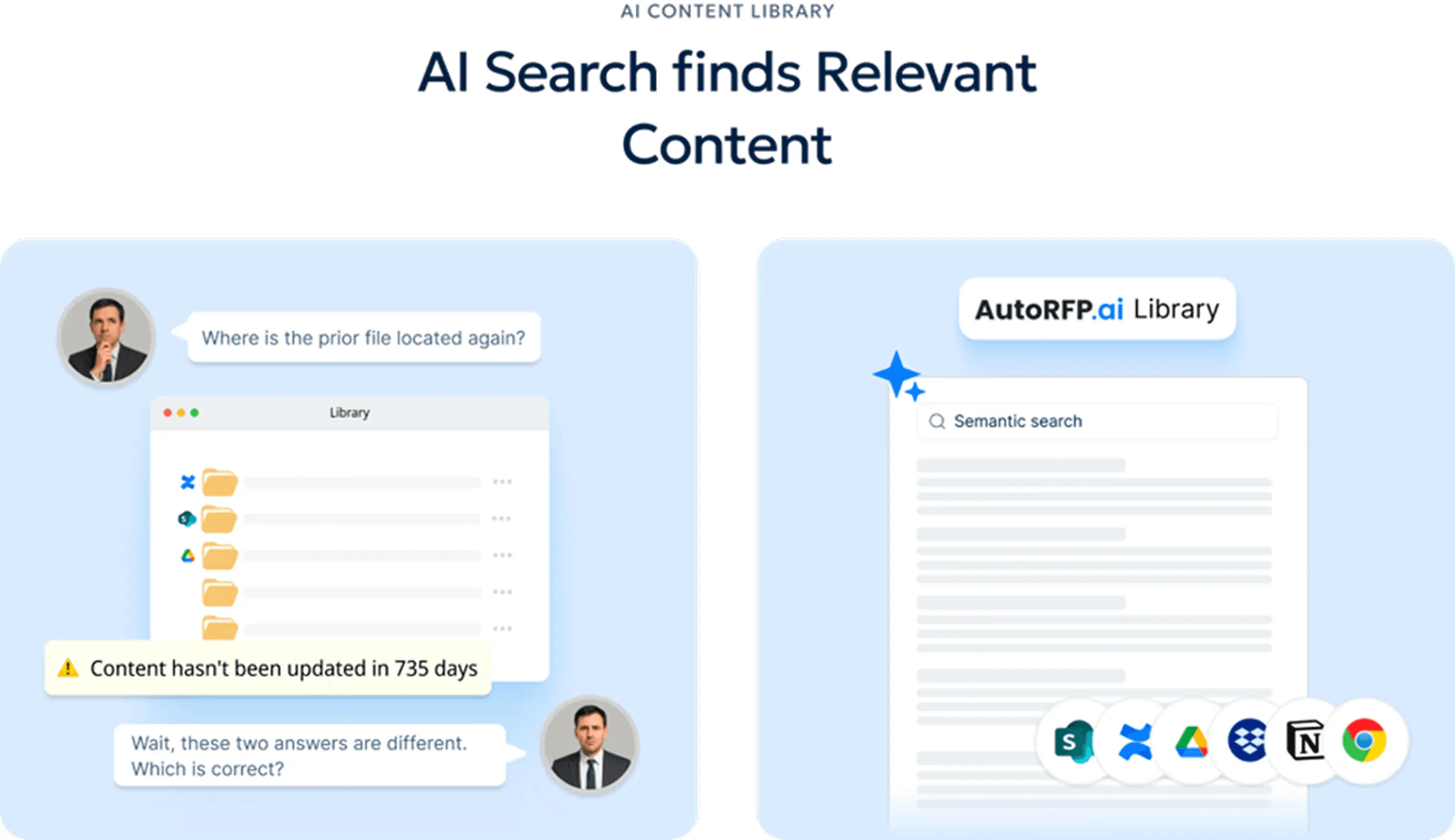
Side note: AutoRFP.ai can support the same “one source of truth” principle for RFPs, DDQs and security questionnaires. Its content library helps teams reuse approved responses, reduce duplicate work and keep proposal answers easier to manage across deals.
2. Process And Governance: Standardised Workflows
RevOps brings structure to revenue execution. Teams need documented workflows so lead routing, handoffs, approvals, renewals and escalations happen consistently.
Aligned customer journey: Define each lifecycle stage from first touch to renewal and expansion.
Clear handoff rules: Document when work moves from marketing to sales, sales to onboarding and onboarding to customer success.
Revenue operations charter: Define RevOps ownership, goals, decision rights and operating principles.
Operationalized sales playbook: Standardise lead routing, territory rules, quoting, approvals and escalation paths.
Side note: Governance should make work easier, not slower. If people still need to ask who owns each step, the workflow is not clear enough.
3. Insights And Planning: Actionable Analytics
RevOps should help leaders see what is working, what is blocked and what needs attention next. The goal is not more dashboards, but better decisions.
Predictive forecasting: Use pipeline movement, customer behaviour and historical patterns to improve forecast confidence.
Core KPI tracking: Track customer acquisition cost, lifetime value, net revenue retention, pipeline velocity and win-loss ratios.
RevOps scorecard: Keep a simple dashboard with five to seven metrics that leaders review regularly.
Clear metric ownership: Assign owners for every key metric so reporting does not become passive.
Side note: A useful RevOps dashboard should make the next action obvious.
4. The Execution Layer: Automation And Tools
RevOps needs tools that turn strategy into daily action. The right stack should reduce manual work, improve visibility and support the workflows teams already use.
AI-enabled tools: Use AI for forecasting support, data enrichment, call insights, content recommendations and response drafting.
Workflow automation: Automate lead routing, task creation, renewal reminders, approvals and CRM updates.
Tech stack optimization: Remove duplicate tools and prioritise platforms that integrate well.
Cross-functional execution: Support workflows that involve sales, marketing, customer success, finance, security and legal.
Examples of RevOps tools by use case:
CRM and pipeline management: Salesforce or HubSpot.
Data enrichment: Clearbit or ZoomInfo.
Conversation intelligence: Gong.
Marketing automation: HubSpot, Marketo or Pardot.
Customer success workflows: Gainsight or Vitally.
RFP, DDQ and security questionnaire automation: AutoRFP.ai.
Internal collaboration: Slack, Microsoft Teams and Google Workspace.
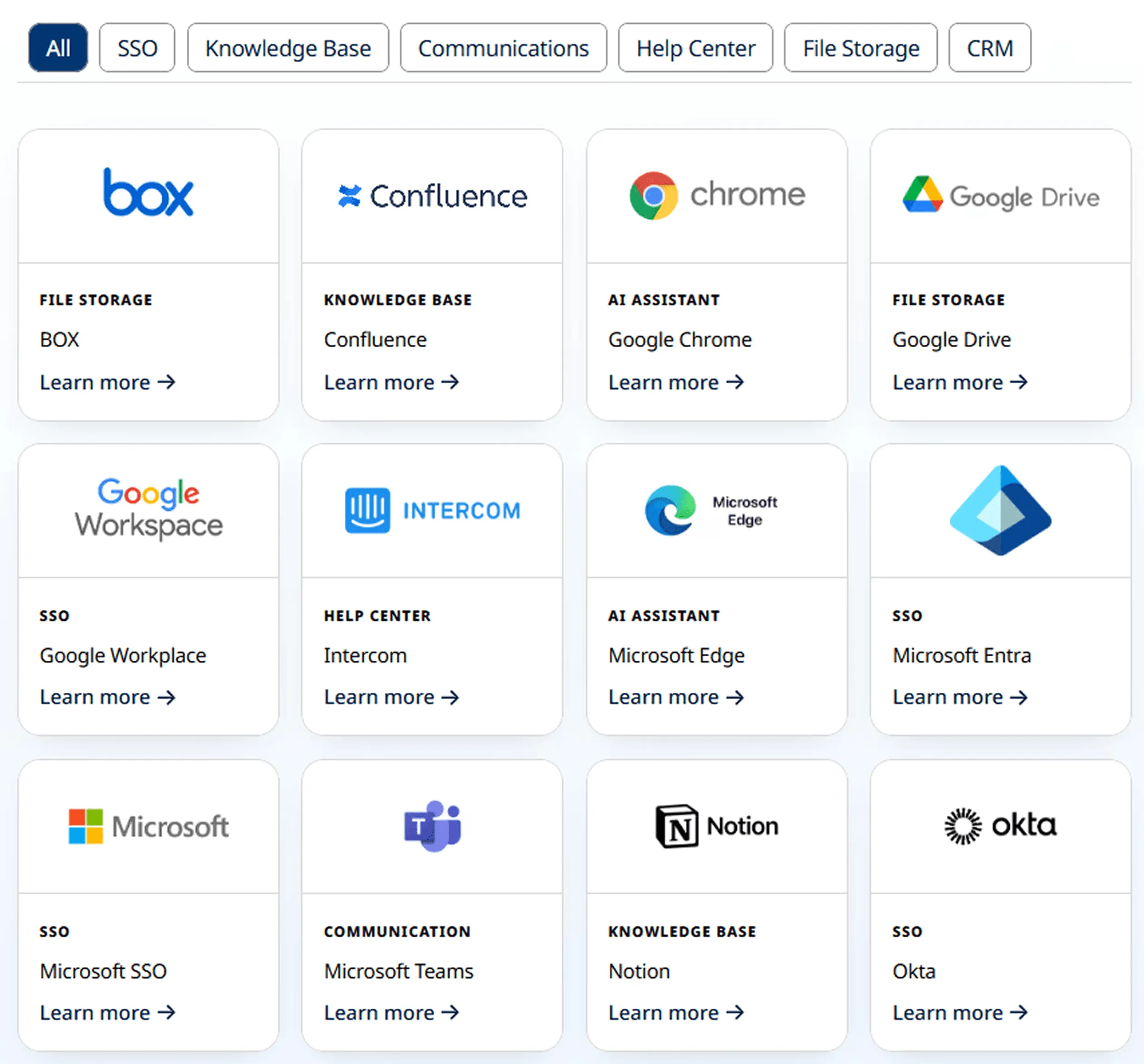
Knowledge and file storage: Google Drive, SharePoint, Confluence and Notion.
AutoRFP.ai is especially relevant when enterprise deals involve RFPs, RFIs, DDQs or security questionnaires. It integrates with tools such as Slack, Microsoft Teams, Salesforce, Google Drive, SharePoint, Confluence and Notion, which helps teams manage proposal work without creating another disconnected workflow.
Side note: Do not build a bigger tech stack just to look more advanced. Build a stack that makes revenue work easier to execute.
5. Cultural Alignment: A Strategic Partner
RevOps should act as a neutral partner across sales, marketing, customer success and leadership. Its job is to align teams around shared revenue goals, not protect one department’s priorities.
Cross-functional alignment: Keep teams focused on shared revenue outcomes, not separate departmental wins.
Strategic communication: Share roadmap updates, process changes and performance insights with leadership.
Neutral decision-making: Use data and process discipline to reduce opinion-based conflicts.
Change management: Help teams adopt new workflows, tools and reporting habits with less friction.
Side note: RevOps becomes more valuable when teams see it as a growth partner, not just the team that manages CRM fields.
Where AutoRFP.ai Fits In Your RevOps Stack
Not every RevOps challenge needs RFP automation. If your main issue is CRM hygiene, forecasting, attribution or customer success workflows, start with tools built for those problems. But if enterprise deals regularly involve RFPs, RFIs, DDQs or security questionnaires.
AutoRFP.ai can help turn that work into a more visible, repeatable RevOps workflow. It helps teams draft responses from approved content, collaborate across SMEs and reduce response time without losing control over quality.
AutoRFP.ai says teams using its platform cut response time by 60% and respond to 30% more RFPs per quarter. To see how it can fit into your revenue workflow, book a demo with AutoRFP.ai.
About the author

Ops Lead
Ops Lead at AutoRFP.ai. Designs the pipeline, content, and handoff systems bid teams use to run RFPs end-to-end, and co-hosts live sessions on winning workflows.
LinkedInFrequently asked questions
How Can You Prove The ROI Of Your Proposal Automation To Your CFO Using AutoRFP.ai?
AutoRFP.ai provides an Automation ROI Report that gives you executive ready data showing exactly how much time and money the platform saves. On average, customers save 26 hours per RFP, which translates to significant human capital savings per submission. The report breaks this down by project and quarter, so when your CFO asks for the ROI on your tools, you have concrete numbers rather than anecdotal evidence.
What Specific Metrics Does The AutoRFP.ai Automation ROI Report Track?
The report tracks your automation rate, time saved per project, cost savings in human capital, and efficiency trends over time. You can view this data across your entire organization to demonstrate continuous improvement and show how your operations are scaling without a linear increase in headcount.
Can You See The Impact Of Automation At The Individual Subject Matter Expert Level In AutoRFP.ai?
Yes. The reporting in AutoRFP.ai shows per SME metrics, including how many questions were assigned and what percentage the AI auto drafted accurately. For example, if you assign 100 questions to a team member, you can see that AutoRFP.ai drafted accurate responses for the vast majority of them, allowing your experts to focus only on the small percentage that required heavy editing.
Does The AutoRFP.ai ROI Report Distinguish Between Different Levels Of AI Involvement In Your Responses?
Yes, the AutoRFP.ai report breaks down your responses into granular levels of AI involvement, including Perfect Match, Minor Edits, Major Edits, and Manual. This allows you to see exactly how much heavy lifting the AI is doing and where your team is adding the most value through strategic editing and high level oversight.
How Long Does It Take To Set Up Your Automation Reporting With AutoRFP.ai?
Automation reporting works automatically once you start completing projects in AutoRFP.ai. Your account can be configured within 48 hours after a quick demo. The more projects your team completes, the richer your ROI data becomes, providing you with a long term view of your operational efficiency.
How Does A Lack Of Quantified ROI Impact Your Proposal Team's Internal Reputation?
Without hard data, proposal and operations teams are often viewed as a cost center rather than a revenue driver. Quantified ROI reporting changes this perception by showing the direct financial impact your team has on the company's efficiency and bottom line, positioning you as a strategic partner in the revenue engine.
How Can Automated ROI Reporting Help You Justify A Request For More Headcount?
Automated reporting shows exactly when your team is at peak capacity, even with AI assistance. By demonstrating that your team is maxed out despite high automation rates, you can present a data driven business case for additional staff to handle rising RFP volumes and maintain your win rates.
How Does Executive Level ROI Reporting Help You Secure Long Term Budget For Your Tools?
CFOs and VPs are much more likely to renew and expand budgets for tools that can prove their impact in dollars and hours. Automated ROI reporting takes the guesswork out of the renewal process by showing exactly how much the tool has saved your company over the course of the year.
How Can Tracking Edit Depth Help You Identify Gaps In Your Company's Content Library?
If your reporting shows that certain categories of questions consistently require major edits despite AI drafting, it is a clear signal that your content library for that topic is outdated or incomplete. This allows you to prioritize library updates where they will have the biggest impact on your team's overall efficiency.
What Are The Risks Of Maintaining Information Silos During Your Bidding Process?
Information silos lead to knowledge fragmentation, where different teams have access to different versions of the truth. This results in inconsistent proposals, slower response times, and a higher likelihood of missing critical requirements that could lead to disqualification from high value deals.
