Best RFX Software Solutions in 2026 & Beyond: Full Review & What to Look For
The best RFx software in 2026 includes AutoRFP.ai, Responsive, Loopio, Arphie, 1up and Conveyor, compared on AI drafting, formats and pricing.
Written by

Technical Account Manager, AutoRFP.ai
- Updated
- Reading time
- 26 min
At IMTC, a single RFP could take up to 32 hours of senior-team time before the first draft was even finished. That kind of workload is exactly why RFX software exists: to help response teams handle RFPs, RFIs, RFQs, and questionnaires without rebuilding every answer from scratch.
This guide reviews the leading RFX software solutions for 2026, how their approaches differ, the features that matter most, and what to look for before choosing a platform your team will rely on.
What Is RFx Software?
RFx software helps organizations manage Requests for X, an umbrella term for procurement documents such as Requests for Information (RFI), Proposals (RFP), Quotations (RFQ), and Tenders (RFT).
However, RFx software serves two different sides of the procurement process:
| Software type | Who uses it and what it does |
|---|---|
| Buyer-side RFx software | Procurement teams use it to create and issue requests, collect supplier submissions, compare bids, and evaluate vendors. |
| Response-side RFx software | Sales and proposal teams use it to analyze incoming requests, generate responses from approved content, coordinate reviews, and prepare submissions. |
For a detailed explanation of each RFx format, see our guide on what RFx means and the differences between RFI, RFP, RFQ, and RFT.
How We Compared RFx Software
In AutoRFP.ai’s 2026 Proposal Win Rate Report, produced with Stargazy, 59% of high-win respondents used content library automation, compared with 36% of low-win respondents.
For teams answering different types of RFx requests, approved knowledge often serves several purposes. Product information used in an RFI may also support an RFP, while security documentation may inform both a customer questionnaire and a DDQ.
We used the report’s findings on content reuse and governance, alongside the practical requirements of responding to incoming requests, to shape the following comparison criteria.
1. Answer Accuracy and Requirement Coverage
A reusable answer needs to be supported by evidence and address the specific question being asked.
Our comparison considers how platforms generate responses from approved company information, expose supporting sources, and flag questions that require expert input.
We also examine how teams can check completeness and adapt answers to the relevant buyer, product, or service. These capabilities matter when similar questions appear across different requests but require different commitments or supporting details.
2. Knowledge Reuse Across RFx Types
We look at how each platform makes existing libraries, previous submissions, and connected documentation available for new responses.
Relevant capabilities include retrieving approved answers, capturing newly approved knowledge, incorporating source updates, and assigning content ownership. We also consider how teams control which information is reusable across projects and which must remain restricted. This helps distinguish useful shared knowledge from content that could be outdated or inappropriate for another customer.
3. Cross-Functional Review and Governance
The report also found that 65% of high-win respondents had formal review or governance processes, compared with 42% of low-win respondents.
RFx responses can require contributions from sales, product, security, legal, finance, and compliance. We therefore consider question assignments, review stages, deadlines, permissions, and change history.
Contributor access and notifications also matter, particularly when occasional specialists need to verify an answer or approve a commitment before submission.
4. Document Handling and Response Workflow Fit
We examine supported import and export formats, handling of complex spreadsheets and documents, procurement portal workflows, integrations, and security controls.
We also distinguish platforms focused on enterprise response management, sales knowledge, or security questionnaires. Support for response-heavy RFPs and RFIs does not automatically establish suitability for pricing-led RFQs. Implementation requirements, project allowances, contributor licensing, and pricing help readers assess AutoRFP.ai and the other platforms against their actual workload.
The report examines self-reported proposal practices, rather than benchmarking individual RFx platforms. Its findings inform our criteria. High-win respondents reported win rates of 51% or more; low-win respondents reported 25% or less.
The 6 Best RFx Software Tools in 2026
| Tool | Best for | Standout feature | Starting price |
|---|---|---|---|
| AutoRFP.ai | Source-grounded RFx response management | Trust and Feedback Scores with source-backed responses and human escalation for unsupported questions | $899/month |
| Responsive | Complex enterprise RFx management | Mature project management, approvals, deadline tracking, and reporting | From $10,000 |
| Loopio | Teams with established RFx content libraries | Mature content library with ownership, scheduled reviews, and reusable approved answers | Contact sales |
| Arphie | AI-native RFx automation and collaboration | Contextual AI drafting with source citations, confidence indicators, and unlimited users | Contact sales |
| 1up | Sales and presales RFx questionnaires | Knowledge automation across questionnaires, Slack, Teams, Google Chat, and browser workflows | Free |
| Conveyor | Security questionnaires and customer trust workflows | Security questionnaire automation combined with a self-service Trust Center | Free |
1. AutoRFP.ai: Best for Source-Grounded RFX Response Management

AutoRFP.ai is the accuracy-first, AI-native platform for RFPs, security questionnaires, and DDQs: every answer is written from content your team has approved, and shows the sources behind it.
That makes it a strong fit for organizations whose RFX workload does not stop at one document type. Commercial RFPs, RFIs, security assessments, DDQs, and tender-style questionnaires often involve different teams and formats, but they repeatedly draw on the same underlying product, security, compliance, implementation, and company knowledge.
AutoRFP.ai brings that work into one governed response process. It can turn complex buyer documents into structured projects, generate answers from approved company knowledge, coordinate contributors and reviewers, preserve evidence behind responses, and return completed submissions in the format the buyer expects.
The key difference is that automation does not come at the expense of reviewability. Every generated answer can be evaluated based on the evidence behind it and how completely it addresses the requirement, while unsupported questions are surfaced for human input rather than being confidently filled with invented content.
Key Features
Here are the AutoRFP.ai capabilities that matter most when managing different types of RFX responses across the same organization.
1. Generate Source-Grounded Responses With Trust and Feedback Scores
AutoRFP.ai drafts responses from approved content across your response library, documentation, previous projects, and connected company sources.
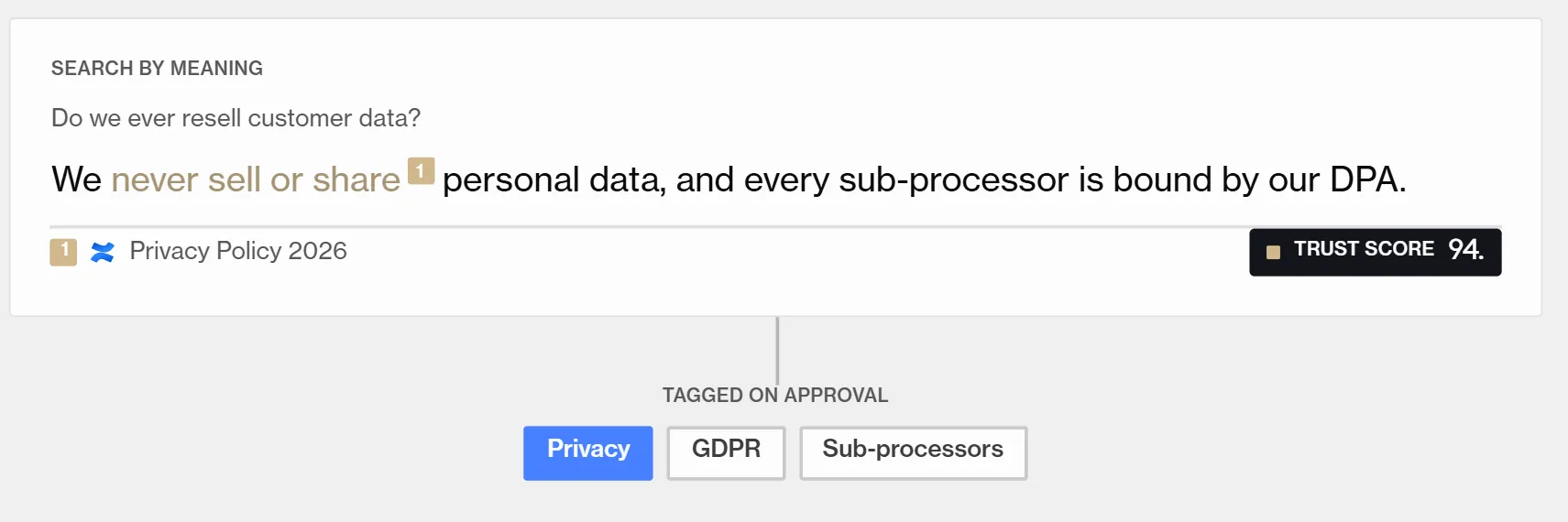
Its response engine evaluates each generated answer using two separate quality signals. The Trust Score reflects how strongly the available sources support the response, while the Feedback Score evaluates whether the answer actually addresses the full requirement, including relevance, clarity, completeness, and appropriate detail.
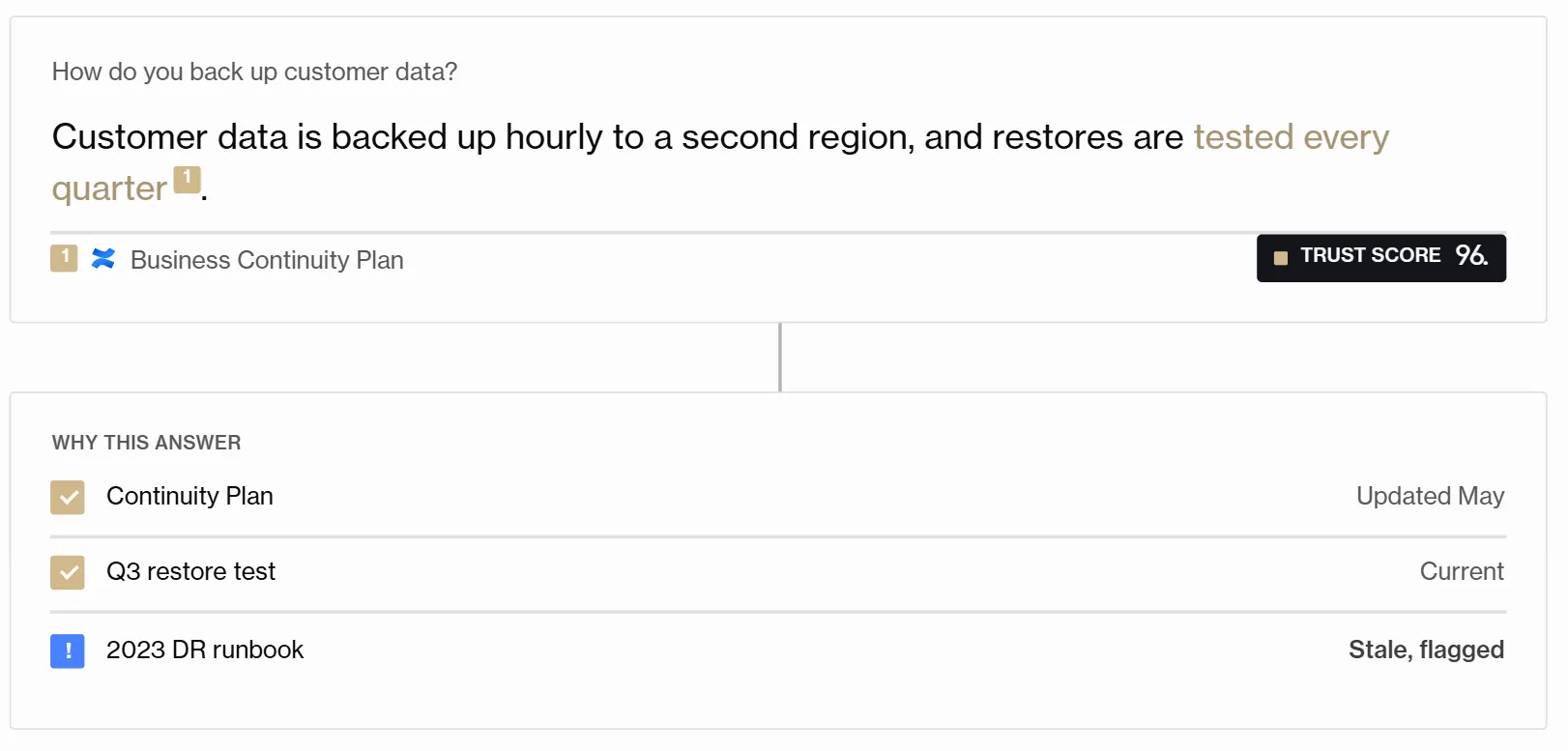
Zero hallucination by design means AutoRFP.ai writes from content your team has approved, cites the sources behind its responses, and routes questions it cannot sufficiently support to a person rather than guessing.
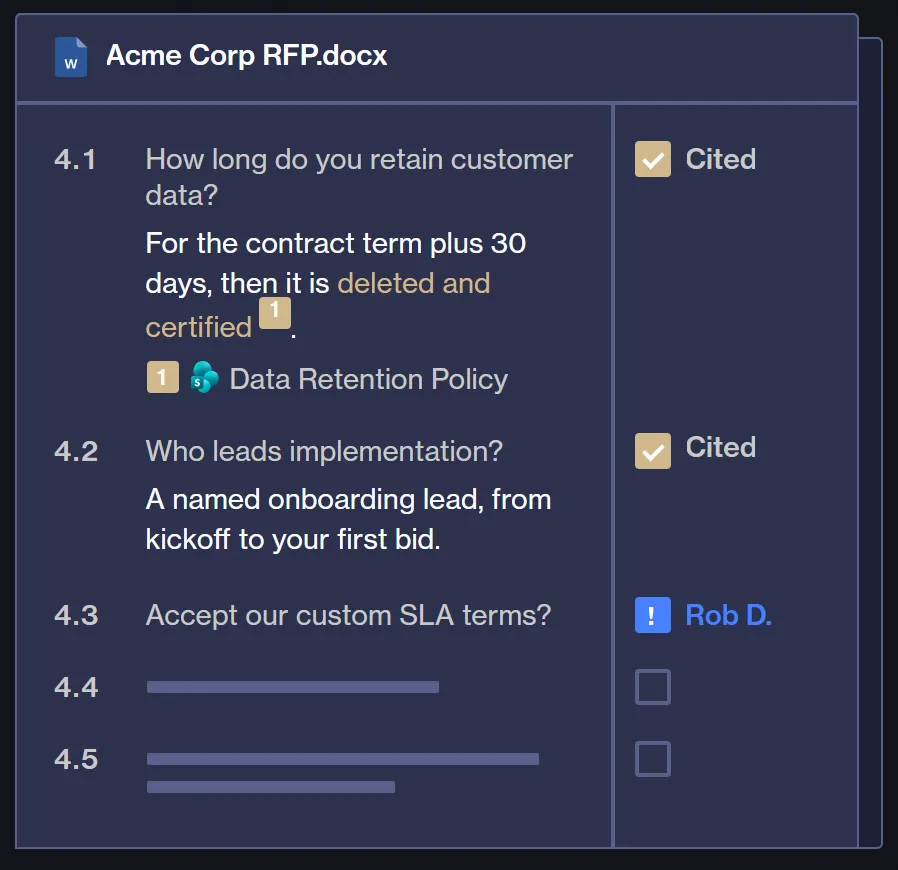
That distinction matters across RFX work because different questionnaires introduce different types of risk. A product-capability answer in an RFP, a security-control statement, and a compliance disclosure in a DDQ may all require different reviewers, but each still needs evidence that the organization can stand behind.


Video transcript
AutoRFP.ai is like having a team member that never sleeps. We've responded to more than double the number of RFPs after implementing AutoRFP.ai than we did the year before. I'll look back on 2025, we'd saved something like 949 hours. It was mind-blowing. Oh my gosh, this can be done automatically. Being able to answer those consistently and accurately puts us in a position to be a trusted vendor for our clients.
Using AutoRFP.ai has definitely helped me increase my closing ratio. Before, we were using Google Drive to store all of our library content and previous responses. It was a very manual process. If the keyword was there, you would find it. If not, then you wouldn't. I would say 60% of the deals that come through in my market are RFP bids.
But as the team was scaling, it quickly became apparent that this wasn't sustainable. I, of course, looked at tools that we had available to us in-house. Became clear that it worked in some ways, but it wasn't built to respond to complex RFPs with multiple questions and moving parts. So what was different about AutoRFP.ai is that we're able to upload multiple documents in all different formats, PDF, Word, Excel, and it will ingest all of those documents and pull out the requirements, even tables within documents instantly.
The Excel sheets just blew our mind because we hadn't seen this anywhere else. As we work in multiple regions, the ability of AutoRFP.ai to translate into multiple languages is really impressive, and it really felt like it was going to be a partnership rather than a transaction. We spend a lot more time now focusing on the strategy for a bid.
The bids are a lot more tailored and a lot more focused on the prospect in a way that we couldn't do before. The quality of our output is just completely different. Do you feel like it's gonna blow their mind because they're like, "Oh, you've said exactly what we needed to hear." Thinking back to that particular deal in Q3, the deadline was coming up.
Having missed the deadline would have meant for me not hitting my quarter, but I also didn't wanna let down my team. Having a bank of information of answers that I could trust really allowed me to just push everything out as quickly as possible, knowing that what I was saying was accurate and true.
Trusting that when that is submitted, more than 50% of the job is done, and I'm really excited to say that, yes, we did win the deal, made me look like a hero, so thank you. We've been able to respond to 20 to 30% more RFPs quarter on quarter. We've been able to increase the capacity of the team. We've saved 45% of the time it would've taken us to respond to the same number of RFPs.
Our shortlist rate has been outstanding, and it just gets better and better I would say don't wait until volumes spike and quality starts to drop. Every bid that your team submits manually is costing you more than you think, not just in hours, but in quality and consistency There's absolutely no way we would want to go back to the previous way AutoRFP.ai is like having a team member that never sleeps, keeps getting smarter, and allows my team to focus on the stuff that they're really good at
2. Manage Different RFX Projects Through the Same Response Workflow
AutoRFP.ai gives teams a shared workspace for managing requirements, assignments, responses, reviews, approvals, and deadlines across each project.
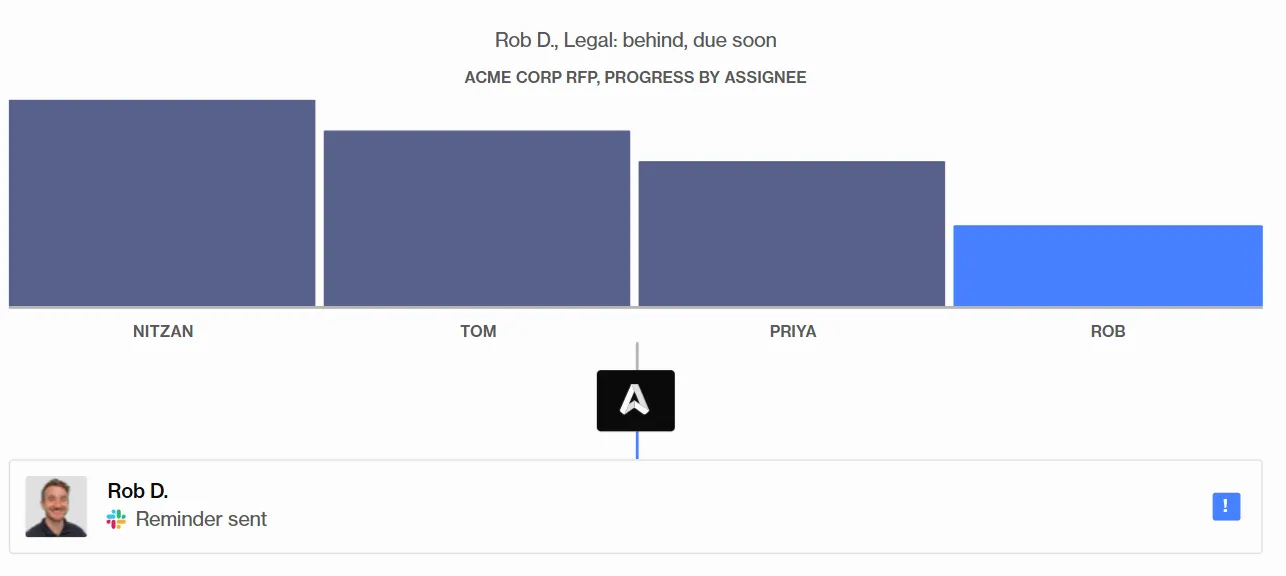
Questions and sections can be routed to the relevant subject matter experts across sales, presales, product, security, legal, finance, compliance, and other functions. Sequential reviews, co-editing, permissions, version history, and audit trails help preserve control as responses move toward approval.
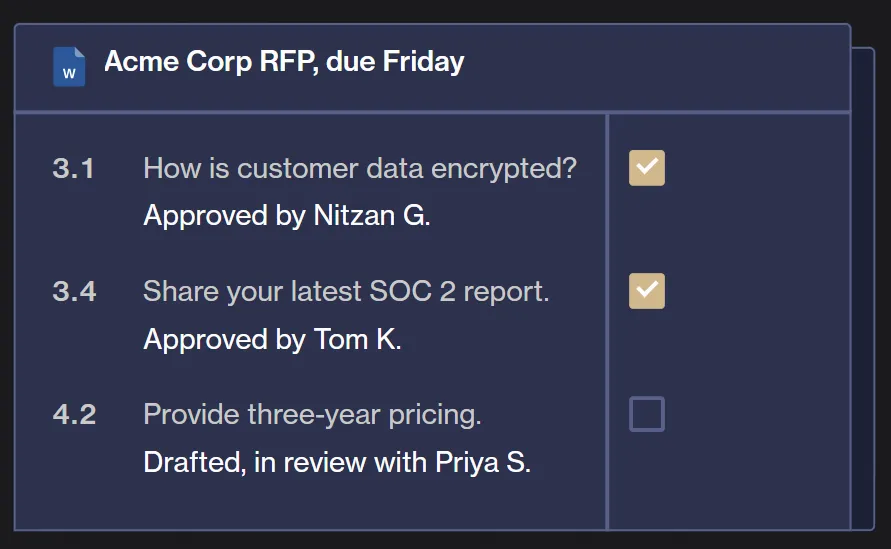
Slack, Microsoft Teams, and email notifications can bring assignments and review requests into the tools contributors already use.
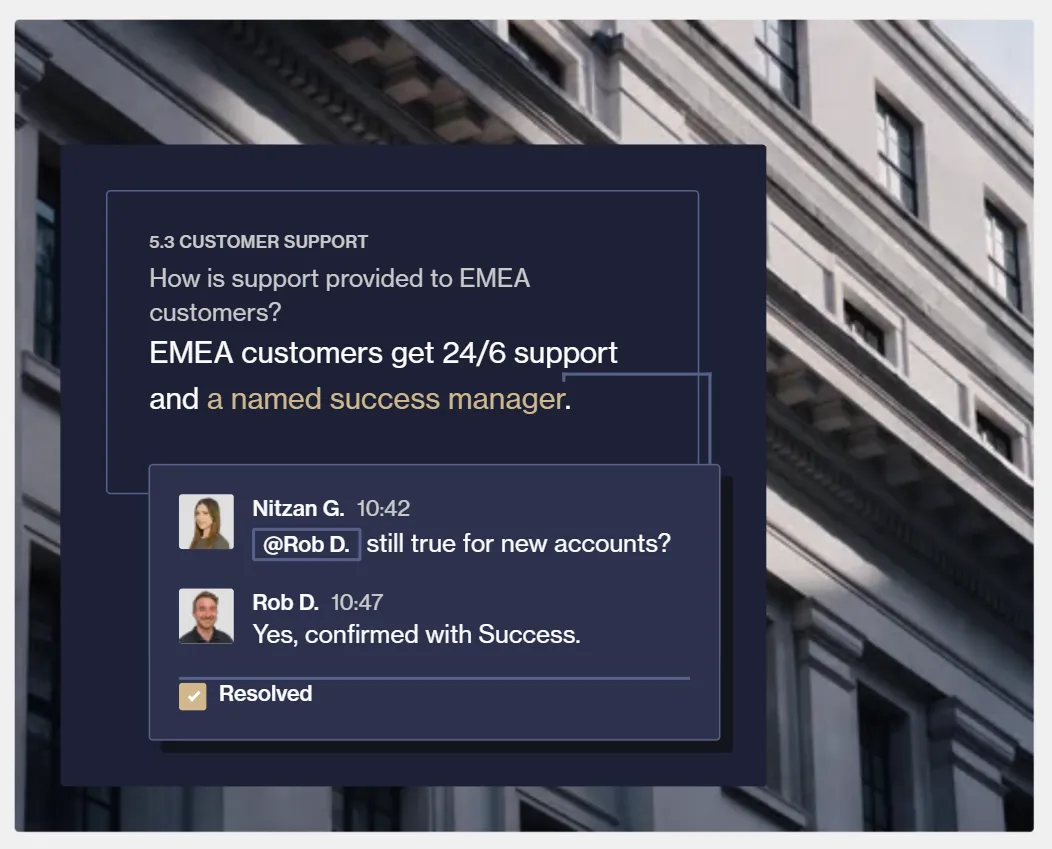
Because AutoRFP.ai includes unlimited users, organizations can involve occasional SMEs and approvers without limiting participation to a small group of licensed response-team users.
3. Build on a Library That Maintains and Improves Itself
AutoRFP.ai builds on the approved response knowledge an organization already has.
Its library can draw from previous projects and connected systems such as SharePoint, Google Drive, OneDrive, Confluence, Box, Notion, and other company knowledge sources.
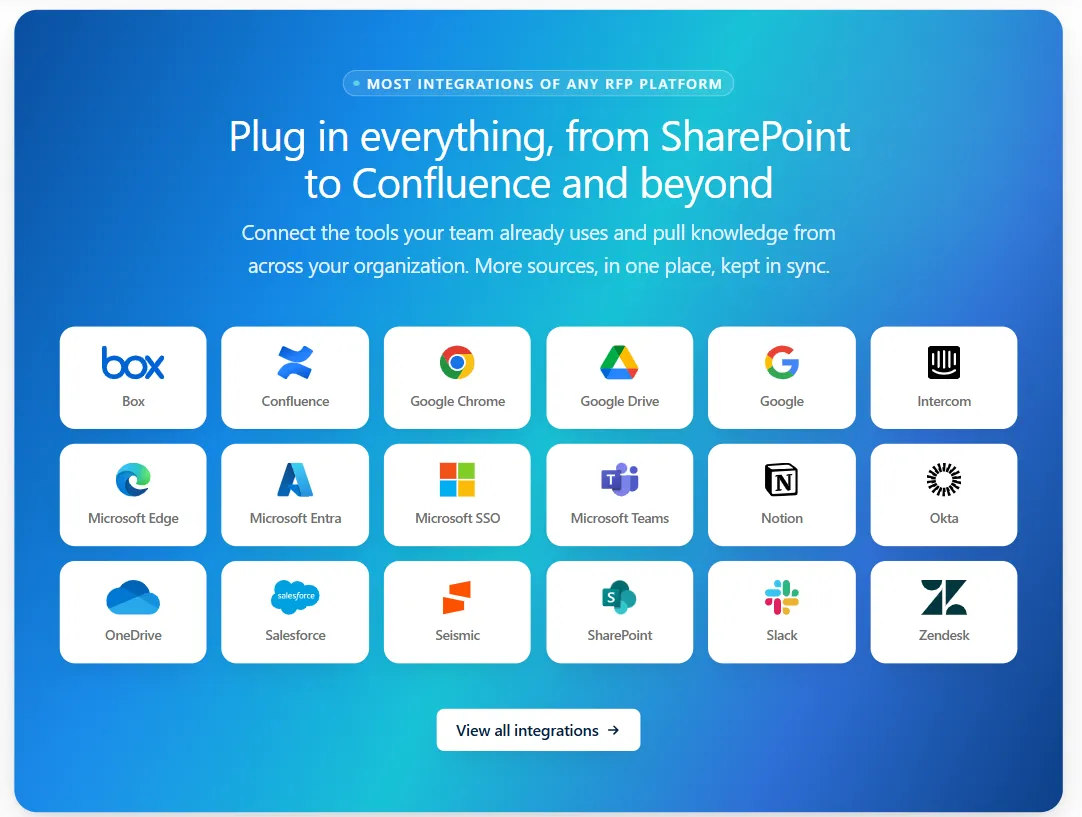
Semantic search finds relevant information by meaning, which is useful when two buyers ask for the same underlying information using completely different terminology.
As responses are approved, useful expertise can become available for future work. Connected-source syncing can also bring changes from systems the organization already maintains into the knowledge available for new responses.
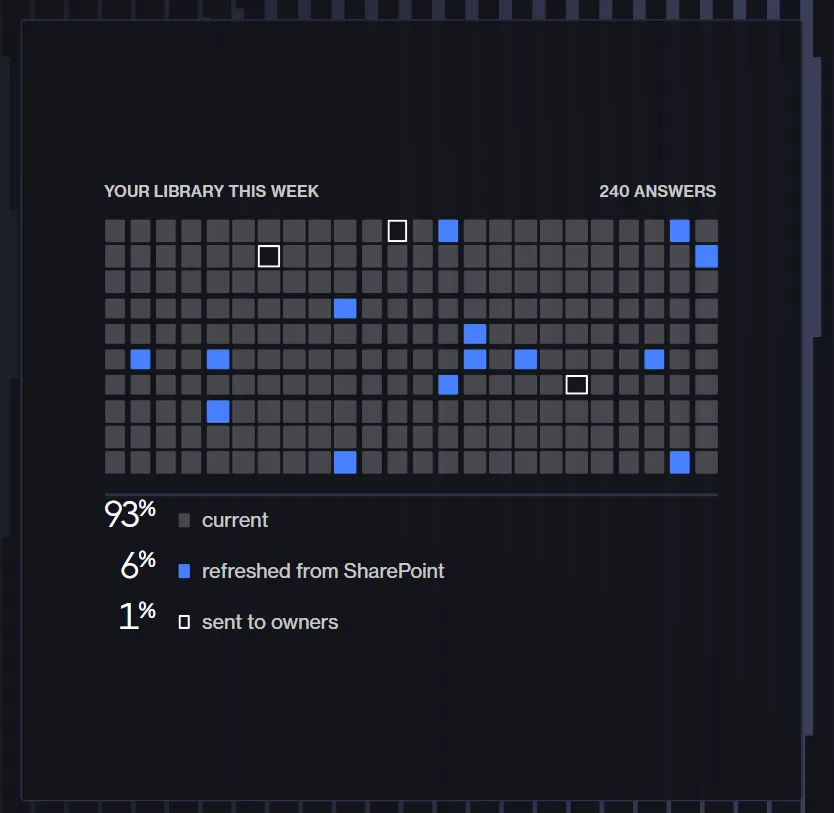
This creates an important advantage for mixed RFX workloads. Knowledge developed while completing a security questionnaire, for example, can strengthen a later RFP or DDQ when the same underlying subject appears again, while content ownership and review remain under the team’s control.
Webinar replay
How Winning Teams setup their Content Libraries

4. Handle Complex RFX Files From Intake Through Submission
RFX requests rarely arrive in a standardized format.
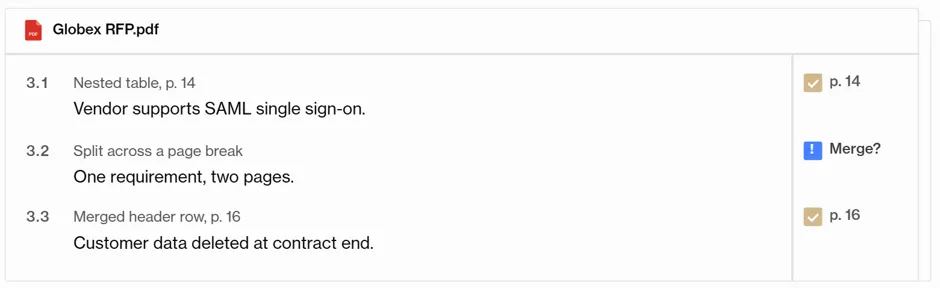
AutoRFP.ai’s AI Document Importer can process Excel spreadsheets, Word documents, PDFs, ZIP files, and complicated questionnaire structures including multiple tabs, nested tables, dropdown fields, hidden worksheets, validation fields, and supporting context.
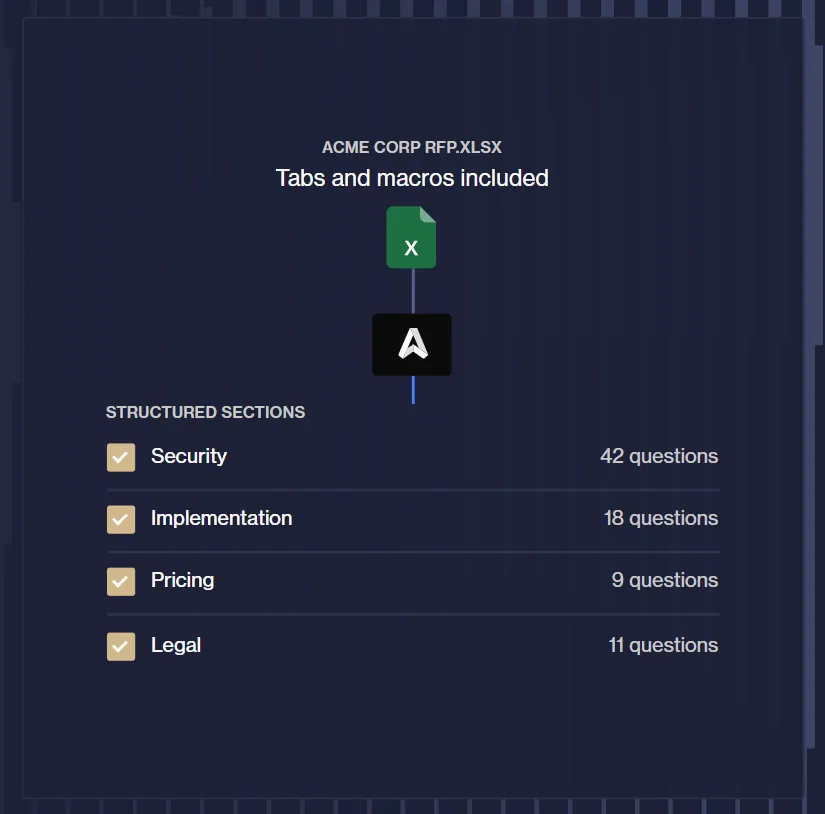
The system extracts requirements into a structured project so the response team can work through them consistently.
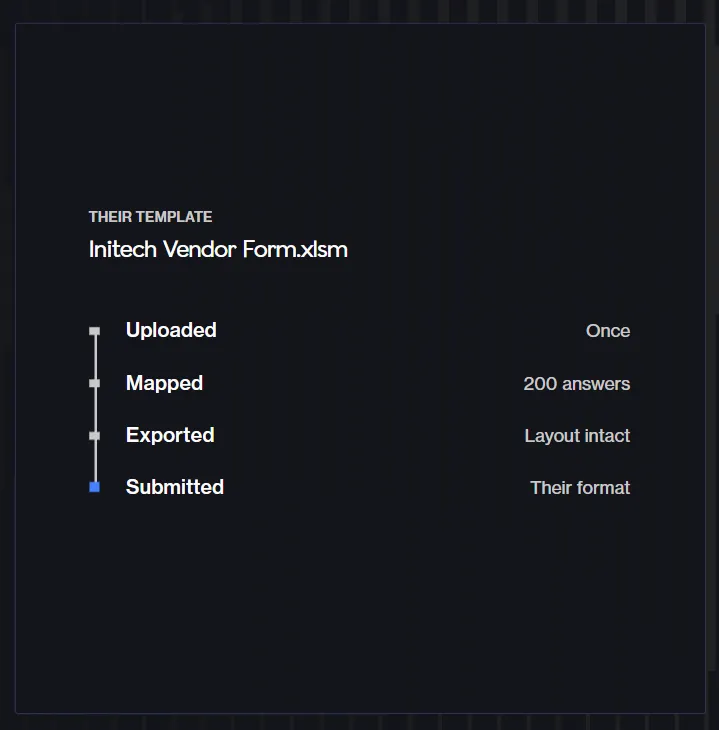
Once review is complete, Excel and Word responses can be written back into the customer’s original file rather than manually reconstructed before submission. PDFs can be managed within the platform and exported as Word documents.
For questionnaires hosted inside procurement or security portals, the Portal Agent can bring those requirements into the same response workflow. This keeps the underlying response process consistent even when buyers use different submission methods.

5. Improve Entire Response Projects With the Project Agent
The Project Agent extends AI assistance beyond individual questions.
Teams can give it project-wide instructions to improve tone, align terminology, apply positioning, check consistency, or update groups of responses. Suggested changes remain reviewable before they are accepted.
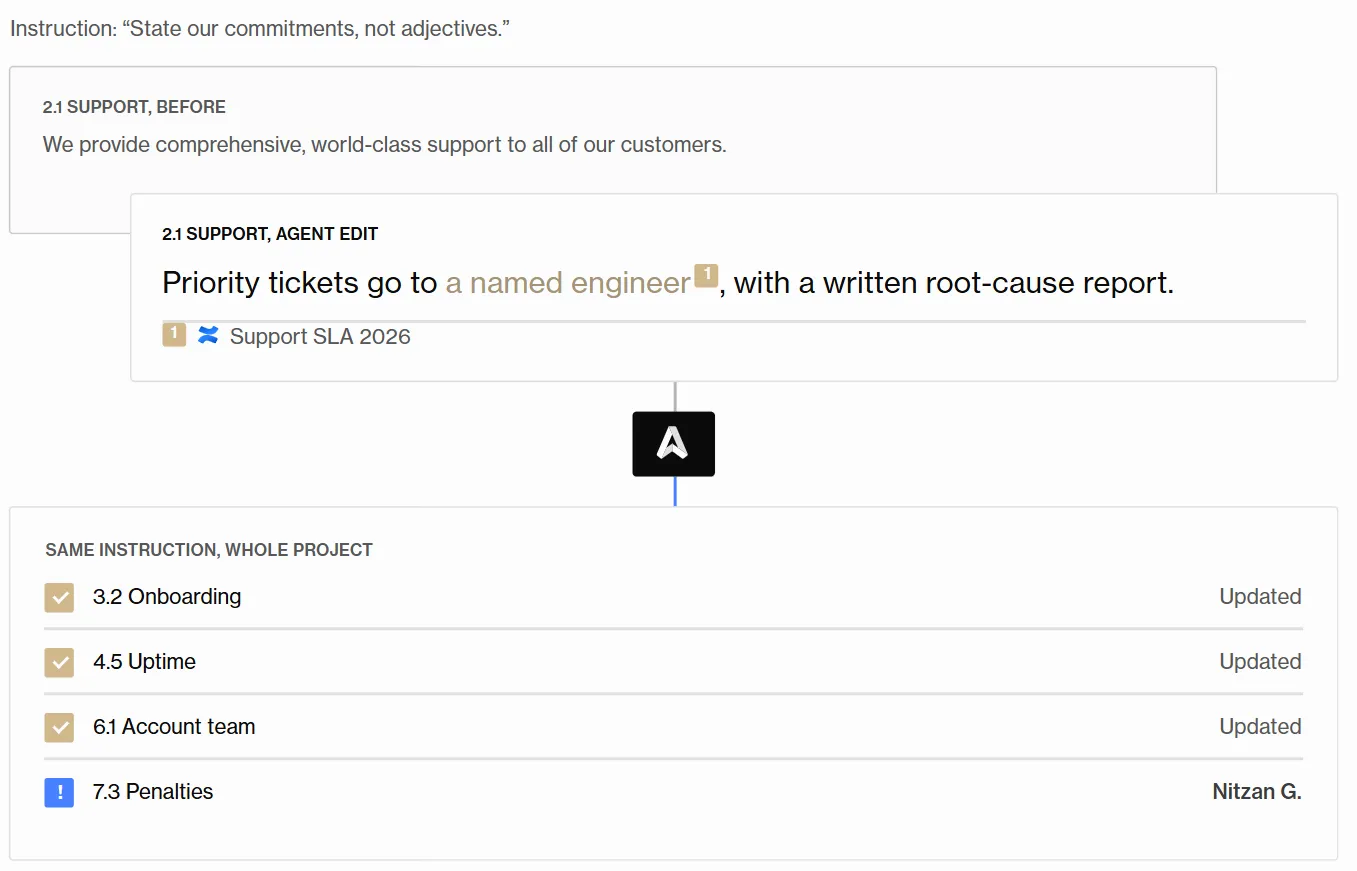
This is particularly useful across large RFX projects where the same change may affect dozens or hundreds of answers.
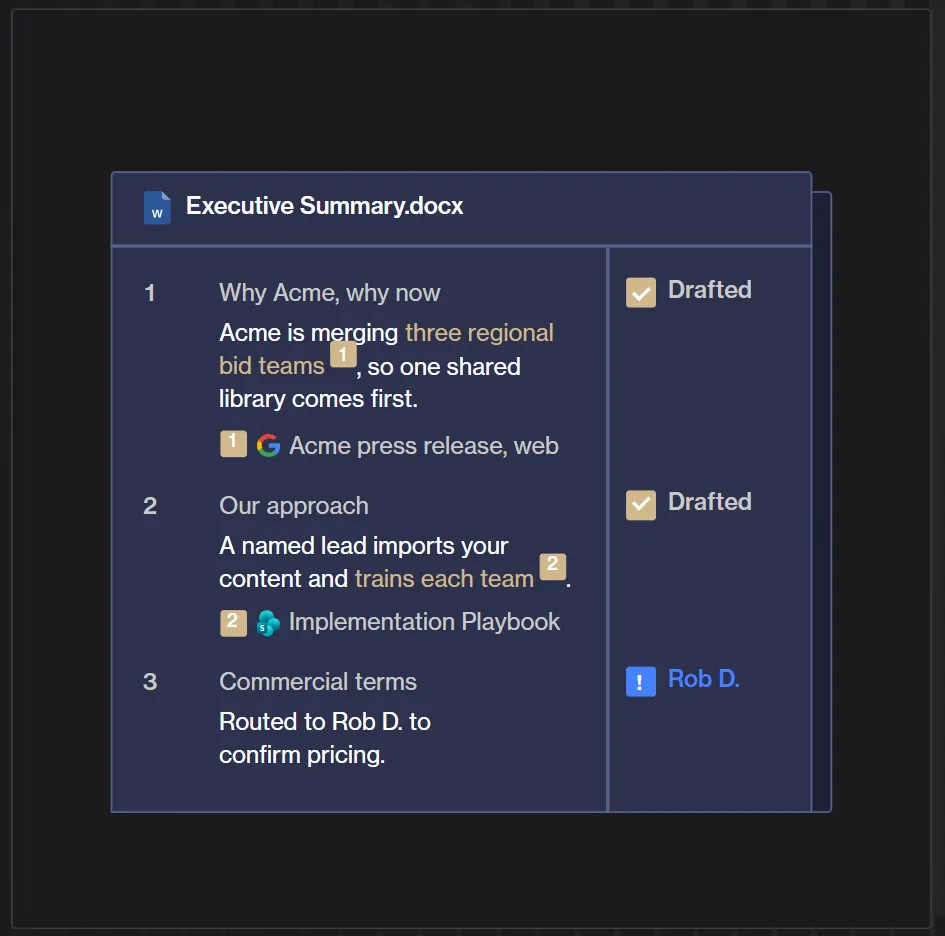
The Project Agent can also work from project context to help create supporting materials such as executive summaries, cover letters, implementation documents, and compliance matrices using company templates.

6. Use RFX Data to Improve Qualification and Future Responses
AutoRFP.ai also helps teams learn from the response work they complete.
Go/No-Go analysis can assess incoming opportunities against configured qualification criteria before substantial response effort begins.
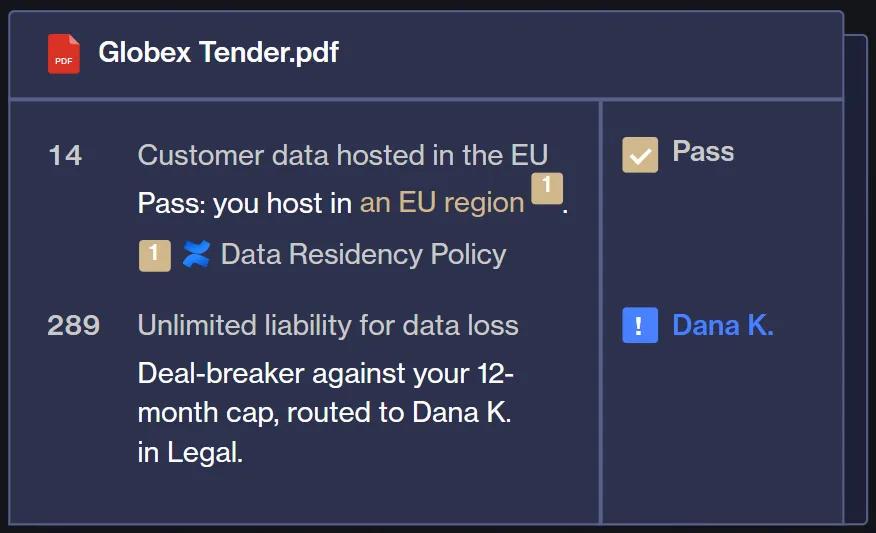
Reporting gives response leaders visibility into project volumes, workloads, capacity, completion patterns, and outcomes across their wider RFX operation.

Gap Analysis can aggregate recurring non-compliant requirements across previous projects, helping teams identify repeated requests for certifications, integrations, deployment options, product capabilities, or other requirements they currently cannot satisfy.
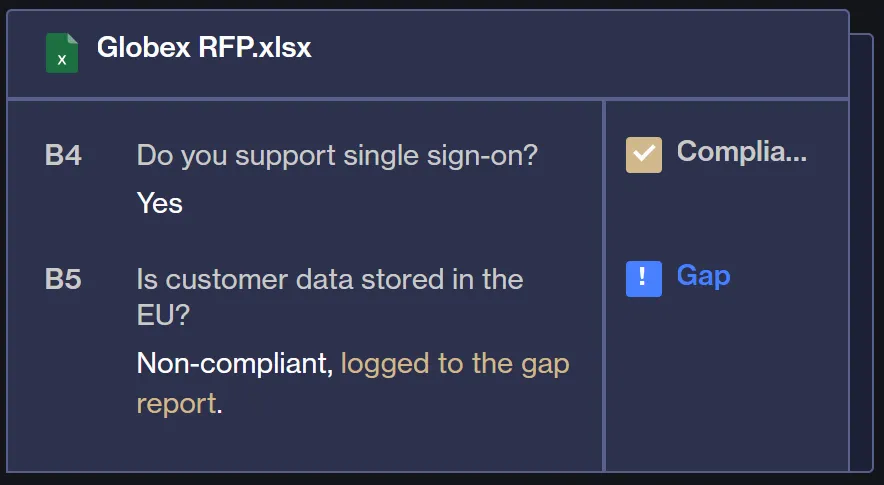
Instead of that information staying buried inside individual questionnaires, it can become evidence for future qualification, content priorities, and product decisions.
Pricing
| Plan | Monthly Cost | Key Inclusions |
|---|---|---|
| Scale | $899/month, paid yearly | 24 projects per year, online training |
| Accelerate | $1,299/month, paid yearly | 50 projects per year, online training |
| Enterprise | Custom | Scalable projects per year, bespoke implementation, and bespoke terms |
Every plan includes unlimited AI, unlimited content, unlimited users, all features, SSO with Google and Microsoft, 18+ integrations, ISO 27001:2022 and SOC 2 compliance credentials, unlimited support, and implementation support.
All features, including SSO, integrations, AI, translation, and more, are included rather than sold as paid add-ons.
AutoRFP.ai also offers a 30-day money-back guarantee, allowing customers to try the platform and request a refund if it is not the right fit.
The unlimited-user model is particularly useful for RFX response work because different questionnaires frequently require input from different combinations of sales, product, security, legal, compliance, finance, and technical specialists.
Where AutoRFP.ai Shines
- One knowledge layer across different response types: Approved product, security, compliance, implementation, and company knowledge can support different RFX projects instead of being recreated separately for every questionnaire type.
- Review by exception: The system helps teams identify which responses warrant deeper human attention, making expert review more targeted across questionnaires containing hundreds or thousands of requirements.
- AI-native automation with compliance-grade controls: AutoRFP.ai combines AI-first response generation with citations, abstention, approvals, permissions, version history, and auditability, which is particularly valuable when AI-generated answers become formal customer commitments.
- Knowledge that compounds across projects: Completing one RFX project can strengthen future work because approved expertise becomes reusable across other questionnaires and connected company knowledge continues supporting new responses.
- Consistency across large response portfolios: Project-wide editing and shared knowledge make it easier to keep terminology, claims, positioning, and response quality aligned when multiple RFPs, RFIs, questionnaires, and DDQs are running at the same time.
- Operational insight beyond individual submissions: Reporting, qualification data, and recurring gap analysis help teams see patterns across the entire response operation rather than treating every questionnaire as an isolated project.
Where AutoRFP.ai Falls Short
- Buyer-side sourcing and procurement: Organizations looking to issue RFXs, score vendors, run sourcing events, negotiate suppliers, or manage procurement workflows need buyer-side sourcing software rather than a response platform.
- Highly narrative proposal work: Teams whose primary requirement is writing long-form, heavily persuasive government or professional-services proposals may prefer specialist proposal-authoring software for that part of the workflow.
Customer Reviews
Katie H., Sr. Director of Sales Operations, said, “This is probably the most valuable tool our organization uses. It has saved us so much time responding to massive RFPs and RFIs.”
Travis K., General Manager, United States, said, “AutoRFP’s RFP responses are extremely tailored and take into account the context of how each question is asked, much more effectively than other systems I’ve previously used. The company is new, and its development and support teams are quick to respond to feedback and make updates.”
Aref Abedi, Co-Founder & CEO of Jobylon said, _“Part of me doesn’t want to recommend it as I want to keep it for myself, but the product is just too good not to share!” _
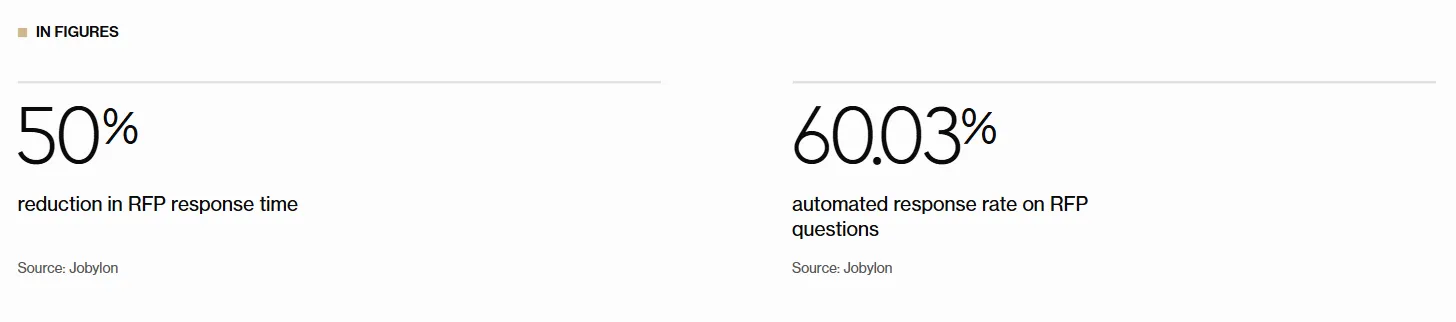
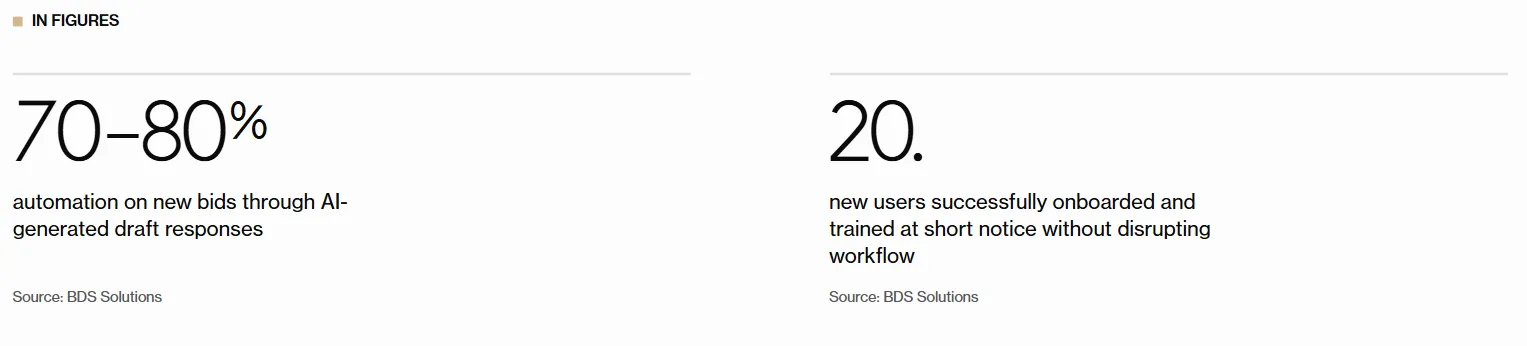
Lisa Ryerson, Director, Marketing at BDS Solutions said, *“Since we started using AutoRFP six months ago, we’ve seen a +50% reduction in the time spent compiling RFP responses.”*** **
Who AutoRFP.ai Is Best For
- Organizations managing several types of RFX responses: Teams handling a mixture of commercial RFPs, RFIs, security questionnaires, DDQs, and tender-style requests rather than a single questionnaire type.
- Enterprise sales and presales teams: Organizations responding to complex opportunities involving product, implementation, security, technical, and commercial requirements.
- Security and compliance-sensitive companies: Teams where customer-facing answers need evidence, controlled approvals, permissions, auditability, and enterprise security safeguards.
- Cross-functional response organizations: Businesses that regularly depend on sales, product, legal, security, compliance, finance, and technical SMEs to complete the same project.
- Teams with established response knowledge: Organizations that already have useful answer libraries, previous submissions, and internal documentation and want that investment to become easier to reuse and improve.
- High-volume response teams: Organizations where running multiple active RFX projects creates pressure on SME capacity, response consistency, and review workload.


Video transcript
Transcript is auto-generated and may contain minor errors.
Hey, I'm Rob from autoRFP.ai. What is autoRFP.ai? Well, autoRFP.ai is an AI software as a service or SaaS application that does AI for proposal or RFP responses. That includes RFIs, like request for informations, includes due diligence questionnaires or DDQs, and includes security questionnaires. So, you can find all about us at autoRFP.ai. So, we're a technology company. We have offices all across the globe including Brisbane, Australia, Vancouver as well. And effectively, our tool allows, whether it be bid managers, sales people, proposal writers, RevOps team members, sales leadership, answer complicated request for proposals. So, what is a request for proposal? You can see one of our other videos below in the description. But effectively, our system
looks something like this. And it lets team members, and you can have unlimited number of people log in to autoRFP.ai, good product, allows people to go in, create projects, which would be for instance an RFP. I can go in here, create my information from my zip file, and that includes, you know, like an Excel spreadsheet, PDF, Word doc. We can run an AI go no go project analysis on the RFP. And then effectively from that, we can bring in all the information in terms of what are the questions, where our AI automatically scans the documents and figures out what is being asked of the RFP, whether it's multiple tabs in an Excel spreadsheet and everything else, whether it's drop-downs. And that all happens automatically through the power of AI. Then, we generate our response, and we can do it in in 40 plus different languages and adding languages all the time. Once you've imported your RFP into order rfp.ai,
you can collaborate with your team members assigning different people to answer the questions, review the questions, looking at an overview of the entire project and project managing due dates. Now AI effectively starts automatically answering those different questions based on your knowledge documentation. So that might be your website, your help docs, your technical documentation, your past RFP answers or security questionnaires, your security policies. But effectively all that different company information you import into order RFP and then our AI leverages that to create an AI first draft of an RFP response. Once we're happy with all those requests, we can approve it. That goes into the model to learn from and add to. So your current responses are automatically used for new responses and then you can export that as well. And then the final cool thing about order RFP is you have a lot of different
integrations that you can pull in, whether it's knowledge documentation from places like Notion, Google Drive and so on. So that's order RFP. We're an AI SaaS app. Uh you can host globally. We do not use customer data for training purposes or to send it back to LLMs. So we're secure and private. We have our ISO 2701 certificate and our SOC 2 certificate and then you can find up-to-date pricing and information on our website. Or if you came to learn more, you can book a demo and schedule time with our team. Thanks.
2. Responsive: Best for Complex Enterprise RFx Management
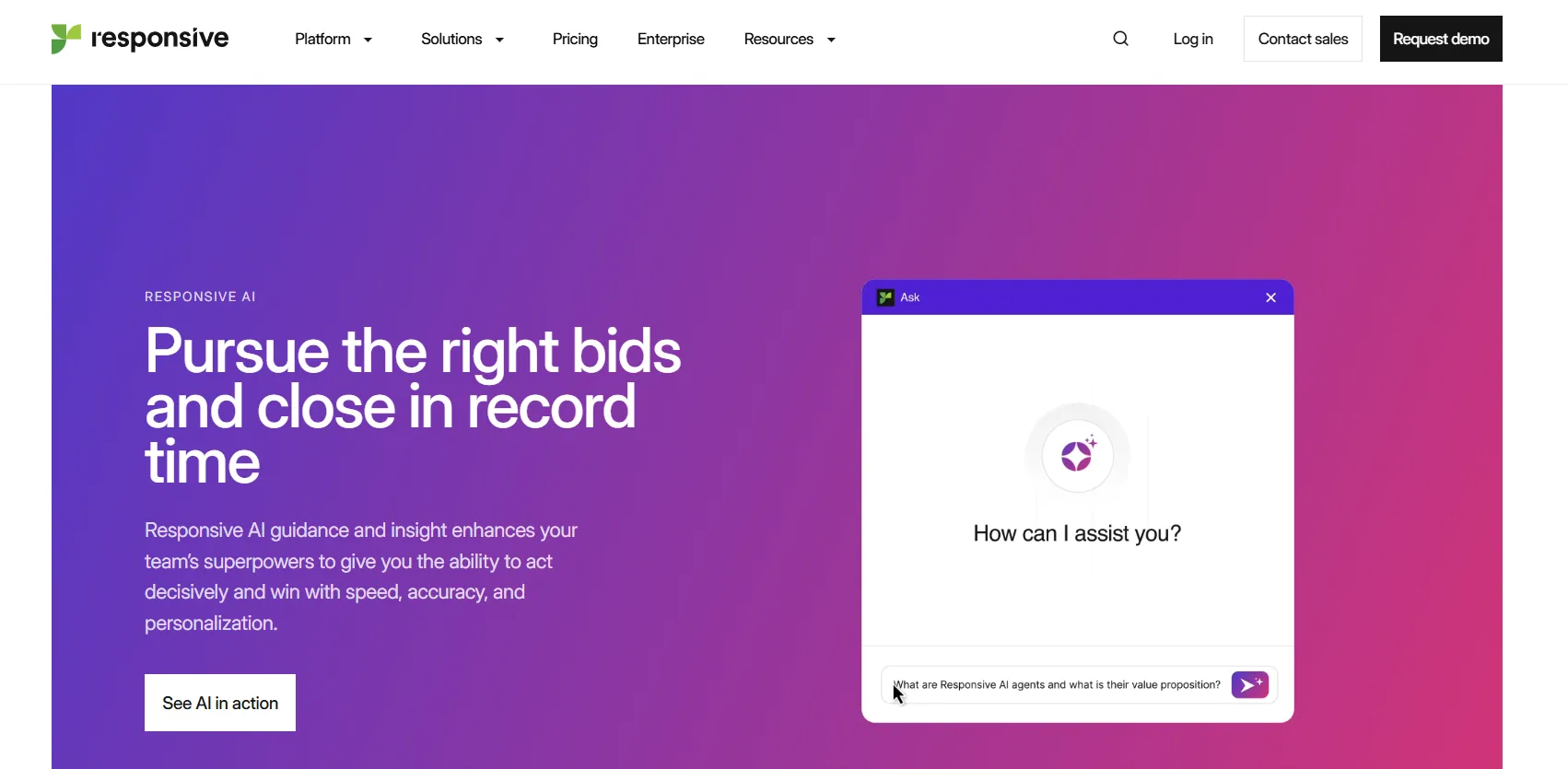
Responsive, formerly RFPIO, is an enterprise response management platform that helps organizations manage RFPs, RFIs, RFQs, security questionnaires, and DDQs. It combines AI-powered response generation, centralized knowledge management, and mature project workflows to coordinate complex requests involving multiple departments.
Key Features
- AI-powered response automation: Responsive uses AI agents to analyze incoming requests, extract requirements, generate responses from approved information, and support compliance reviews.
- Centralized content library: Teams can store approved answers, organize reusable information, assign content owners, and maintain consistency across RFx submissions.
- Enterprise project management: Responsive supports task assignments, deadline tracking, multi-stage approvals, reporting, and integrations with business systems such as Salesforce and Microsoft applications.
Pricing
| Plan Name | Plan Cost |
|---|---|
| Emerging Edition | Starting from $10,000 |
| Growth Edition | Contact sales |
| Enterprise Edition | Contact sales |
Responsive uses annual platform subscriptions with user licensing and potential add-ons or service fees. Its website advertises a $10,000 starting price without specifying the billing period for that figure. All three editions support unlimited response projects.
Where Responsive Shines
- Mature enterprise workflows: Responsive offers established project management, approval controls, deadline tracking, and reporting for organizations handling complex RFx operations.
- Broad RFx coverage: Its platform supports different procurement and response workflows, including RFPs, RFIs, RFQs, security questionnaires, and DDQs.
- Advanced AI capabilities: AI agents assist with document intake, response drafting, requirement analysis, and content governance rather than relying entirely on traditional answer matching.
Where Responsive Falls Short
- Implementation complexity: Its extensive features and configuration options may require additional onboarding and ongoing administration, particularly for smaller teams.
- Content maintenance: Organizations still need to review approved answers, maintain content ownership, and manage their knowledge libraries to support accurate responses.
- Document formatting: Some users report difficulties exporting completed responses into original customer templates, creating additional manual adjustments.
Customer Reviews
Hector T., Sr. Director of Presales CoE, shares, “Responsive makes this easier.” He particularly values its central response repository and cross-functional collaboration but believes its AI capabilities still need improvement.
Johanny L., Sr. RFP Manager, says, “Overall, my experience with Responsive was positive.” She highlights the value of reusable content and collaboration while acknowledging that the library requires ongoing upkeep.
Who Responsive Is Best For
Responsive is best for organizations that:
- Manage complex enterprise RFx workflows: Large businesses handling multiple requests across sales, procurement, security, and legal departments.
- Need advanced project management: Teams prioritizing structured approvals, deadlines, reporting, and governance.
- Handle diverse response requirements: Organizations managing RFPs, RFIs, RFQs, DDQs, and security questionnaires within an established response operation.
3. Loopio: Best for Teams With Established RFx Content Libraries
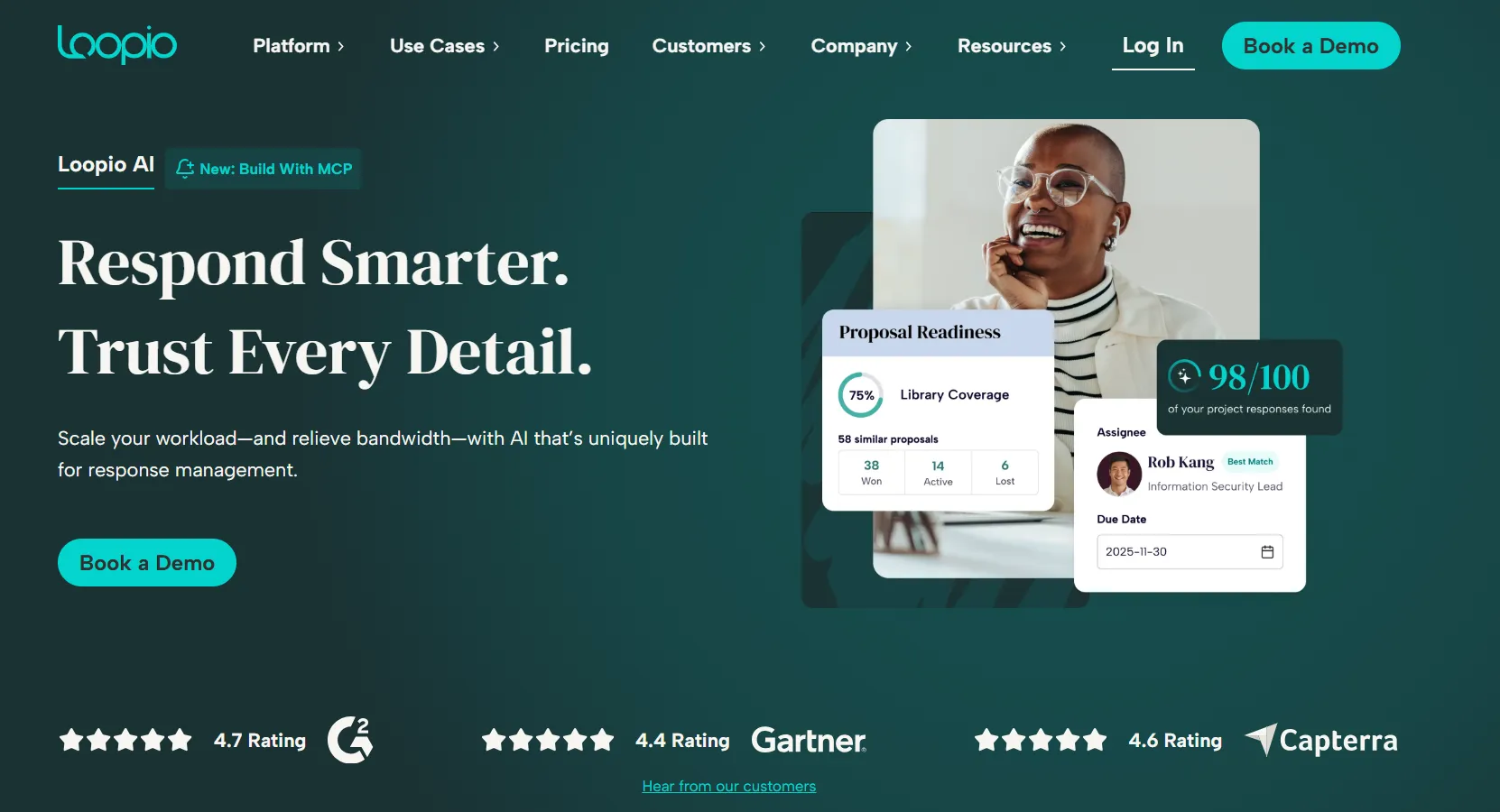
Loopio is an established RFx response management platform recognized for its centralized content library, intuitive interface, and mature collaboration features. It helps organizations manage RFPs, RFIs, and questionnaires while maintaining control over reusable company knowledge and approved responses.
Key Features
- Centralized content library: Loopio organizes approved answers, supporting documents, and previous submissions in a searchable library. Content owners can schedule reviews and maintain information accuracy.
- Magic recommendations and generative AI: Loopio combines automated answer matching with generative AI to draft responses using approved library content and connected knowledge sources.
- Project management: Teams can assign questions, coordinate subject matter experts, track deadlines, and manage multi-stage approval workflows across RFx projects.
Pricing
| Plan Name | Plan Cost |
|---|---|
| Foundations | Contact sales |
| Enhanced | Contact sales |
| Enterprise | Contact sales |
Loopio does not publicly disclose subscription prices. Foundations includes unlimited projects, library entries, and generative AI. Enhanced adds capabilities such as multi-step reviews, while Enterprise supports larger organizations with separate business units and customized requirements.
Where Loopio Shines
- Mature content management: Loopio’s structured library, content ownership, and review cycles help organizations maintain consistent responses across recurring RFx projects.
- Intuitive interface: Its well-organized workflows make it easier for proposal teams and occasional contributors to locate approved information.
- Established collaboration capabilities: Project dashboards, assignments, deadlines, and approval controls support organizations managing multiple contributors.
Where Loopio Falls Short
- Ongoing library upkeep: Although Loopio offers automation and review scheduling, teams still need to manage content accuracy, organization, and approved answers.
- Document formatting challenges: Some users report problems when importing PDFs or exporting completed questionnaires, requiring additional adjustments.
- Seat-based pricing: Organizations with many occasional reviewers should confirm the licensing implications of expanding their contributor base.
Customer Reviews
Ankit J., Senior Proposal Specialist, says, “User Interface and Project handling in Loopio is really good.” His feedback also identifies document export and template handling as areas that could improve.
Lisa S., Business Development professional, shares, “The import function can be clunky at times.” She reports occasional formatting problems when working with PDF documents.
Who Loopio Is Best For
Loopio is best for organizations that:
- Have established content libraries: Teams with dedicated content managers responsible for maintaining approved information and reusable answers.
- Manage recurring RFx requests: Mid-sized and enterprise businesses responding regularly to RFPs, RFIs, and security questionnaires.
- Need structured collaboration: Organizations relying on assignments, deadlines, and approval workflows to coordinate submissions.
4. Arphie: Best for AI-Native RFx Automation and Collaboration
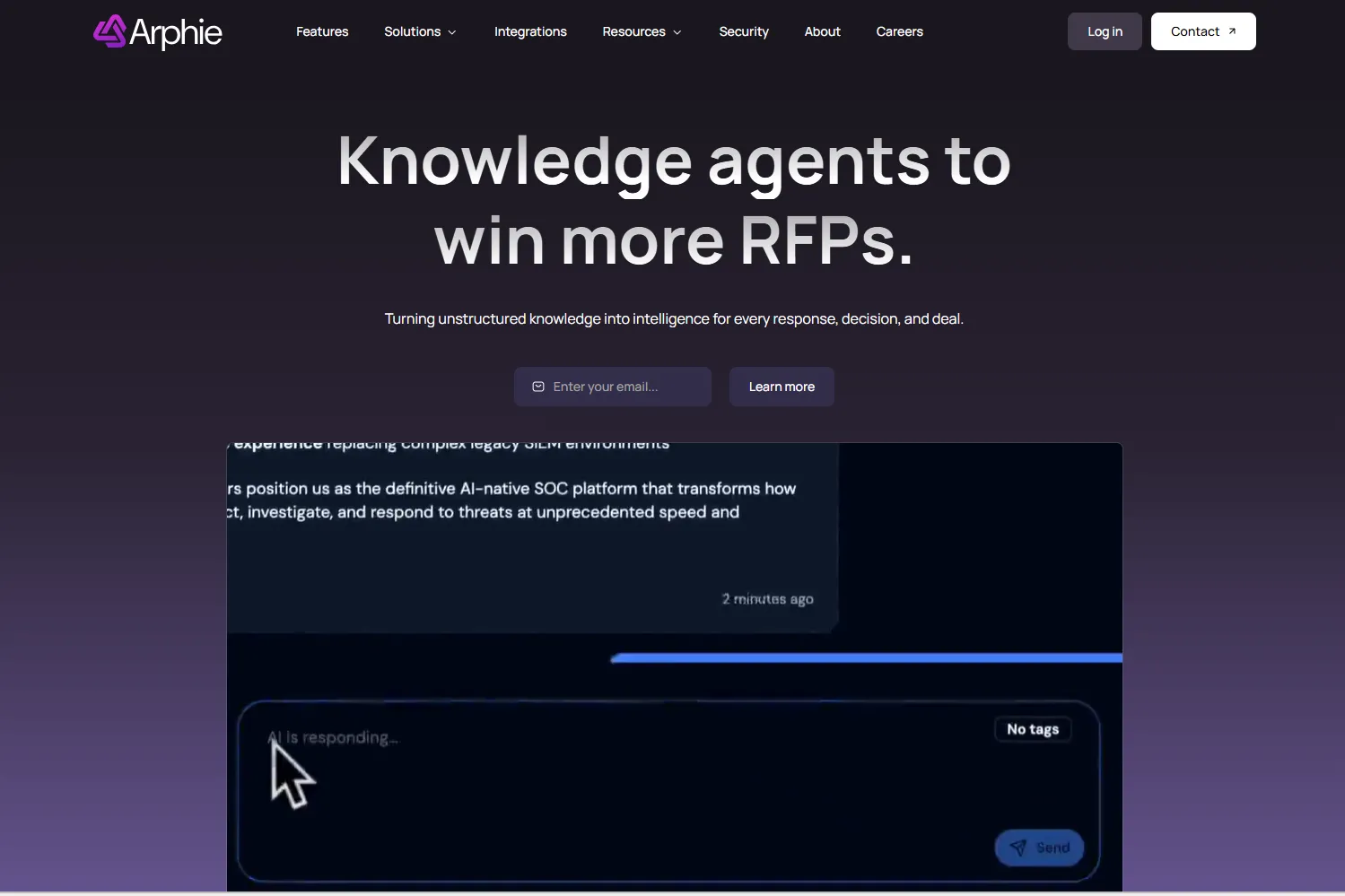
Arphie is an AI-native response automation platform that helps organizations complete RFPs, RFIs, DDQs, and security questionnaires using existing company knowledge. Its emphasis on contextual response generation, source transparency, and unlimited-user collaboration makes it a strong alternative to traditional library-first RFx platforms.
Key Features
- AI-powered response generation: Arphie uses AI agents to draft responses from connected company information, approved documents, and previous submissions, with source citations and confidence indicators.
- Connected knowledge management: The platform integrates with systems such as Google Drive, SharePoint, Confluence, and Notion to retrieve relevant information and support content updates.
- Project collaboration: Teams can assign questions, track deadlines, manage approvals, and monitor RFx projects while involving multiple contributors.
Pricing
| Plan Name | Plan Cost |
|---|---|
| Concurrent-Project Subscription | Contact sales |
Arphie does not publicly disclose its subscription prices. Pricing is based on the number of RFPs, RFIs, and questionnaires being worked on simultaneously rather than the number of users. Unlimited seats and core platform capabilities are included, although SSO integration and premium support may involve additional charges.
Where Arphie Shines
- Strong AI-native capabilities: Arphie combines contextual answer generation, visible source citations, confidence indicators, and AI-assisted content management to support response accuracy.
- Broad response coverage: Its platform supports RFPs, RFIs, security questionnaires, and DDQs, making it relevant to teams managing different RFx workloads.
- Unlimited-user collaboration: Its concurrent-project pricing allows organizations to involve sales, technical, security, and legal contributors without additional seat-based licensing costs.
Where Arphie Falls Short
- Concurrent-project pricing: Teams managing many simultaneous RFx requests may need greater subscription capacity, even when individual projects are relatively small.
- Limited pricing transparency: Organizations must request a customized quote to understand total costs and any charges for additional services.
Customer Reviews
A Technical PM says, “Nice & easy to use product.” The reviewer explains that Arphie reduced the effort required to complete repetitive questionnaires involving information from sales, product, and engineering teams.
A reviewer stated, “I liked how tech savvy Arphie felt and that it utilized artificial intelligence.” However, the reviewer noted that while the AI-powered capabilities were appealing, they preferred human-to-human interaction and did not see the platform as a long-term fit for their work environment.
Who Arphie Is Best For
Arphie is best for organizations that:
- Want AI-native RFx automation: Teams prioritizing contextual drafting, source citations, and confidence indicators.
- Handle different response formats: Businesses managing RFPs, RFIs, security questionnaires, and DDQs within one platform.
- Need broad collaboration: Organizations involving multiple subject matter experts without increasing user-based licensing costs.
5. 1up: Best for Sales and Presales RFx Questionnaires
1up is an AI-powered knowledge automation platform that helps sales and presales teams answer customer questions, RFPs, DDQs, and security questionnaires. It connects company knowledge with AI-generated answers, making it particularly useful for teams handling RFx requests alongside everyday sales inquiries.
Key Features
- AI-powered answers: 1up retrieves information from trusted company knowledge sources to generate responses to RFPs, DDQs, security questionnaires, and customer questions.
- Knowledge integrations: Teams can connect documents, websites, and internal knowledge systems to make approved information accessible across response workflows.
- Sales workflow support: 1up works with Slack, Microsoft Teams, Google Chat, and browser extensions, allowing employees to retrieve answers without switching between multiple applications.
Pricing
| Plan Name | Plan Cost |
|---|---|
| Free | $0 |
| MCP | $50/month + usage |
| Starter | $300/month |
| Plus | $900/month |
| Enterprise | Contact sales |
1up provides publicly listed monthly plans with different questionnaire allowances. The Free plan includes 50 answers per month, Starter includes one questionnaire monthly, and Plus includes six. The MCP plan offers usage-based questionnaire automation, while Enterprise supports customized workloads.
Where 1up Shines
- Accessible starting plans: A free tier and publicly listed subscriptions allow smaller teams to evaluate the platform before committing to a larger deployment.
- Sales-focused integrations: Its Slack, Teams, Google Chat, and browser integrations make company knowledge readily accessible during presales conversations.
- Broad knowledge automation: Alongside structured questionnaires, 1up helps employees retrieve answers to recurring technical, product, and customer questions.
Where 1up Falls Short
- Questionnaire limits: Starter and Plus include fixed monthly questionnaire allowances, which may require higher subscription capacity as RFx volume grows.
- Sales-first focus: Teams requiring extensive proposal governance, advanced reporting, and complex multi-stage approvals may need a more specialized response platform.
- Enterprise pricing: Larger organizations must request a custom quote to understand questionnaire capacity and any additional requirements.
Customer Reviews
A Sales Manager describes it as an “extremely intuitive and responsive product.” The reviewer appreciates its questionnaire-loading workflow, Chrome extension, and responsive customer support.
A verified reviewer on Gartner stated, “The platform is easy to use, the AI suggestions are accurate.” The reviewer praised its responsive support, fast search, and ability to streamline RFP responses, while suggesting improvements to long-form AI writing capabilities.
Who 1up Is Best For
1up is best for organizations that:
- Have sales-led RFx workflows: Sales and presales teams handling customer questionnaires alongside recurring product and technical questions.
- Need accessible knowledge: Organizations wanting answers through Slack, Teams, and browser-based workflows.
- Manage smaller response volumes: Teams seeking a free entry point or predictable monthly questionnaire allowances.
6. Conveyor: Best for Security Questionnaires and Customer Trust Workflows
Conveyor is an AI-native customer trust platform that combines security questionnaire automation, a self-service Trust Center, and AI-assisted RFP responses. Its primary strengths are helping security and sales teams manage customer due diligence, share compliance documents, and reduce repetitive security reviews.
Key Features
- Security questionnaire automation: Conveyor generates responses to customer security assessments using company knowledge, with source citations and configurable human review.
- Agent-powered Trust Center: Organizations can share security documentation, manage access requests, and allow customers to find compliance information through a self-service portal.
- AI RFP responses: Conveyor also supports RFP drafting, requirement mapping, reviewer assignments, and document workflows using its shared knowledge library.
Pricing
Conveyor uses usage-based pricing rather than per-user licensing. Its current pricing page states that customers can have as many users and seats as needed, with full access to the Conveyor platform, while pricing depends on AI usage and includes volume discounts. Integrations, analytics, enterprise settings, and support are included. Buyers should request a quote based on their expected questionnaire, RFP, Trust Center, and automation usage.
Where Conveyor Shines
- Strong security questionnaire capabilities: Conveyor helps security teams respond to customer assessments, retrieve supporting evidence, and manage recurring compliance requests.
- Self-service Trust Center: Customers can access approved security documents and request information without repeatedly contacting internal teams.
- Connected knowledge management: Its AI knowledge management features identify outdated information, conflicting answers, and content gaps to support more consistent responses.
Where Conveyor Falls Short
- Limited included RFP volume: The Business plan includes only 10 RFP projects, making its standard allowance less suitable for organizations managing large volumes of complex proposals.
- Security-centered product focus: Although Conveyor now supports AI RFP drafting, its strongest differentiation remains security questionnaires, customer trust workflows, and compliance document sharing.
Customer Reviews
Conveyor has limited independent customer feedback available across major third-party review platforms. Its AI-powered customer trust and RFP management capabilities offer potential benefits such as automating security questionnaires, simplifying compliance document sharing, streamlining RFP responses, and improving collaboration between security and sales teams.
Who Conveyor Is Best For
Conveyor is best for organizations that:
- Prioritize security questionnaires: B2B software companies regularly completing customer security reviews and vendor assessments.
- Need a self-service Trust Center: Organizations looking to share security documentation and streamline compliance information requests.
- Have moderate RFP workloads: Teams that want RFP assistance alongside security automation and can work within the included project allowance.
How to Choose the Right RFx Software
The right RFx software should match your response workflows, document formats, and security requirements. Evaluate these five factors before choosing a platform.
1. AI Automation That Uses Approved Content
Look beyond AI-generated text. Can the platform reuse approved answers, retrieve information from company documents, show supporting sources, and identify questions that need human input?
AutoRFP.ai generates source-grounded responses from existing company knowledge, with Trust Scores and Feedback Scores to help reviewers assess answer quality. Approved responses also become available for future reuse, reducing repetitive library maintenance.
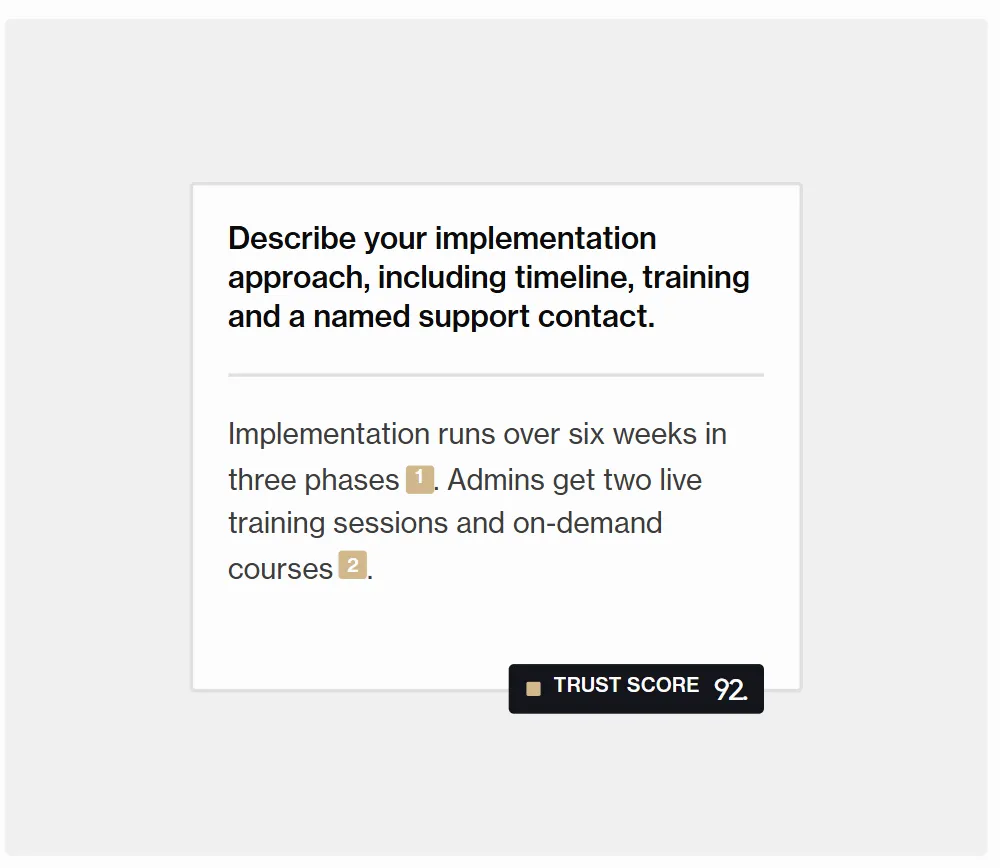
Test AutoRFP.ai’s automation on your actual RFPs
2. Real-Time Collaboration and Review Workflows
RFx responses often require input from sales, legal, security, product, and other subject matter experts. Look for shared editing, clear ownership, deadlines, version history, and structured approvals.
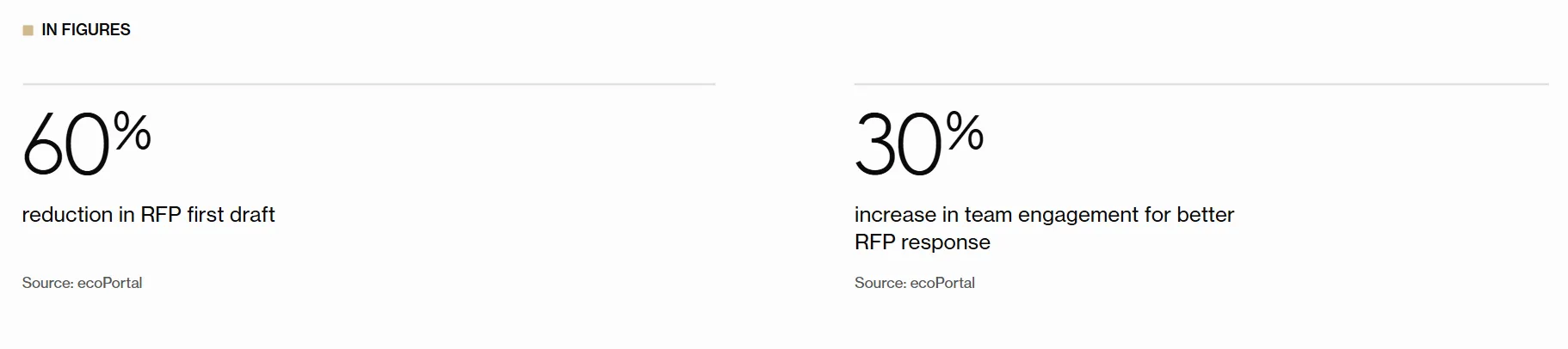
One of AutoRFP.ai’s customers, ecoPortal, reported a 30% increase in team engagement after implementing the platform, making it easier to involve contributors across departments.
3. Coverage Across RFIs, RFPs, RFQs and Portals
Not all RFx software supports the same request types. Check whether the platform handles RFIs, RFPs, RFQs, security questionnaires, and DDQs, and whether it’s designed for issuing requests or responding to them.
Document compatibility matters too. Look for support for complex Excel spreadsheets, Word documents, PDFs, and procurement portals without excessive manual formatting.
AutoRFP.ai specializes in responding to RFPs, RFIs, security questionnaires, and DDQs. It supports exact-format import/export for Excel and Word, PDF imports with Word exports, and portal responses through its Portal Agent.

Teams primarily managing price-driven RFQs or issuing procurement requests should evaluate specialized sourcing or quotation software instead.
4. Security and Compliance
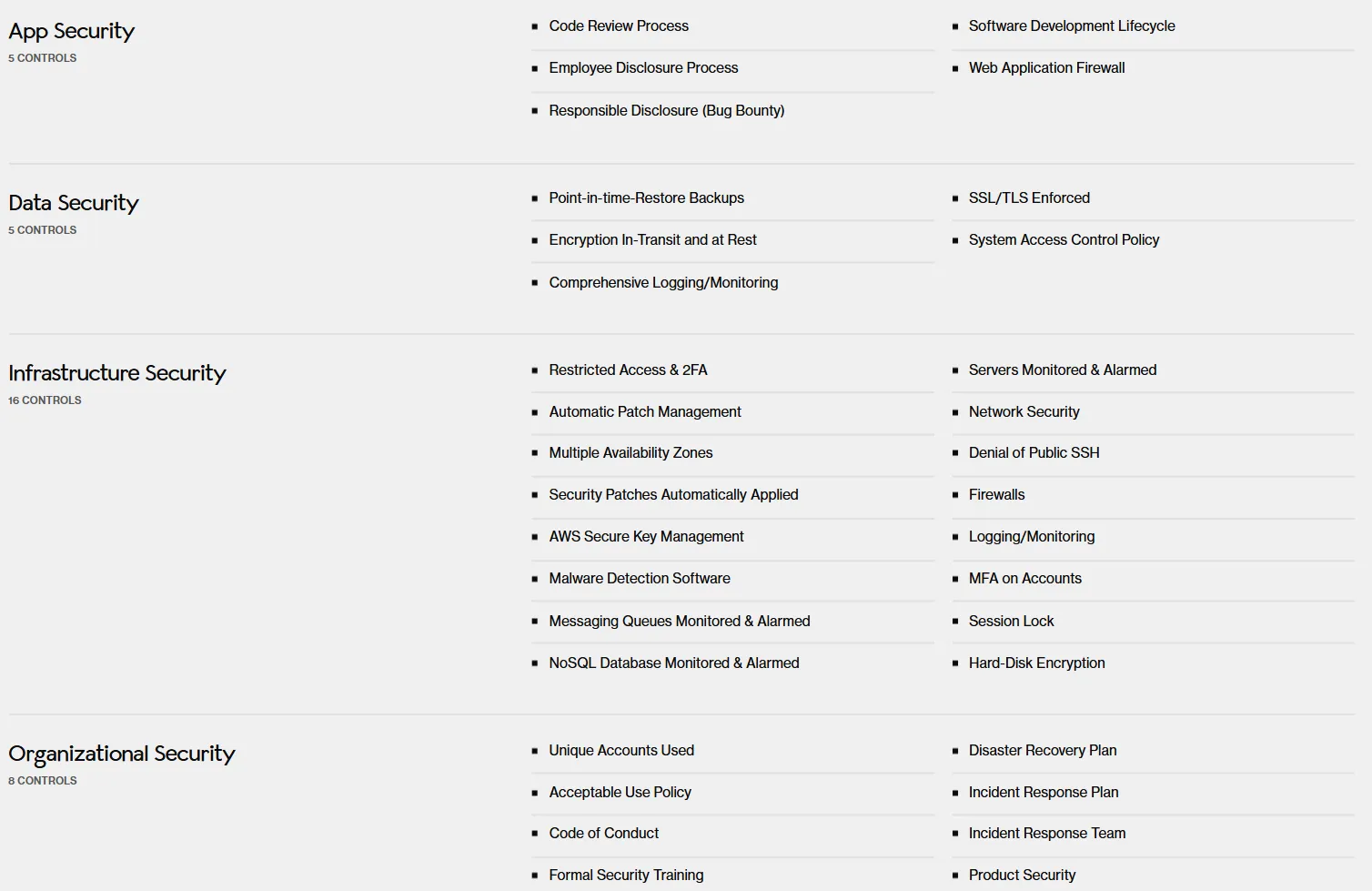
Before uploading confidential company information, verify the platform’s security certifications, data-handling policies, access controls, and AI training practices.
AutoRFP.ai is ISO 27001 certified and SOC 2 Type II audited, and customer data is not used to train AI models. Its Trust Center provides documentation to support vendor security assessments.
5. Integrations and Implementation
Choose software that fits your existing systems without creating unnecessary administrative work.
Check for CRM integrations, document library connections, collaboration notifications, and content syncing. Also compare onboarding requirements, licensing costs, and any additional fees for integrations or users.
Deliver High-Quality Responses at Scale With AutoRFP.ai
Your prospects expect comprehensive, accurate responses within tight deadlines, regardless of how many requirements they include.
AutoRFP.ai combines source-grounded AI drafting, approved content reuse, and structured reviews to help teams respond faster without compromising accuracy.
According to AutoRFP.ai’s Perk customer story, Perk responded to more than twice as many RFPs while maintaining the same headcount after implementing the platform.
Book a demo to see how AutoRFP.ai can streamline your RFx response workflow.
About the author

Technical Account Manager at AutoRFP.ai. Background in asset management completing institutional RFPs and DDQs; now implements AutoRFP.ai for some of the company's largest accounts.
LinkedIn