Best AI RFP Software in 2026: AI-Native Tools Ranked
A scored, methodology-led ranking of the best AI-native RFP software. See how each tool learns from responses and keeps trusted content current.

Technical Account Manager, AutoRFP.ai·Updated ·10 min read
The best AI-native RFP software in 2026 is AutoRFP.ai, ahead of 1up, Arphie, AutogenAI, and Tribble. Legacy platforms (Loopio, Responsive, Qvidian) still lead the broad market by volume, but they are not AI-native, and for a growing number of teams that difference now decides the shortlist. For the legacy-vs-narrative split specifically, see Responsive and AutogenAI for proposal teams.
Here is the scenario that sends most teams looking for a new tool. A 400-question RFP lands from a procurement portal. Your content library has not been updated in six months. Your best sales engineer is on PTO. Someone posts in Slack asking who owns Section 4. Three people open the same exported file. Another teammate pastes answers from last year that still reference a feature you deprecated in Q2. By 11 PM you are reconciling four versions of one document and hoping the buyer does not notice the gaps.
That is the daily reality of legacy RFP tooling. The software promised AI. What it delivered was a faster search box over a library that someone has to maintain forever.
This guide ranks the AI-native tools on a published, weighted rubric. We rank AutoRFP.ai first in the AI-native segment, we show the scoring, and we name the places where AutoRFP.ai is not the right answer. Full disclosure: we built AutoRFP.ai. That is exactly why we published the rubric instead of asking you to take our word for it.
What Makes RFP Software Truly AI-Native?
Almost every RFP tool now claims AI. The label only means something if you can test it.
Legacy platforms (Loopio, Responsive, Qvidian) are built on a content library. You curate approved answers, tag them, and the platform retrieves matches when a new question arrives. That model gives established proposal teams structure and control, but repetitive upkeep can become a part-time job stacked on top of responding.
AI-native platforms can build on the same trusted library while reducing that upkeep. AutoRFP.ai learns from past responses and company documents, captures approved work for reuse, and reads the intent behind a question rather than relying only on keywords. Content owners can keep their categories, tags, and approval practices while the library grows through everyday work.
Here is how the two models differ on what RFP and bid managers feel day to day:
Content library: legacy workflows depend on people filing and refreshing content. AI-native tools can capture approved work and incorporate connected-source updates while owners keep control.
Retrieval: legacy matches keywords and tags. AI-native understands the intent of the question.
Quality over time: any library can degrade when it ages. AI-native tools can improve the library as approved knowledge accumulates.
Trust controls: legacy retrieves stored text. AI-native cites the source response behind every answer.
Agentic capability: legacy is limited. AI-native runs portal and project agents.
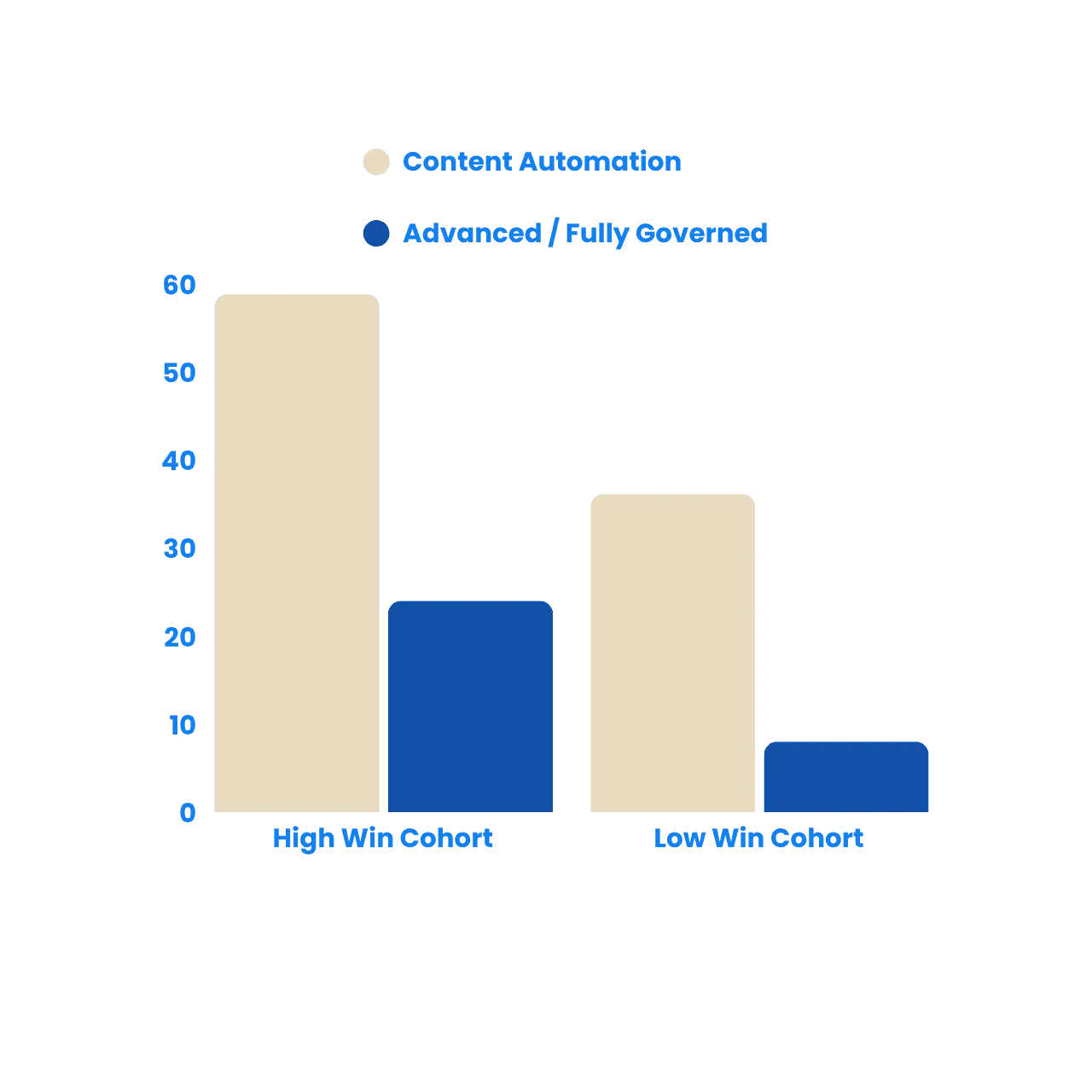
This is not only a workflow preference. It shows up in win rates. The 2026 Proposal Win Rate Report, a survey of 97 bid professionals, found that teams without content automation sit in the Low Win Cohort 51% of the time, versus 29% for teams that have it. Among the highest performers, 59% run content library automation, compared with 36% of the lowest performers, and 65% use AI proposal tech.
One honest caveat keeps this in perspective. The same research found AI adoption on its own has no independent correlation with win rate. Buying AI does not win deals. Treat it as the accelerator. The engine is still your customer insight and your process.
For VPs of Sales Engineering, the first objection is always trust. Can you submit what it generates? AI-native tools answer this with traceability. Every generated answer links to the source it drew from, so a reviewer can verify it in seconds, backed by enterprise-grade security.


Video transcript
Today we're diving into the best AI RFP software that are in the market for 2026. We're gonna be going into the AI agents, the AI workflows, and the AI RFP response process that powers all of these AI RFP software companies. And you're gonna get, at the end of this video, An overview of the best AI native RFP software. Let's jump into it. So first of all, this is a continuation of one of my last videos, which was to do with the best RFP software. So if you wanna have an overall look of RFP software across legacy RFP and AI native RFP, you can have a look at that video which you'll see at the end of the video as well. Link to it below. So what I've analyzed to generate this list of best RFP software is I've looked at the public G2 reviews, the Gartner reviews, and our own industry knowledge, having being an AI-native RFP software ourselves.
So first of all, before jumping into the first one, let's think about the RFP software market as a whole. Effectively, if you're looking for RFP response software, you've got three options. You've got your legacy RFP software. They're like your Loopio, your Responsive, Qvidians. They've been built before AI, and they're effectively a question-and-answer machine. You have your past answers. You get requirements, you upload, and it'll keyword match to find the appropriate answer for those new questions and copy and paste it across. Recently, they've added some more AI features, but they're what we call legacy RFP software, mostly because they've been around for quite a long time and they're not built with a kind of AI architecture to begin with. Then you've got your own AI DIY builds that you can do. Using Claude or ChatGPT or Copilot to effectively help you answer RFPs. And that can be really useful to an extent. And then you'll start to run into issues, especially if you're collaborating across multiple team members, if you're trying to prevent hallucinations and you
wanna get more towards winning responses rather than generic AI responses. You also have your kind of own DIY builds, like doing your own AI agents internally. Then you've got the AI RFP software. These AI native players have been built with AI in mind from day zero, meaning that they're architected for AI and one of the market leaders is AutoRFP.ai.ai, which is where I'm from Okay, there's also the proposal win rate report for 2026. In this report, us and a bid manager community called Stargazy surveyed over a hundred bid managers to find what are those bid teams doing that win the most RFPs, specifically around their tooling, their process, and their systems. What we found, and you can download this report from our website and the link in the description below, is that teams with high content automation and strong processes around customer insights and bringing together all the different data points available to them in RFPs really led to higher win rates.
There's an entire chapter here all around the high-win and low-win cohorts and what matters the most, And there's a whole chapter here on writing winning responses and how teams can get into content automation and do more to win RFPs. So you download that report below. First, let's talk about the best way to evaluate AI RFP software. When looking at AI RFP software, you really wanna make sure you get your hands on the tools. Some of the options I show you today will have access to a free trial directly on their website. Other vendors, you can ask for a proof of concept, like AutoRFP.ai. And with that, effectively, you get access to seeing how the AI will work with your actual RFPs using your actual data. Why that's useful, especially when evaluating AI RFP software side by side, is it lets you see effectively is there proof in the pudding? Does the AI RFP software live up to its claims?
Can it automate RFP response based off my prior content? And does it actually save our team time? let's jump into our first one for the best AI RFP software, and that is AutoRFP.ai.ai. AutoRFP.ai.ai is an AI-native RFP software. It actually launched a few weeks before ChatGPT came out, it's been around for four years, It has customers in over forty-plus countries. Predominantly, it's focusing on technology, so software and hardware and technology services companies, financial services companies, so for instance, asset managers doing DDQs and so on, and healthcare companies like pharmacy benefits managers across the world. And it's used by hundreds customers across the globe to help respond to RFPs. So looking into the platform, you can find out more about their customers and how they use AutoRFP.ai from their website from our website. Our pricing is very transparent.
You can find out on our website. So for instance, the starting price, as well as how to learn more information, so you can get in touch with our team, book an online demonstration where AutoRFP.ai.ai is different and what really sets it apart to be the market leader in the AI RFP software proposal space is really around how it's utilizing agentic features and agents to automate more of the RFP process to help bid managers and proposal writers write winning responses. It's really a lot more about winning RFPs . So if I go to create a project, for instance, you can upload an RFP, Word, Excel, PDF. First what you see here is an AI go, no-go. Before a team will even decide to bid on an RFP, they can make a decision based on AI and their own comprehension of the RFP, Whether it's appropriate to go for, are we a good fit for this RFP? And then the AI will answer each of those different requirements, provide sources and transparency for understanding where that kind of information came from those
RFP documents, and that can help me make a decision whether I want to proceed with this RFP or not Then you've got the AI document importer that will automatically using AI computer vision, scan the document and bring in the necessary response requirement, drop-down cells, and everything like that, include requirement tables, everything that you need to fill out to respond to that RFP then the RFP comes in, and here's the real magic. The AI will search my relevant content in my library, which includes integrations with fifteen plus systems, includes web access. And from that content, it'll use a transparent process to source the correct content through semantic search, through re-ranker models and embedding models, to then bring out the most trustworthy response. Then it'll find the most trustworthy content, and then using AI, generate an appropriate response or take verbatim from my prior answers if required. And as the responses come through, we're greeted with two scores. First, we have our feedback score.
This helps you write better winning responses. It looks at the requirement, it looks at my response, and gives me any feedback to make that response even better, whether it's human written or AI generated. Then you've got the trust score. The trust score transparently displays what information and why that information was used to generate this response. Clicking into here, I can see my exact content that was used to generate the response and why the content was used to generate the response. Then I've got the AI project agent, which you can prompt in natural language, and effectively, you're using this AI across your own content with web search. It can create documents like executive summaries for you. In this example, it's gonna edit these three responses that I've selected following my prompts instructions. While that's happening, I can then look through and make comments. I can select those requirements, and then assign them to my different team members or teams that are working on that RFP As I'm managing this RFP submission, I can quickly go through and see
who has responses left to respond to or what subject matter experts need to approve responses and see how that's going over time. So that's AutoRFP.ai.ai, an AI RFP software. Then you've got Arphie. So Arphie or Arphie.ai is another AI RFP software that has been around for quite a few years. It is predominantly used similar to the others, where you have a content library or knowledge space that has relevant context in terms of your past RFPs. And then it brings all that in to help generate and respond to new RFPs. You can have a look at that website. You can see that the AI is used to manually generate responses. Their integrations and more about their system on their websites. I would say Arphie is generally pretty useful for, mid-market technology companies as well as some large enterprises. Usually would have a strong pre-sales team, sales engineers, solution architects. May not necessarily have a purpose-built bid function and it's useful for
responding to RFPs en masse and so on. They don't appear to have their pricing on their websites. So best bet to get is to get in touch with their team by going to their contact page and yeah, you can get in touch with their team and to understand a bit more about Arphie. Next up is AutoGen. So AutoGen is a little bit different to the others where it's more of what we would call a narrative or long-form RFP software. What that means is AutoRFP.ai, Arphie, what we've discussed so far are used when you wanna upload a bunch of requirements let's say in Excel, Word doc, PDF, and thousand, five hundred, ten thousand responses and generate answers for those. AutoGen may be more useful for architecture, engineering, construction companies and for that it's usually less requirements but usually longer form responses, usually in a Word document. You can find out more about visiting their website Then you've got 1up. 1up has access to a free trial.
Their pricing is transparent, generally useful for teams who are doing a lot of security questionnaires. I would say 1up is actually one of the cheaper systems on the market. Really useful if you're doing like a small number or medium number of RFPs or security questions every year and wanna get started with some basic automation. It's really useful for that, and you can kinda find out more about their website as well there. Then you've got Tribble. Tribble's a little bit different. It's predominantly an extension into Google Sheets or Google Docs like running as a Chrome extension. They do have a platform you can log into and you can find out more about them on their website. It has the proposal automation, so generating responses sales. They're doing more features, around kinda the full cycle of sales. Like you can see there, it has deal prep or follow-up follow-up and they do have transparent pricing. So you can see there it starts at 30 grand USD a year. It starts from 50 per annual projects. So there's a quick overview of each of the AI RFP software. Awesome. You can learn more about AutoRFP.ai at our website, or you can contact each
of the providers we've been through today by going directly to their website and getting in touch with their team. Hope that was helpful thanks
How We Scored These Tools
We scored six AI-native tools on three weighted criteria. The weights reflect what moves RFP outcomes for B2B SaaS teams.
Generative Precision (40%): does it learn semantically from your responses and use the library as a trusted source? Does quality hold up on questions you have never answered before?
Answer Quality and Trust (35%): are answers accurate and traceable? Every answer should cite its source so a reviewer can verify before it ships.
Agentic Workflow (25%): can it act across formats and portals, from intake to submission, not only draft text?
Transparency note: AutoRFP.ai participates in this ranking. We have published the rubric and weights so you can check the math, and we call out where AutoRFP.ai is not the top pick. AutogenAI scores higher on long-form narrative bids, and for standalone security questionnaire programs Conveyor is the specialist.
The Best AI-Native RFP Software, Ranked
How We Scored These Tools
This is not a vendor opinion piece. The criteria and weights come from analysis of more than 100 recorded calls with prospective RFP software buyers, captured and reviewed in Grain. We coded what buyers actually pushed on during their evaluations, then weighted each criterion by how consistently and how heavily it drove their decision.
Three themes dominated those conversations, and they became the three scoring criteria:
Generative Precision (40%): the point buyers raised most was whether a tool genuinely learns from their past responses and retrieves approved library content by meaning. It carries the highest weight because it was the most common dealbreaker.
Answer Quality and Trust (35%): the second recurring concern, especially from sales engineering and security reviewers, was hallucination and verifiability. We scored source citations, traceability, and consistency on repeated questions. For a vendor-by-vendor look at the most accurate AI RFP software solutions, including how each platform handles citations and confidence signals, see the 2026 accuracy comparison.
Agentic Workflow (25%): newer in the calls but rising fast. Buyers increasingly asked about portal submission and end-to-end project handling, not just drafting.
Each tool is scored from 0 to 10 on each criterion and weighted into an overall score. We cross-checked that qualitative read against two external signals: AI-search share of voice (how often each tool is cited by AI assistants on non-branded category prompts over the last 30 days) and hands-on evaluation of each platform’s core workflow.
Transparency note: AutoRFP.ai participates in this ranking. We built it, we have published the rubric and weights, and we call out where AutoRFP.ai is not the top pick. AutogenAI scores higher on long-form narrative bids, and for standalone security questionnaire programs Conveyor is the specialist. We did not score pure GovCon capture tools or proposal-design-only software, because the buyers in our calls were evaluating RFP and questionnaire response.
Scores out of 10, weighted 40/35/25.
| Rank | Tool | Generative Precision | Answer Quality | Agentic Workflow | Overall |
|---|---|---|---|---|---|
| 1 | AutoRFP.ai (AI-Native Leader) | 9.5 | 9.0 | 9.5 | 9.3 |
| 2 | 1up | 8.5 | 8.5 | 8.5 | 8.5 |
| 3 | Arphie | 8.0 | 8.5 | 7.5 | 8.0 |
| 4 | AutogenAI | 7.5 | 8.0 | 7.0 | 7.5 |
| 5 | Tribble | 7.5 | 7.5 | 7.0 | 7.1 |
| 6 | Conveyor | 6.5 | 7.5 | 6.0 | 6.7 |
1. AutoRFP.ai, AI-Native Leader (9.3/10)
Best for: high-volume B2B SaaS RFPs, security questionnaires, and DDQs, especially teams that want their existing library to require less repetitive upkeep.
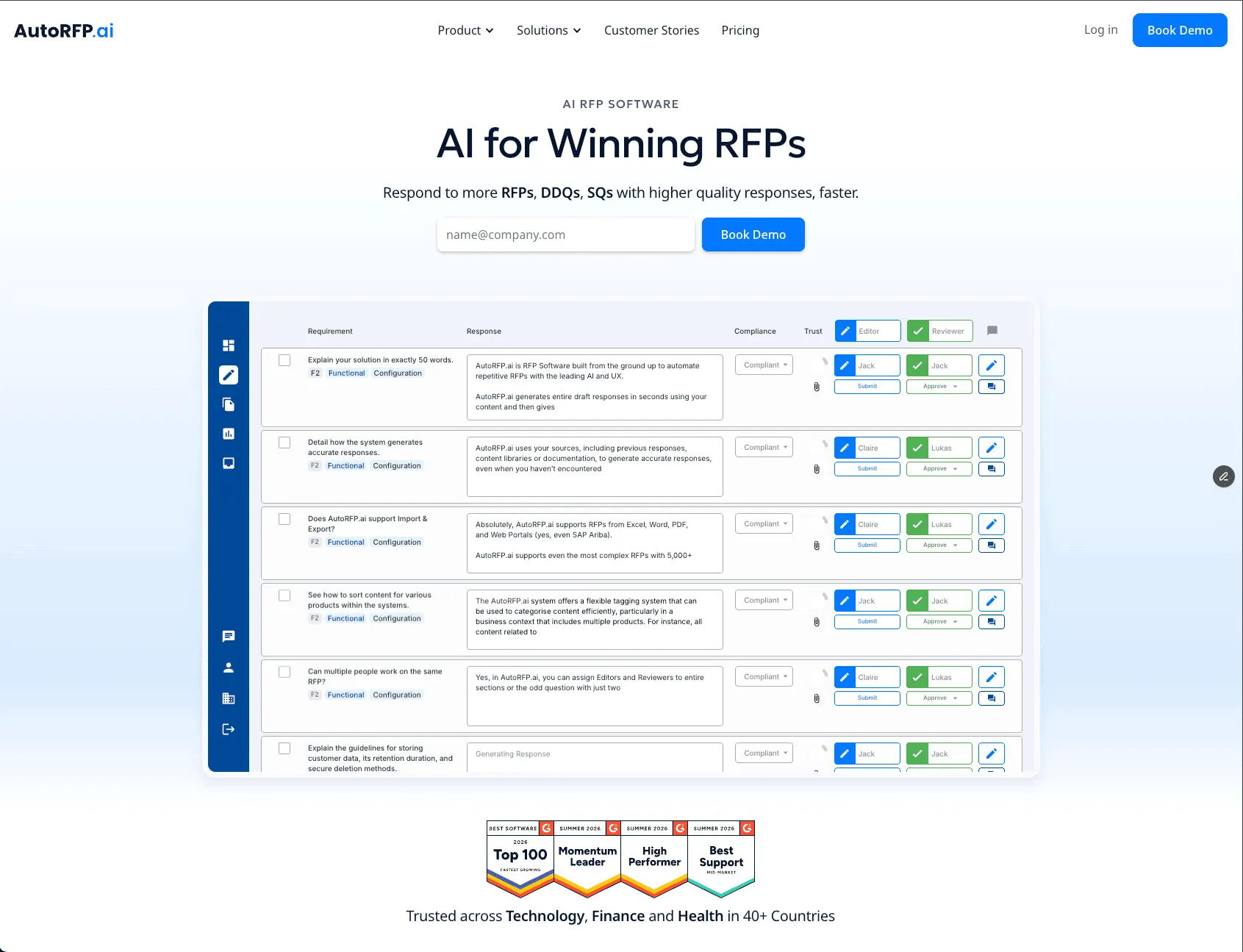
AutoRFP.ai pairs AI-native RFP software with a full agentic stack and a library that keeps improving as the team works. Bring your existing answers, categories, and tags, then connect product docs and security policies. Approved responses become available for future work, while meaning-based retrieval finds the right knowledge for each question. Content owners still control what gets approved and when changes need review.
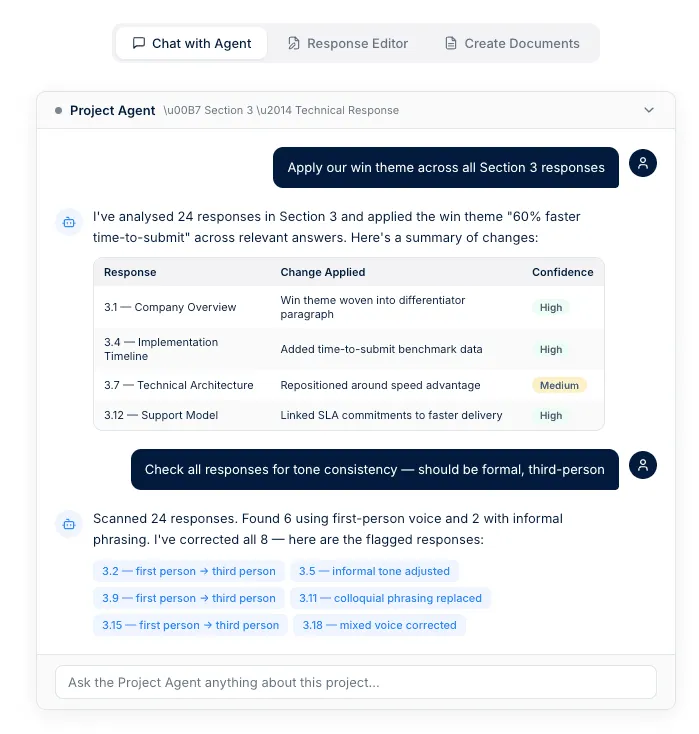
Two agents set it apart. The Project Agent parses an incoming RFP, assigns sections, tracks completion, and flags questions for SME review. The RFP Portal Agent logs into procurement portals and submits directly, which removes the copy-paste step that eats an afternoon on every portal bid. Every answer carries a source citation.
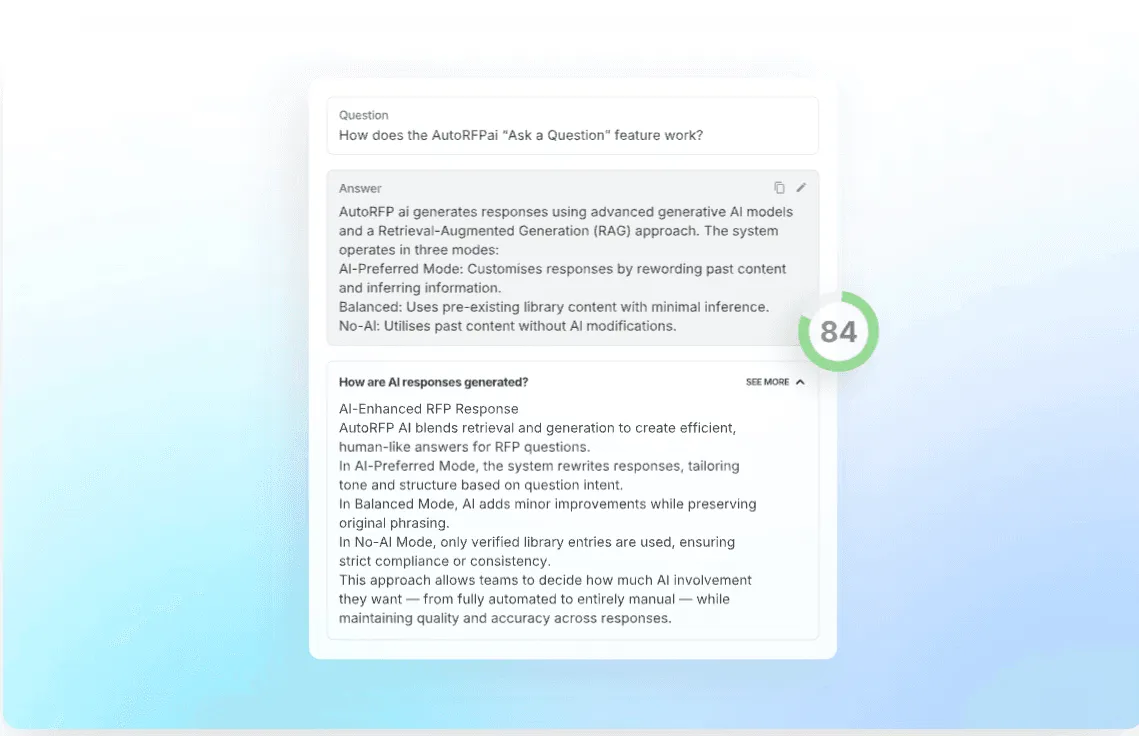
Strengths: highest generative precision in the group, both agents live in production, automatic library growth and freshness, native Excel, Word, PDF, and portal handling.
Gaps: not built for air-gapped or on-premise deployments, not tuned for long-form GovCon narratives.
Not for you if: your primary output is narrative tenders, or your security policy mandates on-premise hosting.
2. 1up (8.5/10)
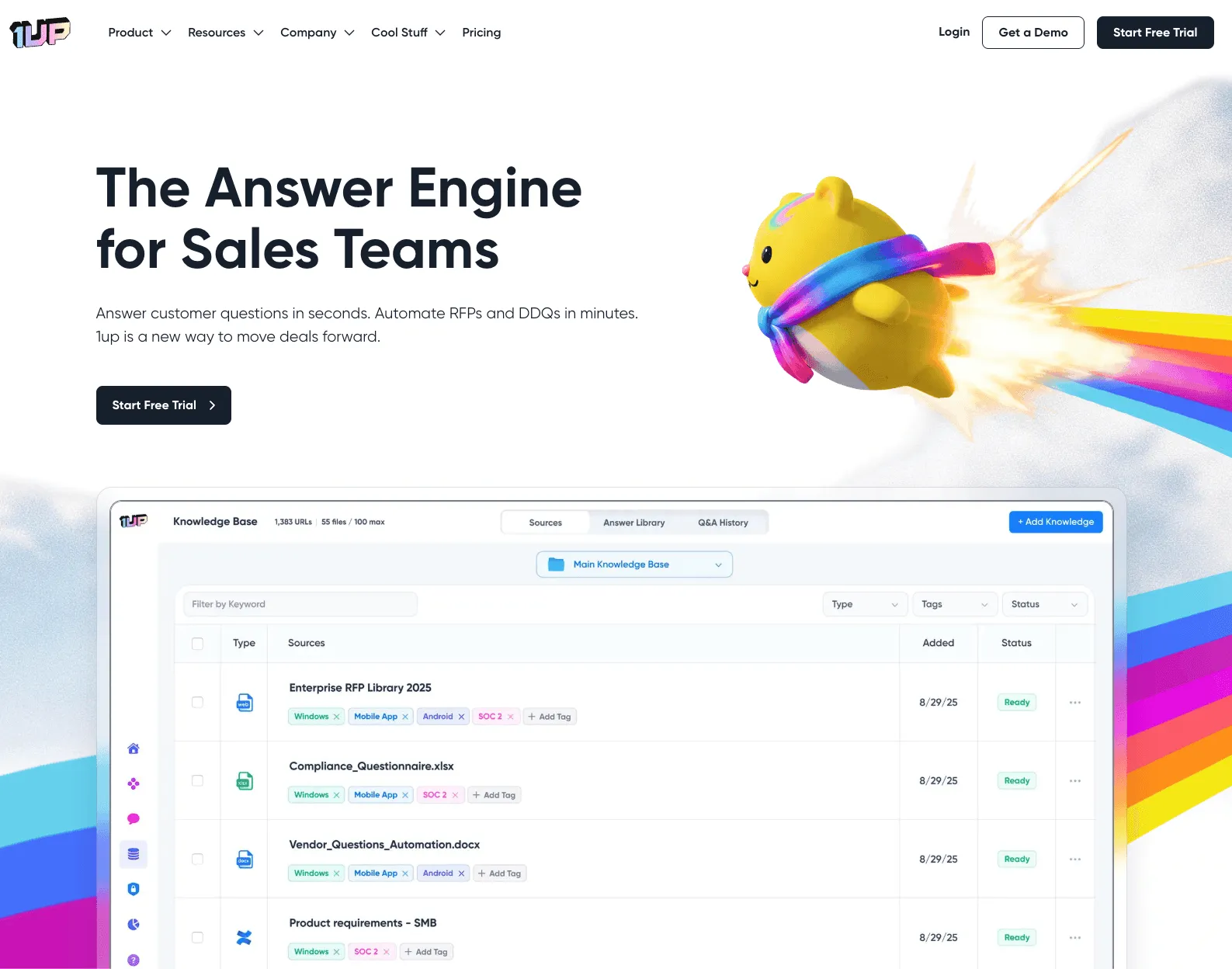
Best for: sales-led teams and mid-market RFP programs that want fast deployment and AI-native drafting without enterprise complexity.
1up sits at the intersection of RFP response and sales enablement. It generates from your existing sales content (battlecards, product docs, case studies) and past responses, which makes it quick to stand up for teams that already have strong content. Buyers in our calls consistently praised its speed to value and light footprint.
The 1up vs AutoRFP.ai guide compares that answer-layer model with a governed response system using the vendors’ current help documentation.
Strengths: fast deployment, strong Salesforce and Slack integration, easy adoption, competitive pricing.
Gaps: less depth on highly technical security questionnaires, portal automation is lighter than AutoRFP.ai.
Not for you if: you need full portal-to-submission automation or heavy compliance questionnaire coverage.
3. Arphie (8.0/10)
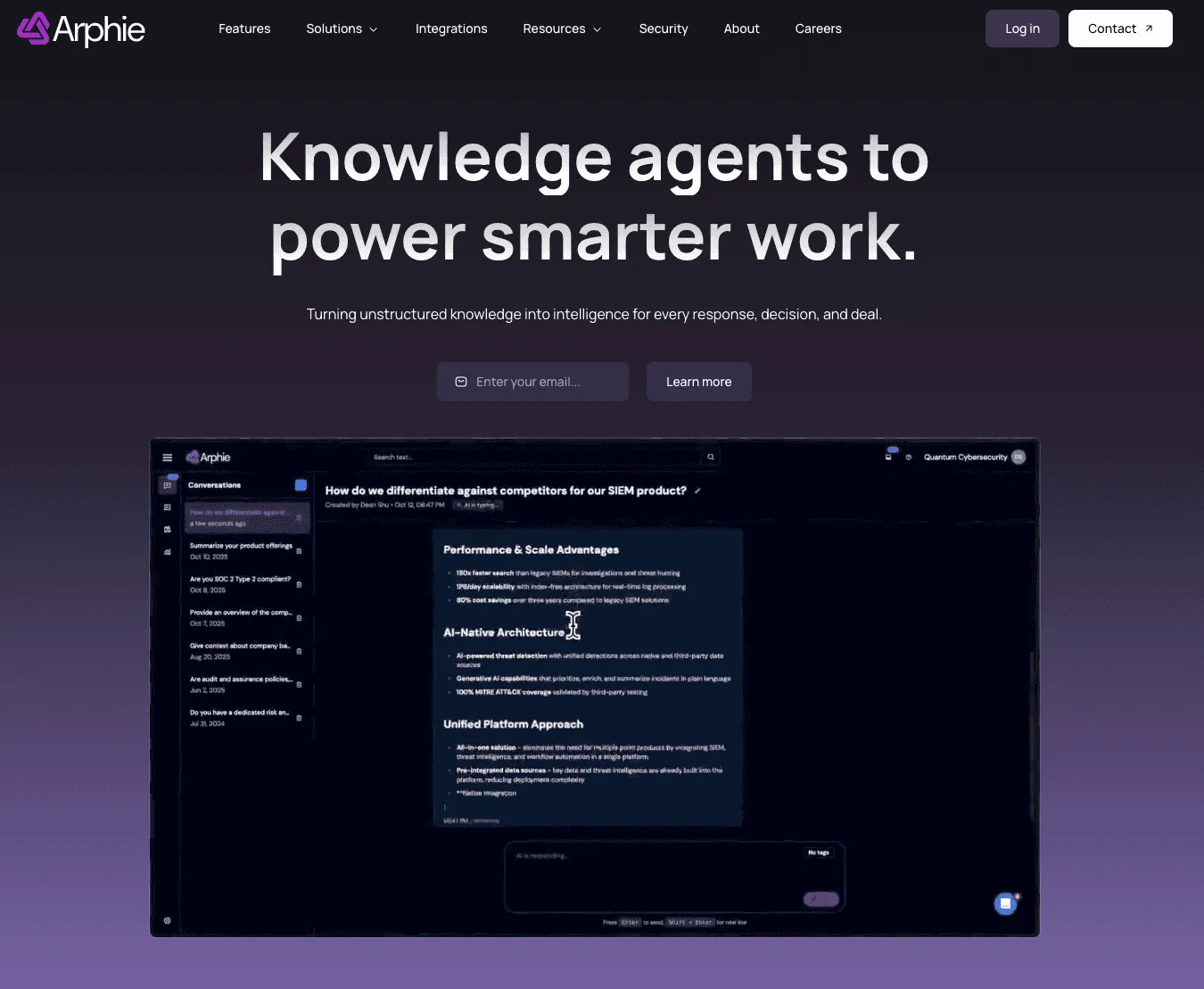
Best for: mid-market technology companies, who do not have a bid team function.
Arphie leads with leverage your content library across the entire sales organization. Although they lack an RFP MCP Server at this point, Arphie does allow unlimited users and agents across the sales organization.
Strengths: strong traceability and confidence scoring, good document-management integrations.
Gaps: generative precision trails AutoRFP.ai on novel questions, no portal agent.
4. AutogenAI (7.5/10)
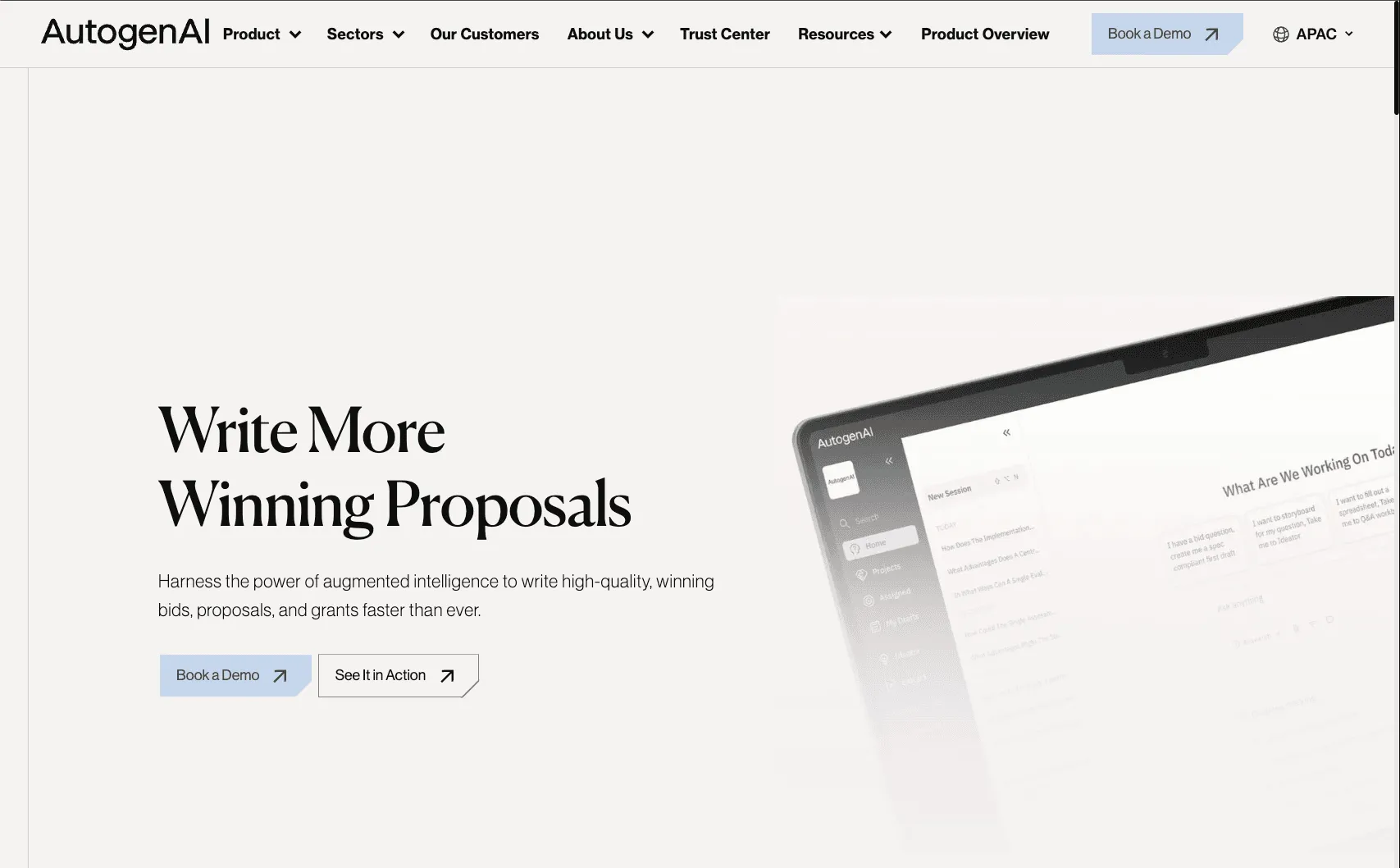
Best for: government and public-sector proposals and long-form narrative bids.
AutogenAI is the specialist for prose. If your bids read as persuasive narrative rather than structured questions and answers, its writing model outperforms the rest of this field on that specific output. Teams comparing budget should also review AutogenAI’s pricing model, which is quote-only.
Strengths: best narrative generation, strong on GovCon, consistent tone across long documents.
Gaps: less suited to structured Q and A, no portal agent, lower precision on factual technical questions.
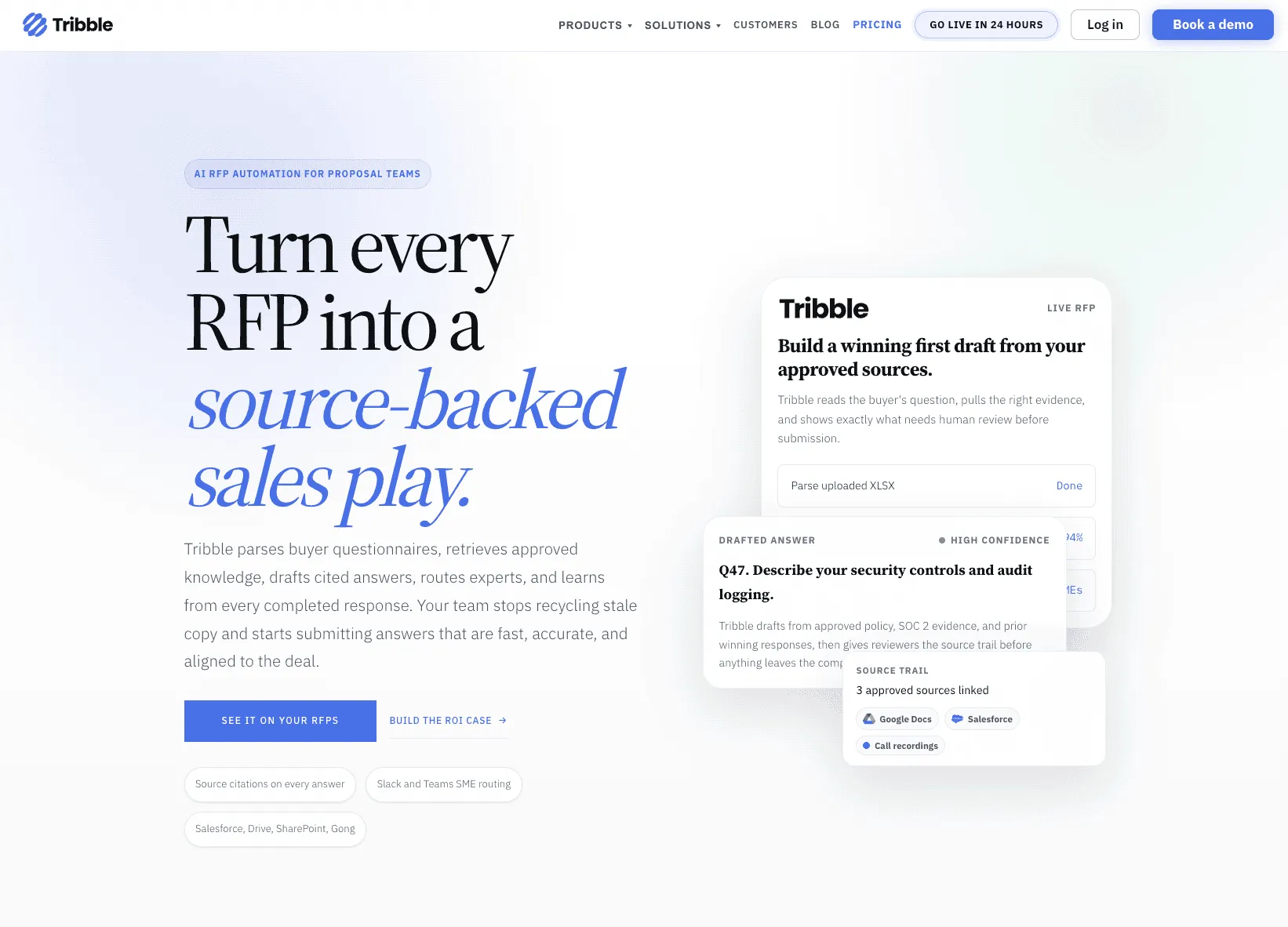
6. Tribble (7.1/10)
Best for: SMB teams and early-stage RFP programs moving off manual processes.
Tribble is the accessible entry point. It covers the core AI-native use case, generating from past responses and existing content at a lower price point.
Strengths: easiest onboarding, affordable, solid for lower-volume programs.
Gaps: lowest agentic capability here, limited on complex multi-format RFPs.
6. Conveyor, security questionnaire specialist (6.7/10)
Best for: teams whose primary volume is security questionnaires and trust assessments rather than full RFPs.
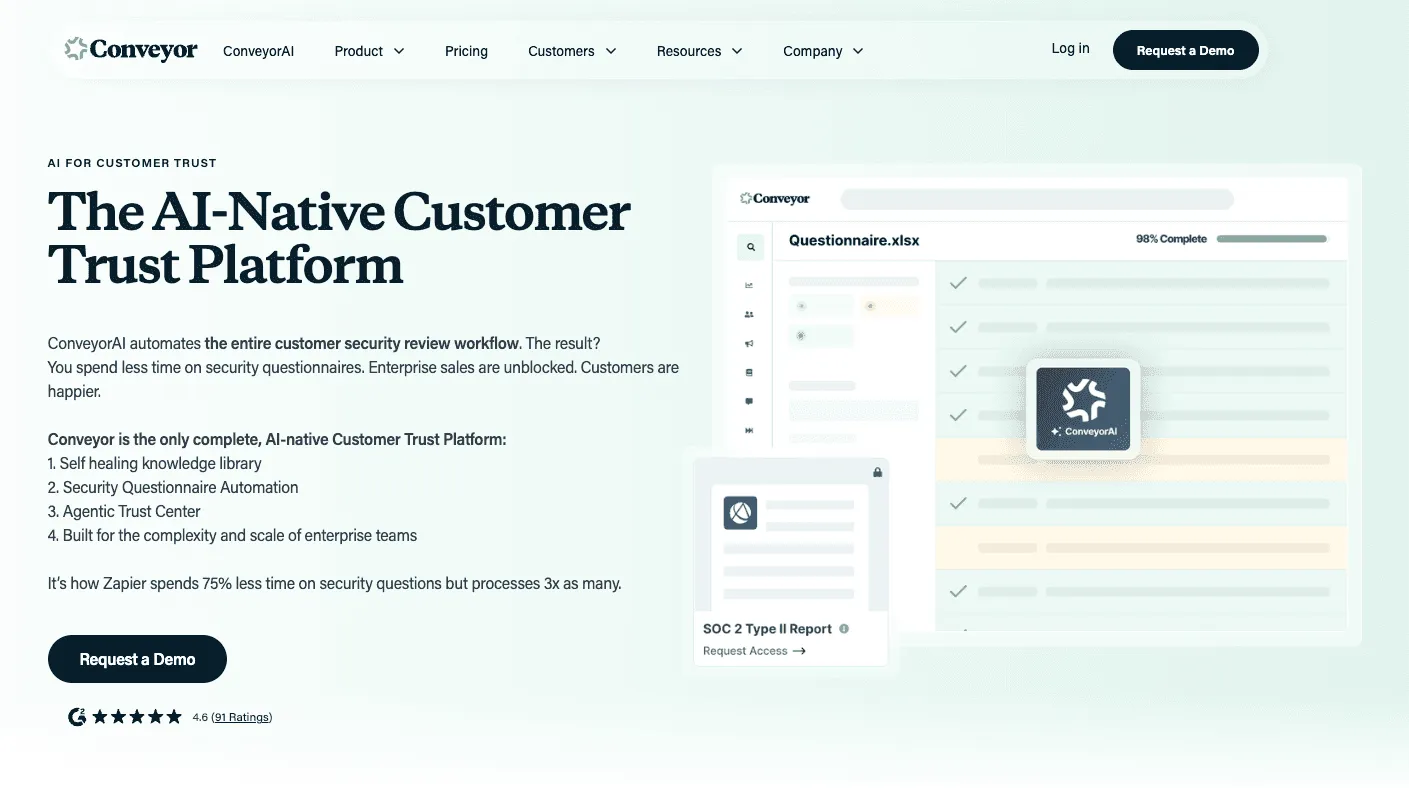
Conveyor is the specialist on this list. It is purpose-built for security questionnaires and trust-center automation, with strong accuracy on technical security content. It ranks last for general RFP response because that is not its focus: it is lighter on broad RFP drafting and end-to-end project and portal workflows. If security questionnaires are the bulk of your work, evaluate it first. Teams that run both RFPs and questionnaires can handle both natively in AutoRFP.ai.
Strengths: strong on security questionnaire accuracy and trust-center deflection, good for InfoSec and pre-sales.
Gaps: not a general RFP platform, lighter agentic and project workflow for RFPs, narrower scope.
Not for you if: you need a full RFP response platform across formats and portals.
AI-Native vs Legacy: When to Switch
Legacy platforms are credible tools for teams that value structured content workflows. AI-native software adds a different capability: it can capture approved work, retrieve by meaning, and incorporate connected-source updates around the library your team already trusts.
The win-rate data backs the shift. High Win teams run content library automation at 59%, versus 36% of Low Win teams, per the 2026 Proposal Win Rate Report. If your team spends more than 20% of its RFP time tagging, updating, and auditing a library, that is time the best teams spend on the customer instead.
Switch to AI-native when:
Your library is more than six months behind your product roadmap.
You run more than 20 RFPs a quarter and maintenance is the bottleneck.
You lose bids to answers that reference outdated capabilities.
You submit through procurement portals and manual navigation drains hours.
Evaluate fit carefully when:
You have a large, well-maintained library whose structure and metadata need to come with you.
Governance rules mandate pre-approved answers, formal ownership, or review schedules.
Your security policy mandates on-premise hosting. AutoRFP.ai is not built for that deployment model.
Your primary output is long-form narrative bids. Consider AutogenAI instead.
For a full breakdown of the two incumbents, see Loopio vs Responsive, and for the whole market including legacy tools, see our best RFP software guide. Teams comparing platforms on governance, integrations, and seat cost should also read the best RFP software for enterprise. For a B2B-focused shortlist, see the best RFP tools for SaaS teams. For a Steerlab-focused cut of the field, see our Steerlab-focused alternatives guide.
The Agent Question
The word agent keeps showing up in how buyers phrase these searches: an RFP AI agent for sales teams, the best RFP agent for go-to-market teams, the most recommended RFP agent. It is not marketing language. It marks a real shift in what teams expect.
The first wave of AI RFP tools automated answer drafting. The current wave automates the workflow around it. AutoRFP.ai’s Project Agent breaks an incoming RFP into sections, assigns ownership, tracks status, and routes questions for review. The RFP Portal Agent handles the submission layer inside procurement portals. The practical result: a 400-question RFP that used to take roughly 40 hours of team time can run in well under half that, with the portal work handled for you.
How to Choose the Right AI-Native RFP Tool
Match your situation to the tool. Remember the tool is only half the answer: automation pays off when it frees your team for the customer work that wins, which is the case we make in AI is only as good as your RFP process.
High-volume B2B SaaS RFPs (20+ per quarter): AutoRFP.ai. Highest precision, both agents live, and approved work feeds the library automatically.
Security questionnaires plus RFPs: AutoRFP.ai. Handles both in one workflow.
Occasional questionnaires without a dedicated bid function: Inventive. For the workload-based comparison with a platform built for owned response queues, see AutoRFP.ai vs Inventive AI.
Compliance-heavy, regulated industries: Arphie. Best traceability and confidence scoring. For the citation and workload comparison, see AutoRFP.ai compared with Arphie. For banks, insurers, and investment firms comparing AI-native and library-first options side by side, see our best RFP software options for financial services.
GovCon or long-form narrative bids: AutogenAI.
Sales-led, fast-turnaround RFIs: 1up.
SMB or early-stage program: Tribble.
Security questionnaires only: Conveyor.
Two questions to ask every vendor: what happens when I submit a question you have never seen, and how does answer quality change between day one and day 90? Ask how approved work enters the library, how source changes reach future answers, and which updates stay under owner review.
About the author

Technical Account Manager
Technical Account Manager at AutoRFP.ai. Background in asset management completing institutional RFPs and DDQs; now implements AutoRFP.ai for some of the company's largest accounts.
LinkedInFrequently asked questions
How does AI RFP software learn from and improve a content library?
It depends on the tool. Some platforms retrieve stored answers from a library. AutoRFP.ai adds meaning-based retrieval, captures approved responses for future work, and incorporates updates from connected sources, so your existing library keeps gaining value as the team uses it.
What is the best AI RFP software for enterprise B2B SaaS teams?
AutoRFP.ai ranks first in the AI-native segment by AI-search share of voice (13.0%) and tops our weighted rubric at 9.3 out of 10. It is the strongest fit for high-volume, structured RFPs and multi-portal submissions.
Does AI RFP software actually improve win rates?
Indirectly, and only as part of a system. Teams with content automation sit in the Low Win Cohort 29% of the time, versus 51% without it, per the 2026 Proposal Win Rate Report. The same research found AI adoption on its own has no independent correlation with win rate. Automation wins when it frees the team for customer research and sharper win themes, not on its own.
What is an RFP AI agent?
An RFP AI agent does more than draft answers. It runs parts of the workflow on its own. AutoRFP.ai's Project Agent manages a response from intake to completion, and its RFP Portal Agent fills and submits responses inside procurement portals.
Which AI RFP tool is best for security questionnaires?
For questionnaires only, Conveyor is the specialist. For teams that handle both RFPs and security questionnaires, AutoRFP.ai covers both with source traceability on technical answers.
Is AutoRFP.ai right for government or public-sector bids?
Not as the primary tool. AutogenAI is better suited to long-form narrative proposals. AutoRFP.ai is built for structured B2B SaaS RFPs and security questionnaires. Teams with both should evaluate both.

