
RevOps Strategy: How to Build a Winning One in 2026
A RevOps strategy aligns sales, marketing, and customer success around shared goals, data, and operating rhythms. Here's how to build one that wins.

Ops Lead, AutoRFP.ai··12 min read
A weak RevOps strategy does not usually fail loudly. It shows up in small ways: leads routed too late, pipeline stages that mean different things to different managers, forecasts nobody fully trusts, and customers falling through handoff gaps after the deal closes. By the time leadership notices, the problem looks like performance, but the root cause is operating design.
This guide walks through how to build a RevOps strategy that identifies where revenue breaks, defines the right processes and metrics, and gives marketing, sales, customer success, and leadership a cleaner way to execute. We’ll also cover the tools that power a RevOps strategy in execution, so your operating model can actually run in the real world, not just live in a slide deck.
What Is a RevOps Strategy?
A RevOps strategy is a structured plan for aligning sales, marketing, and customer success around the same revenue goals, processes, data, and tools.
Instead of each team working in separate systems with different metrics, RevOps creates one connected operating model for the full customer journey.
Key parts of a RevOps strategy include:
Clear revenue goals: Everyone works toward shared targets such as pipeline growth, conversion rate, retention, expansion, and revenue accuracy.
Aligned teams: Sales, marketing, and customer success follow the same definitions, handoff rules, and priorities.
Standardized processes: The strategy defines how leads are captured, qualified, routed, followed up, closed, onboarded, and retained.
Clean data: RevOps makes sure customer and revenue data is accurate, updated, and easy to use across teams.
Connected tools: CRM, marketing automation, sales engagement, customer success, analytics, and AI tools work together instead of creating disconnected workflows.
Performance tracking: Teams monitor the full revenue funnel to find bottlenecks, improve forecasting, and make better decisions.
In simple terms, a RevOps strategy helps a company run its revenue engine more efficiently by making people, processes, data, and technology work together.
Example: In an RFP response process, RevOps helps sales, presales, legal, finance, and customer success work from the same workflow.
Sales can qualify the opportunity, presales can manage technical answers, legal can review risk, finance can confirm pricing, and leadership can track deal value and win probability in one connected process. This makes RFP responses faster, more accurate, and easier to measure.
The Core Components of a RevOps Strategy
Here are the core components you need to know.
| Core component | What it means in practice |
|---|---|
| Revenue goals and KPIs | RevOps starts with shared goals across sales, marketing, and customer success. These can include pipeline value, win rate, sales cycle length, ARR, retention, expansion revenue, customer acquisition cost, and forecast accuracy. |
| GTM integration | A RevOps strategy connects the company’s go-to-market motion across marketing campaigns, sales execution, customer onboarding, renewals, and expansion. This helps each team understand how their work contributes to the full revenue journey. |
| Cross-functional governance | Leadership from marketing, sales, customer success, finance, and operations should plan revenue strategies together instead of making decisions in isolation. This helps teams align priorities, resolve workflow gaps, and make better decisions across the revenue engine. |
| Standardized revenue workflows | RevOps defines how leads are captured, qualified, routed, followed up, closed, onboarded, and retained. Clear workflows reduce confusion, missed handoffs, duplicated work, and inconsistent customer experiences. |
| Clear ownership for revenue processes | Every major revenue process needs a clear owner. This includes lead routing, deal approvals, renewals, upsells, and RFP responses. For RFPs, this means knowing who qualifies the opportunity, who writes the response, who reviews pricing, and who gives final approval. |
| Data management and single source of truth | RevOps makes sure revenue data is clean, consistent, and connected across the CRM, marketing tools, customer success platforms, and finance systems. This gives teams one reliable source of truth for accounts, pipeline, customers, and revenue performance. |
| Revenue intelligence and analytics | RevOps teams use analytics to understand what is driving revenue and where deals are getting stuck. This can include tracking CAC, ARR, recurring revenue, conversion rates, deal velocity, retention, and expansion opportunities. |
| Technology and infrastructure | The right RevOps tech stack supports the full revenue process. This can include CRM software, marketing automation, sales engagement tools, customer success platforms, analytics tools, and AI tools that support workflows such as RFP response automation. |
| Automation for repetitive tasks | RevOps should reduce manual work across the revenue process. Teams can automate lead routing, follow-up reminders, approval workflows, reporting, and parts of the RFP response process so sales and presales teams can focus on higher-value work. |
| Enablement and training | RevOps also supports teams with the resources, playbooks, documentation, and training they need to use processes and tools correctly. This helps sales, marketing, and customer success teams follow the same standards instead of creating their own ways of working. |
| Reporting and forecasting | RevOps gives leadership a clear view of pipeline health, revenue performance, team productivity, and future growth. Shared dashboards and consistent reporting help teams make decisions based on accurate data instead of scattered updates. |
| Continuous process improvement | A RevOps strategy should improve over time. Teams need to review which workflows are slowing people down, where revenue is leaking, which tools are underused, and which processes need to be refined. |
How to Build a RevOps Strategy Step by Step
Why Most RevOps Strategies Stall
These are the reasons why RevOps plans often slow down after the initial rollout.
1. Teams Agree On Alignment, But Still Work In Silos
This happens when sales, marketing, customer success, and finance agree on shared revenue goals in planning meetings, but continue to run their own campaigns, reports, handoffs, and priorities separately.
Marketing may focus on lead volume, sales may focus on close rates, and customer success may focus on retention without a shared view of the full customer journey.
Pro tip: Build cross-functional governance into the RevOps strategy. Revenue leaders should review goals, pipeline movement, handoff issues, and customer risks together on a regular basis instead of solving them within separate departments.
2. The GTM Strategy Is Not Connected To Execution
A RevOps strategy can look strong on paper, but still fail when the go-to-market plan is not connected to real execution across teams.
For example, leadership may define a new target segment, but marketing still runs broad campaigns, sales still uses old qualification rules, and customer success is not briefed on the new customer profile.
Pro tip: Connect every GTM decision to process changes, CRM fields, routing rules, enablement materials, and reporting dashboards. A strategy only works when teams know exactly what changes in their day-to-day workflow.
3. The Dashboard Is Built, But Nobody Owns The Metric
Many teams create RevOps dashboards, but the numbers do not drive action. The dashboard may show pipeline value, CAC, ARR, win rate, or churn risk, but nobody is responsible for improving each metric.
This creates a reporting-heavy RevOps function where teams look at data without changing the process behind the data.
Pro tip: Assign every key metric to a clear owner. For example, marketing may own CAC improvement, sales may own deal velocity, customer success may own retention, and RevOps may own data quality and reporting consistency.
4. The Data Is Not Trusted Across Teams
RevOps depends on clean, connected data. The strategy stalls when each team uses a different source of truth.
Sales may trust the CRM, marketing may trust the automation platform, finance may trust billing data, and customer success may use its own account health scores. When the numbers do not match, teams spend more time debating the data than improving revenue performance.
Pro tip: Define one revenue data model for core metrics such as pipeline, ARR, CAC, conversion rate, retention, expansion, and forecast accuracy. RevOps should also set rules for data ownership, required fields, update frequency, and system hygiene.
5. Workflows Are Documented, But Not Followed
A RevOps strategy often includes clear workflows for lead routing, deal approvals, renewals, onboarding, and expansion. The problem is that teams go back to old habits when the workflow feels slow or unclear.
For example, sales may skip qualification steps, customer success may not update renewal risks, or managers may approve exceptions outside the system.
Pro tip: Keep workflows simple, visible, and tied to the tools teams already use. Review where people bypass the process, then fix the workflow instead of only reminding teams to follow it.
6. Tool Adoption Is Weak
Buying more tools does not automatically create better RevOps. The strategy stalls when the tech stack is too complex, poorly integrated, or not clearly tied to revenue outcomes.
Teams may have a CRM, sales engagement tool, marketing automation platform, analytics dashboard, and customer success platform, but still rely on spreadsheets and manual updates because the tools do not work together well.
Pro tip: Audit the tech stack around actual revenue workflows. Keep tools that improve speed, visibility, accuracy, or collaboration. Remove or consolidate tools that create duplicate data, extra admin work, or unclear ownership.
7. RFP Responses Sit Outside The Revenue Process
For companies that respond to RFPs, the process often becomes disconnected from RevOps. Sales may own the opportunity, presales may write the technical response, legal may review risk, finance may handle pricing, and leadership may approve the final submission.
When this workflow is not connected, teams lose time chasing answers, reusing outdated content, and unclear approvals.
Pro tip: Treat RFP response as a revenue workflow, not just an admin task. Define who qualifies the RFP, who owns each response section, who reviews the final answer, and which tools support the process.
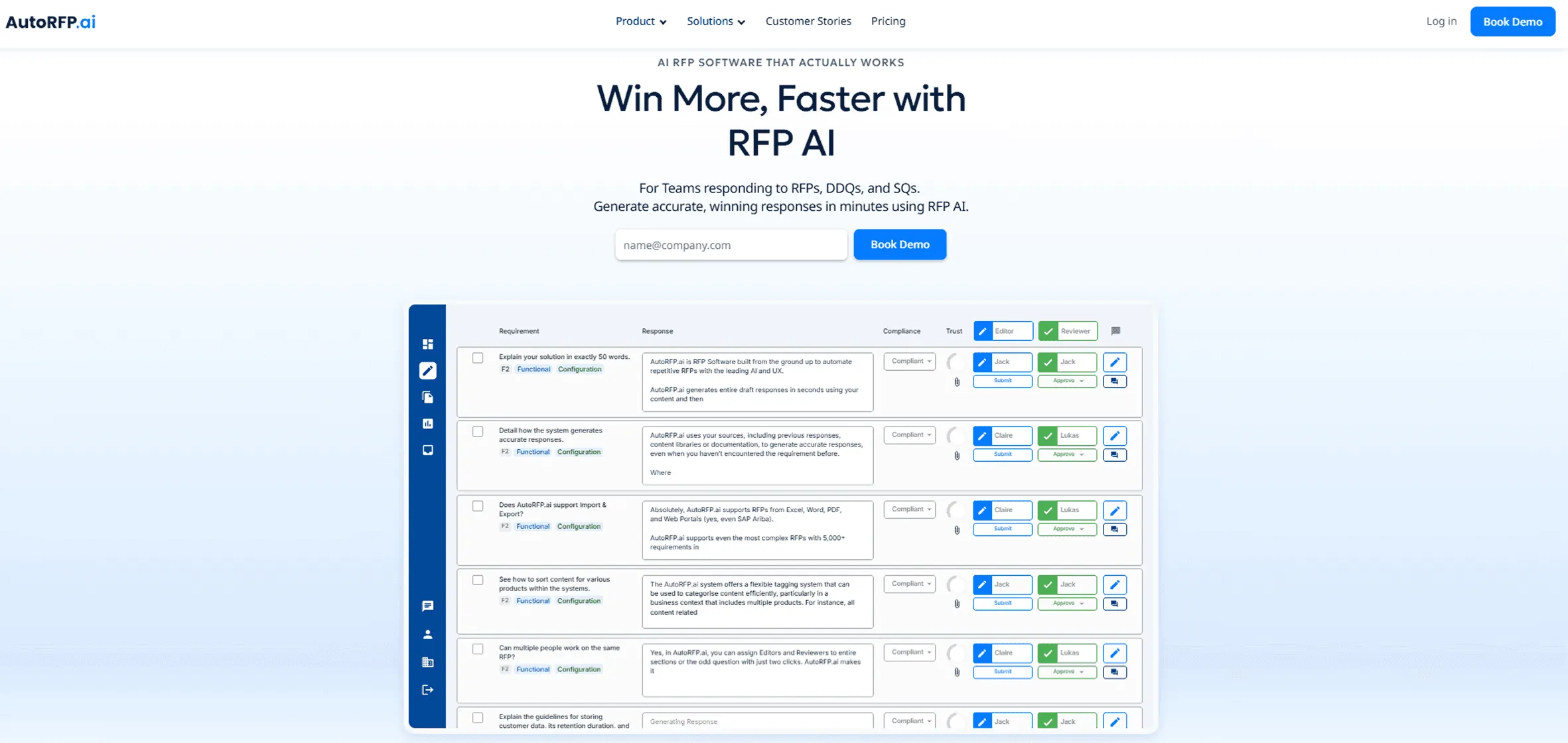
For example, teams can use AutoRFP.ai to speed up response drafting and keep RFP collaboration more structured without making the entire RevOps strategy about RFPs.
8. Enablement Is Treated As A One-Time Handoff
RevOps strategies often stall because teams are given a new process or tool once, then expected to adopt it perfectly.
In practice, sales reps may not know how to use the new fields, marketing may not understand the new lead definitions, and customer success may not know how to report expansion signals.
Pro tip: Make enablement continuous. Build short playbooks, training sessions, workflow examples, and tool usage guides. RevOps should also collect feedback from frontline teams to improve the process over time.
9. Leadership Expects Quick Results Without Process Change
RevOps is not just a new dashboard, job title, or reporting layer. It requires teams to change how they plan, execute, measure, and improve revenue work.
The strategy stalls when leadership expects better forecasting, faster sales cycles, and cleaner data without giving teams the time, ownership, and support needed to change the operating model.
Pro tip: Roll out RevOps in focused phases. Start with the highest-impact revenue bottleneck, such as poor handoffs, weak data quality, slow RFP response cycles, or unreliable forecasting. Fix one workflow properly before expanding the strategy across the full revenue engine.
How to Measure Your RevOps Strategy Success
RevOps metrics commonly include
| Metric | What it shows |
|---|---|
| Pipeline velocity | Measures how quickly qualified opportunities move through the pipeline and where deals may be slowing down. |
| Win rate | Reveals how effectively your team turns qualified opportunities into closed-won revenue. |
| Sales cycle length | Helps you understand whether deals are moving efficiently from first engagement to final decision. |
| Customer acquisition cost | Tracks how much the business spends to acquire each new customer across marketing, sales, and related revenue activities. |
| Annual recurring revenue | Gives a clear view of predictable recurring revenue, especially for SaaS and subscription-based businesses. |
| Customer retention rate | Indicates how well the business keeps existing customers after the initial sale. |
| Expansion revenue | Captures revenue growth from upsells, cross-sells, upgrades, and account expansion. |
| Churn rate | Highlights how much customer or revenue loss the business is experiencing over a specific period. |
| Forecast accuracy | Compare projected revenue against actual results to test how reliable your pipeline and deal data are. |
| Lead-to-customer conversion rate | Connects marketing quality with sales performance by tracking how many leads become paying customers. |
| Handoff quality | Identifies whether leads, opportunities, and customer accounts move smoothly between marketing, sales, and customer success. |
| Tool adoption and process compliance | Checks whether teams are actually using the systems, fields, workflows, and dashboards created by RevOps. |
| RFP response efficiency | Measures how well sales, presales, legal, finance, and leadership collaborate to complete RFP responses faster and with fewer bottlenecks. |
Tools That Power a RevOps Strategy in Execution
These are the main tool categories that help RevOps teams turn strategy into daily execution across pipeline, forecasting, customer data, automation, and revenue workflows.
1. CRM And Revenue Data Foundation
CRM tools give RevOps teams a central place to manage accounts, contacts, opportunities, activities, pipeline stages, and revenue data. This is usually the foundation of the RevOps stack because every other workflow depends on clean customer and deal records.
They help teams:
Standardize pipeline stages and opportunity tracking.
Create a single source of truth for sales, marketing, and customer success.
Track account history, deal movement, ownership, and next steps.
Build reports for pipeline health, sales performance, and forecast reviews.
Example tools include:
Salesforce
HubSpot CRM
Microsoft Dynamics 365
Zoho CRM
2. Forecasting And Pipeline Visibility
Forecasting and pipeline visibility tools help RevOps teams understand what is likely to close, what is at risk, and where revenue may slip. These tools are especially useful when leadership needs a clearer view of pipeline coverage, deal movement, and future revenue.
They help teams:
Improve forecast accuracy across teams and regions.
Identify stalled deals, weak pipeline coverage, and slipping opportunities.
Standardize forecast calls, pipeline reviews, and QBRs.
Give revenue leaders a clearer view of expected revenue.
Example tools include:
Clari
Salesforce Revenue Intelligence
Aviso
BoostUp
3. Revenue Intelligence And Deal Coaching
Revenue intelligence tools help teams understand what is happening inside sales conversations, buyer meetings, and deal interactions. Instead of relying only on CRM updates, RevOps can use these tools to identify buyer intent, deal risk, objections, competitor mentions, and coaching opportunities.
They help teams:
Analyze sales calls, demos, and customer conversations.
Spot deal risks based on buyer engagement and conversation signals.
Help managers coach reps using real examples from calls.
Turn winning sales patterns into repeatable playbooks.
Example tools include:
Gong
Chorus by ZoomInfo
Revenue.io
Salesloft Rhythm
4. Sales Engagement And Prospecting
Sales engagement and prospecting tools help revenue teams build lists, enrich contact data, run outreach sequences, and manage follow-ups. This supports top-of-funnel execution by helping SDRs, BDRs, and sales teams reach the right accounts more consistently.
They help teams:
Find and enrich prospect and account data.
Build outbound sequences across email, calls, and other channels.
Track outreach performance and reply rates.
Keep prospecting activity synced with the CRM.
Example tools include:
Apollo.io
Outreach
Salesloft
ZoomInfo
5. RFP And Proposal Response Automation
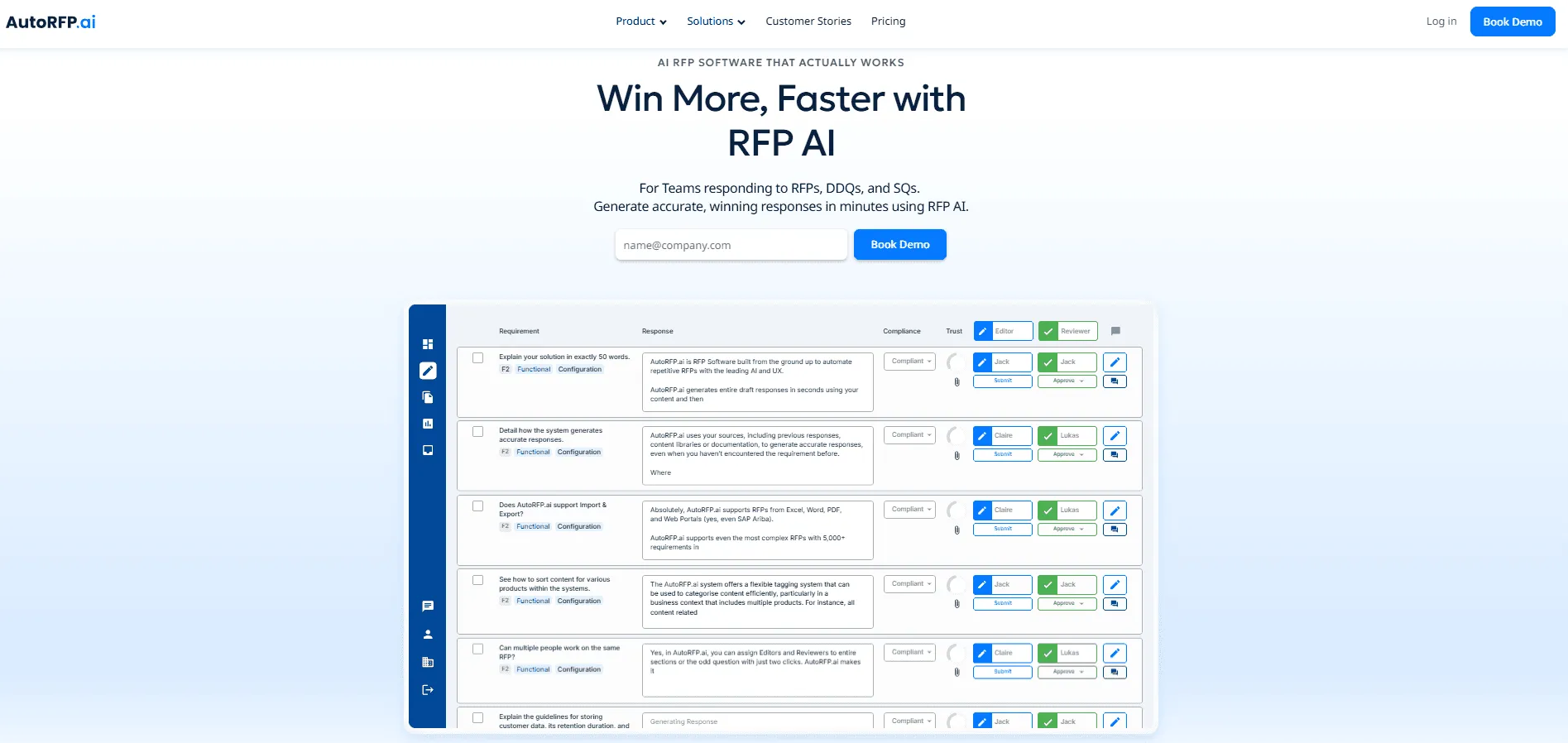
RFP and proposal response tools help teams manage one of the most cross-functional parts of revenue execution. Sales, presales, security, legal, finance, and leadership often need to work together on RFPs, security questionnaires, DDQs, and enterprise bids, so this area helps standardize the response process.
They help teams:
Generate first-draft responses using approved company content.
Reuse past answers without relying on scattered documents.
Assign questions to the right SMEs and track review progress.
Reduce delays in RFP-driven deals where response speed affects pipeline velocity.
Example tools include:
AutoRFP.ai
Loopio
Responsive
QorusDocs
6. Marketing Automation And Campaign Execution
Marketing automation tools help RevOps connect campaign activity with pipeline and revenue outcomes. They are useful when marketing needs to manage lead capture, segmentation, nurturing, scoring, attribution, and handoff quality.
They help teams:
Automate lead nurturing and follow-up workflows.
Score and segment leads based on behavior and fit.
Connect campaign performance to pipeline and revenue.
Improve marketing-to-sales handoffs.
Example tools include:
HubSpot
Marketo Engage
Pardot
ActiveCampaign
7. Customer Success And Retention Management
Customer success tools help RevOps teams track customer health, onboarding progress, renewal risk, expansion opportunities, and post-sale engagement. This matters because RevOps is not just about new business; it also supports retention and recurring revenue growth.
They help teams:
Monitor account health and churn risk.
Track onboarding, adoption, renewals, and expansion signals.
Create playbooks for customer success teams.
Align sales and customer success around account growth.
Example tools include:
Gainsight
ChurnZero
Totango
Planhat
8. Analytics And Business Intelligence
Analytics and BI tools help RevOps teams combine data from CRM, marketing, finance, customer success, and product systems into clearer dashboards. They are important when teams need deeper reporting than what individual platforms can provide.
They help teams:
Track ARR, CAC, churn, win rate, pipeline velocity, and forecast accuracy.
Combine data from multiple revenue systems.
Build dashboards for leadership and team-level reporting.
Identify revenue leaks across the full customer journey.
Example tools include:
Tableau
Looker
Power BI
Domo
9. Workflow Automation And Integration
Workflow automation and integration tools help connect systems that do not naturally work together. They are useful when teams need to reduce manual data entry, automate approvals, sync records, or trigger actions across different platforms.
They help teams:
Sync data between CRM, marketing, finance, and customer success tools.
Automate repetitive tasks such as routing, notifications, and approvals.
Reduce manual updates and duplicate data entry.
Keep revenue workflows moving across disconnected systems.
Example tools include:
Zapier
Make
Workato
Tray.io
Turn RFP Response Into a RevOps Advantage With AutoRFP.ai
A strong RevOps strategy should not stop at dashboards, forecasts, and CRM workflows. If RFPs are part of your revenue process, your team also needs a faster and more structured way to manage responses across sales, presales, legal, finance, and security.
AutoRFP.ai helps teams turn scattered RFP work into a repeatable revenue workflow by generating first drafts, reusing approved answers, assigning owners, and keeping response progress visible. Instead of chasing SMEs or rebuilding answers from scratch, teams can move RFP-driven deals forward with more speed, consistency, and control.
Book Demo with AutoRFP.ai to see how your team can respond to RFPs faster and keep complex revenue workflows moving.
About the author

Ops Lead
Ops Lead at AutoRFP.ai. Designs the pipeline, content, and handoff systems bid teams use to run RFPs end-to-end, and co-hosts live sessions on winning workflows.
LinkedInFrequently asked questions
What Is The Difference Between RevOps And Sales Operations?
Sales operations usually focuses on improving sales team performance, pipeline management, CRM usage, and sales processes. RevOps is broader because it connects sales, marketing, customer success, finance, and operations around the full revenue journey. Instead of optimizing one team, RevOps looks at how the entire revenue engine works together.
How Often Should A RevOps Strategy Be Reviewed?
A RevOps strategy should be reviewed at least quarterly, especially when pipeline performance, conversion rates, forecast accuracy, customer retention, or team capacity starts changing. Regular reviews help teams adjust workflows, clean up data issues, improve reporting, and make sure the strategy still supports current revenue goals.
How Should RevOps Teams Prioritize Which Revenue Bottlenecks To Fix First?
RevOps teams should prioritize bottlenecks based on revenue impact, urgency, and how many teams are affected. For example, poor lead routing, slow proposal cycles, unreliable CRM data, weak handoffs, or delayed approvals should be reviewed based on how much they affect pipeline speed, customer experience, and forecast accuracy.
How Can AutoRFP.ai Help RevOps Teams Manage RFP Workload?
AutoRFP.ai helps RevOps teams manage proposal workload by showing assigned questions, completion status, blocked responses, and team capacity in one dashboard. This gives revenue leaders better visibility into how sales, presales, legal, finance, and security teams are contributing to active bids without relying on manual status updates.
How Can AutoRFP.ai Help RevOps Teams Prove Proposal ROI?
AutoRFP.ai’s reporting helps RevOps teams measure automation rate, time saved, cost savings, response quality, and efficiency trends across RFP projects. This makes it easier to show leadership how proposal automation supports revenue execution, improves team productivity, and reduces the manual effort required to move RFP-driven deals forward.
