5 Best RFI Software Solutions (Updated for 2026 and Beyond)
Compare the 5 best RFI software tools for 2026 & beyond for teams answering RFIs, including AutoRFP.ai, Loopio and Responsive, with pricing, pros and cons.
Written by

Technical Account Manager, AutoRFP.ai
- Updated
- Reading time
- 23 min
RFI software helps vendor teams answer buyer questions using content the business has already approved. The real value is not just faster drafting, but making trusted answers easier to find, reuse, review, and update across opportunities.
This guide compares five leading platforms based on how they handle response generation, knowledge management, collaboration, integrations, and review controls, so you can choose the one that best matches your RFI workflow.
| Tool | Best for | Standout feature | Starting price |
|---|---|---|---|
| AutoRFP.ai | Source-grounded RFI response management | Trust and Feedback Scores with source-backed responses and human escalation for unsupported questions | $833/month |
| Loopio | Teams with established RFI content libraries | Mature content library with ownership, scheduled reviews, and reusable approved answers | Contact sales |
| Responsive | Complex enterprise RFI management | Advanced project management, approvals, reporting, and enterprise integrations | From $10,000 |
| Inventive AI | Fast AI-powered RFI responses | Conflict detection that flags outdated, duplicate, or contradictory information | Starting at approximately $830/month, billed annually |
| Arphie | AI-native RFI automation and collaboration | Source-backed AI drafting with confidence indicators and unlimited-user collaboration | Contact sales |
RFI Software for Vendor Teams vs Construction RFI Software
RFI software serves two different workflows. In construction, Requests for Information clarify drawings, specifications, and project requirements. In B2B sales, RFIs help buyers gather information from potential suppliers before making purchasing decisions.
| RFI type | Who sends it? | Who answers it? | Best-fit software |
|---|---|---|---|
| B2B vendor RFI | Procurement, enterprise buyers, or prospective customers | Sales, presales, bid, and proposal teams | AutoRFP.ai and other response management platforms |
| Construction RFI | Contractors or subcontractors seeking project clarification | Architects, engineers, project owners, or general contractors | Procore, Autodesk Construction Cloud, Bluebeam |
If you’re managing RFIs on a construction project, specialized construction platforms are the better choice.
How We Compared RFI Software
In AutoRFP.ai’s 2026 Proposal Win Rate Report, produced with Stargazy, 88% of high-win respondents reported a defined customer-insight process, compared with 67% of low-win respondents.
For teams answering RFIs, understanding what the buyer wants to learn helps determine which information belongs in a response. A question about implementation, for example, may require details about deployment options, internal resources, or integration dependencies rather than a general description of the product.
We used the report’s findings on customer insight and content reuse, alongside the practical requirements of vendor RFI responses, to shape the following comparison criteria.
1. Relevant Answers With Verifiable Support
We consider how platforms help teams adapt approved company information to the buyer’s questions and context.
Relevant capabilities include generating answers that address every part of a requirement, incorporating opportunity-specific information, and showing the sources behind a response.
We also examine how missing evidence and questions requiring expert input are identified. For early-stage RFIs, reviewers need to distinguish what the business can support today from assumptions that could create inaccurate expectations later.
2. Reusable Knowledge That Stays Current
The report also found that 59% of high-win respondents used content library automation, compared with 36% of low-win respondents.
RFIs frequently revisit company information, product capabilities, integrations, security, and implementation requirements. We therefore look at how platforms retrieve approved answers, search connected documentation, capture newly approved responses, and incorporate source updates.
Content ownership and review controls also matter. Information developed for one opportunity should become reusable where appropriate, while customer-specific details and restricted material remain under the team’s control.
3. Expert Input and Clear Approval Ownership
An RFI can require contributions from several departments even before a formal proposal process begins.
Our comparison considers question assignments, comments, co-editing, deadlines, review stages, and approval records. We also examine contributor access and notifications, which affect how easily occasional specialists can participate.
These capabilities help response owners resolve information gaps and obtain approval from the people responsible for technical, security, legal, or commercial statements.
4. RFI Formats and Day-to-Day Fit
We consider spreadsheet and document imports, export formatting, portal support, integrations, security controls, and implementation requirements.
The comparison also accounts for workload and pricing structure, including project allowances, concurrent-project limits, and contributor licensing.
Some teams need a platform for occasional RFIs; others manage them alongside RFPs, DDQs, and security questionnaires. These differences help readers assess AutoRFP.ai and the other platforms against the work their teams actually handle.
The report covers self-reported proposal practices across teams, rather than RFI-specific outcomes or software rankings. High-win respondents reported win rates of 51% or more; low-win respondents reported 25% or less.
1. AutoRFP.ai: Best for Source-Grounded RFI Response Management

AutoRFP.ai is the accuracy-first, AI-native platform for RFPs, security questionnaires, and DDQs: every answer is written from content your team has approved, and shows the sources behind it.
That approach also makes it well suited to RFIs. Early-stage information requests can span product capabilities, integrations, implementation, security, company information, compliance, and commercial requirements, often before the buyer has narrowed the opportunity into a formal RFP. The response team needs to answer broadly without making claims the business cannot support.
AutoRFP.ai turns those requests into structured response projects, drafts from approved company knowledge, gives reviewers visibility into the evidence behind each answer, and coordinates the SMEs responsible for filling genuine information gaps. As completed responses are approved, that expertise can strengthen the knowledge available for the next RFI, RFP, security questionnaire, or DDQ.
Key Features
Here are the AutoRFP.ai capabilities that matter most for teams responding to recurring RFIs.
1. Generate Source-Grounded RFI Responses With Trust and Feedback Scores
AutoRFP.ai drafts responses from approved content across your library, previous projects, documentation, and connected company sources.
Each generated answer is assessed through two different quality signals. The Trust Score reflects how strongly the source material supports the response. The Feedback Score looks at whether the answer actually addresses what was requested, including completeness, relevance, clarity, and appropriate detail.
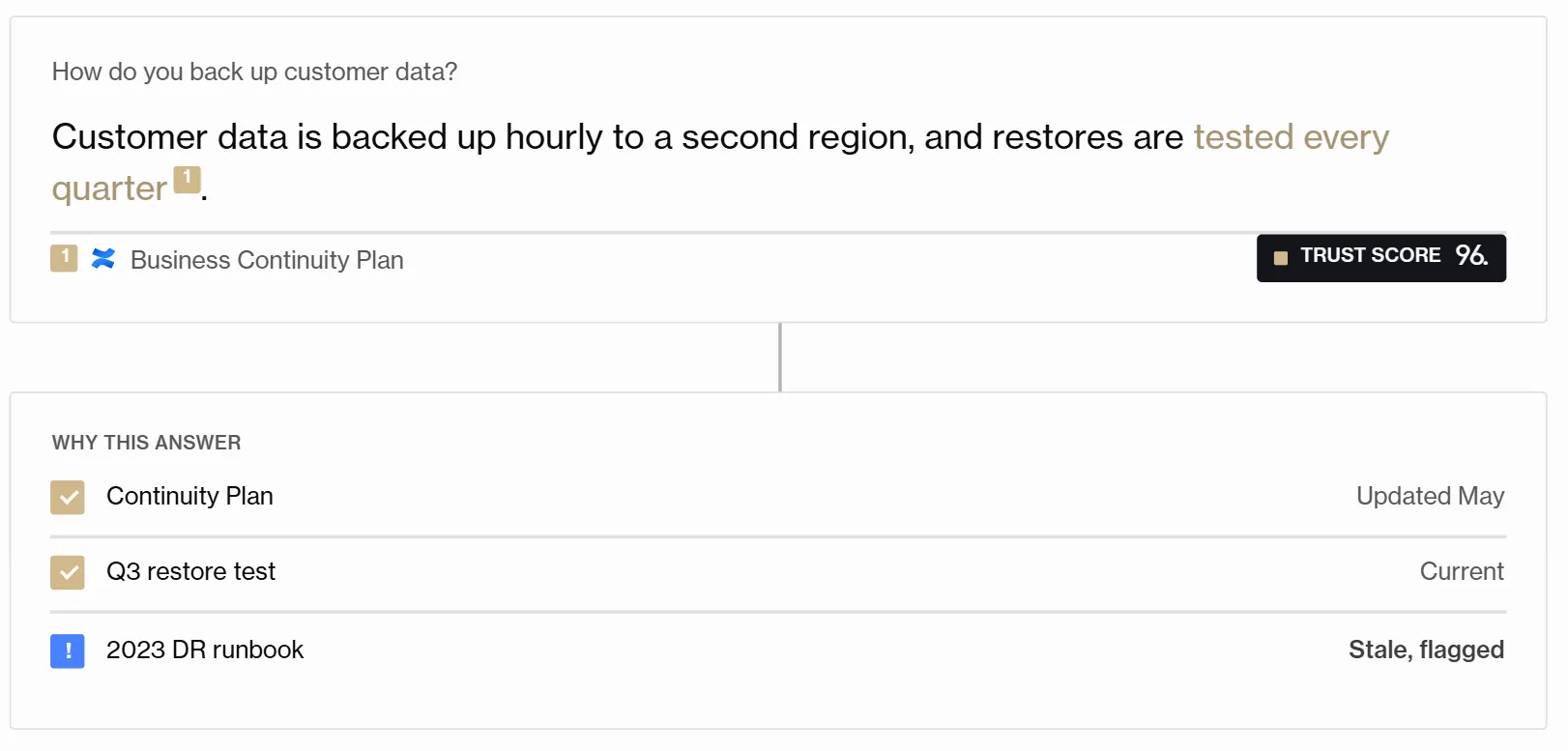
That separation is useful in an RFI. An answer can be factually supported but still miss part of a multi-part question, provide too little context, or fail to explain a capability clearly enough for an evaluator.
Zero hallucination by design means AutoRFP.ai writes from content your team has approved, shows the evidence supporting its responses, and routes questions it cannot adequately support to a person rather than guessing.
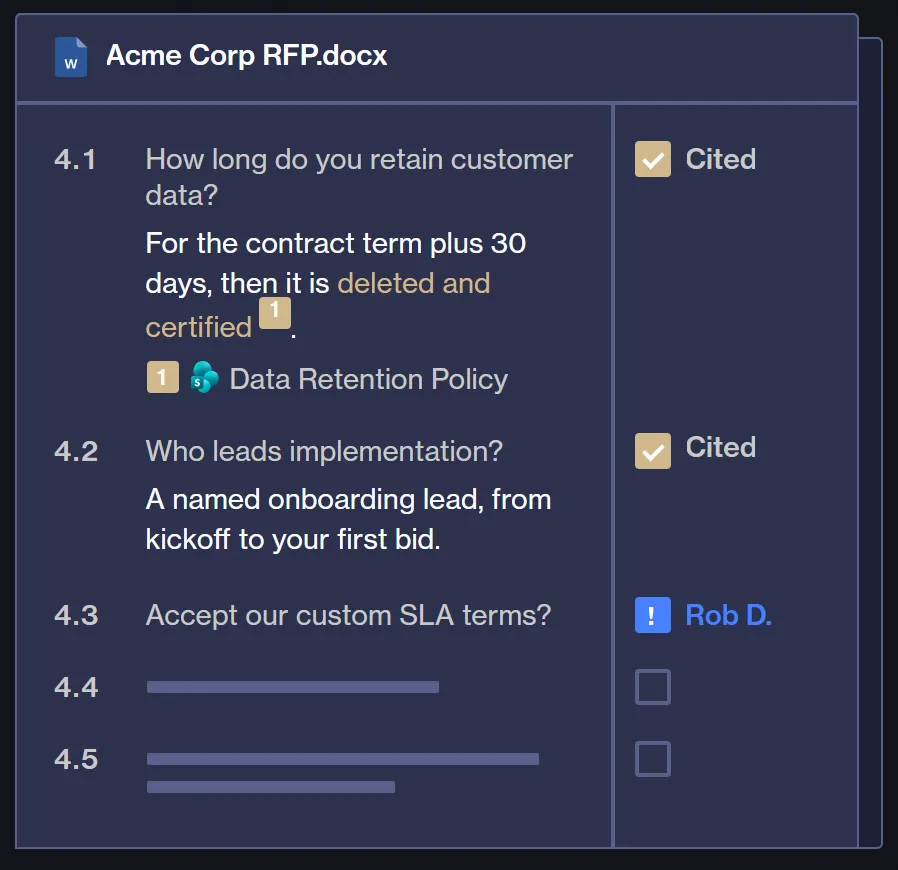
The result is a first draft reviewers can validate against actual company knowledge instead of treating every fluent AI response as equally trustworthy.


Video transcript
AutoRFP.ai is like having a team member that never sleeps. We've responded to more than double the number of RFPs after implementing AutoRFP.ai than we did the year before. I'll look back on 2025, we'd saved something like 949 hours. It was mind-blowing. Oh my gosh, this can be done automatically. Being able to answer those consistently and accurately puts us in a position to be a trusted vendor for our clients.
Using AutoRFP.ai has definitely helped me increase my closing ratio. Before, we were using Google Drive to store all of our library content and previous responses. It was a very manual process. If the keyword was there, you would find it. If not, then you wouldn't. I would say 60% of the deals that come through in my market are RFP bids.
But as the team was scaling, it quickly became apparent that this wasn't sustainable. I, of course, looked at tools that we had available to us in-house. Became clear that it worked in some ways, but it wasn't built to respond to complex RFPs with multiple questions and moving parts. So what was different about AutoRFP.ai is that we're able to upload multiple documents in all different formats, PDF, Word, Excel, and it will ingest all of those documents and pull out the requirements, even tables within documents instantly.
The Excel sheets just blew our mind because we hadn't seen this anywhere else. As we work in multiple regions, the ability of AutoRFP.ai to translate into multiple languages is really impressive, and it really felt like it was going to be a partnership rather than a transaction. We spend a lot more time now focusing on the strategy for a bid.
The bids are a lot more tailored and a lot more focused on the prospect in a way that we couldn't do before. The quality of our output is just completely different. Do you feel like it's gonna blow their mind because they're like, "Oh, you've said exactly what we needed to hear." Thinking back to that particular deal in Q3, the deadline was coming up.
Having missed the deadline would have meant for me not hitting my quarter, but I also didn't wanna let down my team. Having a bank of information of answers that I could trust really allowed me to just push everything out as quickly as possible, knowing that what I was saying was accurate and true.
Trusting that when that is submitted, more than 50% of the job is done, and I'm really excited to say that, yes, we did win the deal, made me look like a hero, so thank you. We've been able to respond to 20 to 30% more RFPs quarter on quarter. We've been able to increase the capacity of the team. We've saved 45% of the time it would've taken us to respond to the same number of RFPs.
Our shortlist rate has been outstanding, and it just gets better and better I would say don't wait until volumes spike and quality starts to drop. Every bid that your team submits manually is costing you more than you think, not just in hours, but in quality and consistency There's absolutely no way we would want to go back to the previous way AutoRFP.ai is like having a team member that never sleeps, keeps getting smarter, and allows my team to focus on the stuff that they're really good at
2. Build on a Library That Maintains and Improves Itself
RFIs often ask variations of questions the organization has already answered somewhere else.
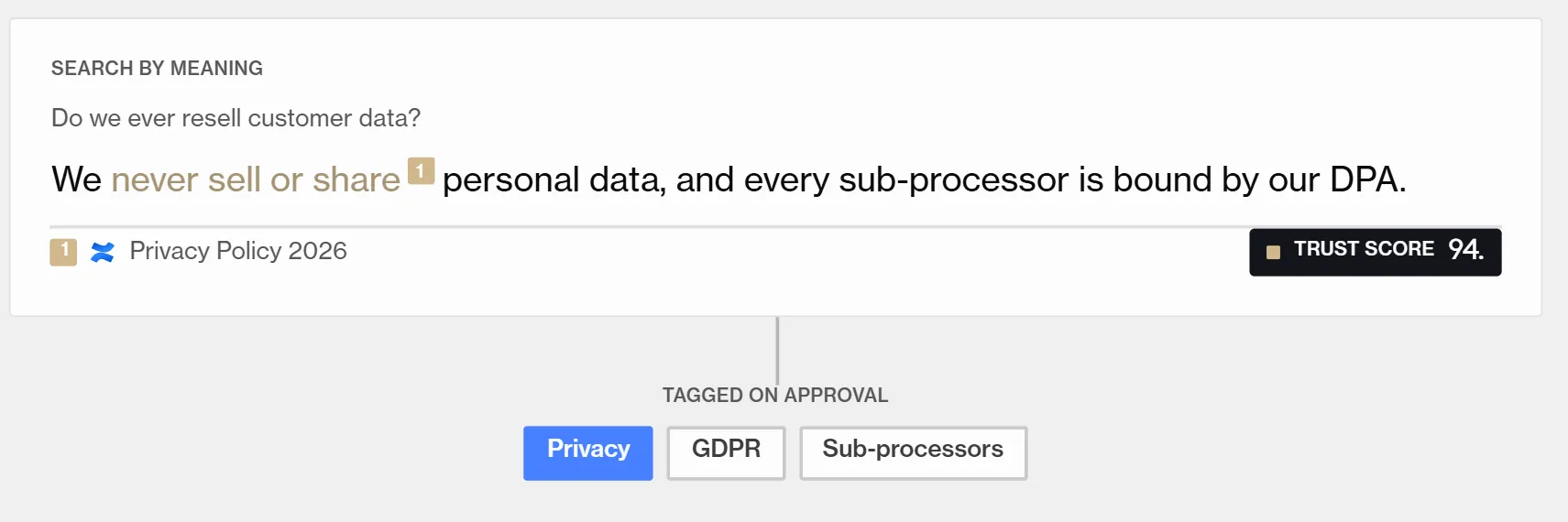
AutoRFP.ai searches approved answers, previous projects, and connected knowledge by meaning rather than depending solely on identical wording or manually matched keywords.
That helps surface relevant information even when one buyer describes a requirement differently from another.
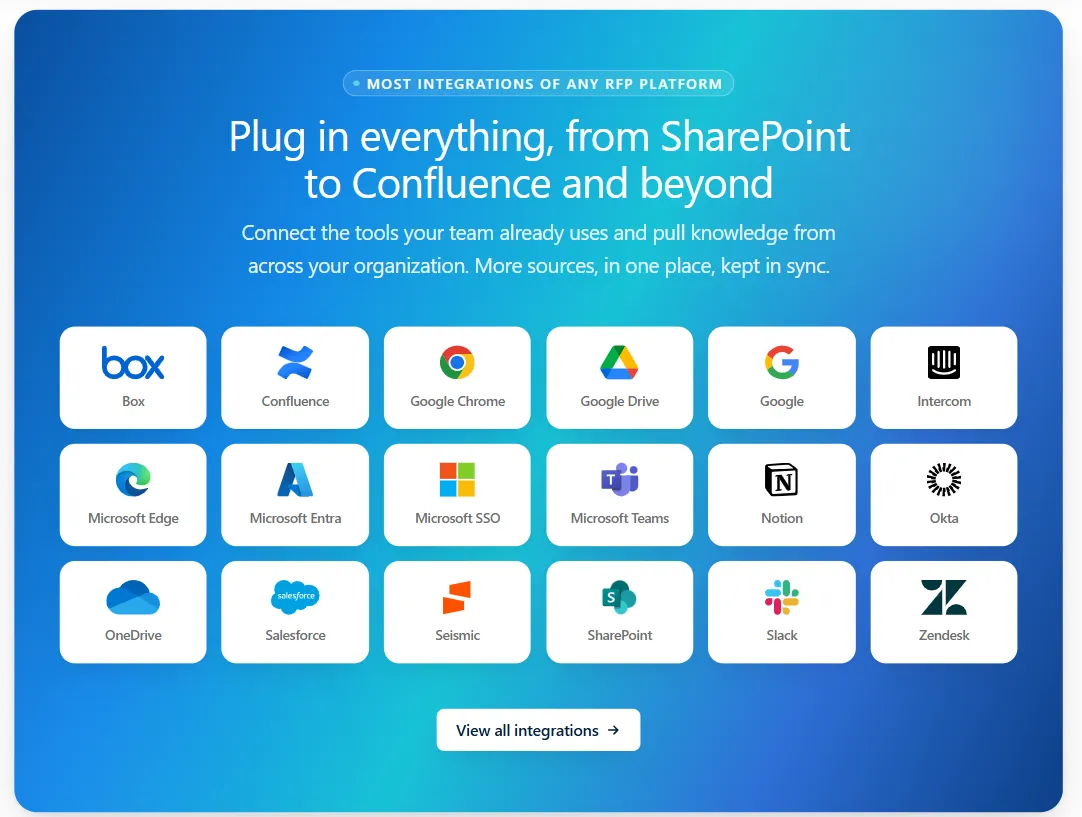
The platform can connect to knowledge already maintained across systems such as SharePoint, Google Drive, OneDrive, Confluence, Box, Notion, and other company repositories.
As teams approve new responses, AutoRFP.ai captures that expertise for future work. Connected-source syncing can also incorporate updates from selected company systems, helping the knowledge available to future responses stay current.
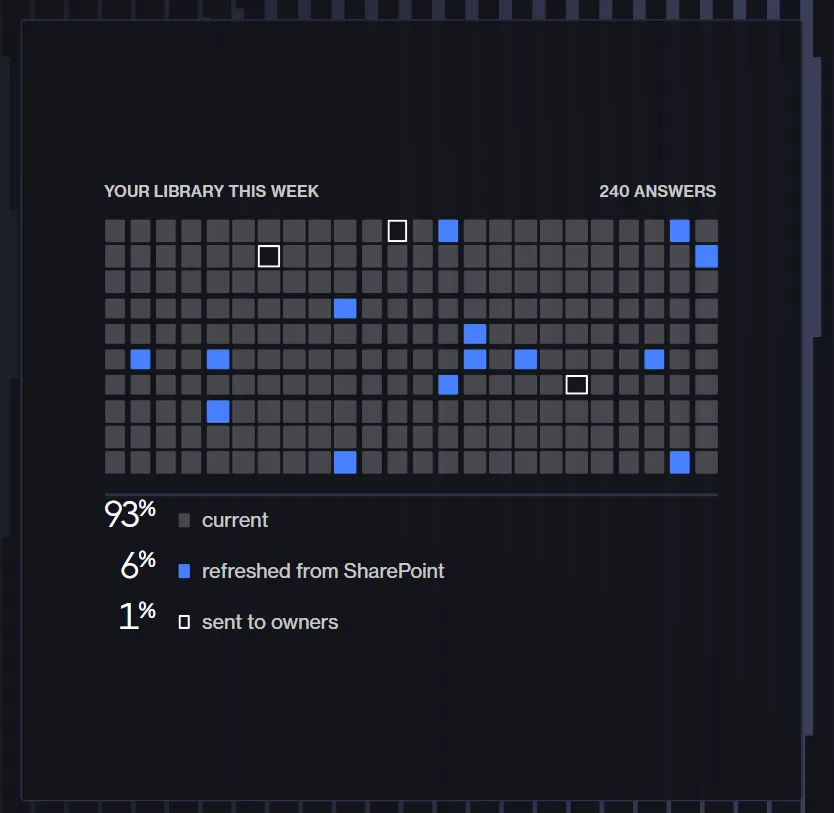
Content owners retain control over organization, tagging, review, and approval. The library therefore grows through everyday response work while continuing to operate within the team’s governance process.
Webinar replay
How Winning Teams setup their Content Libraries

3. Keep Every RFI Requirement, Owner, and Deadline Visible
An RFI may look less formal than an RFP, but answering one can still require input from several departments.
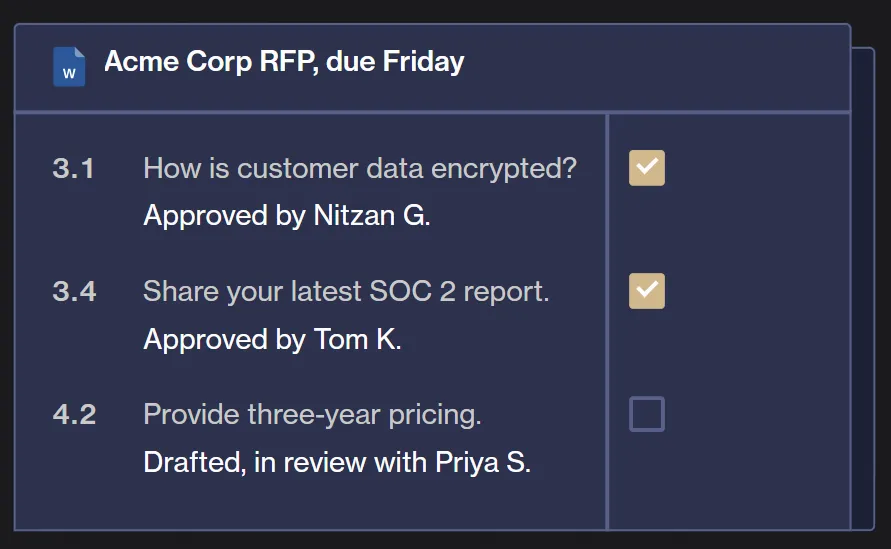
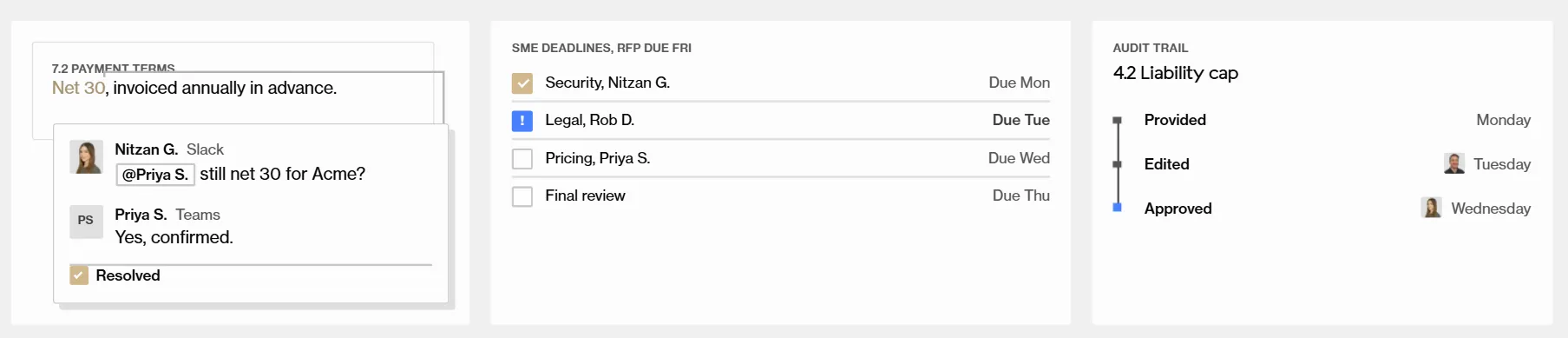
AutoRFP.ai’s project management capabilities let response owners structure the request, assign questions or sections to the appropriate SMEs, establish ownership, set deadlines, monitor progress, and identify work that is holding up completion.
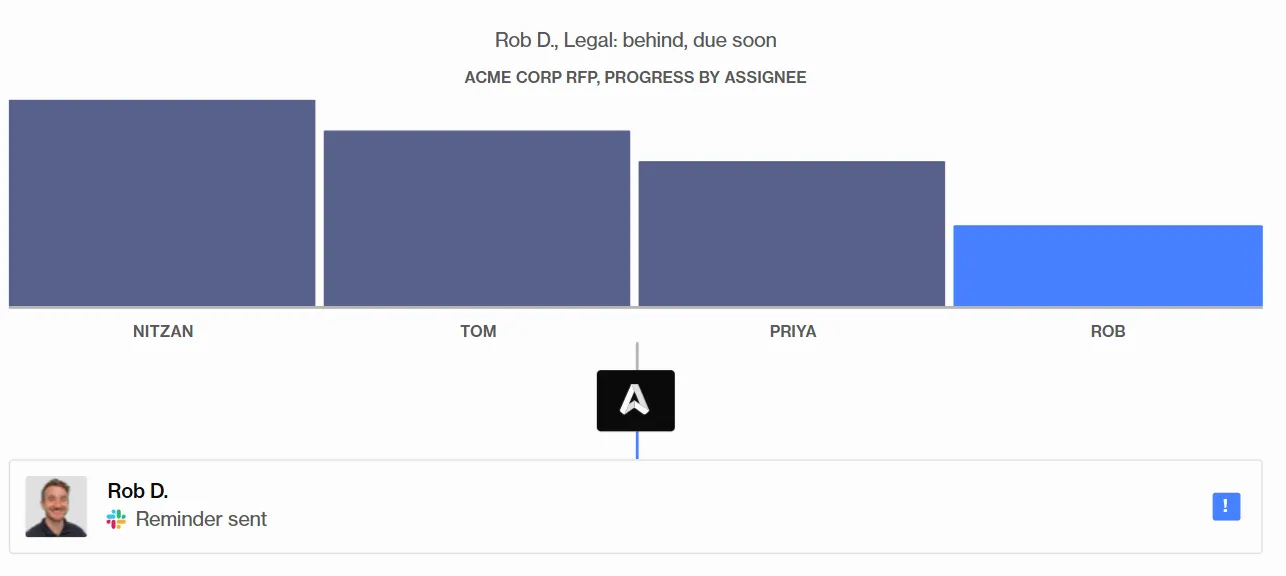
Instead of coordinating responses across spreadsheets, emails, and separate document versions, the team works from the same project.
Version history and audit trails also preserve what changed during the response process and who contributed or approved the final information, which becomes increasingly important when early RFI answers later influence a formal RFP or customer commitment.
4. Collaborate With SMEs Without Restricting Participation
RFIs commonly reach beyond the core proposal team because different questions may belong to product, engineering, security, legal, finance, implementation, compliance, or other specialists.
AutoRFP.ai supports assignments, co-editing, comments, sequential reviews, approval workflows, and notifications so those contributors can participate without the response owner manually chasing every question.
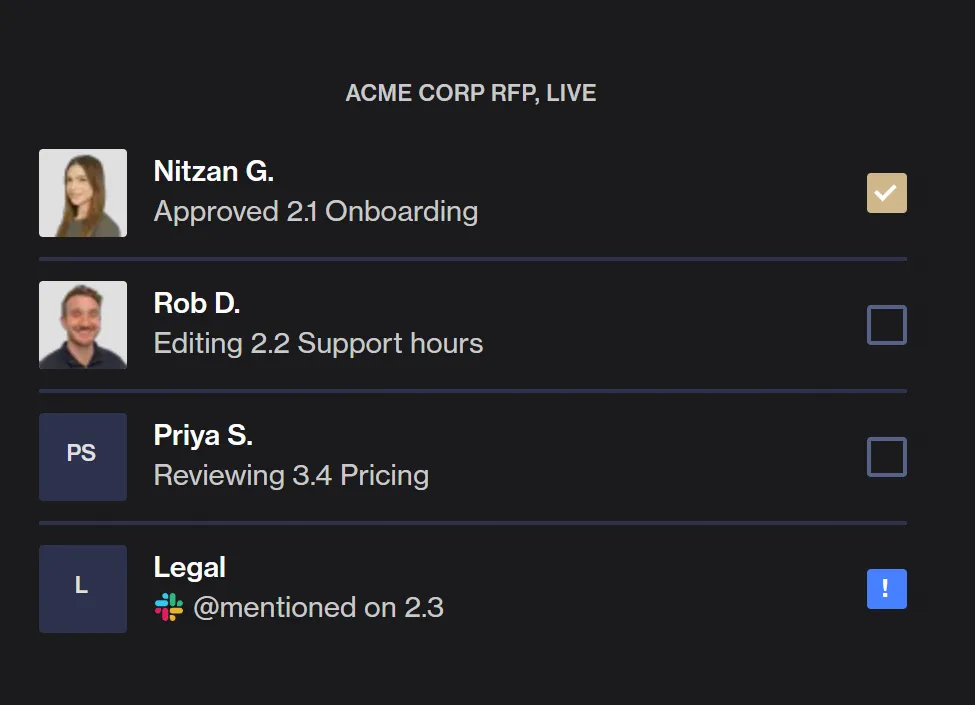
Slack, Microsoft Teams, and email notifications can bring assignments and review requests into the systems SMEs already use.
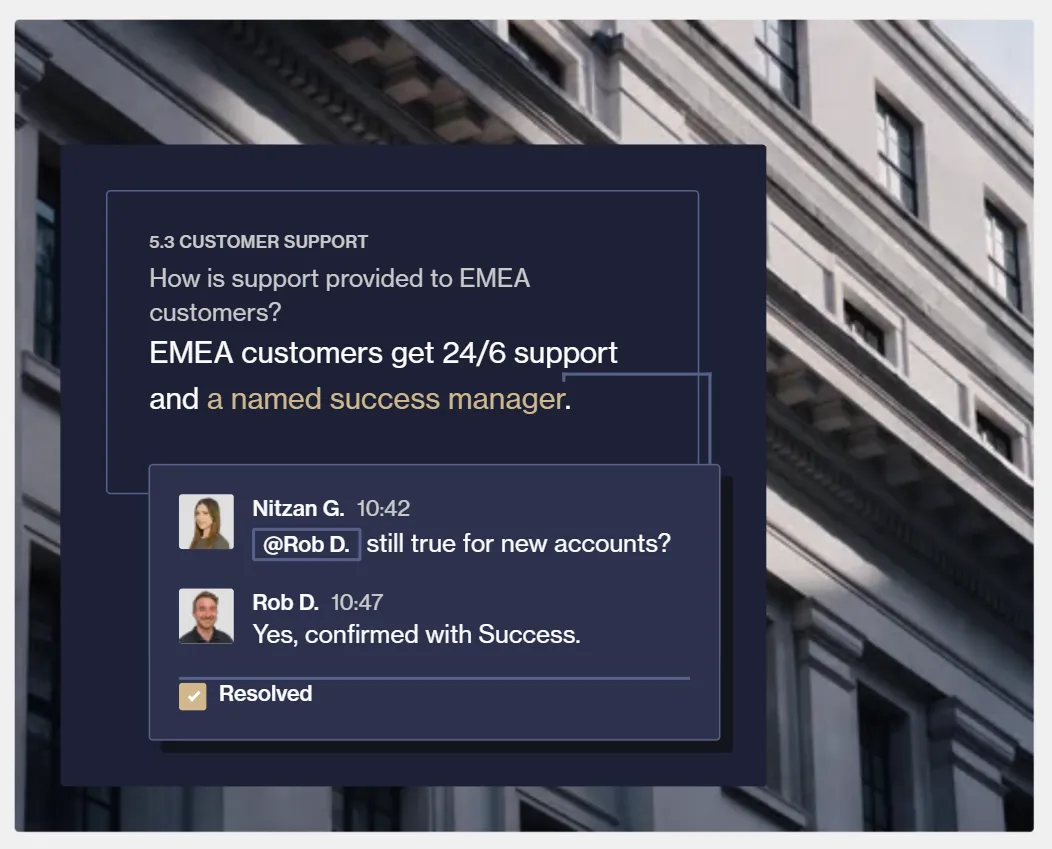
AutoRFP.ai also includes unlimited users, which is particularly useful for RFI workflows where a specialist may contribute to only a handful of questions rather than work on the platform every day.
5. Handle Excel, Word, PDF, and Portal-Based RFIs
Buyer requests do not arrive in one standardized format.
AutoRFP.ai’s AI Document Importer can process Excel workbooks, Word documents, PDFs, ZIP files, and complex questionnaire structures, including multi-tab spreadsheets, nested tables, dropdowns, validation fields, and supporting information.
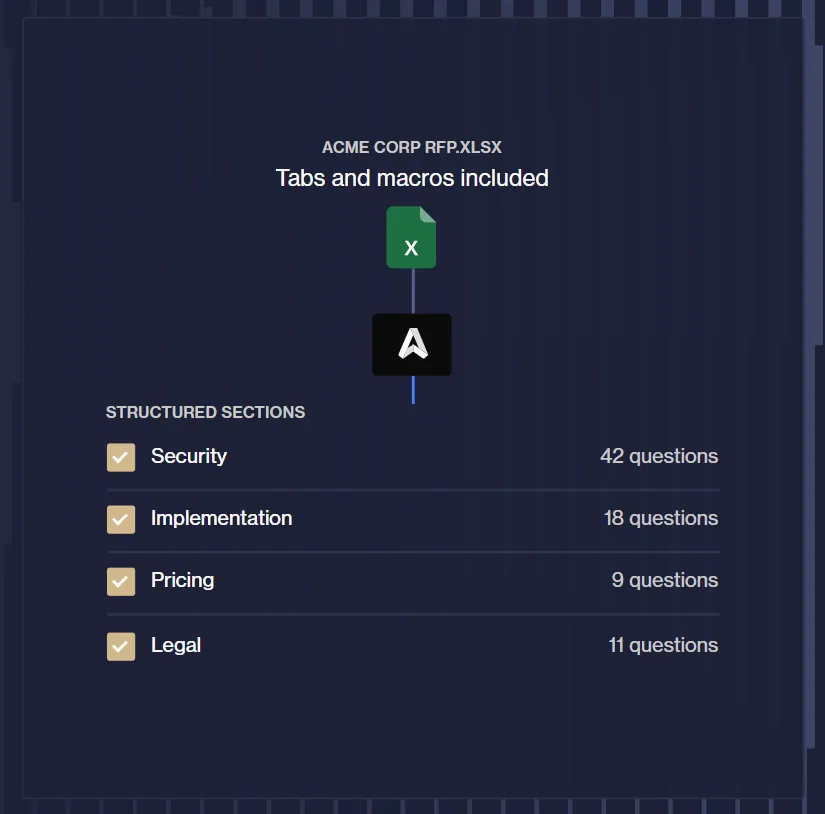
Requirements are extracted into a structured response project where the team can work through them consistently.
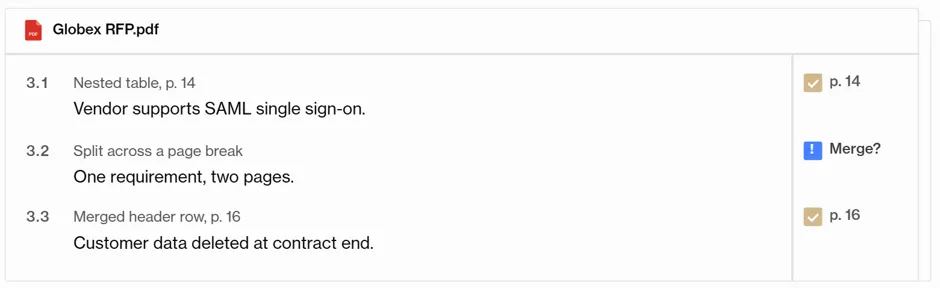
After review, completed Excel and Word files can be returned in the buyer’s original format instead of requiring someone to manually rebuild the response before submission. PDFs can be answered through the platform and exported as Word documents.
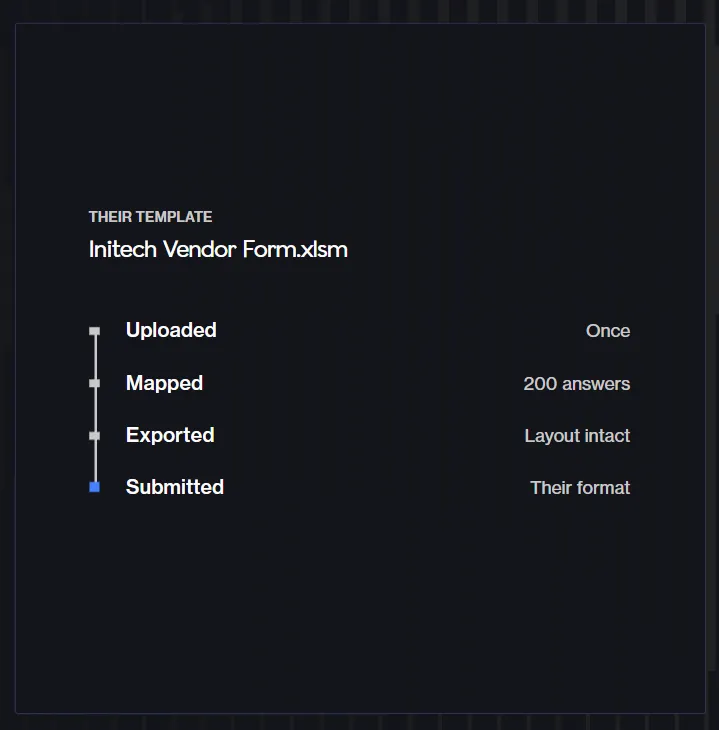
If the RFI is hosted inside an online procurement or security portal, Portal Agent support allows those requirements to move through the same underlying response process rather than forcing the team into an entirely separate workflow.

6. Turn RFI Activity Into Better Qualification, Capacity, and Product Insight
AutoRFP.ai can also use response activity to help teams make decisions beyond the individual RFI.
Go/No-Go analysis compares incoming opportunities against configured qualification criteria, helping teams identify potential deal-breakers before significant SME effort is committed.
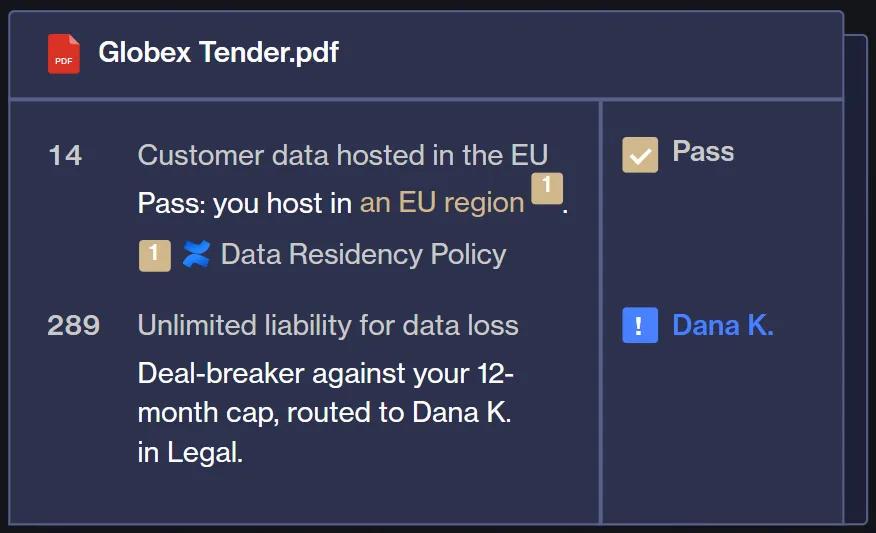
Reporting provides visibility across project volume, workloads, capacity, completion patterns, and outcomes, giving response leaders a clearer picture of how much work their team is carrying and where bottlenecks are emerging.

Gap Analysis aggregates recurring requirements the organization struggles to meet across completed projects. If buyers repeatedly ask for the same integration, certification, deployment option, security control, or product capability, teams can identify that pattern instead of rediscovering the gap one questionnaire at a time.
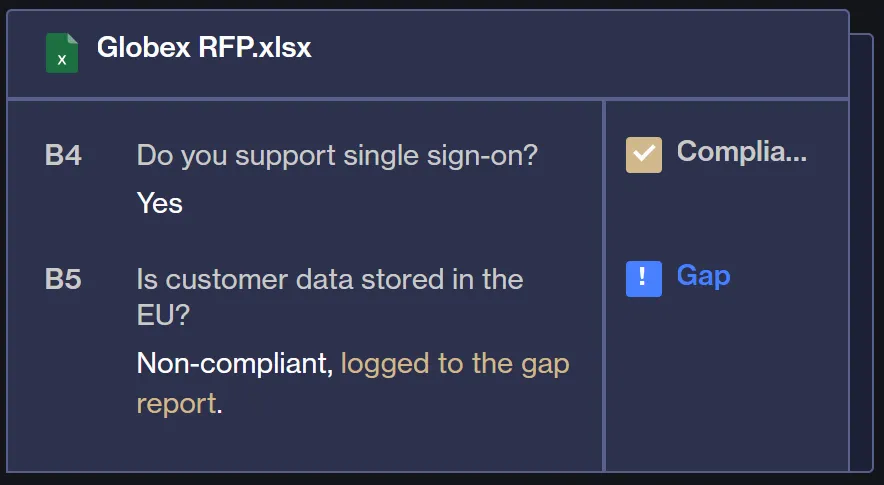
This makes RFI data useful beyond response completion. The questions buyers ask early in the sales process can become evidence for qualification, content planning, and product decisions.
Pricing
| Plan | Monthly Cost | Key Inclusions |
|---|---|---|
| Scale | $833/month, paid yearly | 24 projects per year, online training |
| Accelerate | $1,299/month, paid yearly | 50 projects per year, online training |
| Enterprise | Custom | Scalable projects per year, bespoke implementation, and bespoke terms |
Every plan includes unlimited AI, unlimited content, unlimited users, all features, SSO with Google and Microsoft, 18+ integrations, ISO 27001:2022 and SOC 2 compliance credentials, unlimited support, and implementation support.
All features, including SSO, integrations, AI, translation, and more, are included rather than sold as paid add-ons.
AutoRFP.ai also offers a 30-day money-back guarantee, allowing customers to try the platform and request a refund if it is not the right fit.
Where AutoRFP.ai Shines
- Review by exception: Reviewers can focus attention on responses where evidence is weaker, information is missing, or the answer needs improvement instead of giving hundreds of straightforward RFI answers the same level of manual scrutiny.
- Accuracy during early buyer conversations: RFI responses can shape what buyers expect later in the sales process. AutoRFP.ai keeps those early claims tied to approved company knowledge so teams are less likely to create commitments they have to correct during a later RFP, security review, or negotiation.
- Cross-functional answers that remain consistent: Product, security, legal, implementation, and sales teams can contribute without each department creating its own disconnected version of the company’s capabilities.
- Knowledge that compounds across the sales cycle: An answer developed and approved during an RFI can strengthen later response work when the same subject appears again in an RFP, security questionnaire, or DDQ.
- Response operations that generate business intelligence: Recurring requirements, capability gaps, workload patterns, and qualification signals become visible across projects instead of disappearing after each RFI is submitted.
- Automation with human accountability: Routine drafting, retrieval, and coordination can be automated while the people responsible for the information retain control over review, approval, and what ultimately reaches the buyer.
Where AutoRFP.ai Falls Short
- Buyer-side RFI creation and vendor research: AutoRFP.ai is designed for teams responding to requests. Procurement organizations primarily issuing RFIs, researching suppliers, comparing vendors, and managing sourcing events need buyer-side procurement or sourcing software.
- Quote-driven RFQs: The platform is built around information-rich RFP, RFI, security questionnaire, DDQ, and tender responses rather than workflows centered primarily on requesting and comparing prices.
- Very simple, occasional RFIs: Teams receiving only a handful of short information requests each year may not need the governance, knowledge management, collaboration, and reporting depth of a dedicated response platform.
- Narrative-heavy proposal authoring: Organizations primarily creating long-form persuasive bids or heavily designed proposals may still prefer specialist proposal-writing or design software for that part of their workflow.
Customer Reviews
Bryce P., Business Development Manager, said, “AutoRFP is very easy to use, highly intuitive, and saves me tons of time when responding to lengthy RFPs.”
Tim W., Head of Solution Design, said, “AutoRFP makes completing complex RFPs straightforward. The AI assistance is valuable and relevant, and the customer support is top-notch.”
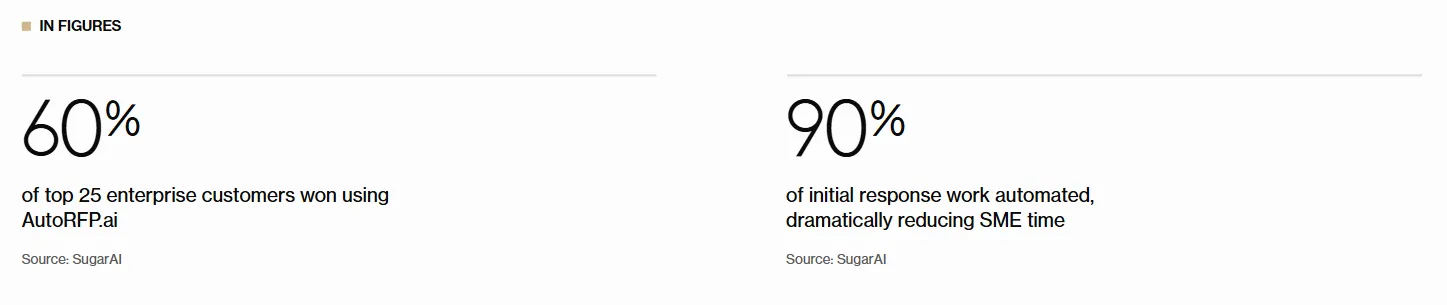
Trevor Carlsson, Director, Solution Consulting at SugarAI, said: “AutoRFP.ai has genuinely been a game changer for our team across APAC. It has significantly reduced the time required to respond to RFPs while still maintaining a high standard of quality and accuracy.”
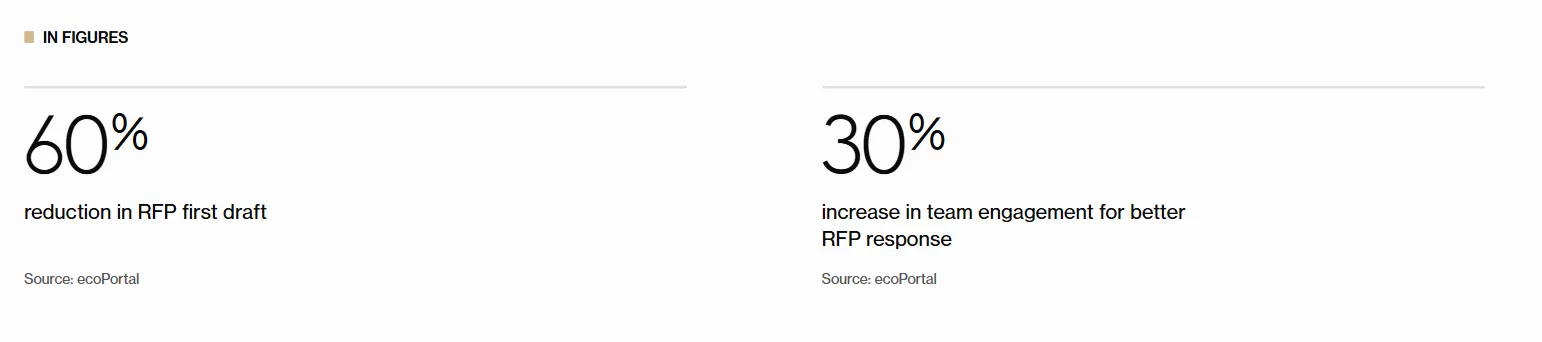
Jason McGeorge, Solutions Architect at ecoPortal, said: “It’s faster, it’s more engaging and it’s more accurate than our previous legacy RFP Software.”
Who AutoRFP.ai Is Best For
- B2B companies responding to recurring RFIs: Teams receiving regular buyer information requests before formal RFP or procurement stages.
- Enterprise sales and presales organizations: Companies answering detailed questions about product capabilities, integrations, implementation, security, compliance, and company operations.
- Cross-functional response teams: Organizations where RFIs regularly require information from product, technical, security, legal, finance, implementation, and compliance SMEs.
- Security-conscious organizations: Teams that need AI-assisted responses while retaining source visibility, permissions, approval workflows, version history, and auditability.
- Organizations with established company knowledge: Teams with previous responses, internal documentation, and approved content that they want to reuse and continuously improve.
- Teams managing RFIs alongside other response work: Organizations where the same team handles RFIs, formal RFPs, security questionnaires, DDQs, and tenders and wants the knowledge created in one workflow to support the others.
2. Loopio: Best for Teams With Established RFI Content Libraries

Loopio is an established RFI and RFP response management platform known for its centralized content library, polished interface, and mature project management capabilities. Its large customer base and established workflows make it a practical choice for organizations that regularly handle RFIs alongside proposals and security questionnaires.
Key Features
- Centralized content library: Loopio stores approved answers, company information, and past responses in a searchable library. Teams can organize entries, assign content owners, and schedule reviews to maintain accuracy.
- Magic recommendations and generative AI: Loopio combines automated answer matching with generative AI to draft RFI responses using approved library content and connected sources. Reviewers can check suggested answers and supporting information before submission.
- Project management: Teams can assign RFI questions to subject matter experts, monitor deadlines, track completion, and manage multi-step reviews across departments.
Pricing
| Plan Name | Plan Cost |
|---|---|
| Foundations | Contact sales |
| Enhanced | Contact sales |
| Enterprise | Contact sales |
Loopio does not publicly disclose subscription prices. Foundations includes 10 seats, while Enhanced adds advanced collaboration features and Enterprise supports larger organizations with multiple teams and business units.
Where Loopio Shines
- Mature content management: Loopio’s established library workflows, content ownership, and review processes help teams maintain consistent responses across recurring RFIs.
- Strong collaboration tools: Its project dashboards, assignments, and deadline management are particularly useful for organizations coordinating multiple contributors.
- Established platform: Loopio has a substantial customer base, an active user community, and a track record of supporting enterprise response operations.
Where Loopio Falls Short
- Ongoing library upkeep: Although Loopio offers content review cycles and automation, teams still need to manage approved answers, review outdated information, and maintain library organization.
- Document formatting challenges: Some users report formatting issues when importing PDFs or exporting completed questionnaires, creating additional work before submission.
- Limited pricing transparency: Subscription costs depend on the selected package, seat requirements, and add-ons, making it difficult to estimate costs without a sales quote.
Customer Reviews
John R., SVP of Worldwide Sales, says, “How simple and intuitive it is. Easy to manage content as well as user access to that content.”
Lisa S., Business Development professional, shares, “The import function can be clunky at times. When uploading a PDF I sometimes see formatting issues.”
Who Loopio Is Best For
Loopio is best for organizations that:
- Have established RFI content libraries: Teams with existing approved answers and dedicated content managers responsible for keeping information accurate.
- Manage recurring RFIs: Mid-sized and enterprise businesses handling multiple RFI, RFP, and security questionnaire projects.
- Need mature collaboration workflows: Organizations that rely on structured assignments, deadlines, and multi-stage approval processes.
3. Responsive: Best for Complex Enterprise RFI Management
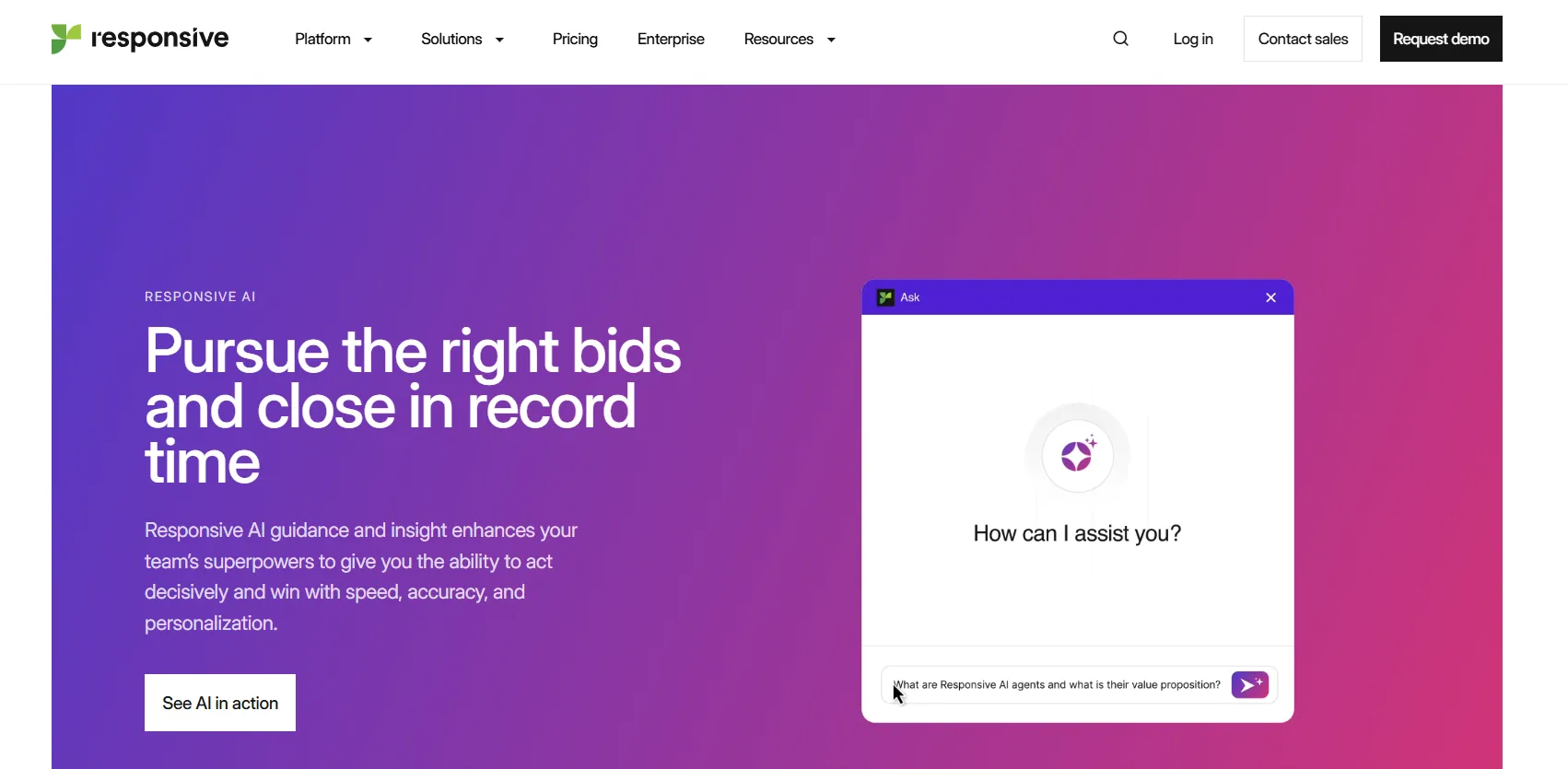
Formerly known as RFPIO, Responsive is an enterprise response management platform that helps organizations manage RFIs, RFPs, DDQs, and security questionnaires. It combines AI-powered drafting, centralized knowledge management, and advanced project controls for teams handling complex procurement requests.
Key Features
- AI-powered RFI automation: Responsive uses AI agents to analyze incoming RFIs, identify requirements, and generate responses using approved company information.
- Centralized knowledge library: Teams can organize reusable answers, maintain approved content, and retrieve relevant information for different RFI requirements.
- Enterprise project management: Responsive supports task assignments, review workflows, reporting, and integrations with Salesforce, Slack, Microsoft applications, and other business systems.
Pricing
| Plan Name | Plan Cost |
|---|---|
| Emerging Edition | Starting from $10,000 |
| Growth Edition | Contact sales |
| Enterprise Edition | Contact sales |
Responsive’s Emerging Edition starts from $10,000. Its pricing model combines an annual platform subscription with user licenses and any applicable add-ons or services, so buyers should confirm the complete annual cost with sales.
Where Responsive Shines
- Advanced project management: Responsive provides established deadline tracking, approval workflows, and reporting capabilities for complex RFI operations.
- Broad AI capabilities: Its AI agents support document intake, drafting, content governance, and workflow automation rather than relying solely on traditional answer matching.
- Enterprise integrations: Its integrations and access controls support organizations managing RFIs across sales, legal, security, and procurement teams.
Where Responsive Falls Short
- Implementation complexity: Its extensive features and configuration options can require substantial onboarding and administrative effort, particularly for smaller teams.
- Content maintenance: Teams still need to organize approved information, review existing answers, and maintain their knowledge library to support accurate AI responses.
- AI output requires review: Some users report that suggested responses need correction or additional context before they can be used in customer-facing submissions.
Customer Reviews
Hannah W., Underwriting Analyst, shares, “It automates responses, and aids in seeing past responses. Helps track the progress of bids and sets reminders to meet deadlines.”
Patrick C., Sr. Director of Technical Sales, says, “It fits the bill. I like email reminders. Recommendations are good and we’re getting more value out of the AI capabilities.”
Who Responsive Is Best For
Responsive is best for organizations that:
- Manage complex RFI workflows: Enterprise teams handling multiple requests involving different departments and approval stages.
- Need detailed reporting: Proposal operations teams that prioritize performance tracking, project visibility, and content governance.
- Operate across multiple business systems: Organizations requiring integrations, access controls, and structured collaboration.
4. Inventive AI: Best for Fast AI-Powered RFI Responses
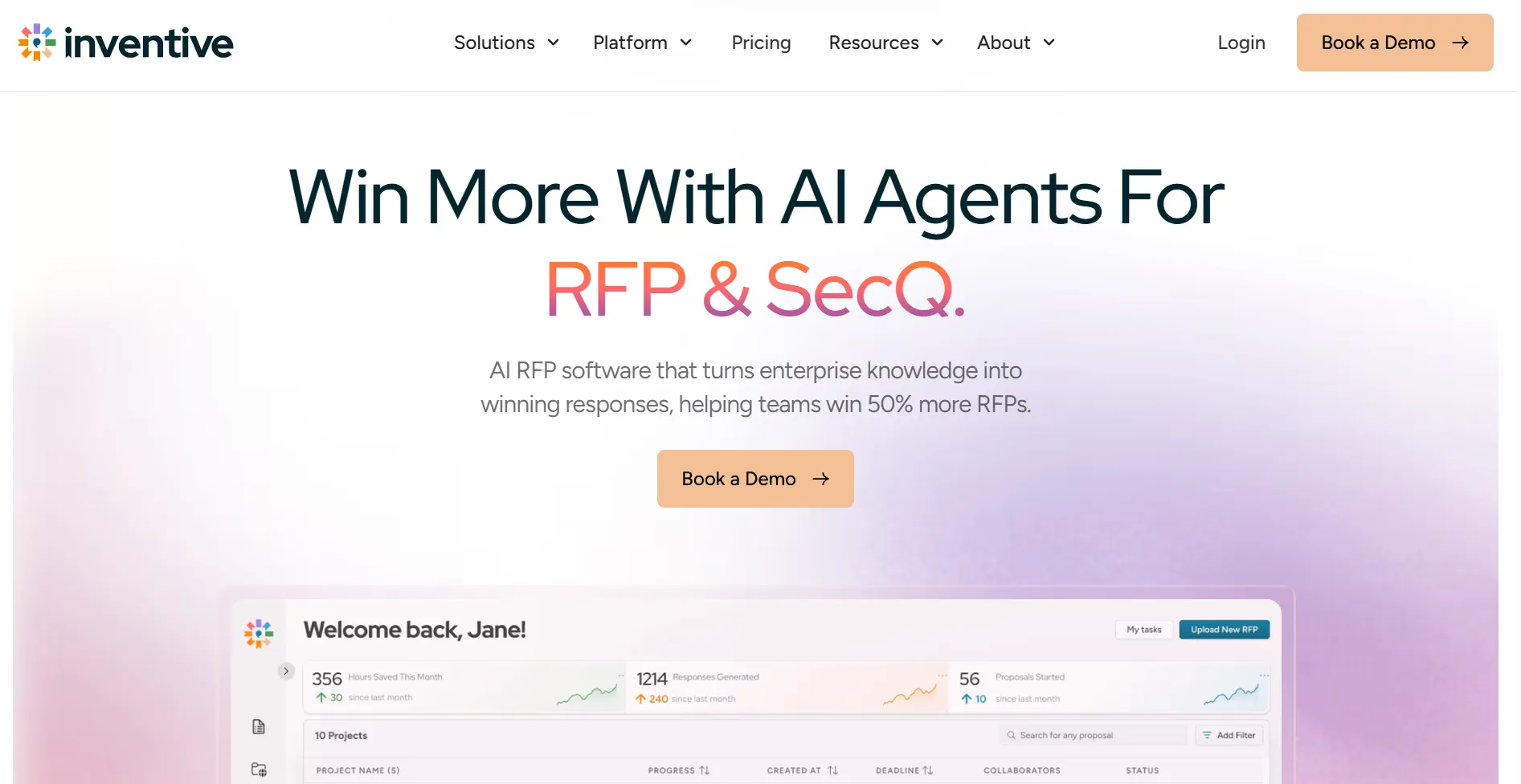
Inventive AI is an AI-native response automation platform designed to help sales and presales teams complete RFIs, RFPs, DDQs, and security questionnaires. Its emphasis on rapid drafting, connected knowledge sources, and conflict detection makes it particularly appealing to smaller teams looking to reduce repetitive response work.
Key Features
- AI response generation: Inventive AI drafts RFI answers using company documentation, past responses, and connected knowledge sources. It adapts answers to the question and buyer context.
- Conflict detection: Its AI Content Manager identifies outdated, duplicate, or contradictory information across sources, helping reviewers resolve inconsistencies before submission.
- Knowledge integrations: Inventive AI connects with SharePoint, Google Drive, Confluence, Notion, and other systems to retrieve relevant company information without requiring every document to be manually organized into traditional Q&A entries.
Pricing
| Plan Name | Plan Cost |
|---|---|
| Usage-based subscription | Starting at approximately $830/month, billed annually |
| Custom enterprise requirements | Contact sales |
Inventive AI uses a fixed platform fee plus usage-based pricing, with unlimited users included. Its official pricing page states that plans start at $10,000 per year, with pricing scaling according to RFP and security-questionnaire usage
Where Inventive AI Shines
- Fast response generation: Inventive AI emphasizes reducing RFI drafting time by retrieving relevant information from existing company documents and generating contextual responses.
- Conflict detection: Its ability to flag contradictory or outdated information helps teams identify potential content problems before submitting answers.
- Straightforward onboarding: Its knowledge integrations and accessible interface make it appealing to lean presales teams that want to start using existing documents without a lengthy library-building exercise.
Where Inventive AI Falls Short
- AI responses need refinement: Users report that generated responses occasionally require manual adjustments to match company tone and specific requirements.
- Reporting depth: Some reviewers would like more detailed analytics and reporting capabilities, particularly for monitoring proposal performance.
- Usage-based budgeting: Although unlimited users are included, teams must estimate their annual RFI and questionnaire volumes to understand total subscription costs.
Customer Reviews
Shikha C., Sr. Product Manager, says, “Inventive helps speed up RFP responses and keeps things organized. There’s a small learning curve but it’s a useful tool.”
An Anonymous User, Assistant Executive, describes the interface positively: “The UI is clean and easy to adapt to.” The reviewer also notes, “The reporting and analytics features could also be more detailed.”
Who Inventive AI Is Best For
Inventive AI is best for organizations that:
- Have lean presales teams: Small and growing software businesses that need to respond quickly to RFIs without extensive administrative resources.
- Prioritize drafting speed: Teams looking to generate responses from existing documents and reduce repetitive manual work.
- Manage changing product information: Organizations that benefit from identifying conflicting or outdated content across knowledge sources.
5. Arphie: Best for AI-Native RFI Automation and Collaboration
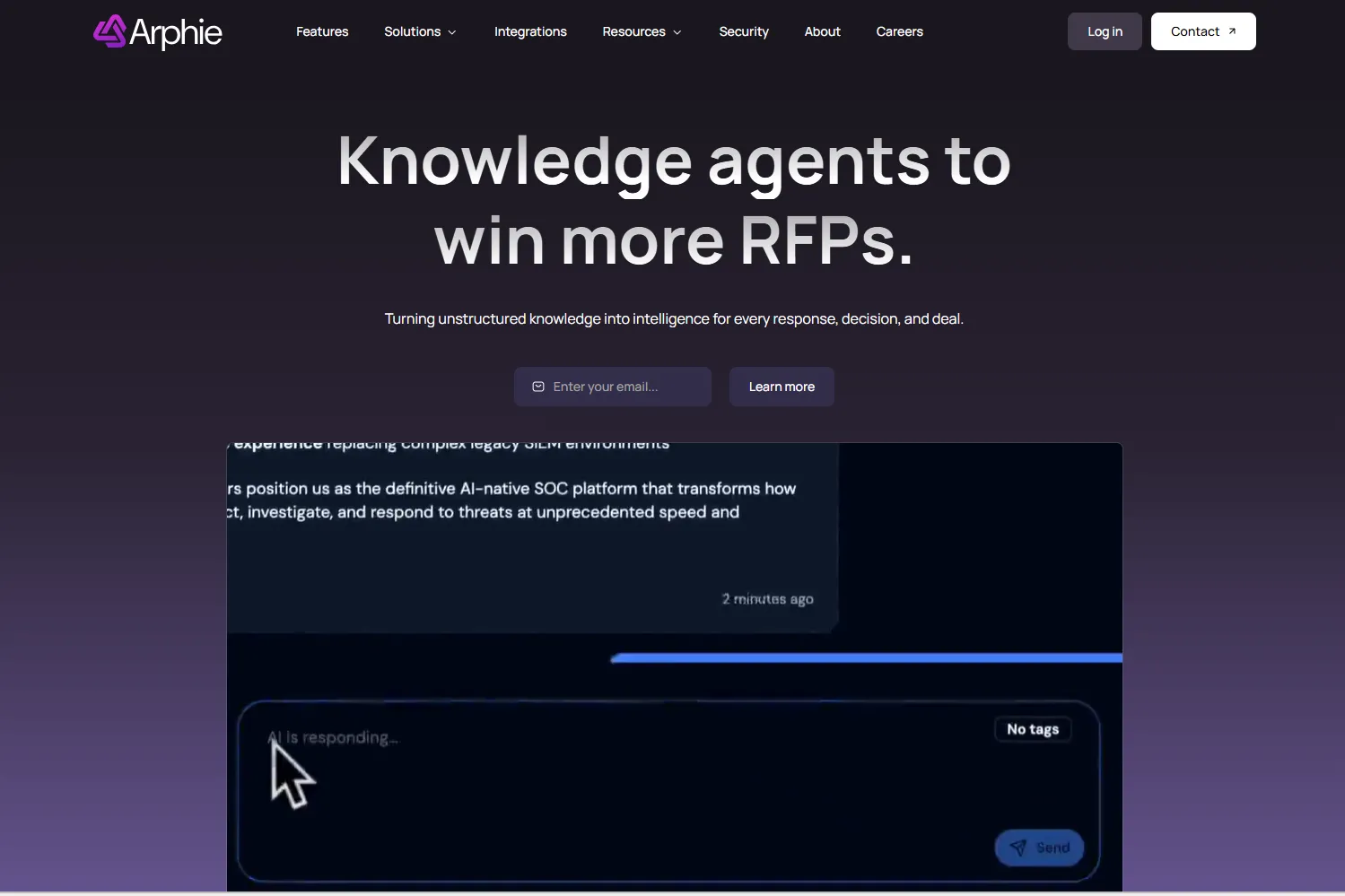
Arphie is an AI-native RFI automation platform that helps teams generate accurate, source-backed responses using existing company knowledge. It also supports RFPs, DDQs, and security questionnaires, making it a strong option for organizations seeking broader proposal automation without traditional per-seat licensing.
Key Features
- AI-powered RFI responses: Arphie generates draft answers from approved information, past responses, and connected documents, with source citations and confidence indicators for reviewers.
- Connected knowledge sources: Arphie integrates with Google Drive, SharePoint, Confluence, Notion, and other systems to retrieve relevant information and reduce repetitive content management.
- Review and collaboration: Teams can assign questions to subject matter experts, review AI-generated answers, manage approvals, and track progress across simultaneous RFIs.
Pricing
| Plan Name | Plan Cost |
|---|---|
| Concurrent-project subscription | Contact sales |
Arphie does not publicly disclose subscription prices. Its pricing model is based on the number of RFI, RFP, and questionnaire projects being worked on simultaneously rather than the number of users. Unlimited seats and core platform capabilities are included, although certain services may carry additional costs.
Where Arphie Shines
- Strong AI-native capabilities: Arphie combines contextual answer generation, source citations, confidence indicators, and AI writing customization to support reliable RFI drafting.
- Broad response coverage: Alongside RFIs, it supports RFPs, security questionnaires, and DDQs, allowing teams to reuse company knowledge across different response workflows.
- Unlimited-user collaboration: Its concurrent-project pricing allows organizations to involve sales, technical, legal, and security contributors without increasing seat-based licensing costs.
Where Arphie Falls Short
- Concurrent-project pricing: Organizations managing many RFIs simultaneously may need higher subscription capacity, even when individual questionnaires are relatively small.
- Limited pricing transparency: Arphie requires a customized sales quote, making it harder to compare costs before a product evaluation.
Customer Reviews
A Technical PM, reviewing Arphie on Gartner Peer Insights, shares, “Nice & easy to use product. Helps us save time with payment questionnaires that often take up a lot of time for our team.”
Loganne Y., an Ultrasound Technologist, says, “Arphie was great to use but is not something I would use long term in my particular work setting.” She also appreciated its use of artificial intelligence.
Who Arphie Is Best For
Arphie is best for organizations that:
- Want AI-native RFI automation: Teams looking for contextual response generation, source citations, and confidence indicators.
- Manage different proposal types: Businesses handling RFIs alongside RFPs, security questionnaires, and DDQs.
- Need unlimited collaboration: Growing teams involving multiple subject matter experts without paying separately for every contributor.
How to Choose the Best RFI Software for Your Business
Choose RFI software based on your team’s actual workload, document requirements, and review processes. Here are five important factors to evaluate.
1. Make Sure It Supports Your RFI Formats
Your RFI software should handle the formats your buyers use, including Word, Excel, PDF, and online procurement portals. Look for accurate question extraction, support for structured fields, and minimal manual reformatting.
AutoRFP.ai imports Word, Excel, and PDF questionnaires, automatically identifies questions and response fields, and supports exact-format import/export for Excel and Word.

PDF responses export as Word documents, while its Portal Agent handles questions from supported procurement portals.

2. Look for Real-Time Collaboration Features
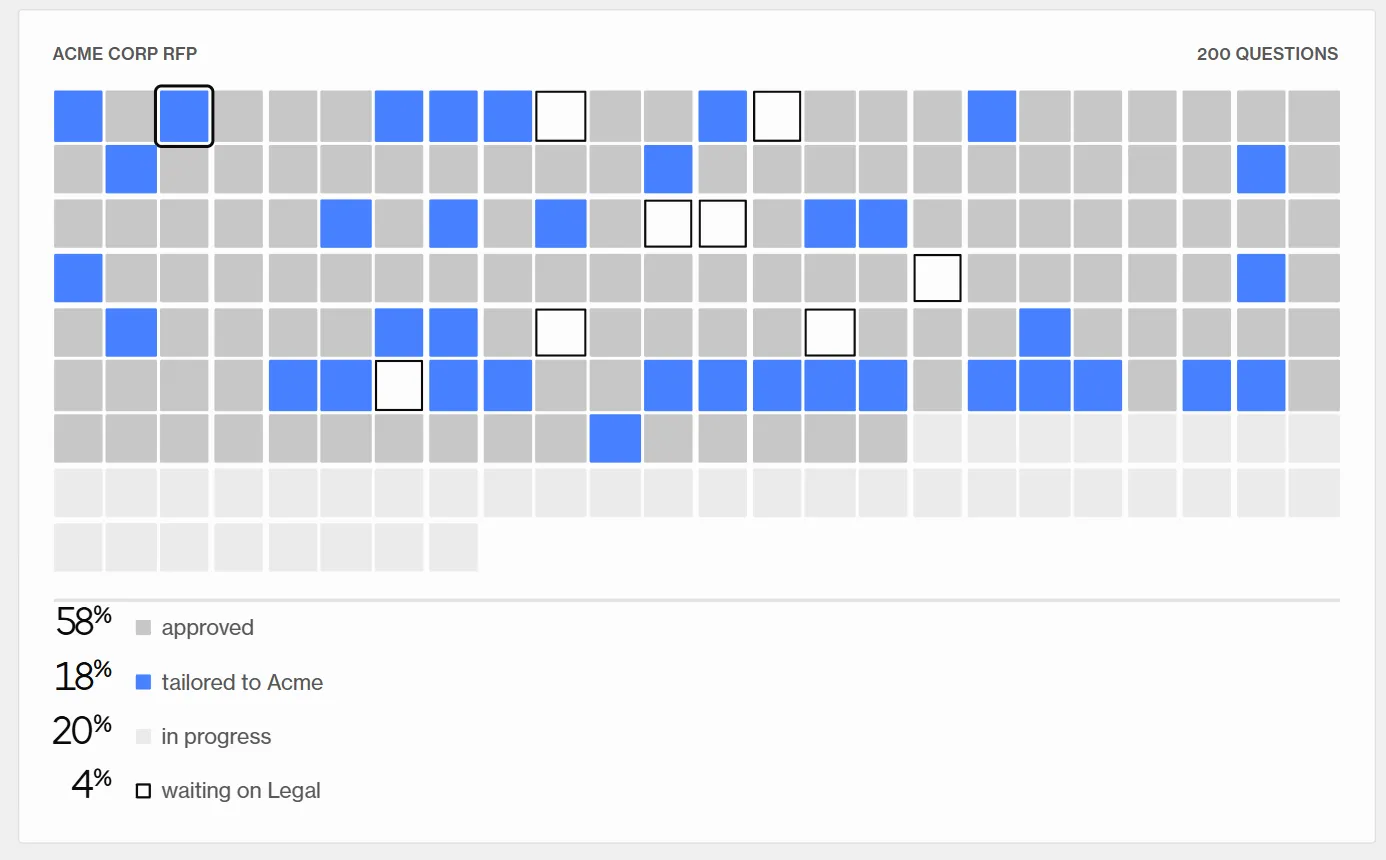
RFI responses often require input from sales, product, legal, security, and other subject matter experts. Choose software that supports shared editing, clear assignments, progress tracking, and structured approvals.
AutoRFP.ai allows unlimited users to collaborate on responses, assign editors and reviewers, and track progress from drafting through approval. Integrations with Slack and Microsoft Teams also help notify contributors when their input is needed.
3. Verify Answer Accuracy and Source Transparency
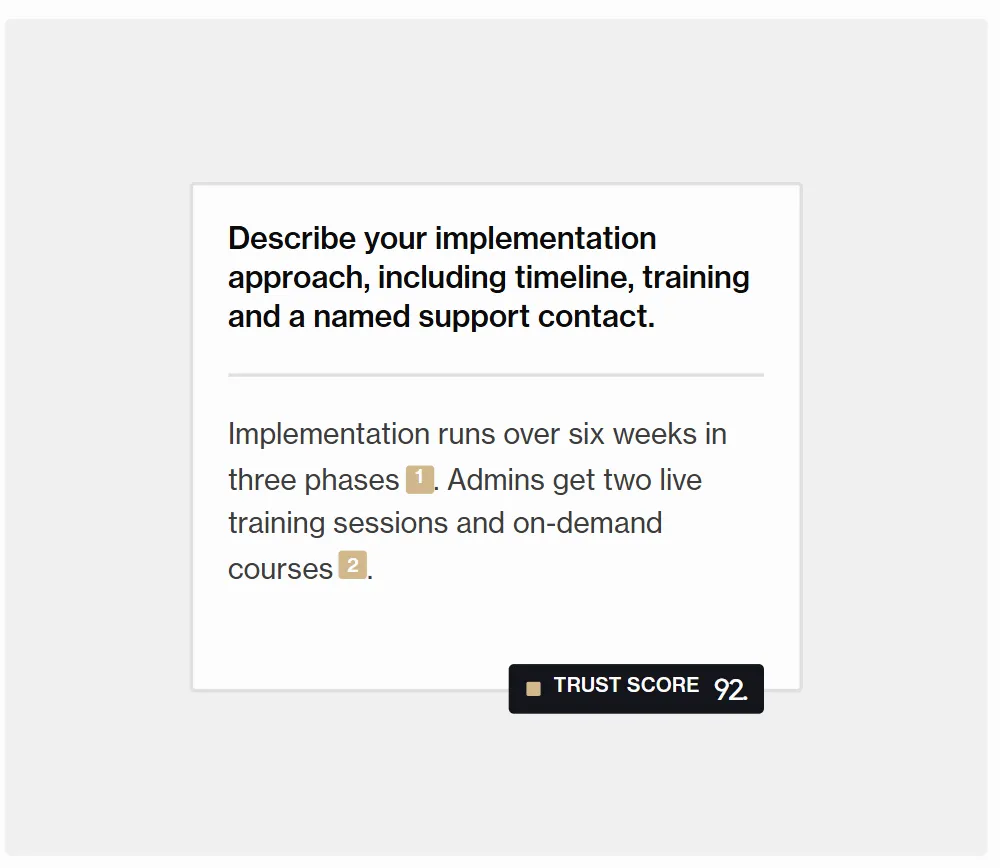
AI-generated responses should be supported by evidence, not just sound convincing. Check whether reviewers can see the original sources behind each answer and understand how well the response addresses the buyer’s question.
Also ask what happens when the software cannot find supporting information. Does it flag the question for human review or generate an unsupported answer?
AutoRFP.ai provides source citations, a Trust Score measuring source support, and a Feedback Score assessing answer completeness. When reliable supporting content is unavailable, it flags the question for human input rather than guessing.
4. Confirm Security and How Your Data Is Used
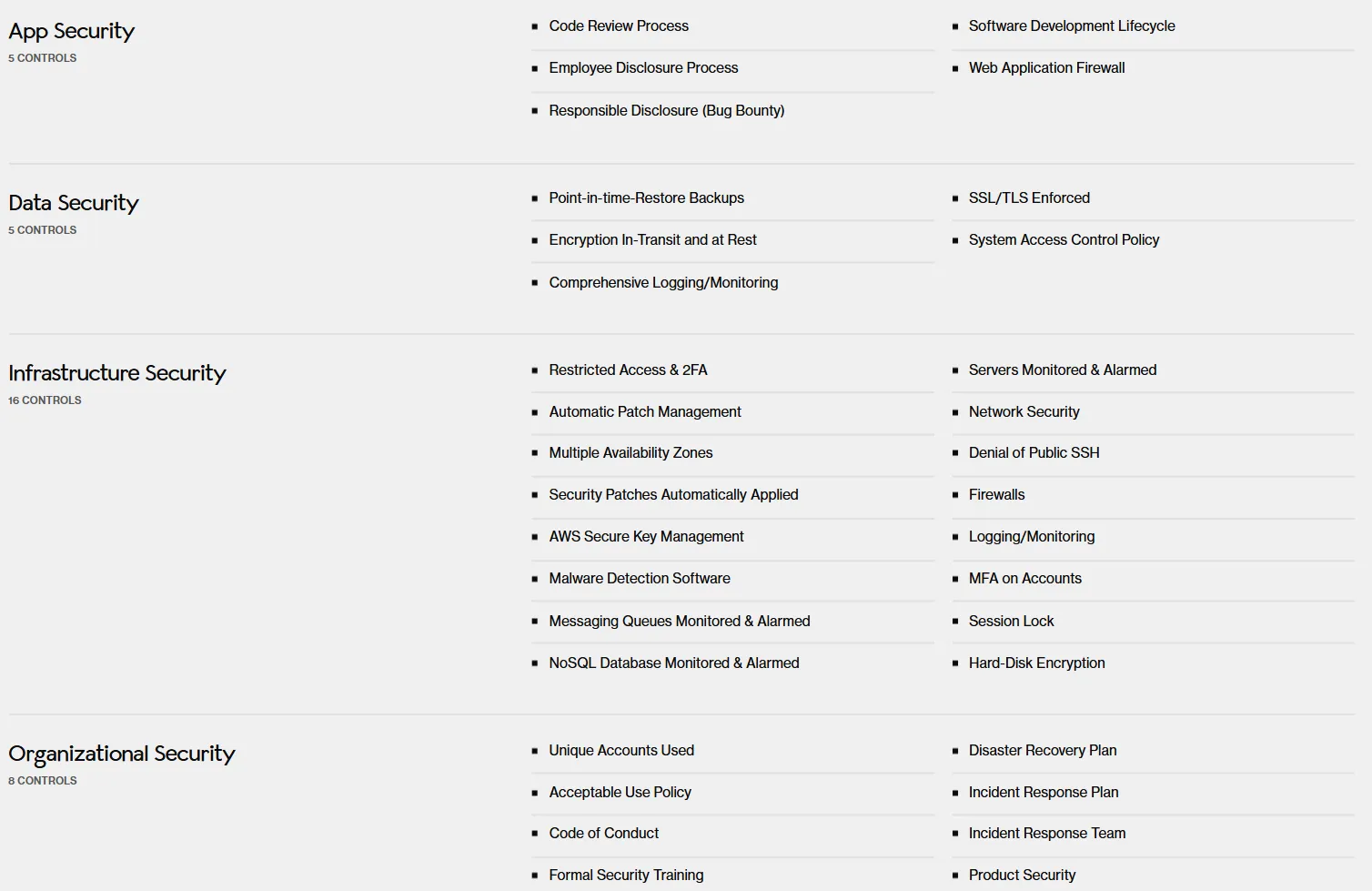
RFIs often contain confidential information about company operations, technical capabilities, financial details, and security controls. Before uploading sensitive documents, check the vendor’s security certifications, access permissions, data residency options, and AI training policies.
Look for SOC 2 Type II audit reports and ISO 27001 certification, particularly if your organization operates in a regulated industry.
AutoRFP.ai does not use customer data to train AI models. Its Trust Center provides security documentation and downloadable reports to help your IT and compliance teams evaluate the platform.
5. Choose One Tool for RFIs, RFPs, Security Questionnaires, and DDQs
Teams answering RFIs often receive RFPs, security questionnaires, and due diligence questionnaires (DDQs) from the same buyers. Managing these separately can create duplicated content, inconsistent answers, and additional review work.
Look for software that supports these response types using the same approved knowledge, content ownership rules, and approval processes.
AutoRFP.ai handles RFIs, RFPs, security questionnaires, and DDQs within a shared response workflow. Its library captures approved answers for future reuse and incorporates updates from connected company sources, helping teams maintain consistent responses without rebuilding their knowledge for each request.
Respond to RFIs Faster With Source-Grounded AI
Repetitive questions, scattered documents, and lengthy review cycles can slow down your RFI process.
AutoRFP.ai generates first drafts from approved company knowledge, shows the sources behind each answer, and flags unsupported questions for human review. Its content library also grows as your team approves responses, reducing repetitive work while keeping reviewers in control.
Spend less time searching for answers and more time improving your responses.
Book a personalized demo to see how AutoRFP.ai can streamline your RFI workflow.
About the author

Technical Account Manager at AutoRFP.ai. Background in asset management completing institutional RFPs and DDQs; now implements AutoRFP.ai for some of the company's largest accounts.
LinkedIn
