9 Best Sales Enablement Tools in 2026: For Every Use Case
Compare the best sales enablement tools for content management, coaching, onboarding, and buyer engagement. See features, pricing, pros, cons, and best-fit use cases.

Ops Lead, AutoRFP.ai··10 min read
“Sales enablement tool” can mean ten different things depending on what your team is struggling with. Some teams need consistent RFP responses, better onboarding and training. Others need content that actually shows up in deals, cleaner playbooks, or coaching that fixes what’s happening on calls. That’s why picking one tool from a generic list rarely works.
In this guide, we break down 9 sales enablement tools by use case, so you can choose based on the job you need done, not just the brand name.
| Tool | Best for | Standout feature | Starting price |
|---|---|---|---|
| AutoRFP.ai | Sales teams handling recurring RFPs, DDQs, and security questionnaires | Drafts approved, consistent answers from your existing company knowledge | Starts at $899/month, billed annually |
| Highspot | Teams that need organized sales content, rep guidance, and buyer engagement | Recommends the right content and next steps based on deal context | Custom pricing, contact sales |
| Gong | Sales teams that want better call insights, coaching, and deal visibility | Turns customer conversations into coaching insights and deal signals | Custom pricing, contact sales |
| Mindtickle | Teams focused on sales training, onboarding, coaching, and rep readiness | Combines AI role plays, coaching workflows, and readiness tracking | Custom pricing, contact sales |
| HubSpot Sales Hub | Growing teams that want CRM, pipeline visibility, and sales automation | Brings contact management, outreach, and automation into one simple workspace | Free plan available. Paid plans start at $15/month per seat |
| Salesforce Sales Cloud | Larger teams that need enterprise CRM, forecasting, and workflow customization | Supports deep CRM customization, forecasting, and large-scale sales processes | Free Suite available. Paid plans start at $25/user/month |
| Guru | Teams that need fast access to verified sales knowledge across daily work tools | Delivers trusted answers inside tools like Slack, Teams, and Salesforce | Custom pricing, contact sales |
| Outreach | Sales teams running structured outbound outreach and engagement workflows | Automates outreach, follow-ups, and rep activity with AI-powered workflows | Custom pricing, contact sales |
| Clari | Revenue teams that need better forecasting, pipeline inspection, and deal visibility | Uses AI to flag deal risk and improve forecast accuracy | Custom pricing, contact sales |
1. AutoRFP.ai: Best for Sales Enablement Content Consistency
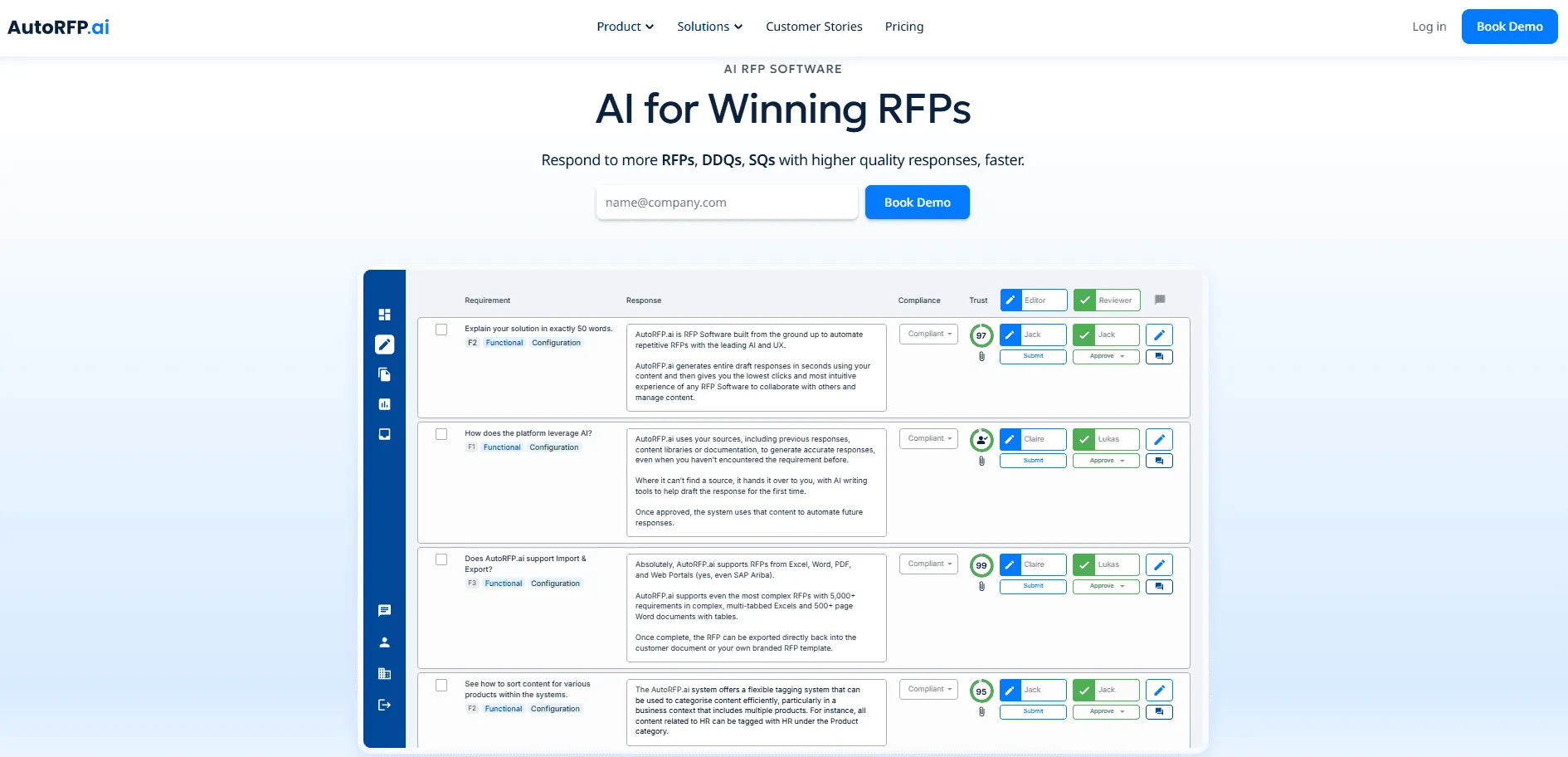
AutoRFP.ai is an AI RFP automation platform that helps proposal and sales, and presales enablement teams respond to RFPs, DDQs, and security questionnaires faster. It turns approved sales messaging, past responses, and company knowledge into consistent, buyer-ready answers without forcing reps to start from a blank page.
Key Features
AI RFP Response Engine
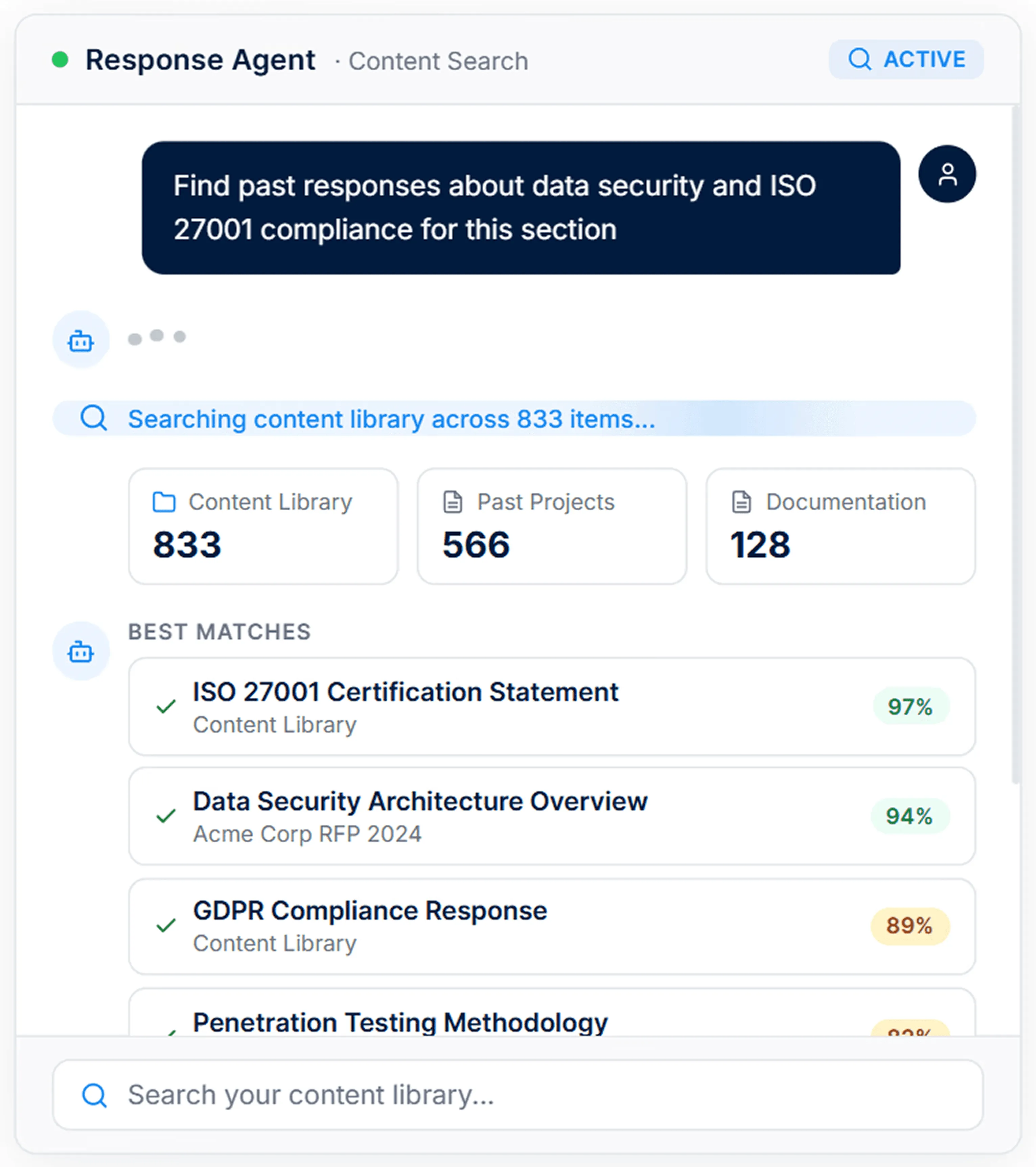
AutoRFP.ai drafts RFP responses from approved messaging, prior submissions, and your company’s existing knowledge base. For sales enablement teams, this means reps can handle smaller RFPs without rewriting product positioning, security language, or feature descriptions in their own words.
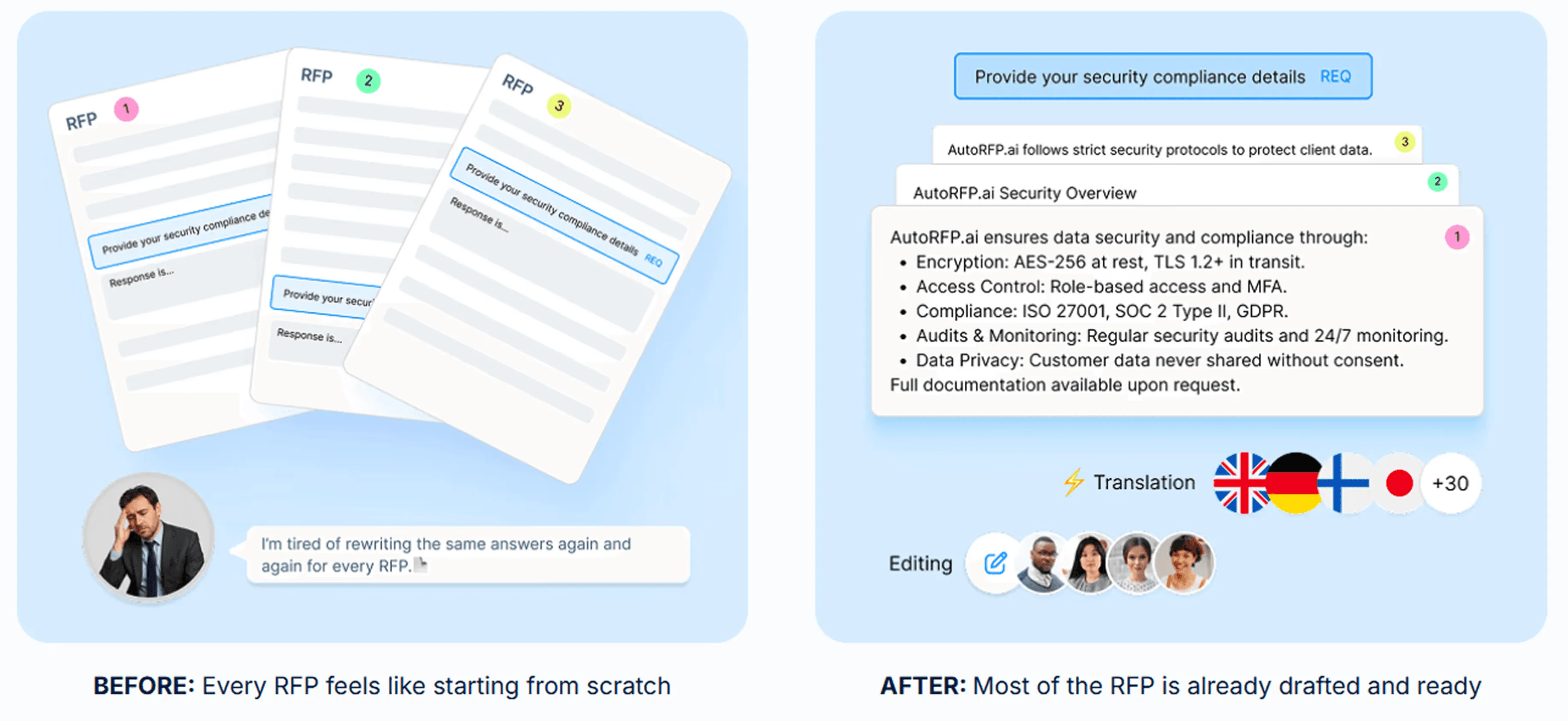
It also keeps answers aligned across the sales organization. Instead of one rep saying “military-grade encryption” and another saying “AES-256 encryption,” the platform helps every response reflect the same approved language, tone, and competitive positioning.
AI Go/No-Go Screening
AutoRFP.ai screens each RFP against standard qualification questions before the team spends time on the opportunity. Sales enablement leaders can set screening criteria across areas like compliance, implementation fit, customer requirements, legal risk, and commercial alignment.
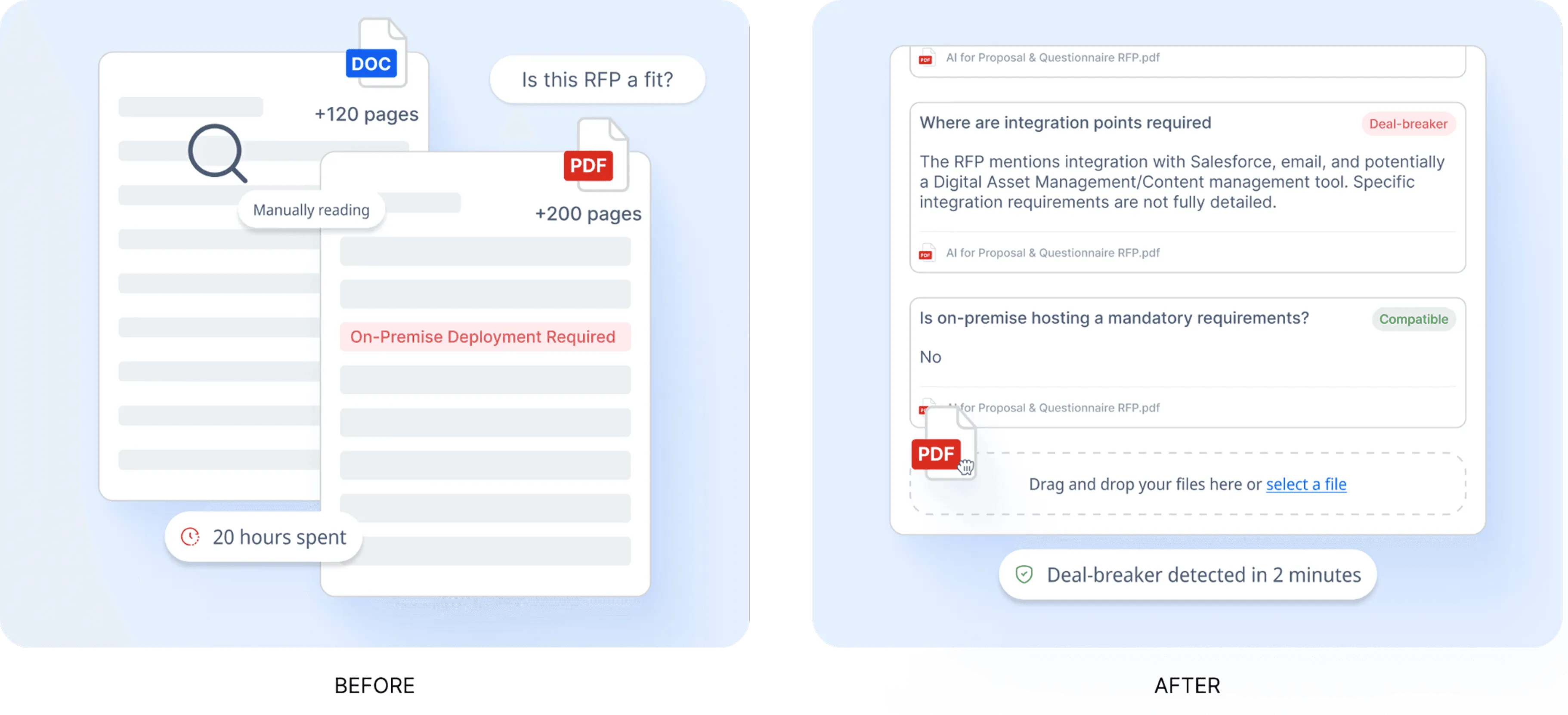
This gives junior AEs and senior reps the same qualification framework. Good-fit opportunities move forward faster, while poor-fit bids are flagged early before they drain proposal, SME, and enablement resources. Aligning your team under these structured qualification steps is a core component of modern sales enablement best practices.
Self-Updating RFP Content Library
AutoRFP.ai keeps approved response content connected to the latest source material. When product messaging, feature descriptions, security language, or sales collateral changes, teams can update the source once instead of chasing old versions across decks, one-pagers, and spreadsheets.
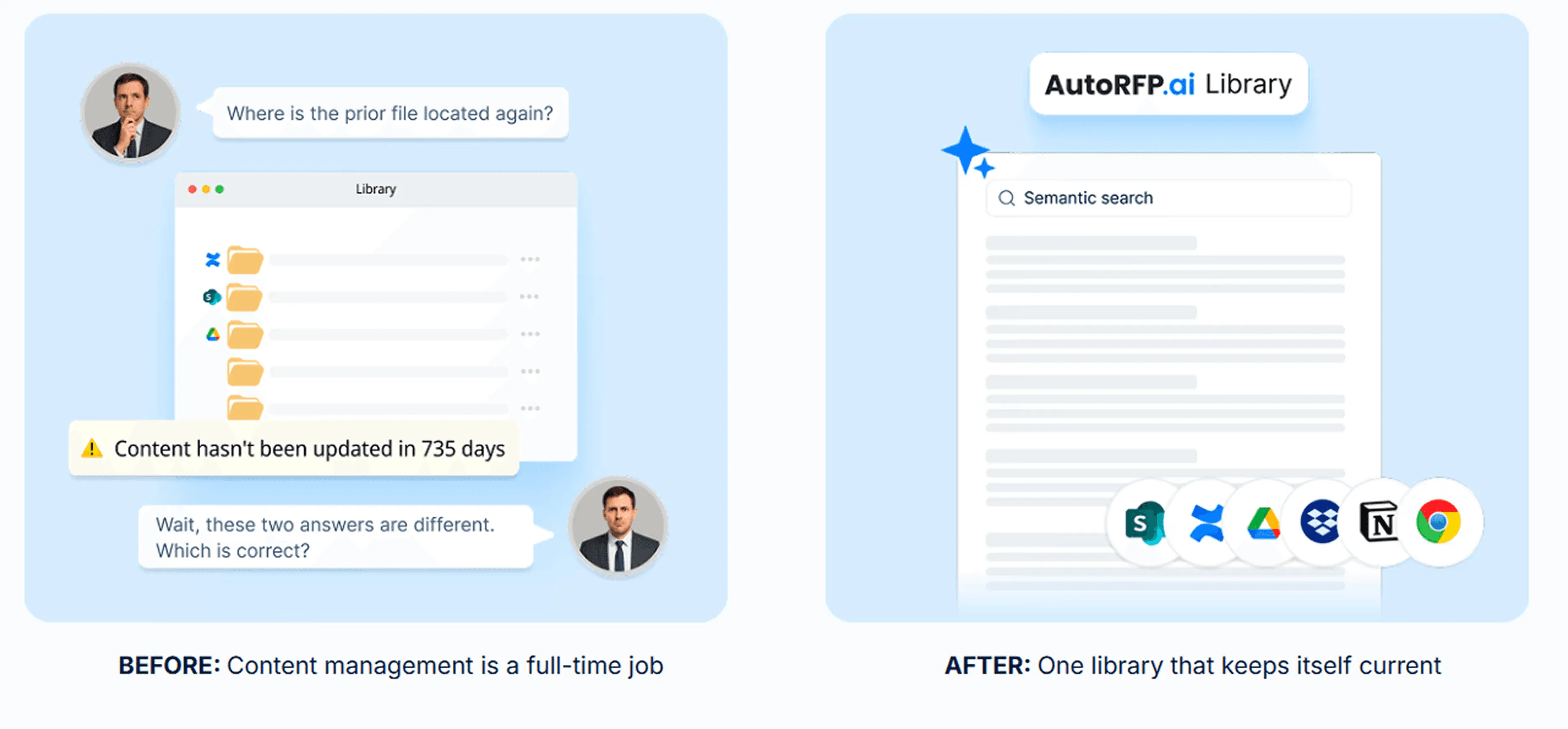
For sales enablement, this matters because reps often reuse content long after it becomes outdated. AutoRFP.ai helps make sure proposals reflect the latest product story, not a six-month-old answer hiding in someone’s folder.
AI RFP Q&A Chatbot
AutoRFP.ai gives sales reps a Q&A assistant that can answer questions from approved content inside Slack and Teams. Instead of asking SMEs the same product, security, or compliance questions repeatedly, reps can get sourced answers from the knowledge base they already rely on.
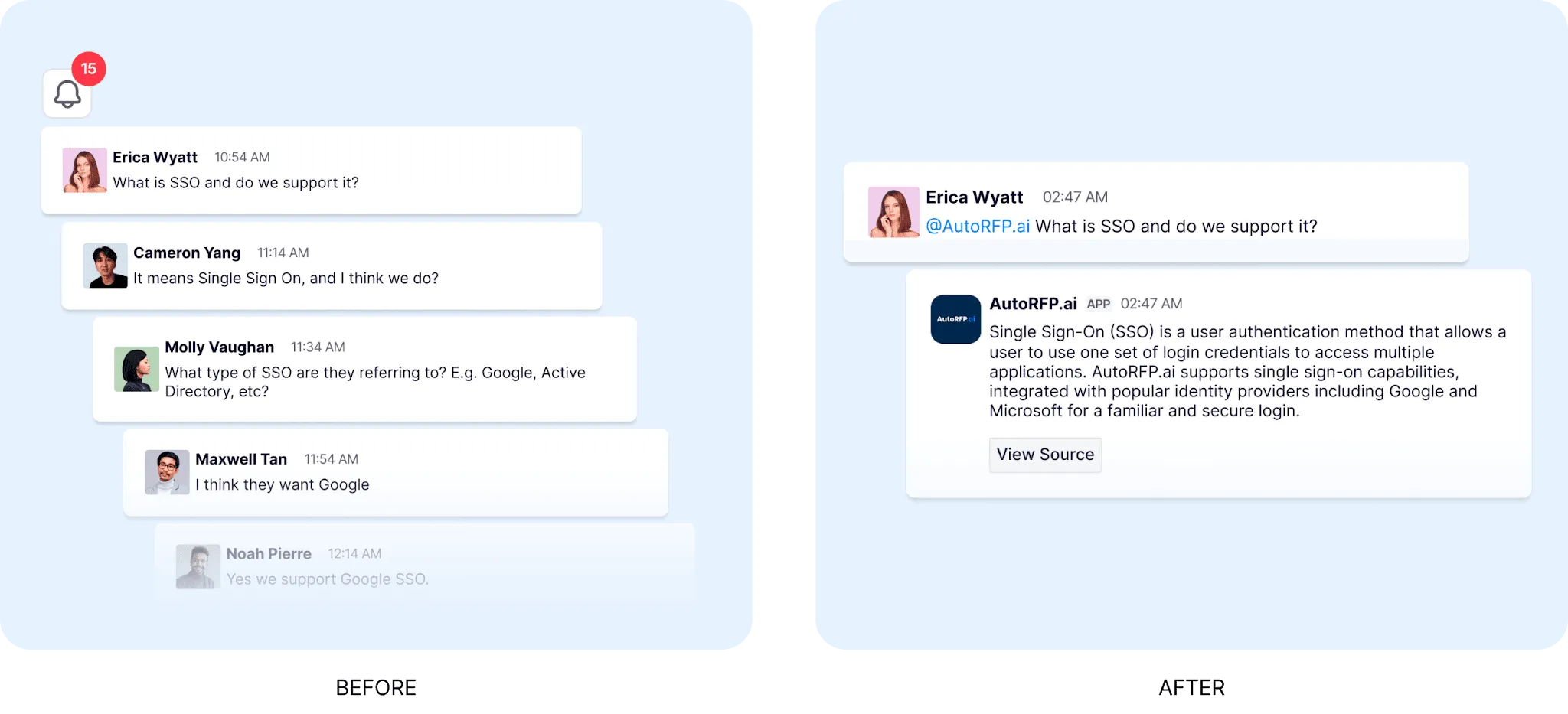
This makes enablement content easier to use in live selling moments. Battlecards, response templates, product notes, and approved answers become searchable support, not static documents reps forget to open.
Project Agent
AutoRFP.ai’s Project Agent helps teams tailor responses to the specific prospect, not just the RFP question. It can research buyer context, review public materials such as trust center documentation, and help rewrite answers around the requirements that matter most to that customer.
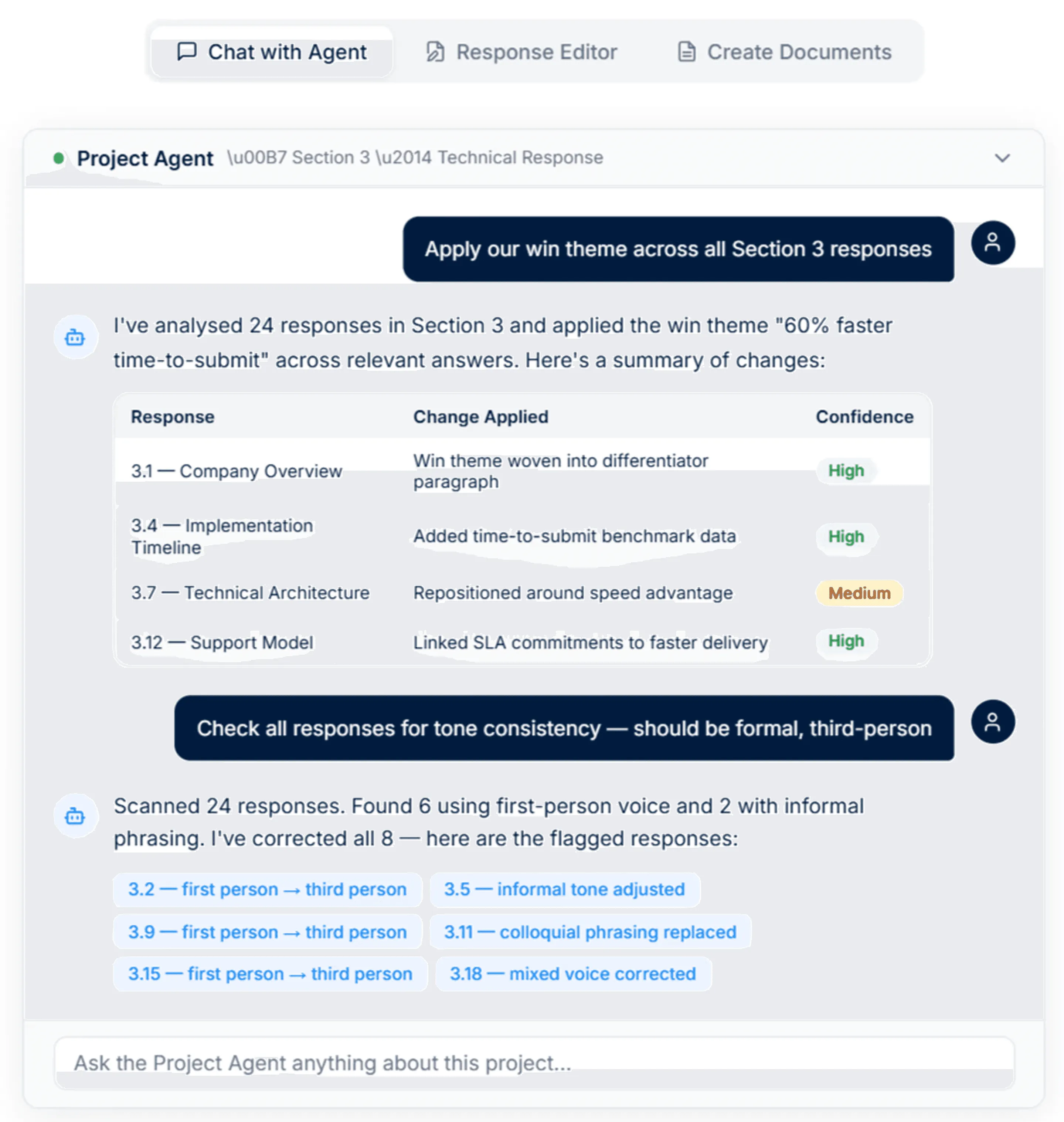
That gives sales enablement teams a faster way to personalise complex responses. A generic data residency answer can become a prospect-specific response that leads with the right regions, certifications, and hosting details.
RFP Project Management
AutoRFP.ai gives reps, proposal managers, and enablement teams shared visibility into active RFPs, owners, deadlines, blockers, and completion status. Instead of asking where a response stands, teams can see what is moving, what is stuck, and who needs to act next.
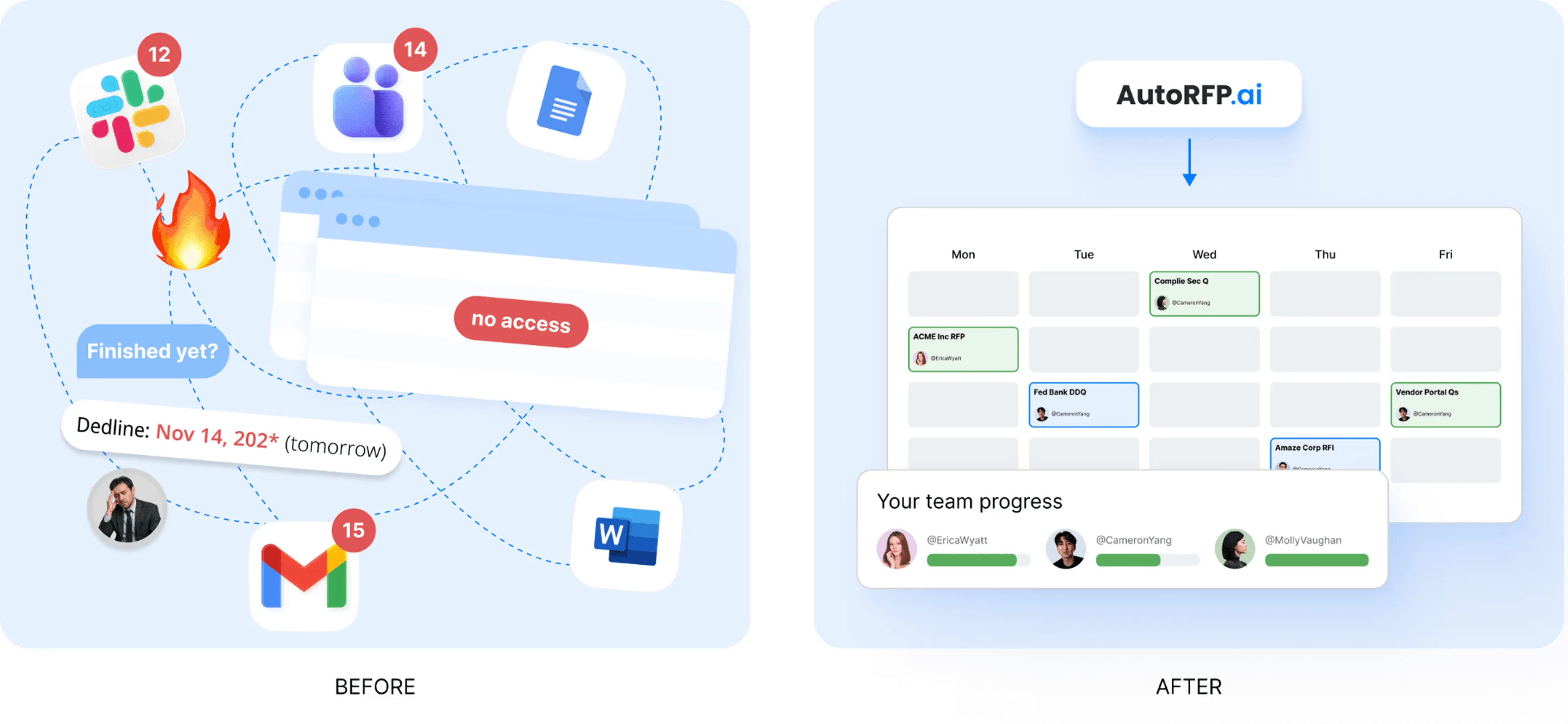
This makes the RFP handoff cleaner across sales, proposal, legal, product, and security teams. It also helps enablement leaders spot workflow gaps, reduce status meetings, and keep response cycles from slowing down at the worst possible moment.
Pricing
| Plan | Monthly Cost | Key Inclusions |
|---|---|---|
| Scale | $899 | Unlimited AI responses, users, content, and integrations |
| Accelerate | $1,299 | Everything in Scale, plus advanced analytics and priority support |
| Enterprise | Custom | Custom integrations, a dedicated success manager, and tailored security and compliance features with SSO |
AutoRFP.ai comes with a 30-day money-back guarantee, personalized onboarding, and tailored training to help teams get started quickly. Every plan includes unlimited users with no per-seat fees, and teams can be up and running in as little as 48 hours.
Where AutoRFP.ai Shines
AutoRFP.ai works best for sales enablement teams that need faster intake, cleaner handoffs, and more consistent response quality across recurring RFP work.
It can pull RFP requirements from Word documents, Excel files, and PDFs, so teams do not have to spend hours copying questions manually.
It connects with CRM and SSO systems, which helps sales enablement teams keep RFP work aligned with sales workflows, access control, and governance.
It supports portal-based questionnaires by scraping questions, drafting answers, and exporting responses back into platforms such as Ariba, UpGuard, and Jaggaer.
Where AutoRFP.ai Falls Short
AutoRFP.ai is stronger for repeatable RFP, DDQ, and questionnaire workflows than highly custom proposal environments.
It may not be the best fit for AEC, US GovCon, defense, custom software development, or highly bespoke professional services.
These sectors often require deeply tailored narratives, project-specific evidence, and custom technical responses that are harder to automate through reusable content patterns.
Customer Reviews
Saxon W., Senior Workforce Management Consultant, wrote in a Capterra review, “Without AutoRFP, I simply wouldn’t have the time to complete RFPs regularly. It saves an exceptional amount of time. The responses are infinitely better than the other systems in the market because AutoRFP understands context. Most systems I’ve used just regurgitate irrelevant answers from previous RFPs. Setup was painless. The team actively work with their customers and continue to innovate.”
In a Reddit thread on finding the right RFP tool, a user mentioned that “AutoRFP.ai was a solid option, nice enough UI, easy to project manage, and decent support. It also seemed to be significantly cheaper than competitors like Loopio and Responsive when we were shopping last year”.
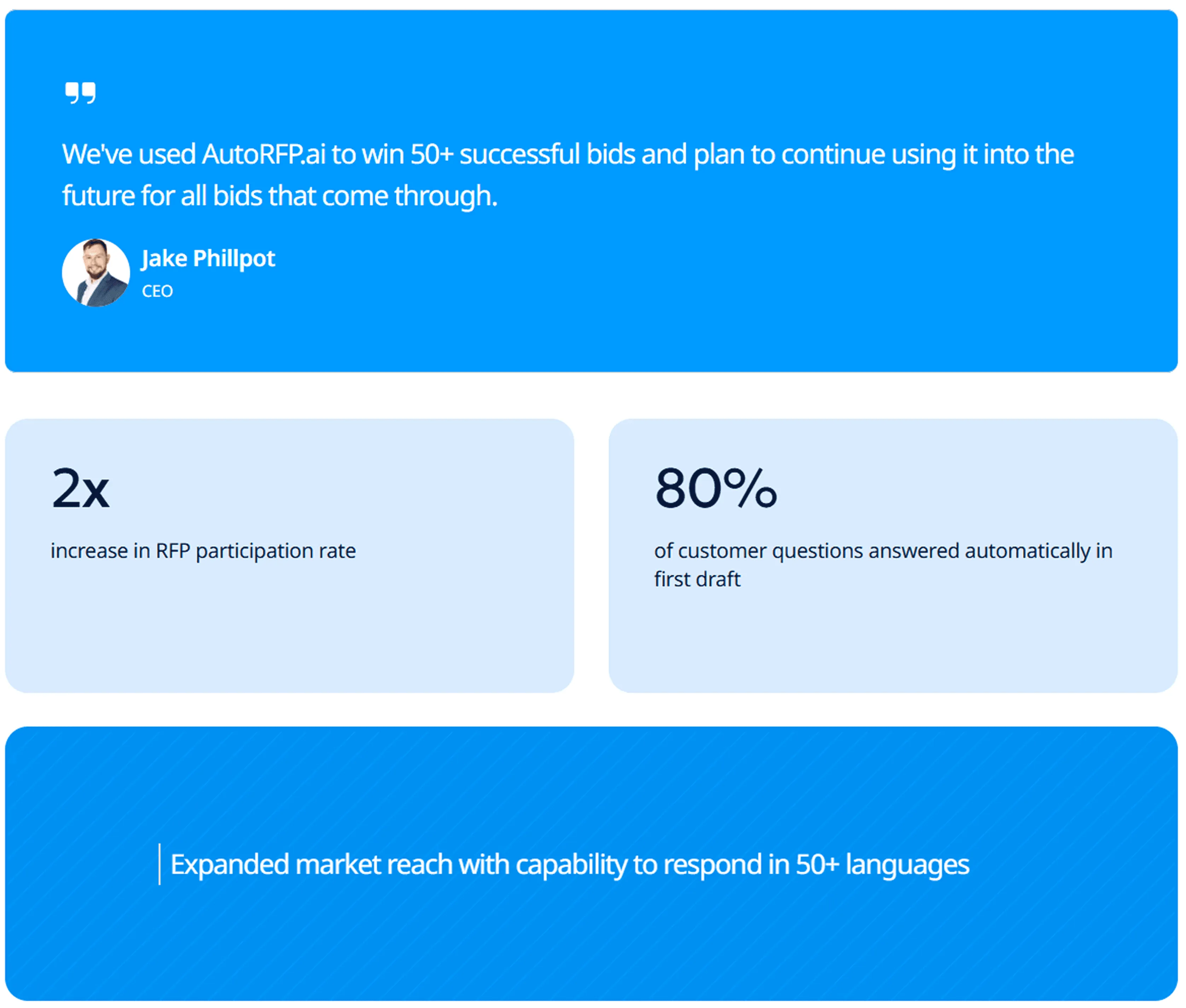
Jake Phillpot, CEO of Workforce.com said, “We’ve used AutoRFP.ai to win 50+ successful bids and plan to continue using it into the future for all bids that come through.”
Who AutoRFP.ai Is Best For:
Mid-to-large B2B SaaS sales enablement teams: Teams handling frequent RFPs, RFIs, DDQs, and security questionnaires that need approved messaging, faster first drafts, and consistent responses across reps.
Enterprise deal teams: Sales enablement leaders, proposal managers, enterprise AEs, and pre-sales engineers coordinating complex responses across product, legal, security, and SME teams. Teams that need demo and RFP tools for sales engineers can also compare SE-specific platforms alongside broader enablement software.
Financial services sales teams: Managed funds, insurance firms, and asset managers that need accurate, approved answers for high-stakes DDQs, client reviews, and compliance-heavy sales processes.
Regulated enterprise revenue teams: Healthcare, fintech, cybersecurity, and enterprise sales software teams that need stronger go/no-go screening, controlled content, and reliable answers for technical buyer questions.
Sales teams with recurring questionnaire work: Teams that answer similar buyer questions across multiple deals and want to turn approved enablement content into a reusable response system.
2. Highspot: Best for Sales Content Management and Buyer Engagement
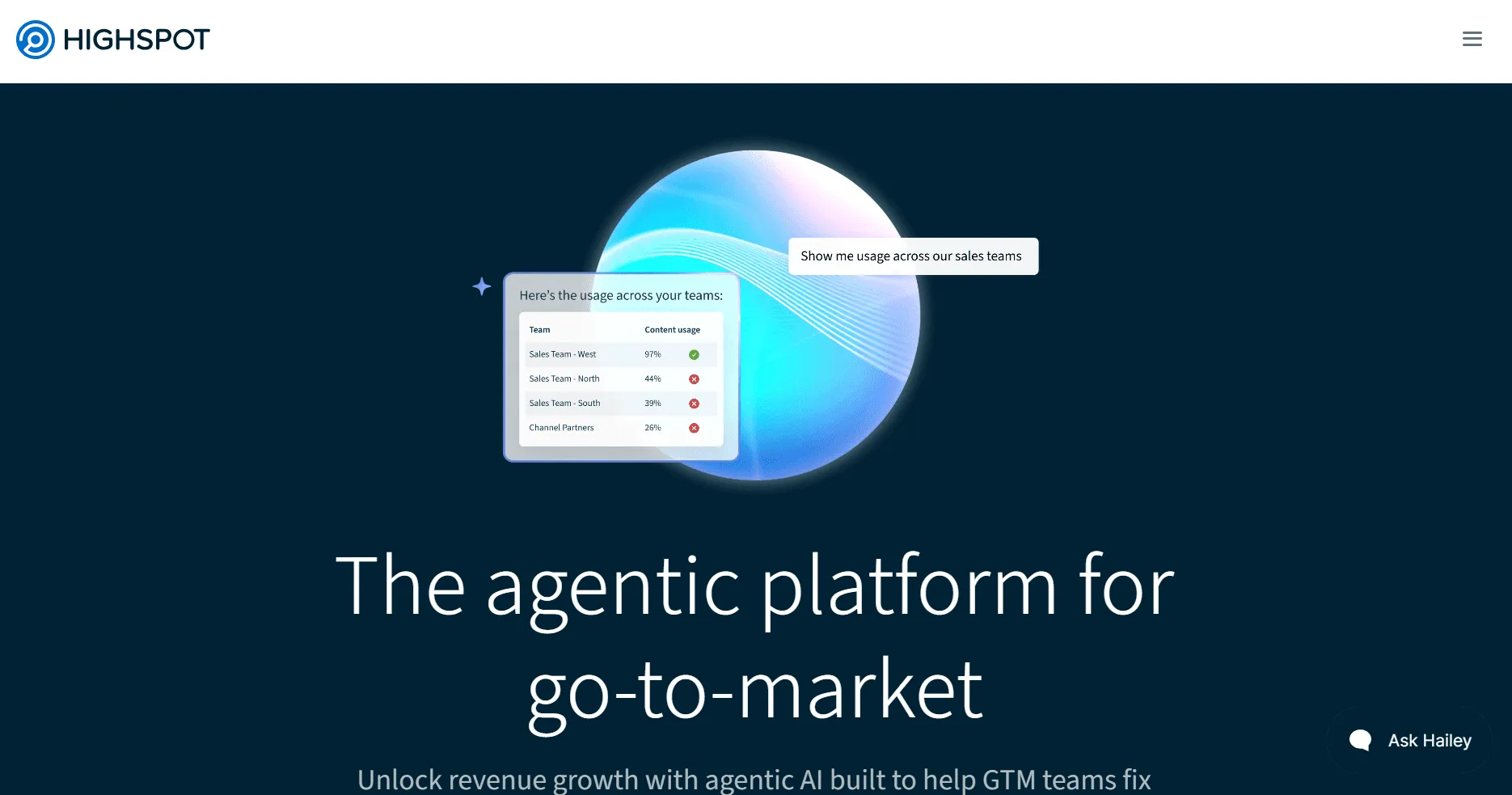
Highspot is a strong sales enablement platform for teams that need to organize content, guide reps, and improve buyer engagement from one place.
It is especially useful for larger go-to-market teams that want enablement content, training, coaching, analytics, and AI-powered guidance connected to daily sales workflows.
Key Features
AI-powered guidance: Recommends content, next steps, and deal-specific actions so reps know what to use at each sales stage.
Sales content management: Centralizes sales assets, playbooks, and approved messaging so teams can reduce outdated or inconsistent content.
Buyer engagement tools: Helps reps share personalized content experiences and track how buyers interact with materials.
Analytics and adoption tracking: Shows which content, plays, and enablement activities are actually helping sales teams perform.
Pricing
- Pricing is not publicly disclosed. Highspot says pricing is tailored based on capabilities, use cases, services, organization size, complexity, and number of licenses. Contact sales for a quote.
Where Highspot Shines
Strong content governance: It works well for teams with a large library of sales assets, messaging, and playbooks.
Good enterprise fit: Highspot is built for go-to-market teams that need structure, adoption, and measurable enablement impact.
Useful buyer engagement layer: Reps can send more relevant content and understand what buyers engage with.
Broad enablement coverage: It covers content, training, coaching, analytics, and AI guidance in one platform.
Where Highspot Falls Short
Less ideal for small teams: Smaller sales teams may find the platform broader than they need.
Pricing is not transparent: Highspot uses tailored pricing based on team size, use case, and required capabilities.
Setup may need planning: Teams with messy content libraries may need time to organize assets before seeing full value.
Can overlap with other tools: Companies already using separate LMS, CMS, and sales analytics tools may face tool duplication.
Customer Reviews
Scott B., Director, Sales Development, said on Capterra, “My experience with Highspot has been very positive overall. The platform makes it easy to organize, find, and share sales content, which has streamlined how I prepare for calls and follow-ups. The search functionality is strong, and I like how it surfaces relevant content based on the deal stage or account type.”
Elizabeth G., Customer Onboarding, mentioned that “This is one of the most confusing and horribly designed software products I’ve ever used in my life. The UX feels like it is from 2000. The navigation and terms used are not intuitive or easy to understand.”
Who Highspot Is Best For
Mid-market and enterprise sales teams: Best for teams with large sales content libraries and structured enablement programs.
Sales enablement leaders: A strong fit for teams that need to improve content adoption, rep guidance, and buyer engagement.
Marketing and sales alignment teams: Useful when marketing needs better visibility into which assets sales teams actually use.
Complex B2B sales teams: Helpful for teams selling across multiple personas, regions, products, or long sales cycles.
3. Gong: Best for Conversation Intelligence and Deal Coaching
Gong is best for teams that want to understand what actually happens in sales calls, emails, and customer conversations. It records and analyzes buyer interactions, then turns that data into coaching insights, deal visibility, and revenue intelligence for sales leaders.
Key Features
Conversation intelligence: Captures and analyzes calls, meetings, and customer interactions to identify themes, risks, and coaching moments.
Deal insights: Helps managers understand deal health based on real buyer conversations and engagement signals.
Rep coaching: Gives sales managers data-backed examples they can use to coach reps more effectively.
Forecast support: Connects conversation data with pipeline visibility to help teams spot deal risks earlier.
Pricing
- Pricing is not publicly disclosed. Gong says licenses are priced per user, with a platform fee based on the number of users supported. It prepares customized proposals.
Where Gong Shines
Excellent call analysis: It is one of the strongest tools for understanding sales conversations at scale.
Useful for coaching: Managers can review real calls instead of relying only on CRM notes.
Strong revenue visibility: It helps teams connect buyer conversations with deal progress and pipeline risk.
Good for mature sales teams: It works best when teams already have structured sales processes and call activity.
Where Gong Falls Short
Not a content enablement tool: It does not replace platforms like Highspot for content management or sales plays.
Pricing can be expensive: Gong uses custom pricing with per-user licenses and a platform fee.
Requires enough call volume: Smaller teams may not generate enough conversation data to justify the investment.
Can create review overload: Managers need clear coaching processes to avoid collecting insights without acting on them.
Customer Reviews
Darby C., Account Executive, wrote on Capterra, “Amazing B2B Sales Tool. Overall experience with Gong has been great. We are considering using it for its prospecting functionality too. Call recording functionality is a game-changer.”
Angie P., VP, Revenue, said, “It’s fine at what it does, and it likely was the best choice for call recording a few years ago, but it doesn’t seem like that anymore.”
Who Gong Is Best For
Sales managers: Best for leaders who want better visibility into rep performance and real buyer objections.
Revenue teams: Useful for teams that want conversation data connected to forecasting and deal inspection.
B2B SaaS sales teams: A strong fit for teams running frequent demos, discovery calls, and pipeline reviews.
Coaching-led sales organizations: Helpful when managers want to coach using actual calls, not assumptions.
4. Mindtickle: Best for Sales Training, AI Role Plays, Coaching, Certifications
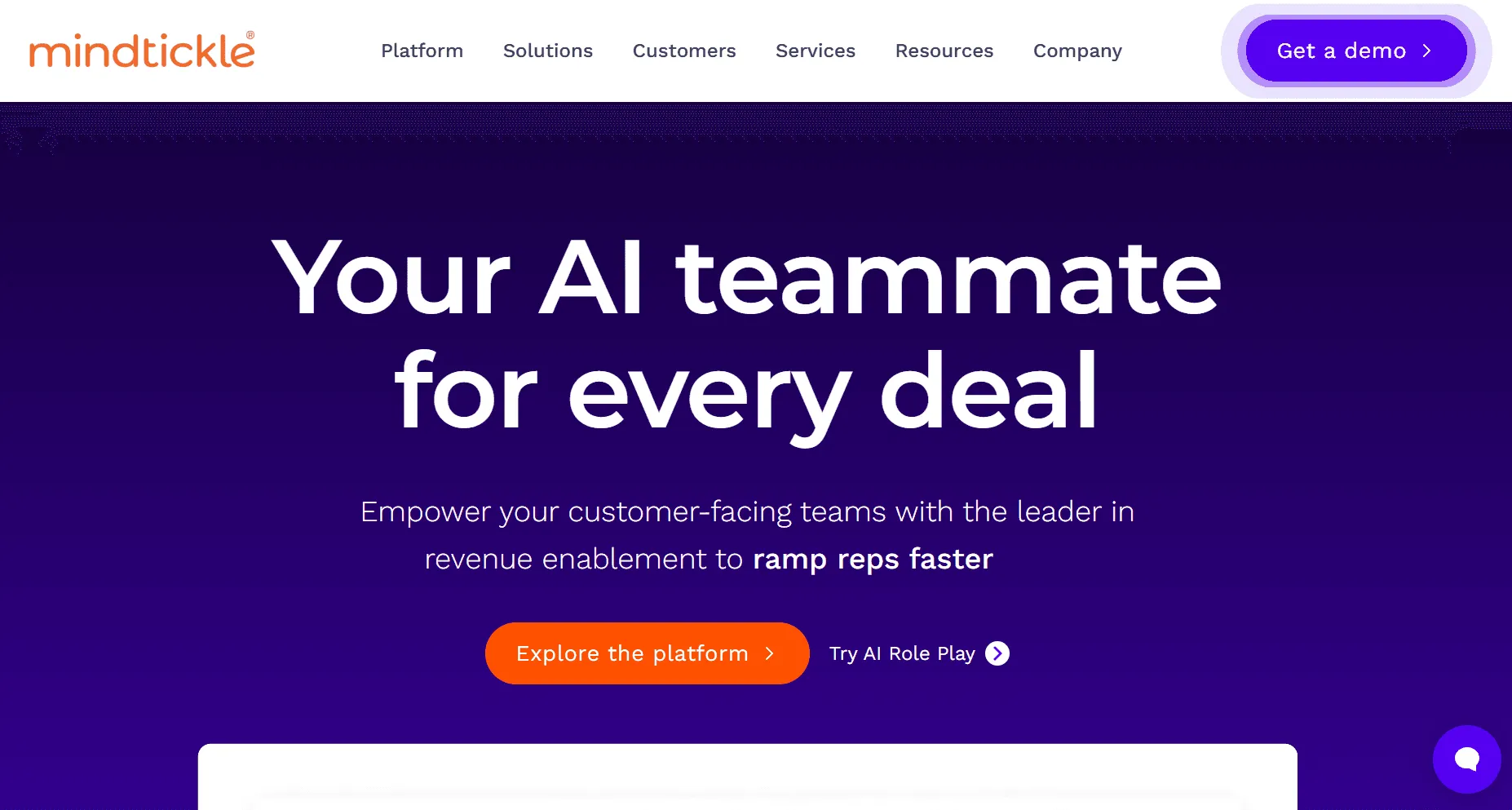
Mindtickle is a revenue enablement platform built for training, onboarding, coaching, and improving sales readiness. It is a good fit for teams that need structured learning programs, certifications, AI role plays, and ongoing skill development for reps.
Key Features
Sales training programs: Helps teams build structured onboarding and ongoing learning paths for sales reps.
AI role plays: Lets reps practice pitches, objections, and sales conversations before speaking with real buyers.
Coaching workflows: Gives managers a way to reinforce skills, review performance, and support continuous improvement.
Certifications and readiness tracking: Helps leaders measure whether reps are ready to sell specific products, messages, or plays.
Pricing
- Pricing is not publicly disclosed. Contact sales for the pricing. Final pricing is negotiated with the seller.
Where Mindtickle Shines
Strong training focus: It is especially useful when onboarding and rep readiness are major sales priorities.
Good for skill reinforcement: Teams can use role plays, coaching, and certifications to keep learning practical.
Helpful for large teams: It supports structured enablement programs across many sellers, teams, and regions.
Broader than a simple LMS: It connects training with coaching, content, digital sales rooms, and analytics.
Where Mindtickle Falls Short
May feel heavy for smaller teams: Teams with simple onboarding needs may not need this much structure.
Pricing is not publicly listed: Buyers usually need to contact sales for a quote.
Requires enablement ownership: The platform works best when someone actively manages training content and coaching programs.
Less focused on CRM workflows: It supports readiness, but it is not a full CRM replacement.
Customer Reviews
Nina B., Learning Experience Manager, said, “I like how Mindtickle made it easy to bring in outside graders and coaches when we had students complete different roleplays during our programmes. It was easy to teach outside facilitators and coaches, and we were able to collect student feedback in a central location. My biggest issue with Mindtickle was that our team had to continually find workarounds and new approaches to blend asynchronous and live learning courses. I am glad the functionality was there. I just wish the build for creating these hybrid-type courses was more seamless.”
Logan H., Account Manager, said, “It tries to put all of your learning tasks in one place. The tasks and assignments can be hard to find.”
Who Mindtickle Is Best For
Sales enablement teams: Best for teams responsible for onboarding, certification, and rep readiness.
Fast-growing sales organizations: Useful when many new reps need to ramp quickly and consistently.
Enterprise revenue teams: A strong fit for teams that need training, coaching, and readiness tracking at scale.
Product-heavy sales teams: Helpful when reps must stay current on changing products, messaging, or competitive positioning.
5. HubSpot Sales Hub: Best for CRM-Led Sales Enablement for Growing Teams
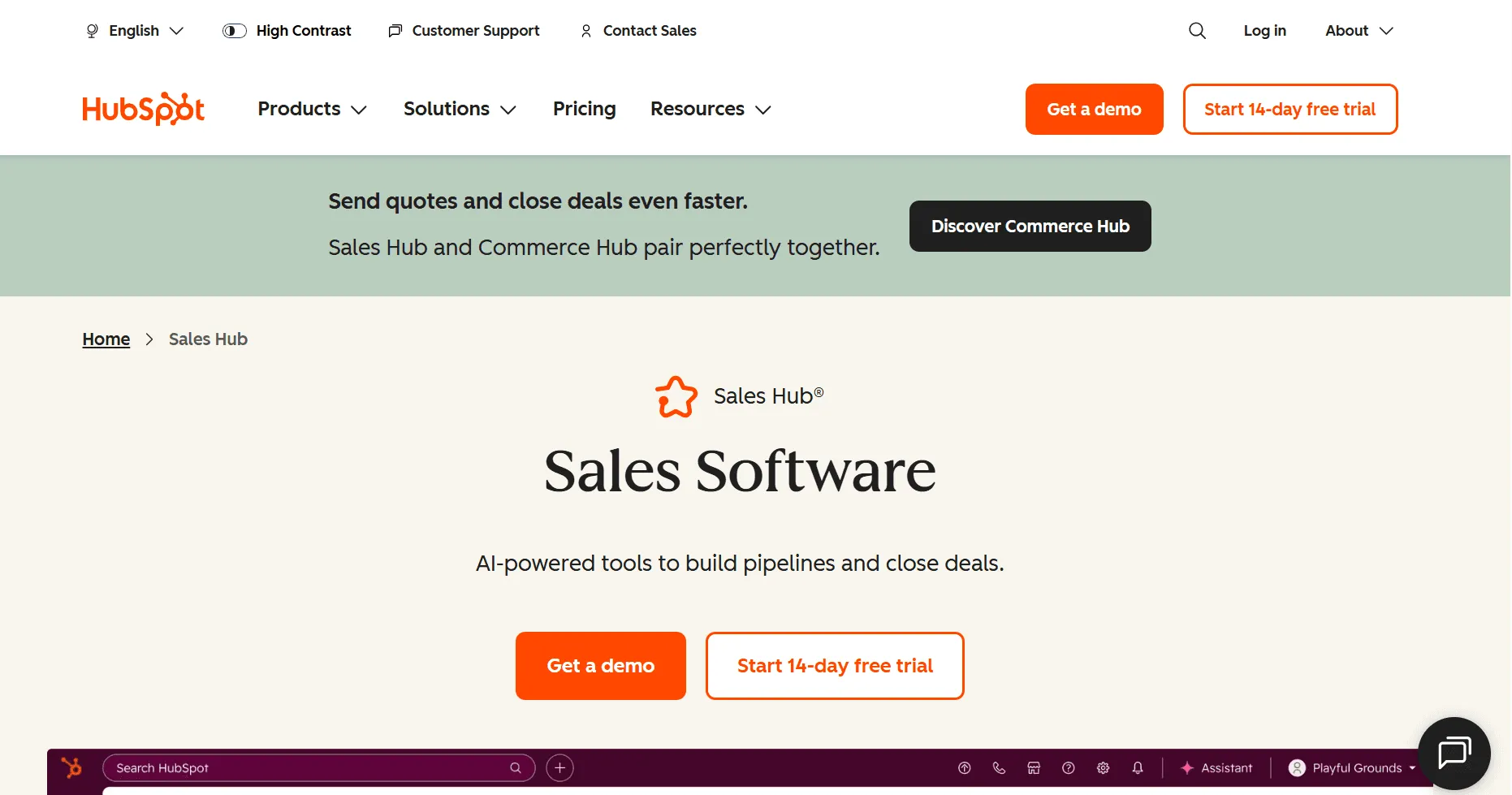
HubSpot Sales Hub is best for teams that want sales enablement built around a simple CRM, not a separate enterprise enablement system. It helps sales teams manage contacts, track deals, automate outreach, schedule meetings, and keep pipeline activity in one accessible workspace.
Key Features
CRM and pipeline tracking: Gives teams a central place to manage contacts, deals, tasks, and sales activity.
Sales automation: Helps reps automate follow-ups, outreach steps, and repetitive admin work.
Meeting scheduling: Reduces back-and-forth by letting prospects book meetings directly.
Email and prospecting tools: Supports outreach, tracking, templates, and sales activity management.
Pricing
| HubSpot sales hub plan | Pricing |
|---|---|
| Free | $0/month |
| Starter | Starts at $15/month per seat when billed annually, or $20/month when billed monthly |
| Professional | Commonly listed at $90/month per seat annually, or $100/month monthly, with a one-time onboarding fee |
| Enterprise | Commonly listed at $150/month per seat annually |
| Note | Pricing can vary by billing term, region, and add-ons |
Where HubSpot Sales Hub Shines
Easy to adopt: It is more approachable than many enterprise CRM and enablement platforms.
Strong fit for growing teams: HubSpot works well when teams want CRM, sales tools, and automation in one place.
Free and starter options: HubSpot offers a free tier and paid Sales Hub plans starting at lower entry points.
Good all-in-one ecosystem: Teams can connect sales, marketing, service, and operations inside the HubSpot platform.
Where HubSpot Sales Hub Falls Short
Advanced features can get expensive: Costs can rise as teams move into Professional or Enterprise tiers.
Less enterprise-customizable than Salesforce: Complex organizations may need deeper workflow and reporting customization.
Not a dedicated content enablement tool: It does not replace tools like Highspot for advanced sales content governance.
Can become broad quickly: Teams may need to manage which HubSpot products and seats they actually need.
Customer Reviews
Branko J., Sales Operations Associate, said, “What I liked most about HubSpot Sales Hub was how easy it was to use while still giving our team powerful tools like pipeline tracking, email templates, sequences, automation, and clear reporting all in one place. What I liked least was that the pricing can become expensive as you grow, especially when key features are only available in higher-tier plans.”
Sara Gabriela C., Outdoor Living Consultant, said, “While it is very helpful for receiving, tracking, and organizing leads, the workflows do not always work. There are delays, and almost every week, there is an issue with something.”
Who HubSpot Sales Hub Is Best For
Small and growing sales teams: Best for teams that want CRM, automation, and sales productivity without enterprise complexity.
Inbound-led businesses: A strong fit when sales and marketing need to work from the same customer data.
Startups and SMBs: Useful for teams that want quick adoption and clear pipeline visibility.
Teams new to sales enablement: Good for companies that need practical sales tools before adopting specialized enablement platforms.
6. Salesforce Sales Cloud: Best for Enterprise CRM and Sales Forecasting
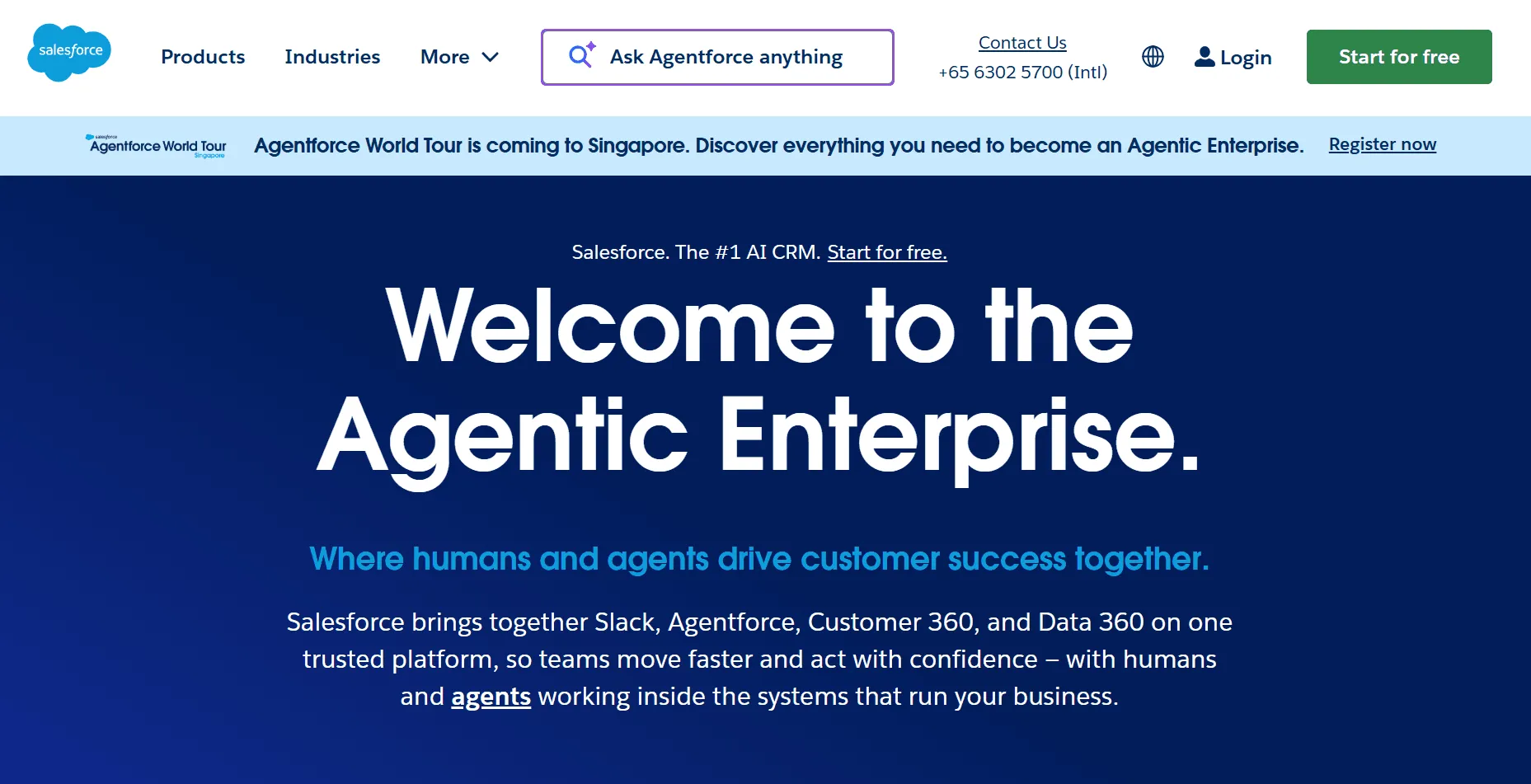
Salesforce Sales Cloud belongs in the second half because it is more of an enterprise CRM foundation than a dedicated sales enablement platform.
It helps teams manage leads, accounts, opportunities, forecasting, automation, and sales data at scale. Salesforce is especially strong for larger companies that need deep customization, complex workflows, and a large integration ecosystem.
Salesforce also has built-in AI, lead progression, customer detail management, mobile selling, and forecasting features.
7. Guru: Best for Sales Knowledge Management
Guru is best for sales teams that struggle to find accurate internal knowledge during live selling moments.
Instead of acting as a full CRM or coaching platform, Guru gives reps a verified knowledge layer they can use across tools like Slack, Microsoft Teams, Salesforce, Zendesk, Confluence, and SharePoint.
This makes it useful for sales teams that need fast answers on pricing, product details, objection handling, competitive positioning, and process questions. It fits best as a sales knowledge management tool, especially for teams with lots of internal documentation.
8. Outreach: Best for Sales Engagement Automation
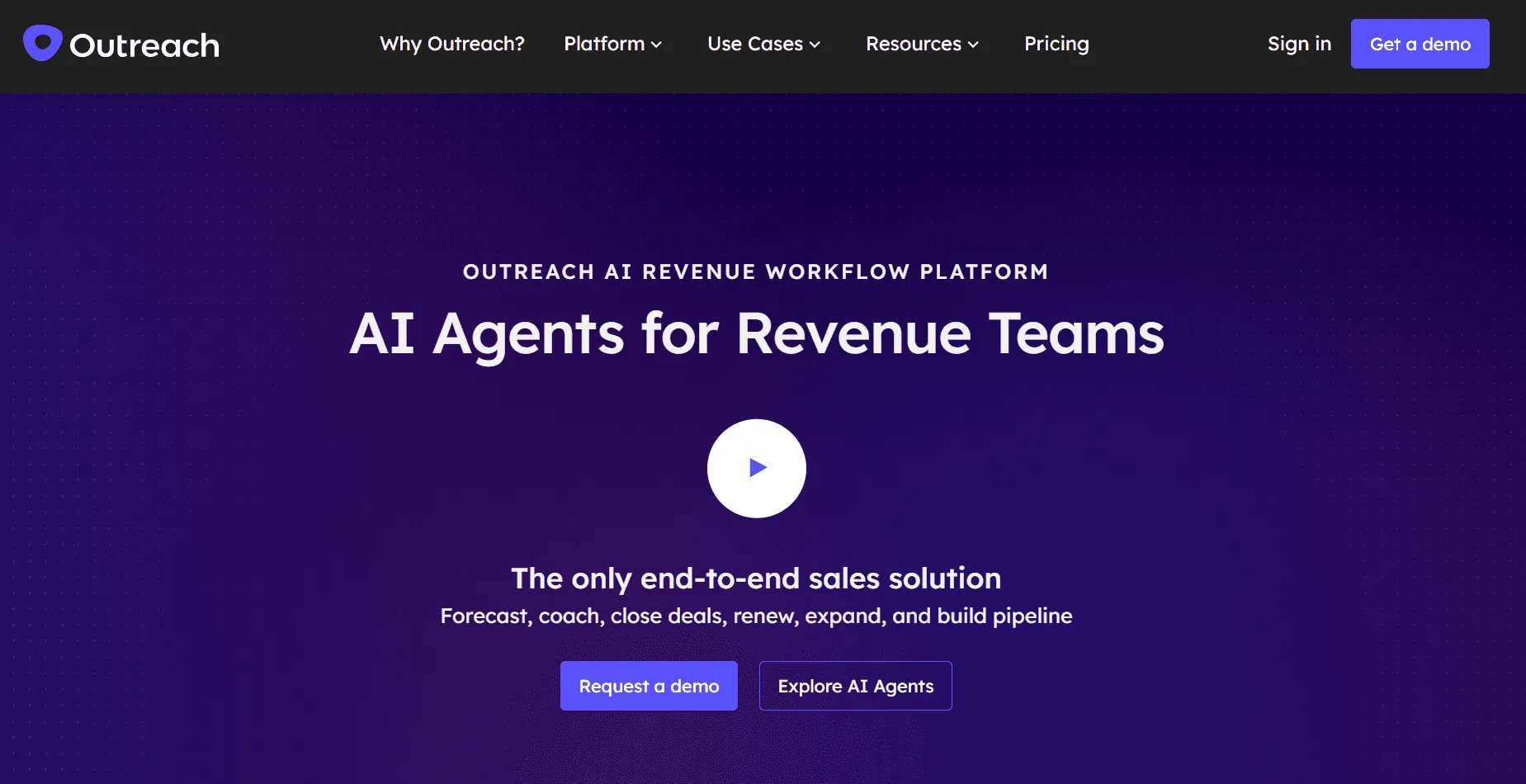
Outreach is best for teams that need to automate and manage outbound sales engagement across email, calls, tasks, and prospecting workflows. Its platform focuses on AI-powered revenue workflows for sales, marketing, RevOps, and go-to-market teams.
It is a better fit for SDR, BDR, and account executive teams that need structured outreach and activity management. It should not be positioned as a content enablement tool like Highspot or a conversation intelligence tool like Gong. Its strongest use case is helping teams execute outreach more consistently.
9. Clari: Best for Revenue Forecasting and Pipeline Inspection
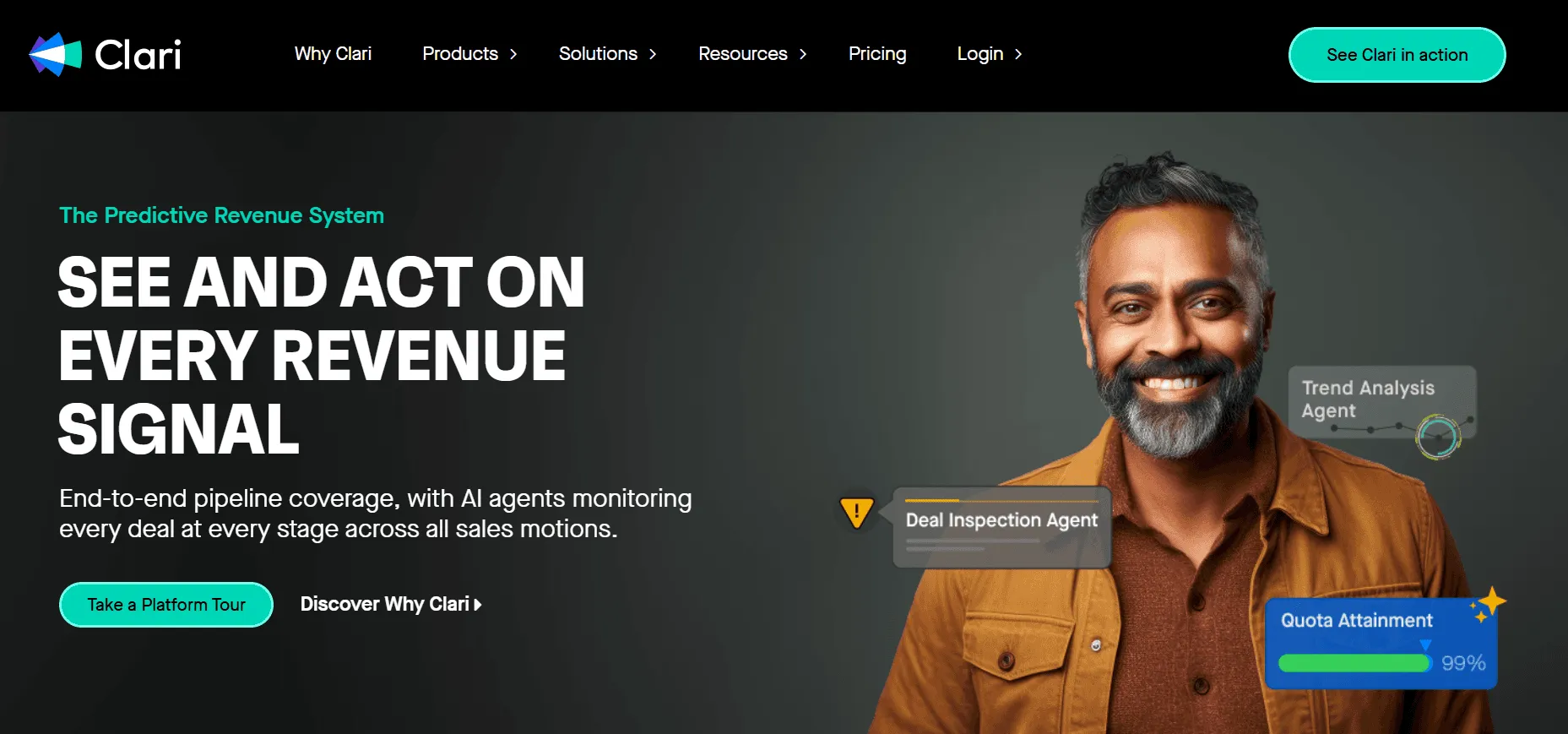
Clari is best for revenue leaders who need clearer forecasting, pipeline inspection, and revenue execution visibility.
It is less about rep training or content management and more about helping teams understand whether the pipeline is real, which deals are at risk, and where revenue teams should focus next.
Clari highlights AI deal scoring, AI-driven forecasting, workflow boosters, integrations, and customization.
How to Choose The Best Sales Enablement Tool
Here’s how you can choose the best sales enablement tool for your business:
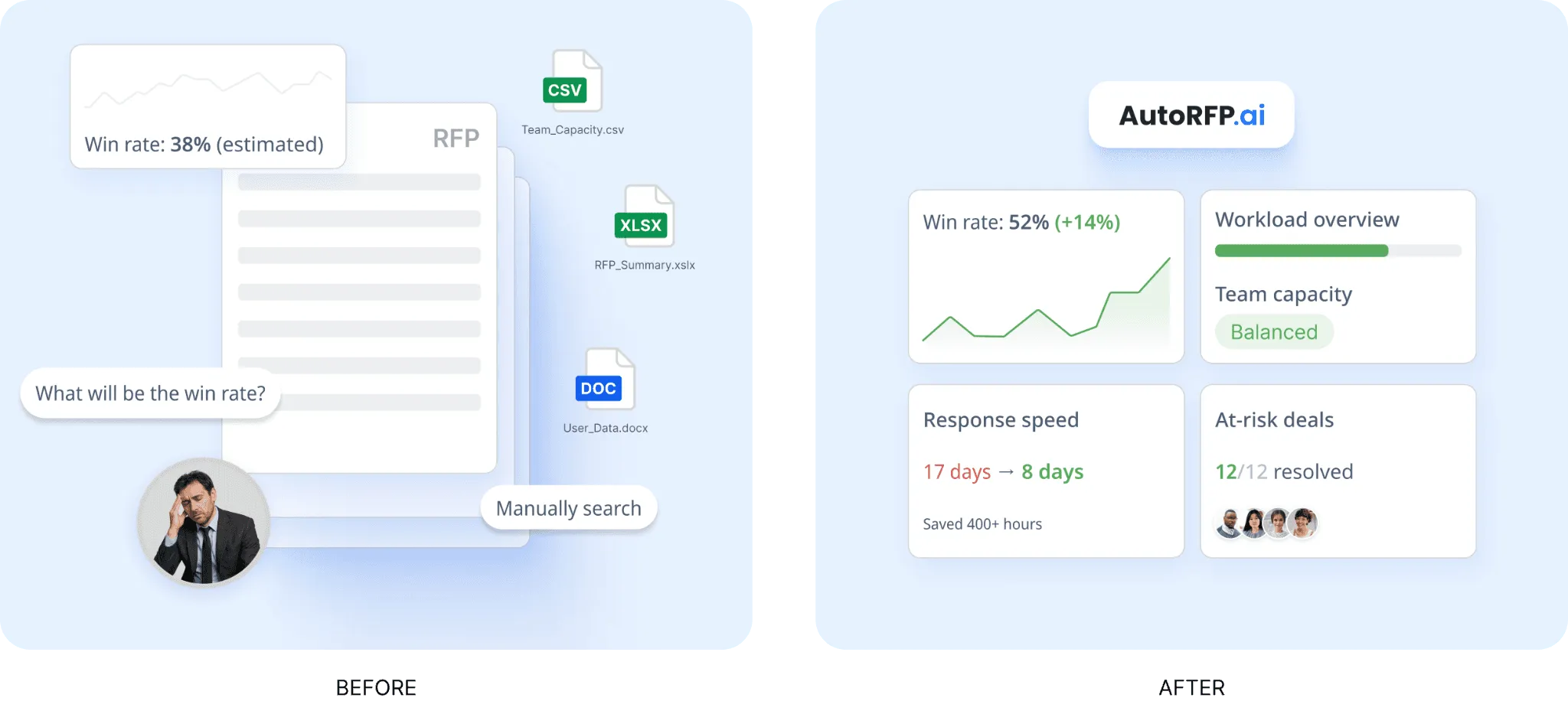
1. See Which Content Updates Actually Improve Win Rates
A good sales enablement tool should show which content changes are improving sales outcomes. For example, if you update your security content after getting SOC 2 certification, you should know whether it improves win rates for compliance-heavy deals.
With AutoRFP.ai, teams can track win rate, team capacity, sales volume, and response velocity in one place. This helps sales and proposal leaders decide what to update, what to reuse, and whether the team can take on more work.
2. Measure Whether AI and Automation Are Paying Off
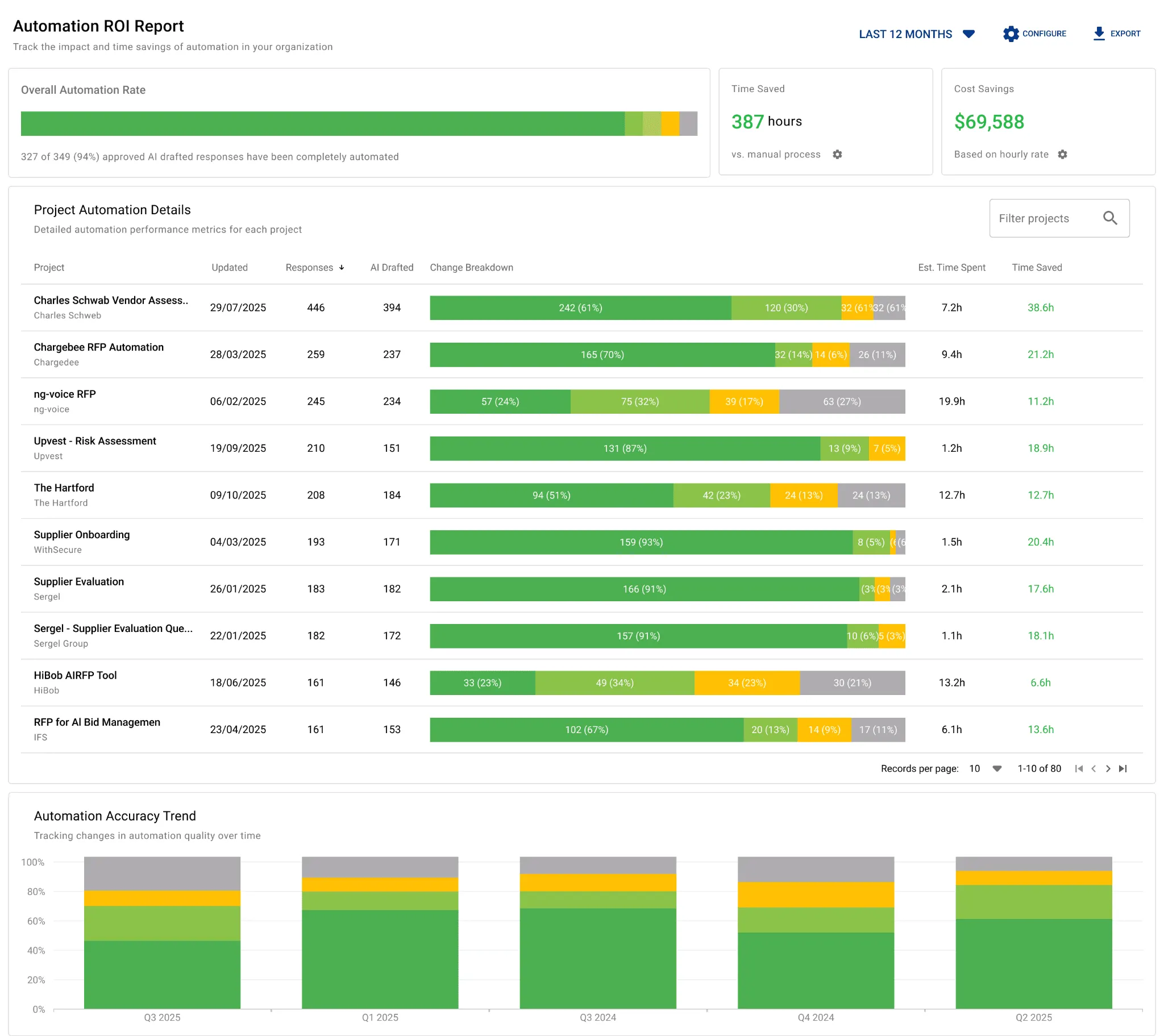
If you are using AI or automation in sales enablement, use KPIs for sales enablement that track automation rate, cost savings, time saved, and efficiency across completed work.
AutoRFP.ai’s ROI reporting helps teams measure automation value across completed projects without building manual reports. This makes it easier to prove whether your AI investment is reducing repetitive work and improving sales productivity.
3. Match the Tool to Your Sales Motion
Not every sales enablement tool solves the same problem. Some are built for content management, while others focus on training, digital sales rooms, conversation intelligence, or proposal automation.
Before choosing a platform, map the tool to how your team actually sells. Enterprise sales teams, for example, may need proposal workflows, security responses, stakeholder tracking, and buyer-ready content in one place.
4. Prioritize Representative Adoption and Ease of Use
A sales enablement tool only works if reps actually use it. Look for a platform that makes content easy to find, recommends the right assets, and connects with the tools your team already uses.
This may include your CRM, email, Slack, Teams, call tools, or proposal workflows. The goal is to help reps spend less time searching for materials and more time selling.
5. Look for Sales Insights Beyond Content Usage
Basic analytics can show views, downloads, and shares, but that is not enough. The best sales enablement tools connect content usage to sales outcomes, pipeline influence, deal progression, and win rates.
This helps leaders understand which assets support closed deals and which ones need improvement. Choose a platform that turns enablement data into decisions, not just reports.
Streamline Sales Enablement With an Enhanced Tech Stack
The best sales enablement tech stack helps reps find the right content, use the right workflow, and move deals forward faster. As autonomous AI improves, teams can go beyond content storage and start automating qualification, response drafting, and performance tracking.
AutoRFP.ai helps sales teams streamline RFPs, DDQs, and questionnaires with faster drafts, approved answers, and clearer visibility. Book Demo to see how AutoRFP.ai can simplify complex response work.
About the author

Ops Lead
Ops Lead at AutoRFP.ai. Designs the pipeline, content, and handoff systems bid teams use to run RFPs end-to-end, and co-hosts live sessions on winning workflows.
LinkedIn