
AutoRFP.ai vs Steerlab: Which AI RFP Platform Fits?
AutoRFP.ai vs Steerlab compared from current product, integration, security, and pricing evidence. See which AI RFP platform fits and what to test.

Ops Lead, AutoRFP.ai·Updated ·20 min read
AutoRFP.ai vs Steerlab is the buyer cut between a lighter security-questionnaire product and a governed mid-market or enterprise response operation. Steerlab’s clearest fit is a security team that wants to load a questionnaire, generate sourced drafts, use confidence scores to guide human review, and start with one free project. Its public materials also cover proposal and presales work, but the product evidence is deepest around security questionnaires. The same comparison tables also live on the AutoRFP.ai vs Steerlab landing page. For a wider field beyond this head-to-head, see our guide to Steerlab alternatives.
AutoRFP.ai is built for the response operation around those documents. It applies an accuracy-first architecture across RFPs, security questionnaires, and DDQs, with approved sources visible to reviewers. Two separate quality signals, sequential governance, exact-format Office return, enterprise identity controls, and operations reporting make it the stronger documented fit for mid-market and enterprise teams.
We build AutoRFP.ai. This guide therefore links the evidence and labels public-documentation gaps as questions to verify. Research covered Steerlab’s product, integration, security, team, and comparison pages; its Legal Terms and privacy notice (both last updated June 19, 2026); its AWS Marketplace listing; dated G2 reviews surfaced by AWS; and independent funding coverage. Sources were reviewed on August 25, 2026, with the legal pages re-read on August 27, 2026. Dated page captures below were taken on August 26, 2026.
The short answer
Choose Steerlab when a security team wants a lighter questionnaire workflow with sourced drafting, confidence scoring, human review, and one free document.
Choose AutoRFP.ai when RFPs, security questionnaires, and DDQs must move through a governed mid-market or enterprise response operation. Citations sit on the sentence, not only on the answer: a reviewer can open the quoted passage, the named file or connected system, and the person behind that source. Trust Score shows how strongly approved content supports an answer. Feedback Score checks whether the draft answers the requirement. Unsupported questions route to a person, and approved work returns in the issuer’s original Excel or Word file with the response record intact. That operation also needs published staffed coverage beyond a single European timezone.
Both vendors let you evaluate at no cost, and the scope differs. Steerlab covers one free RFP or questionnaire. AutoRFP.ai runs a free two-week proof of concept: unlimited access to the whole platform, your real workload rather than a single document, and our implementation team working alongside your reviewers for the duration. One document shows you a draft. Two weeks of real volume shows you the response operation, including the second and third questionnaire that arrive in the same week as an RFP.
Where Steerlab genuinely fits
Steerlab’s security-team page makes a clear promise: answers are sourced, each carries a confidence score, and the product tells the user when it does not know. That explicit unsupported-answer behavior is a real strength in a category where many products stop at fluent drafting.
The proposal-team page adds progress tracking, comments, and collaboration. The presales page adds an in-tool copilot, Slack Q&A, Go/No-Go analysis, and competitor-bias detection. Those are adjacent workflows. The security-team experience remains Steerlab’s clearest public lane.
That framing is consistent with Steerlab’s own limitations disclosure. Its 2026 cybersecurity buyer guide calls Steerlab “a younger company still scaling its customer base.” The same guide identifies human-in-the-loop review as part of the fit. Buyers willing to evaluate a younger vendor can put one of their own questionnaires through it at no cost.
Files and portals: inspect what comes back
Steerlab’s Responsive comparison page says it ingests Excel, Word, PDF, and narrative proposals. It also publishes a Chrome extension for browser questionnaires. The public pages establish broad input coverage, but they do not document a preservation contract for formulas, macros, validation lists, or nested workbook structure. Steerlab also publishes no comparable document-size ceiling.
A G2 review surfaced by AWS Marketplace, dated June 6, 2026, gives a concrete test condition: “When exporting with structured templates, the formatting sometimes shifts slightly, which ends up costing me a few extra minutes to fix before I can send it out.” The same review praises Steerlab’s verified-content drafting, clean interface, and quick adoption, so the export note sits inside a clearly positive review.
AutoRFP.ai retains the original Office file. Import proposes the question, answer, and compliance mapping for confirmation. Original-file export writes approved responses into the same Excel cells or Word paragraphs while preserving workbook structure, formulas, macros, and validation dropdowns. Public pages document support for 5,000+ requirements, 500+ page Word files, multi-tab Excel, nested tables, hidden tabs, macros, dropdown validation, compliance matrices, multiple files, and ZIP archives. PDFs import for in-product answering and completed PDF work exports as Word.
The Portal Agent pulls questions from major procurement and security portals into a response project. Drafting and review use the same governed workflow, then answers return beside the portal for one-click copy.
What imports cleanly, what returns in the original file, and how portal work enters the response record.
| Capability |  AutoRFP.ai AutoRFP.ai |  Steerlab Steerlab |
|---|---|---|
| Import RFPs from tens of formats | Yes 5,000+ requirements; 500+ page Word files | Partial Publishes Excel, Word, PDF, narrative proposals, and web portals |
| Answers return in the issuer’s original Office file | Yes | Partial Structured-template export exists; preservation contract is not public |
| Preserves formulas, macros, sheets, and validation lists | Yes Includes hidden tabs and nested structures | Partial No public formulas, macros, or validation-preservation guarantee |
| Custom PDF-template export | No PDF imports and completed work exports as Word | – |
| Portal questions enter a governed project and answers return beside the portal | Yes | Partial Chrome extension published; retained project record is not documented |
Comparison based on public product information and verified user reviews as of October 2026. – indicates the capability isn't clearly documented, or that the row does not apply.
That scale is live customer work, not a brochure ceiling. A verified G2 reviewer calls “the range of answer types, criteria and scenarios it handles” impressive and highly configurable by RFP. Another reviewer describes completing three RFPs, including one with 500 questions. David F., Head of Sales, says it takes a “dirty Excel file” and converts it into highly accurate answers. A further verified reviewer reports four “extremely disparate questionnaires” in one month and says AutoRFP.ai “seamlessly centralizes all review and approvals.” IMTC processed questionnaires with up to 900 questions, using Excel, Word, and PDF imports. SugarAI handles security questionnaires with up to 2,000 questions and values the review process for keeping responses aligned before submission.
The file test should include a macro-enabled workbook, formulas, dropdowns, nested sheets, a Word table, and one ambiguous answer column. Compare the returned files cell by cell and inspect the record retained from the portal workflow.
Answer architecture and review burden
Steerlab’s features page says the product auto-generates more than 80% of a document with sourced answers. Its security-team page says each answer receives a confidence score and unsupported questions are identified. The product also publishes linked source documents on its Responsive comparison page.
Those claims establish a credible source-and-review architecture. They do not explain what the confidence score measures, how it is calibrated, or the threshold that sends a response to a person. The public pages also stop at linked source documents on the answer. They do not describe a citation on each sentence, a quoted passage behind each claim, or a named person on the source.
AutoRFP.ai uses two separate checks because source support and answer completeness are different problems:
- Trust Score measures how strongly the best matching approved source supports the draft and exposes how the answer was produced.
- Feedback Score evaluates whether the response is complete, relevant, clear, and appropriately detailed for the requirement.
- No Search Results marks an unsupported question at zero trust so a person takes over.
Citations are finer than a document link on the whole answer. After drafting, an attribution pass pins each sentence to the quoted passage that supports it, the named file or connected system it came from, and the person associated with that source. Reviewers verify a claim against a quote and a name, not a filename. Claims without backing stay marked unsupported rather than borrowing a source they did not use.
Zero hallucination by design: AutoRFP.ai drafts from approved content, cites the sentences it used back to those sources and people, scores the source support, and routes anything it cannot support to a person. Reviewers can sort by the evidence that needs attention instead of reading every answer with the same level of suspicion.
How sources, approved answers, conflicts, citations, and shared-library changes are governed.
| Capability | AutoRFP.ai | Steerlab |
|---|---|---|
| Source citations reviewers can inspect | Yes Quoted sentences, named files, named people | Yes Linked documents and a confidence score on each answer |
| Connected knowledge sources stay synchronized | Yes | Yes Drive, SharePoint, OneDrive, Box, Confluence, and Notion |
| Human-approved answers override conflicting content | Yes | – |
| Automatic conflict resolution | Yes | Yes Vendor says the library removes duplicates and conflicts |
| A library that maintains and improves itself | Yes | Partial Auto-classifies, deduplicates, and flags stale content |
| Shared-library changes pass through owner review | Yes | Partial Human review is central; owner gate for shared changes is not public |
Comparison based on public product information and verified user reviews as of October 2026. – indicates the capability isn't clearly documented, or that the row does not apply.
What to test
Create a small evidence set with two deliberate traps:
- Put different data-retention periods in two approved files.
- Ask for a certification that neither file supports.
For every output, save the answer, each cited sentence, the named source and person, the score explanation, and the routing decision. Then ask a subject-matter expert whether the product made uncertainty easier to locate.
Security and enterprise controls
Steerlab’s primary security page publishes:
- SOC 2 assessed across the five Trust Services Criteria, without identifying the report type
- AES-256 encryption at rest and TLS 1.2 in transit
- explicit tenant isolation and European AWS data storage
- customer-enforced MFA, SSO, and roles including Admin, Contributor, and Proposal Manager
- multi-availability-zone deployment, infrastructure as code, monitoring, and vulnerability scanning
This is a credible public security baseline. The same page does not state ISO 27001, SCIM, or regional hosting outside Europe. European AWS storage is an EMEA fact, not Americas or APAC coverage. Some newer Steerlab-authored buyer guides claim ISO 27001, so the correct procurement step is to request the current certificate, legal entity, scope, and applicability statement.
AutoRFP.ai publishes ISO 27001:2022 and SOC 2 Type II through a self-service Trust Center, plus a public subprocessor register. Production runs in separate US, EU, and APAC deployments. Identity lifecycle includes SSO and SCIM through Okta or Microsoft Entra. Team-exclusive collections and organization-scoped retrieval apply permission boundaries to both users and AI.
What InfoSec and IT will check: identity lifecycle, permissions, auditability, certifications, and grounding.
| Capability | AutoRFP.ai | Steerlab |
|---|---|---|
| Zero hallucination by design (100% source-grounded answers) | Yes | Partial Sourced answers, confidence scores, and unsupported-answer handling |
| Enterprise Permissions | Yes | Yes Admin, Contributor, and Proposal Manager roles |
| Single sign-on (SSO) | Yes | Yes Okta, Google SSO, Auth0, and Microsoft Entra ID |
| Okta SSO | Yes | Yes |
| SCIM provisioning and deprovisioning | Yes Okta and Microsoft Entra | No No public SCIM documentation |
| Enterprise administrative audit trail | Yes | Partial Version control published; administrative audit export is not |
| SOC 2 Type II certified | Yes | Yes Primary security page says SOC 2; report type is not stated |
| ISO 27001 certified | Yes | Partial Claimed in vendor content, absent from the primary security page |
Comparison based on public product information and verified user reviews as of October 2026. – indicates the capability isn't clearly documented, or that the row does not apply.
Ask both vendors for current audit reports, certification scope, model-provider terms, data-flow diagrams, deletion behavior, a SCIM demonstration, and a sample administrative audit export.
Public legal terms
Steerlab’s Legal Terms, last updated June 19, 2026, are the public contract for “access to and use of the Services.” A signed order form may replace them. That replacement is not published. The clauses below are quoted from that page.
Regulated-industry use is restricted. Section 1 states: “The Services are not tailored to comply with industry-specific regulations (Health Insurance Portability and Accountability Act (HIPAA), Federal Information Security Management Act (FISMA), etc.), so if your interactions would be subjected to such laws, you may not use the Services. You may not use the Services in a way that would violate the Gramm-Leach-Bliley Act (GLBA).” Ask whether a later contract carves that restriction out before sending healthcare, US federal, or GLBA-covered questionnaires through the product.
The product is provided as-is, with no published uptime or support obligation. Section 16 provides the Services “ON AN AS-IS AND AS-AVAILABLE BASIS” and disclaims warranties of merchantability, fitness for a particular purpose, and non-infringement. Section 12 says Steerlab has “no liability whatsoever for any loss, damage, or inconvenience caused by your inability to access or use the Services during any downtime,” and that nothing in the terms “will be construed to obligate us to maintain and support the Services.” A public SLA URL was not found.
The vendor can change the deal, or end it, without notice. The opening agreement says Steerlab may modify the Legal Terms and “you waive any right to receive specific notice of each such change,” with continued use treated as acceptance. Section 11 reserves the right, “IN OUR SOLE DISCRETION AND WITHOUT NOTICE OR LIABILITY,” to deny access “FOR ANY REASON OR FOR NO REASON” and to “DELETE YOUR ACCOUNT AND ANY CONTENT OR INFORMATION THAT YOU POSTED AT ANY TIME, WITHOUT WARNING.”
Liability and data-loss risk sit with the customer. Section 17 disclaims “ANY DIRECT, INDIRECT, CONSEQUENTIAL, EXEMPLARY, INCIDENTAL, SPECIAL, OR PUNITIVE DAMAGES, INCLUDING LOST PROFIT, LOST REVENUE, LOSS OF DATA,” then caps remaining liability at “THE AMOUNT PAID, IF ANY, BY YOU TO US DURING THE six (6) month PERIOD PRIOR TO ANY CAUSE OF ACTION ARISING.” Section 19 says the customer is “solely responsible for all data” transmitted through the Services and that Steerlab “shall have no liability to you for any loss or corruption of any such data.”
Customer content is not carved out as confidential Customer Data. Section 7 says any Contributions “may be treated as non-confidential and non-proprietary.” Section 8 grants Steerlab an “unrestricted, unlimited, irrevocable, perpetual” license to “disclose, sell, resell, publish” those Contributions, including company name and logos. The terms do not define a Customer Data category that excludes uploaded questionnaires and answer libraries from that license. Ask for a written Customer Data ownership and confidentiality clause before loading production files.
Privacy names AI subprocessors, and there is no public DPA. The privacy notice (also June 19, 2026) says Steerlab does “not process sensitive personal information,” and that “your input, output, and personal information will be shared with and processed by” Anthropic, OpenAI, Mistral AI, and Cohere. The site sitemap lists the terms and privacy pages. /dpa, /legal/dpa, /data-processing-agreement, and /msa returned HTTP 404 on August 27, 2026. Steerlab’s own GDPR guide says a SaaS vendor acting as a processor “must sign a Data Processing Agreement with each customer.”
AutoRFP.ai publishes a Master Services Agreement, Data Processing Agreement, Service Level Agreement, and security exhibit. The MSA states that the customer exclusively owns Customer Data and Outputs, grants only a limited license to host that data to provide the Services, and will not use Customer Data to train AutoRFP.ai or third-party models except tenant-specific models for that customer. It does not contain a HIPAA, FISMA, or GLBA use prohibition. The SLA commits to 99.95% monthly uptime with defined response targets. Confirm sector-specific addenda (including any BAA) in the order form on both sides.
Integrations: compare the job, not the logo
Both products connect the same core knowledge, CRM, and collaboration stack. Counted from each vendor’s own public directory on August 26, 2026, AutoRFP.ai publishes 32 entries against Steerlab’s 17, about 1.9 times as many, and the gap widens on what those connections actually do.
Integrations listed
1.9x as many- AutoRFP.ai
- 32
- Steerlab
- 17
| Connection type | AutoRFP.ai | Steerlab |
|---|---|---|
| Breadth: by category | ||
| CRM | 4 | 3 |
| Knowledge, storage, help center, revenue intelligence | 13 | 7 |
| Communication | 3 | 2 |
| Identity and SSO | 4 | 4 |
| Browser and AI assistant | 6 | 1 |
| Named procurement or security portals | 2 | None listed |
| Depth: what the connection does | ||
| Documented behavior per connection | Yes | No Systems named only |
| CRM status write-back | Yes | No |
| API | Yes | No |
| Webhooks | Yes | No |
| Model Context Protocol | Yes Server and client | No |
Breadth is the easier half of that table to close. Depth is the part a buyer feels in month three: whether the CRM connection writes status back to the opportunity, whether an integration can be driven programmatically, and whether an assistant can reach governed content at all. The AutoRFP.ai integration directory documents the job each connection performs. Salesforce carries intake, owner mapping, live opportunity status, and status write-back. API and webhooks cover custom workflows. The MCP layer works in both directions: assistants can query governed AutoRFP.ai knowledge, and AutoRFP.ai can pull permitted context from external MCP servers. Steerlab’s directory names its systems without publishing API, webhook, or MCP documentation, so the connection behavior has to be confirmed in a demo.
Those 17 Steerlab entries are still a real stack, and worth conceding plainly. Its integration directory names Google Drive, SharePoint, OneDrive, Dropbox, Box, Slack, Microsoft Teams, HubSpot, Dynamics 365, Salesforce, Chrome, Confluence, Notion, Okta, Google SSO, Auth0, and Microsoft Entra ID.
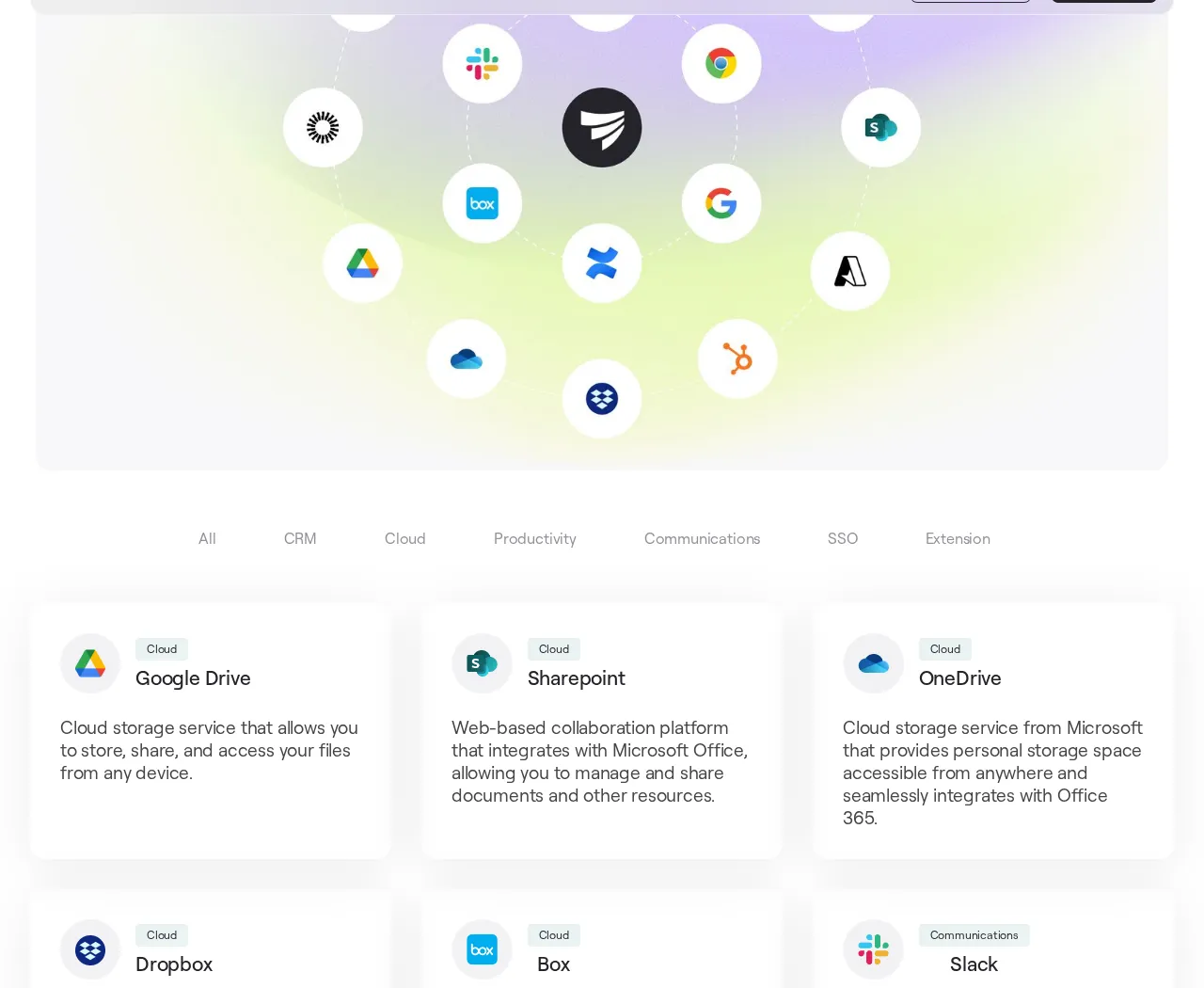
No directory proves depth on its own, on either side. A G2 review dated June 3, 2026 asks Steerlab for “stronger native integration with some of the smaller consumer service CRMs we use.” Another review dated April 24 says CRM sync was quick and helped sales and engineering collaborate, so the CRM connectivity works. Run both products against your own fields, triggers, owner mapping, status write-back, and least common system, then keep the connection that survives the test rather than the one with the better logo wall.
Collaboration, approvals, and shared content
Steerlab publishes contributors, comments, task assignments, review flows, version control, progress tracking, and bottleneck visibility. Its Responsive comparison page also says the content library classifies material, removes duplicates and conflicts, flags outdated responses, and learns from completed submissions.
That is substantial workflow coverage. The public material does not show ordered approval stages, a separate content-owner gate before edited text becomes authoritative across the organization, or the administrative audit export an enterprise buyer can inspect. Buyers should ask Steerlab to demonstrate those controls instead of interpreting documentation silence as product absence.
AutoRFP.ai supports multiple reviewers and sequential approval layers. Shared-library changes can pass through a content owner, confidential projects stay outside reusable content, and locked responses remain protected from agent edits. Version history and the response record show who changed, reviewed, approved, and exported the answer.
Who can contribute, how many people can review, and what must happen before content is approved.
| Capability | AutoRFP.ai | Steerlab |
|---|---|---|
| Unlimited collaborator users (no per-seat fees) | Yes Live co-editing, comments, and assignments | – |
| Multiple reviewers on one answer | Yes Any or all reviewers can be required | Yes Contributors, assignments, comments, and review flows |
| Sequential approval layers | Yes Ordered review stages and locks | Partial Review flows are published; ordered approval layers are not |
| Approval-gated saves to shared content | Yes | – |
| Answer edit history and restoration | Yes | Yes Vendor comparison page publishes version control |
| Slack | Yes | Yes |
| Microsoft Teams | Yes | Yes |
| Q&A Agent in Slack and Teams | Yes Unlimited users can ask sourced questions | – |
Comparison based on public product information and verified user reviews as of October 2026. – indicates the capability isn't clearly documented, or that the row does not apply.
For the pilot, model the real sign-off chain. Include a proposal owner, a security reviewer, legal, and an executive approver. Then remove one reviewer from the identity provider and verify what happens to access and outstanding work.
Reporting and deal insights
Steerlab’s distinct reporting angle is deal strategy. The features page publishes data-backed win probability and competitor-bias detection. Its presales page adds a Go/No-Go agent. The Responsive comparison page names inconsistencies, response gaps, bias and risk, win/loss patterns, progress, contributors, and bottlenecks.
The public pages do not define the methodology behind win probability or competitor-bias detection, and they do not show the output of an operations report. A G2 review dated June 2, 2026 says, “A few more integration choices and better reporting would make it even stronger for larger proposal teams.” Another review dated May 30 says “the reporting side still has room to grow.” Both reviews also praise the AI assistance, organization, and ease of use.
AutoRFP.ai’s reporting covers projects, workload, automation, compliance gaps, and scheduled delivery. At approval, the platform word-diffs the final answer against its draft so the automation rate has a defined method. The ROI model exposes the buyer’s own assumptions, and reports export to CSV, Excel, and PDF.
What a bid lead can see across the queue: automation, workload, win/gap analysis, and enterprise reporting.
| Capability | AutoRFP.ai | Steerlab |
|---|---|---|
| Enterprise Reporting | Yes | Partial Deal insights published; operational reporting depth is not detailed |
| Workload Reporting | Yes | Partial Tracks contributors, sections, progress, and bottlenecks |
| Win/Gap Analysis Reporting | Yes | Yes Go/No-Go, competitor bias, gaps, and win/loss analysis |
Comparison based on public product information and verified user reviews as of October 2026. – indicates the capability isn't clearly documented, or that the row does not apply.
Steerlab may be the better starting point when a security team prioritizes a lighter workflow and Go/No-Go insights. AutoRFP.ai is the stronger documented fit when leadership needs capacity, automation, compliance-gap, and savings reporting across a sustained response operation.
Pricing and commercial fit
Steerlab’s first RFP or questionnaire is free, which is a genuine way to see output on a real document before any commercial conversation.

Paid pricing is quote-based. The AWS Marketplace listing uses private offers, displays a placeholder price, and says pricing scales with purchased Units. It does not define whether a Unit means a seat, workspace, response, or another measure. Public sources also leave paid usage limits, overage behavior, and renewal terms unspecified.
Support tiers belong in the same quote. The listing says Steerlab provides “various tiers of support levels from basic support through email … all the way to 24x7 premium support with an assigned customer success manager.” That sentence sits in the vendor-authored support section, on a page where AWS states that “vendors are responsible for their product descriptions and other product content” and that it does not warrant them. Staffed hours, response targets, escalation paths, and regional cover are not published anywhere public. Steerlab’s about page says the company is based in Paris. Tracxn’s company profile lists 14 employees as of July 31, 2026 at that Paris-based company, and the about page does not list another office. Reviewers do praise responsiveness: a G2 review dated June 3, 2026 says “the support team is quick to respond whenever you flag something.” Treat 24x7 and global cover as questions rather than published features. Ask which hours are staffed, from which cities, against what response targets, and put the answer in the agreement instead of the listing.
AutoRFP.ai publishes Scale at $899 per month and Accelerate at $1,299 per month, billed annually with unlimited users. The plans use annual project allowances, which accommodates an uneven response year.
The evaluation is also free, and it covers more ground. A two-week proof of concept opens the full platform with no usage cap, connects your own content sources, and includes implementation support while your team runs live work through it. Reviewers, approvers, and security stakeholders all participate, because users are never metered.
Ask Steerlab to price the real team and response pattern. Include a quiet month, a burst of simultaneous questionnaires, external reviewers, premium support, and renewal. Compare that written proposal with AutoRFP.ai’s annual allowance and included-user model.
Company evidence and implementation
Steerlab is a newer, smaller vendor in this category. Its about page says it was founded in 2023 and is based in Paris, led by founders Rami Iguerwane and Othmane Hamzaoui. It announced a $1.9 million pre-seed round in September 2024. Tracxn’s company profile lists 14 employees as of July 31, 2026 at the Paris-based company. The about page names Paris leadership and does not publish other offices, so Americas or Asia-Pacific staffed coverage is not a public fact. Its public site shows customer logos and short testimonials, but no full case-study library was found as of August 26, 2026. AWS Marketplace surfaced a 4.6 rating from 56 G2 reviews. Those reviews praise traceable sources, quick adoption, and support, while dated comments ask for better reporting, more flexible dashboard exports, stronger native support for smaller CRMs, and more reliable structured-template formatting.
AutoRFP.ai publishes full customer stories, a 4.9 G2 rating from 60 reviews, and teams in New York, Vancouver, Stockholm, and Brisbane, covering support across North America, Europe, and Asia-Pacific. Its security evidence is self-service through a public Trust Center. For a mid-market or enterprise buyer, that record is easier to inspect before loading sensitive response content into a proof of concept.
Published support hours and data hosting for the Americas, EMEA, and APAC.
| Capability | AutoRFP.ai | Steerlab |
|---|---|---|
| Dedicated support team (24/6) | Yes | Partial 14 Paris-based staff; no published global coverage window |
| Data hosting and support (Americas) | Yes Separate US deployment | No No Americas region published |
| Data hosting and support (EMEA) | Yes Separate EU deployment | Yes European AWS storage; Paris-based support |
| Data hosting and support (APAC) | Yes Separate Australia deployment | No No APAC region published |
Comparison based on public product information and verified user reviews as of October 2026. – indicates the capability isn't clearly documented, or that the row does not apply.
Is Steerlab’s AutoRFP.ai comparison still accurate?
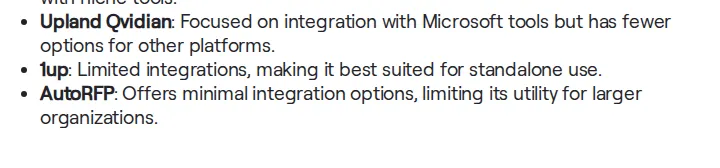
Steerlab’s comparison page dated November 5, 2024 remains live without an update date. It makes five claims about AutoRFP.ai. Every one conflicts with the current public product record, customer evidence, or both. That does not establish what was available on the day the page was published. It does mean the page is not a reliable description of the product a buyer can evaluate now.
| Area | What Steerlab’s page says about AutoRFP.ai | Current public record |
|---|---|---|
| Complex RFPs | ”Specializes in quick turnaround for standard RFPs but may struggle with complex requirements.” | AutoRFP.ai publishes support for 5,000+ requirements, 500+ page Word files, multi-tab Excel, nested tables, hidden tabs, macros, dropdown validation, compliance matrices, multiple files, and ZIP archives. Steerlab publishes no comparable document-size ceiling. Customer evidence is in the files section above. |
| Content management | ”Limited in content management functionality, making it more suitable for one-off proposals.” | AutoRFP.ai has a dedicated Content Management area with semantic search, connected-source sync, auto-categorization, ownership, moderation and approvals, renewal and expiry schedules, freshness alerts, and an audit trail. Every approved response can feed future work. |
| Collaboration | ”Collaboration tools are limited, making it less ideal for complex projects.” | Collaboration includes unlimited users, live co-editing, assignments, requirement-level comments, Slack, Teams, and email alerts, workload and deadline tracking, version and approval history, any, all, and sequential review processes, plus response and export locks. |
| Integrations | ”Offers minimal integration options, limiting its utility for larger organizations.” | The current public directories list 32 AutoRFP.ai entries against 17 from Steerlab. AutoRFP.ai also publishes an API, webhooks, CRM status write-back, and MCP server and client behavior. The detailed count and depth comparison appears in the integrations section above. |
| Data security | ”Limited security features make it less ideal for handling sensitive data.” | AutoRFP.ai publishes ISO 27001:2022, SOC 2 Type II, separate US, EU, and APAC deployments, SSO, SCIM, role and collection permissions, tenant isolation, a self-service Trust Center, a public subprocessor register, audit controls, and a contractual commitment that customer content is not used to train public models. |
The integrations line is the easiest to check in public sources. A capture of Steerlab’s own directory from November 12, 2024, one week after that page went up, shows the same 17 connectors it carries today. The AutoRFP.ai integration directory carries 32, among them SharePoint, Google Drive, OneDrive, Box, Confluence, Notion, Seismic, Zendesk, Intercom, Salesforce, Slack, Microsoft Teams, Okta, Microsoft Entra, Google Workspace, Gong, and an official MCP server.
Use the current product pages and a live proof of concept, not that 2024 comparison page, as the record of what each platform does now.
Final decision
Start with Steerlab when a security team wants a lighter product for sourced questionnaire drafts, confidence-guided review, and one free document. Its public evidence does not make it the stronger choice for a mid-market or enterprise response operation with layered governance, broad integration requirements, exact-format file return, and management reporting.
Start with AutoRFP.ai when the response process needs inspectable quality controls and enterprise governance across RFPs, security questionnaires, and DDQs. Sentence-level citations name the source and the person, two scores focus review, unsupported questions route to a person, and work continues through sequential approval, exact-format return, identity lifecycle, integrations, and operations reporting.
We’d rather show you than tell you: bring a real fortnight of response work, your own sources, reviewers, and approval policy. The AutoRFP.ai proof of concept covers the whole platform for two weeks at no cost and with our team supporting the run, so the artifacts you keep at the end are drafts, cited sentences, named sources and people, score explanations, review history, audit records, and returned files from your actual workload.
About the author

Ops Lead
Ops Lead at AutoRFP.ai. Designs the pipeline, content, and handoff systems bid teams use to run RFPs end-to-end, and co-hosts live sessions on winning workflows.
LinkedInFrequently asked questions
AutoRFP.ai vs Steerlab: which should I choose?
Choose Steerlab for a lighter, security-questionnaire-focused workflow with sourced drafts, confidence scores, human review, and one free questionnaire. Choose AutoRFP.ai for a mid-market or enterprise response operation that needs sentence-level citations to named sources and people, separate source and completeness signals, exact-format Office return, sequential approvals, SCIM, regional hosting, staffed coverage across North America, Europe, and Asia-Pacific, a public Trust Center, and reporting across RFPs, questionnaires, and DDQs.
What is the main difference between Steerlab and AutoRFP.ai?
Both are AI-native platforms that draft from company content, show sources, support human review, and connect to common knowledge and collaboration tools. Steerlab centers its public quality story on sourced answers with a confidence score and linked source documents. AutoRFP.ai cites at sentence level: each claim points at a quoted passage, a named file or connected system, and the person behind that source, then separates source confidence from response completeness through Trust Score and Feedback Score, and carries those answers through sequential approval, original-file return, and an auditable response record.
Is Steerlab good for security questionnaires?
Yes. Security questionnaires are a genuine Steerlab strength. Its security-team page publishes sourced answers, a confidence score for each answer, an auto-managed knowledge library, and explicit handling when the system cannot support an answer. Test the confidence method, source passages, and reviewer routing on your own unsupported and contradictory questions. On AutoRFP.ai, also check whether each sentence cites a quoted passage, a named file, and a named person.
Does Steerlab integrate with Slack, Teams, Salesforce, and SharePoint?
Yes. Steerlab's integrations page lists Slack, Microsoft Teams, Salesforce, SharePoint, Google Drive, OneDrive, Dropbox, Box, HubSpot, Dynamics 365, Confluence, Notion, Chrome, Okta, Google SSO, Auth0, and Microsoft Entra ID. Buyers should compare what each connection does, including source sync, review actions, CRM status, and identity lifecycle.
How much does Steerlab cost compared with AutoRFP.ai?
Steerlab offers one free RFP or questionnaire, but does not publish paid prices, usage limits, overage rules, or billing terms. Its AWS Marketplace listing uses private offers and does not define what a billing Unit represents. AutoRFP.ai publishes Scale at $899 per month and Accelerate at $1,299 per month, billed annually with unlimited users, and evaluation runs as a free two-week proof of concept with unlimited platform access and implementation support.
What security certifications does Steerlab publish?
Steerlab's primary security page states SOC 2 but does not identify the report type. It also publishes AES-256 encryption at rest, TLS 1.2 in transit, customer isolation, European AWS data storage, MFA, SSO, and user roles. Other Steerlab-authored pages claim ISO 27001, while the primary security page does not list it, so buyers should request the current certificate and scope.
Does Steerlab offer 24/7 support?
Steerlab's AWS Marketplace listing advertises tiers from basic email support up to 24x7 premium support with an assigned customer success manager. That text is vendor-authored, and AWS states on the same page that it does not warrant vendor product content. Staffed hours, response targets, and regional cover are not published. Steerlab's about page says the company is based in Paris, and Tracxn lists 14 employees there as of July 31, 2026, with no other office published. Reviewers do praise responsiveness, so confirm staffed hours, regions, response targets, and escalation paths in the contract.
How established is Steerlab?
Steerlab is a newer entrant: founded in Paris in 2023, with a $1.9 million pre-seed round in September 2024. Tracxn lists 14 employees at the Paris-based company as of July 31, 2026. Its about page names Paris leadership and does not list other offices. Its public site displays customer logos and short testimonials, but no full case-study library was found as of August 26, 2026. Buyers should request comparable customer references and implementation examples.
Does Steerlab have global support coverage?
No published office or staffed coverage appears outside Paris. Steerlab's about page names a Paris base, and Tracxn lists 14 employees there as of July 31, 2026. AutoRFP.ai publishes teams in New York, Vancouver, Stockholm, and Brisbane, covering North America, Europe, and Asia-Pacific. Confirm overnight and regional cover in the Steerlab contract rather than treating 24x7 marketplace copy as a coverage map.
How should I test Steerlab against AutoRFP.ai?
Run the same live questionnaire through both products. Include conflicting source documents, a question with no supporting evidence, a structured Excel workbook, several reviewers, and an identity change. Keep the cited sentences, named sources, named people, score explanations, review history, audit evidence, and returned files.
Does AutoRFP.ai list more integrations than Steerlab?
Yes, on the public directories captured August 26, 2026: AutoRFP.ai lists 32 entries and Steerlab lists 17, about 1.9 times as many. AutoRFP.ai also documents CRM write-back, an API, webhooks, and MCP server and client behavior. Steerlab's 17 named connectors are a real stack, and a November 12, 2024 archive of its directory shows the same 17.
Is Steerlab's AutoRFP.ai comparison accurate?
The Steerlab page dated November 5, 2024 is not a reliable description of AutoRFP.ai today. It calls AutoRFP.ai limited on complex RFPs, content management, collaboration, integrations, and security. Current public pages document 5,000+ requirements, 500+ page Word files, a dedicated content-management area, unlimited collaboration with sequential review, 32 integration entries against Steerlab's 17, ISO 27001:2022, SOC 2 Type II, SCIM, and US, EU, and APAC deployments. That does not prove what was true in 2024. Use current product pages and a live proof of concept.
Do Steerlab's public terms cover enterprise procurement?
Steerlab publishes website Legal Terms last updated June 19, 2026. Those terms bar use where interactions would be subject to HIPAA or FISMA, and bar use that would violate GLBA. They provide the Services as-is, allow termination and deletion of an account and posted content for any reason or no reason without notice, and cap liability at amounts paid in the prior six months, including a disclaimer of direct damages. A public MSA, DPA, or SLA was not found on the site (sitemap lists only the terms and privacy pages). AutoRFP.ai publishes an MSA, DPA, and SLA. Ask whether a signed order form replaces the website terms before loading production questionnaires.

